






















Embed your profile, publication, or tag stream in 90 seconds. Pulls Medium's official RSS feed, surfaces read time, tags, and subtitles. Free, no code.
No credit card required
14-day free trial
Cancel anytime
Trusted by 11,000+ brands
Free forever, paid plans from $19/mo
Try the live widget
Live demo, not a screenshot. Paste a Medium URL, pick a reading layout, tune typography, embed. What you see here is what ships to your site.
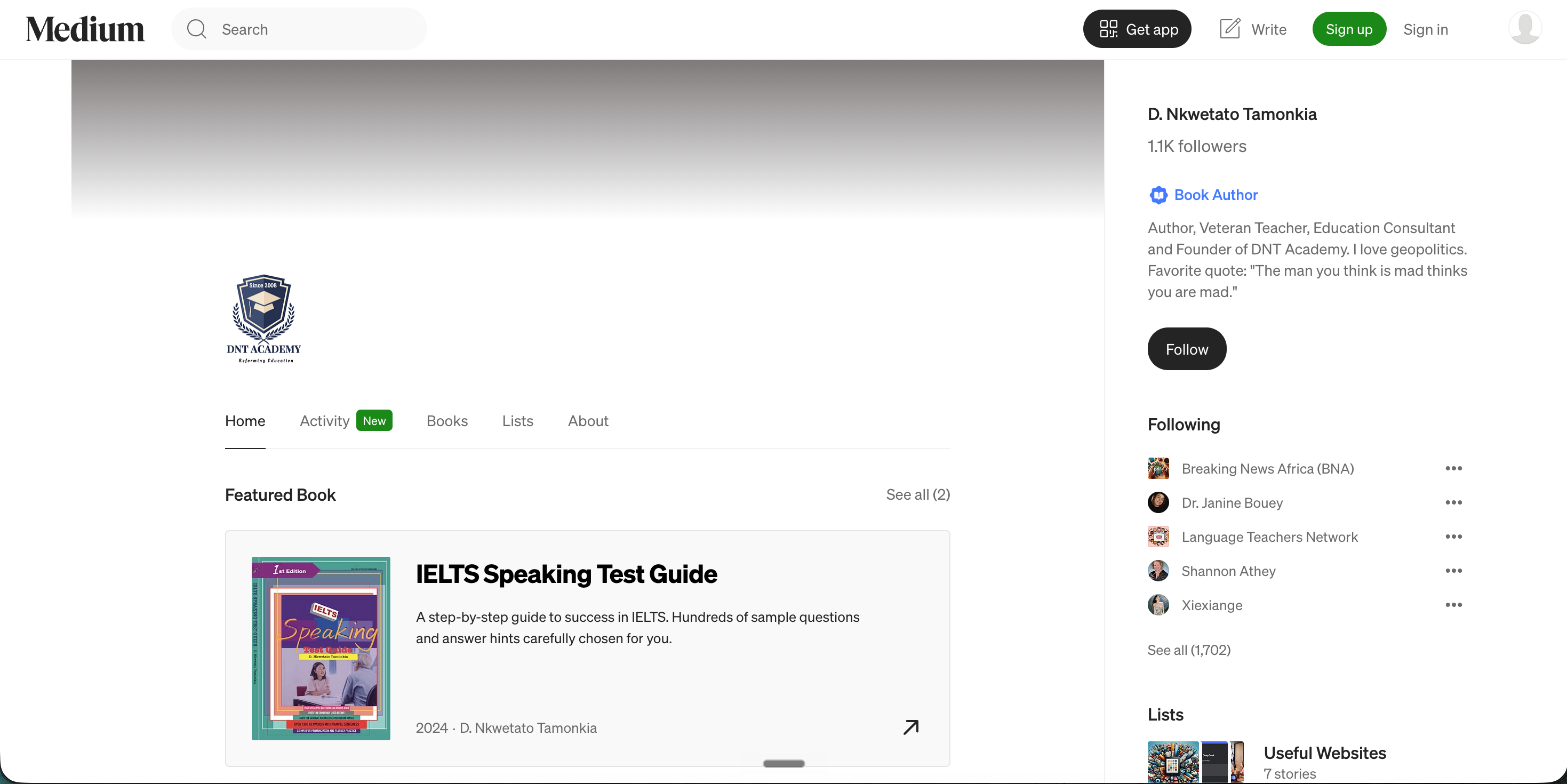
Medium.com profile page for Marcus Acme (@marcus.acme) showing 12K followers, Top Writer in Technology badge, and three story cards: How I built a $1M open-source business by Maya Iverson (12 min, 4.2K claps), The end of front-end frameworks by Tom Reyes (8 min, 2.8K claps), and Why Rust is winning systems programming by Aïsha Khan (14 min, 6.7K claps)
Medium Stories · 30 min
●marcusacme.com
Poper widget live
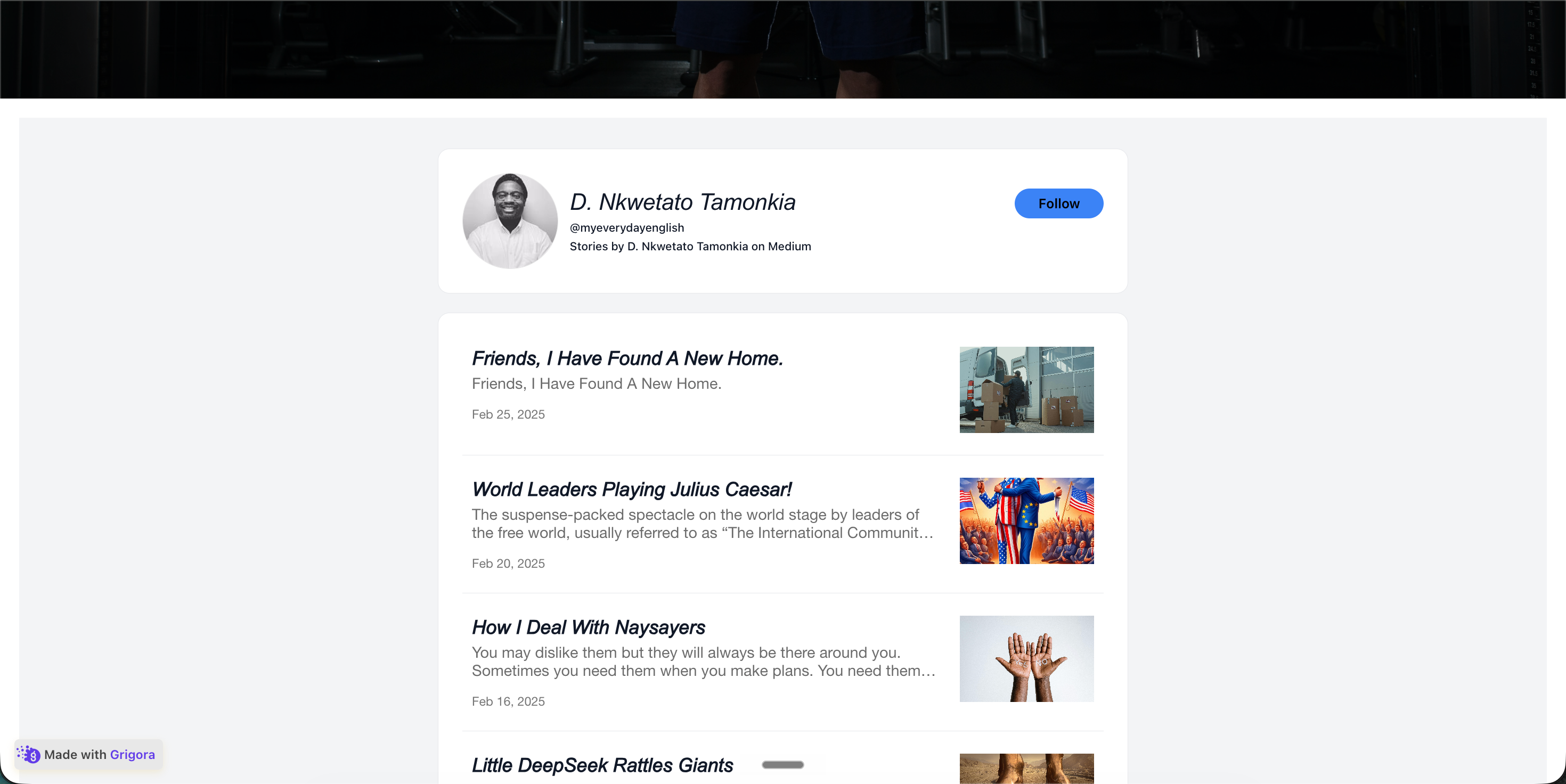
Marcus Acme's branded essay site marcusacme.com with header MARCUS ACME · Writing · Talks · Newsletter · Medium and a hero reading 'Long-form essays on technology', containing the Poper Medium feed widget embedded inline in muted sage and warm cream rendering the same three stories from Maya, Tom, and Aïsha
Mockups for illustration. Pull your real Medium Feed Widget: Embed Profile, Publication and Tag Stories on Any Site from Medium and embed in 90 seconds.
How to use it
How to add Medium to your website
Three steps. Under two minutes. No developer needed.
01Step 1
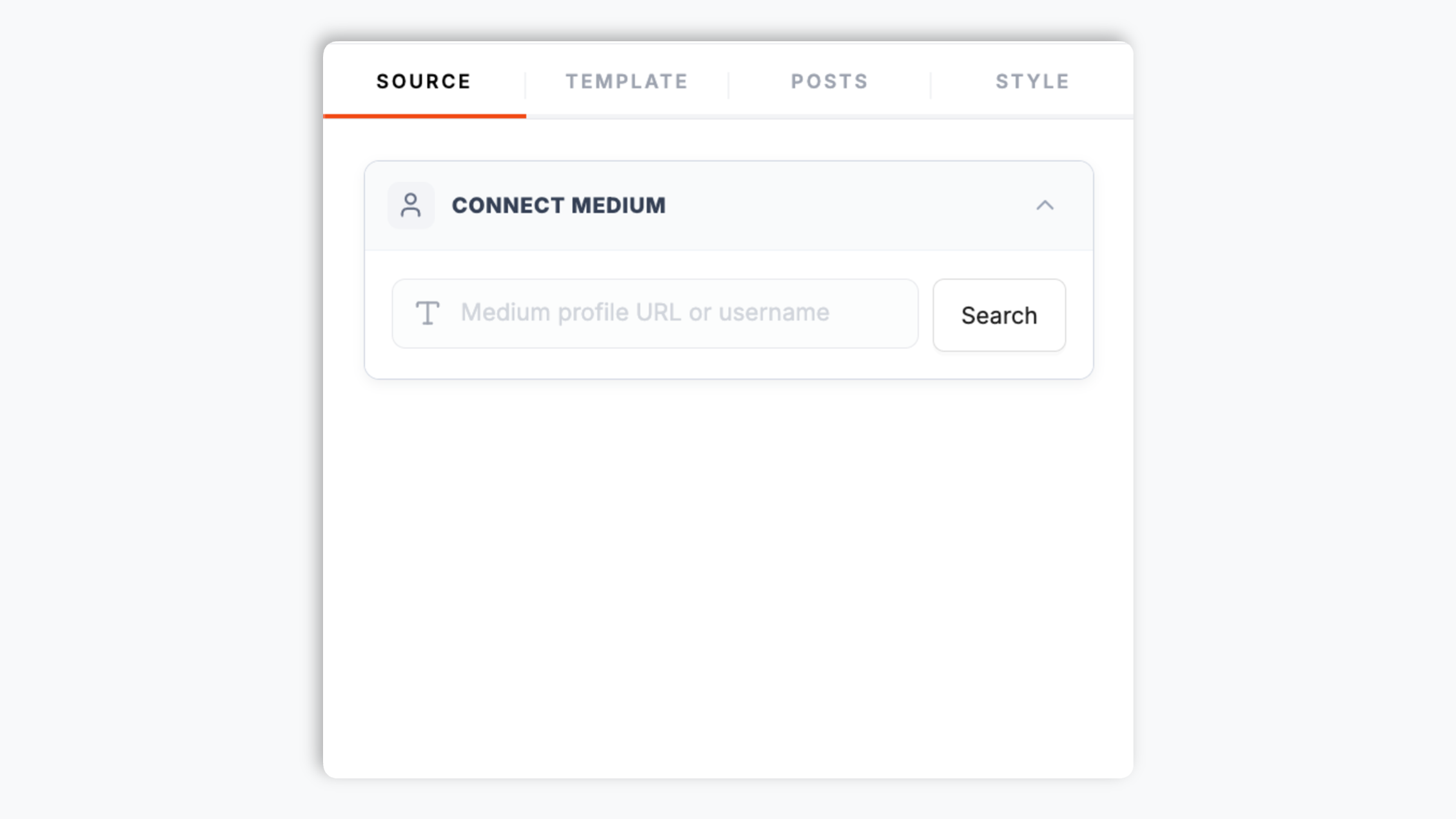
Connect your Medium profile or publication
Drop in @marcus.acme, your medium.com URL, custom-domain publication, or any tag stream. Poper resolves the underlying RSS endpoint and shows your follower count and Top Writer status before you connect.
02Step 2
Pick a reading-first layout and brand it
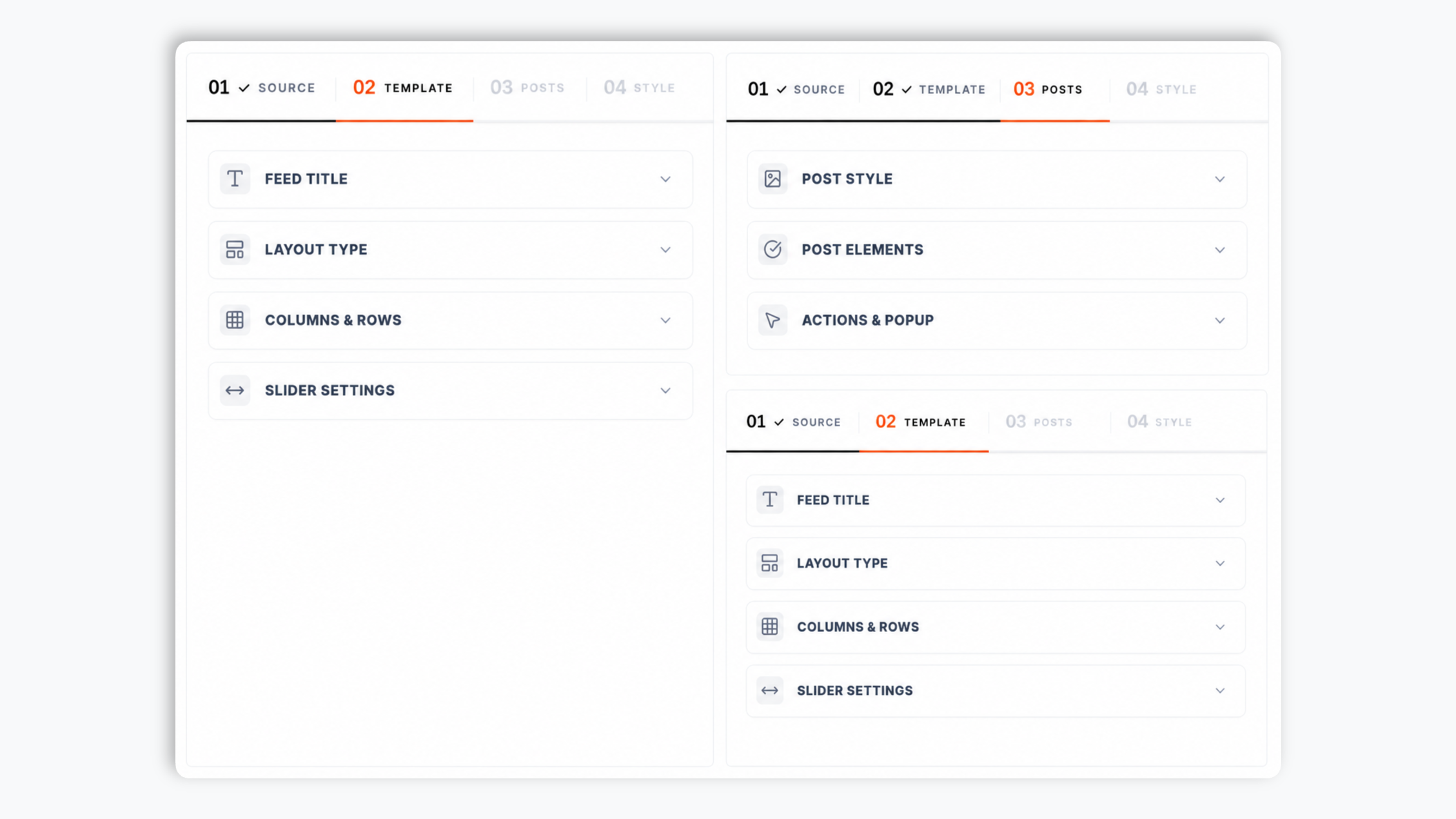
Choose Article List, Card Grid, Compact, Magazine, Featured, or Stacked. Tune typography, accent color, read-time pills, and tag chips to match your essay-first site.
03Step 3
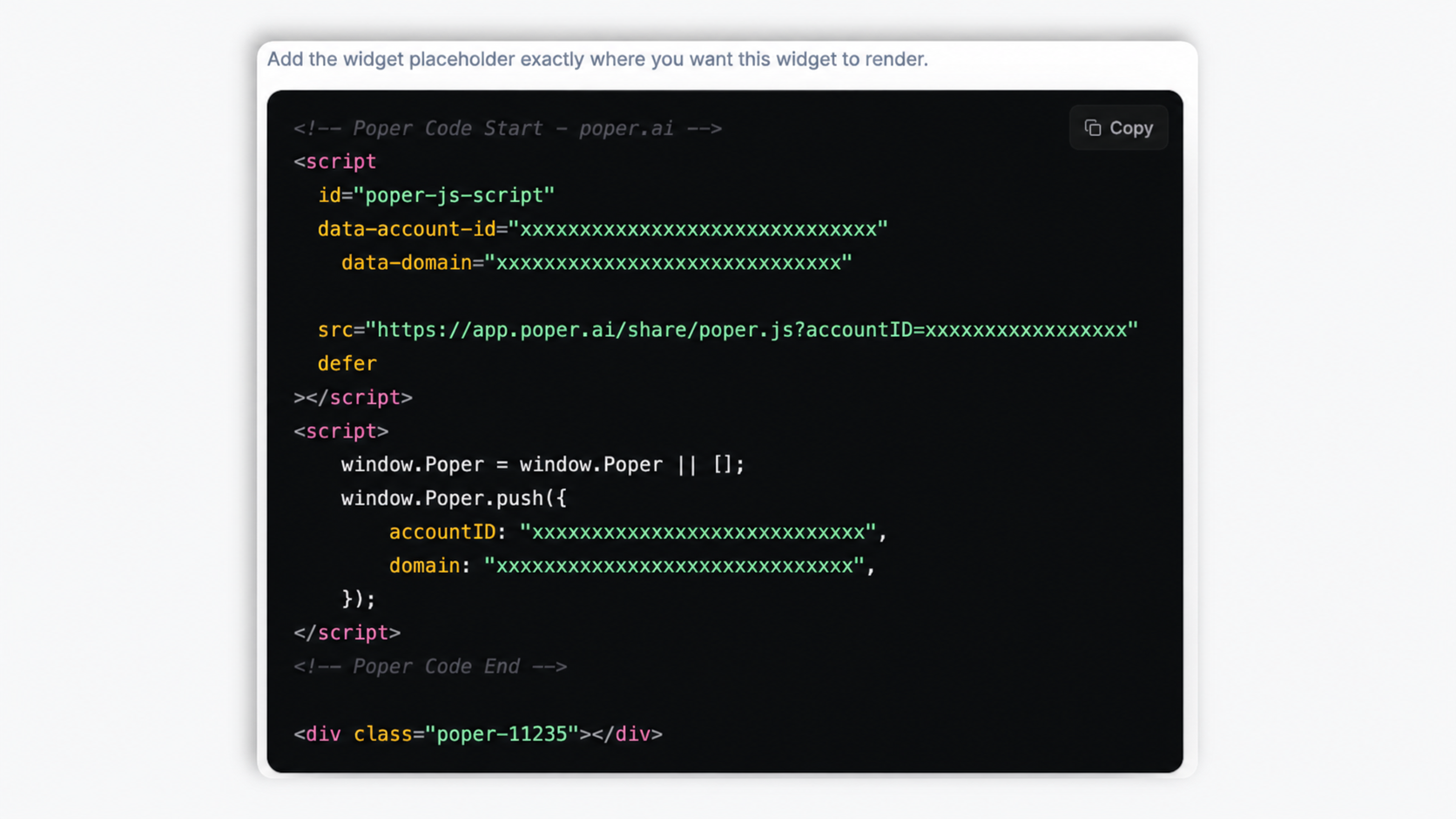
Copy the snippet and embed
Paste the one-line script tag into your site. Works on Webflow, Framer, Ghost, Notion Sites, WordPress, and any HTML stack writers actually use.
Works everywhere
Works with every website platform you already use
Drop-in install on WordPress, Shopify, Wix, Squarespace, Webflow, Framer, Ghost, and any HTML-friendly stack. No build step, no developer needed.
WordPress
Shopify
Wix
Squarespace
Webflow
Framer
Ghost
HTML
Plus 250+ other platforms via the embed snippet. If your site can render a <script> tag, it can render the Medium Feed Widget: Embed Profile, Publication and Tag Stories on Any Site.
What you get with Poper Medium Feed
Six things that matter when you are paying for a Medium widget, not 30 features no one uses.
RSS-native, no scraping, no breakage
Medium has no public read API for non-RSS access, so most third-party widgets either scrape (against Medium's ToS, frequently blocked) or sit on a fragile hidden endpoint. Poper parses Medium's official, supported RSS feed at medium.com/feed/@handle. When Medium ships a redesign, your embed keeps working because the RSS contract has not changed since 2014.
Typography tuned for long-form
Font family, weight, line-height, measure, and tracking as first-class controls. Reading-first defaults: 65-character measure, 1.6 line-height, optical sizing on titles. Medium's content deserves Medium-quality typography on your site.
Profile + publication + tag streams
Pull a single author, an entire publication, a tag stream like medium.com/tag/design-systems, or merge several sources into one feed. Built for personal sites, company blogs, and curated reading lists.
Read time, tags, claps surfaced
Medium RSS exposes rich metadata. Poper renders read-time badges, tag pills, clap counts, and author avatars natively, so visitors can budget attention and pick the story that fits.
Honest paywall handling
Member-only stories show a clear paywall indicator and link to Medium for the full read instead of fake-rendering a teaser that ends mid-sentence. Public posts render in full inside the widget. No Medium Partner Program revenue is impacted.
Custom-domain Medium publications
If your publication runs on a custom domain via Medium for Publishers, Poper resolves it back to the underlying medium.com/feed endpoint automatically. Your embed reflects the publication exactly, even when the public URL hides Medium entirely.
Use cases
Where Medium Feed Widget: Embed Profile, Publication and Tag Stories on Any Site actually moves the needle
Four buyer types who get the most lift from embedding Medium Feed Widget: Embed Profile, Publication and Tag Stories on Any Site on their site.
Tech writers and developers
Engineers and indie hackers post technical write-ups on Medium because that is where the developer audience reads. Embed your stories on your portfolio so recruiters and clients see your latest algorithm essays and language deep-dives without leaving your homepage.
Design essayists and brand thinkers
Founders, design directors, and brand consultants use Medium for long-form essays on craft. A widget on your homepage signals you are actively writing on typography, color, and product judgment, and quietly grows Medium follows from your existing site traffic.
Business analysts publishing on Medium
Strategy consultants, finance bloggers, and product analysts publish chart-driven essays on Medium because that is where the reader is. Mirror the work on your domain so prospects researching your firm see your latest thinking on Q4 forecasts and pipeline analysis.
Data storytellers and PM analysts
Product managers, growth analysts, and data journalists turn cohort dashboards and scatter plots into Medium essays. Embed those stories on your work site so recruiters see the full narrative arc, not just the dashboard screenshots.
Poper vs other Medium embed options
Medium itself only ships a single-story oEmbed card. Substack, Ghost, and standalone Medium widgets all solve different slices. Here is how the popular options stack up.
Recommended
Poper
Medium official embed
Substack widget
Ghost Feed widget
Free plan available
Self-host only
Embed full Medium profile feed
Embed Medium publication feed
Embed Medium tag stream
Multi-source merged feed
Read time, tags, claps surfaced
Single story only
N/A
Limited
Sync frequency (lowest plan)
1 hour
Live single story
1 hour
Manual rebuild
Member-only paywall handled correctly
N/A
N/A
Custom CSS / total design control
Paid only
Pricing for unlimited stories
$19/mo (Starter)
Free
Free
Free (self-host)
Bundled with popups, forms, quizzes
Comparison reflects publicly listed pricing and features as of 2026. Verify current details on each provider's site.
Real teams. Real outcomes.
Writers, publication editors, and SaaS companies who put their Medium writing where their audience already lives.
“Poper has improved our website's user engagement! Since integrating Poper's personalized popups, we've seen a dramatic surge in conversions and user interactions. The platform's intuitive design makes creating and customizing popups a breeze, even for those with minimal tech skills. What truly sets Poper apart are its…”
“Fantastic app and support team, they are very quick to help and provide a solution or improvement to their product. Highly recommended!”
Alex
CEO · AH
“Poper has been a total lifesaver for our agency! As a digital marketing agency, we’re always juggling a million things at once. Poper has been a real game-changer in terms of streamlining our workflow and keeping track of all our clients’ campaigns. The ability to track all our clients’ websites from one place is a…”
Idris Basir
-
Pricing
Simple pricing. Free plan covers most websites.
Free forever for one widget. Upgrade only when you need faster sync, multiple instances, or to drop the watermark.
All plans include unlimited page views, no contracts, cancel anytime. Annual billing saves 20%.
Guide · 5 min read
The complete guide to embedding Medium on your website
Medium reached 100 million monthly active readers and remains the default home for long-form essays, technical writing, and thought leadership on the open web. The catch is that Medium hosts the writing, while your site hosts the brand. Visitors land on your homepage, see no recent thinking, and leave. A Medium feed widget closes that gap by pulling your latest stories onto your own site so the work and the brand show up in the same place. This guide walks through what actually matters when you choose and configure a medium feed widget in 2026: the RSS-based access model, the Medium Partner Program and the paywall, custom-domain publications, the post-2023 reach decline that nobody at Medium will admit on the record, and whether Substack migration is the right escape hatch.
01
Why every legitimate Medium widget runs on RSS
Medium has never shipped a public read API for non-RSS access. There is an unauthenticated GraphQL endpoint that powers the medium.com frontend, but it is undocumented, rate-limited aggressively, blocked by IP for repeated automated requests, and explicitly off-limits under Medium's Terms of Service. Every widget tool that claims to read Medium content via something other than RSS is either scraping that GraphQL endpoint and praying it stays up, or scraping the rendered HTML, which Medium routinely changes. The official, supported, and only durable integration path is RSS at medium.com/feed/@username for profiles, medium.com/feed/publication-slug for publications, and medium.com/feed/tag/topic for tag streams. Poper parses that RSS feed. When Medium redesigns the site, ships a new homepage layout, or rotates internal endpoints, the RSS contract stays stable because it has not meaningfully changed since 2014. The trade-off: RSS exposes the most recent 10 stories per feed by default, which is plenty for a homepage embed but not enough if you want to display a full archive. For archives, paginated multi-feed merging is required, and Poper handles that on Pro and Business plans by stitching together adjacent feeds (your profile feed plus your publication feed, for example) into one chronologically sorted stream.
02
The Medium Partner Program and what it means for embedding
The Medium Partner Program pays writers based on member reading time on their stories. As of 2026, Medium has restructured the program three times since 2017, and the current rules require 100 followers, 1 personal Medium domain or claimed handle, and an active Stripe account. Crucially, member reading time only accrues on medium.com itself, not on third-party embeds. That means if a visitor reads your full story inside a Medium feed widget on your own site, you earn zero from the Partner Program for that read. This sounds bad until you realize that the entire purpose of embedding Medium on your own site is to capture audience attention on a domain you own, not to monetize reads on a domain Medium owns. The right mental model: Medium is a discovery engine and a writing tool, your site is the brand and the conversion surface. Honest widgets handle this correctly. Poper renders public posts in full because they do not generate Partner Program revenue anyway. Member-only stories show a clear member-only badge with a link out to Medium, where actual member reads do count toward your earnings. Widgets that fake-render member-only teasers inside the embed are simultaneously cannibalizing your Partner Program revenue and giving readers an unsatisfying half-story experience. Avoid them.
03
Custom domains, Medium for Publishers, and the URL puzzle
Medium for Publishers lets publications run on custom domains so the public URL hides medium.com entirely. A reader visits journal.companyname.com and sees a clean branded experience, but under the hood the publication is still hosted on Medium and the RSS feed still lives at medium.com/feed/publication-slug. The complication for widget tools: when you paste journal.companyname.com into a widget builder, the tool needs to resolve that custom domain back to the underlying Medium publication slug before it can pull RSS. Most third-party widgets do not handle this and either reject the URL or pull the wrong feed. Poper resolves custom-domain Medium publications by following redirects and reading the canonical link tag in the publication's homepage HTML, which Medium injects automatically. Paste journal.companyname.com, Poper detects it is a Medium publication on a custom domain, looks up the underlying slug, and embeds the correct feed. Your embed reflects exactly what is published, even when the public URL is fully white-labeled. This matters most for company blogs that migrated TO Medium specifically because they wanted the writing tool and reader network without the medium.com branding showing on every page.
04
The post-2023 reach decline nobody at Medium will say out loud
Medium's organic reach for individual writers has measurably declined since 2023. The shift started when Medium pivoted away from algorithmic distribution toward editor-curated publications and Boost-eligible stories, which means most writers without an existing audience now see story-level traffic 50 to 80 percent lower than 2021 numbers. The Medium Partner Program payout formula changed three times in the same window, generally reducing per-read earnings. Many established writers have publicly migrated to Substack or self-hosted stacks like Ghost or even back to WordPress. This is not a reason to abandon Medium, since Medium is still excellent as a writing tool and still has a real reader network, but it is a strong reason to mirror your Medium content on your own site. If Medium continues its current trajectory and your audience increasingly finds you through Google search or direct visits to your site rather than the Medium homepage, your owned domain becomes the durable channel and your Medium handle becomes a syndication mirror. A medium feed widget makes that strategy automatic. New Medium posts appear on your site within an hour of publishing, your homepage stays fresh without manual cross-posting, and if you decide to migrate to Substack or Ghost in the future, your readers were on your site, not Medium, all along. This is the boring but correct posture for any writer or publication that takes their audience seriously in 2026.
05
Substack migration, dual publishing, and what an embed unlocks
Many writers ask whether they should pick Medium or Substack in 2026, and the honest answer is most working writers should publish on both. Substack owns the email-newsletter conversion path and the paid-subscription monetization model. Medium owns the discovery network and the long-form writing tool. The two surfaces target different reader behaviors: Substack readers subscribe and receive your work in their inbox, Medium readers browse and click. Dual publishing is straightforward as long as you publish to Substack first, then republish to Medium with a canonical link back to the Substack version, which protects SEO and credits the original. A medium feed widget on your own site complements this dual-publishing setup by giving you a third surface, your own domain, where both audiences can land and see your latest work. Add a Substack newsletter widget alongside the Medium feed and you have a single homepage block that shows recent posts and a subscribe form, which is the tightest possible conversion funnel for a writer with both surfaces active. Poper ships both widgets and they share styling primitives, so the typography, spacing, and color palette stay consistent whether the post lives on Medium or Substack. If you eventually want to walk away from Medium entirely, the same Poper feed widget configuration works against a Ghost feed or a Hashnode feed by changing one URL, which keeps the migration cost close to zero.
Quick reference
What is Medium Feed Widget: Embed Profile, Publication and Tag Stories on Any Site?
A Medium feed widget is an embeddable script that pulls stories from a Medium profile, publication, or tag stream onto a third-party website using Medium's official RSS feed at medium.com/feed/@username, medium.com/feed/publication-name, or medium.com/feed/tag/topic.
Key facts
1Medium reports 100 million monthly active readers as of 2026, making it the largest open-web long-form writing platform.
2The only officially supported integration for embedding Medium content on third-party sites is RSS, since Medium has never shipped a public read API for non-RSS access.
3RSS feeds expose rich metadata per story including read time, tags, publish date, author, subtitle, and clap count.
4The Medium Partner Program pays writers based on member reading time on medium.com itself, so reads inside an embed do not generate Partner Program revenue, while reads on member-only stories that click out to Medium do count.
5Custom-domain Medium publications via Medium for Publishers route through medium.com under the hood, so a widget tool needs to resolve the custom domain back to the underlying publication slug to embed the correct feed.
6Medium organic reach for individual writers has declined measurably since 2023 as Medium pivoted from algorithmic distribution to editor-curated and Boost-eligible stories, which is why mirroring Medium content on an owned domain is increasingly recommended.
Frequently asked questions
Can't find the answer you're looking for? Chat with our support team.
Medium has never published a public read API for non-RSS access, so the only officially supported integration is RSS. Poper parses Medium's official RSS feed at medium.com/feed/@yourhandle for profiles, medium.com/feed/publication-name for publications, and medium.com/feed/tag/topic for tag streams. We never scrape the Medium HTML or hit undocumented internal endpoints, which is what some other widgets do and which gets them blocked or broken every few months. The RSS contract has been stable since 2014, so your embed keeps working through every Medium redesign.
Member-only stories embedded through Poper show a clear paywall badge and link out to Medium for the full read, so member reading time still accrues on medium.com and your Partner Program payouts are unaffected. Public posts render in full inside the widget because public posts do not generate Partner Program revenue regardless of where they are read. Widgets that fake-render member-only teasers inside the embed are cannibalizing your Partner Program income, so avoid them. The Medium Partner Program also requires 100 followers and an active Stripe account as of 2026, neither of which the widget interacts with directly.
No. Member-only stories surface in the widget with their title, subtitle, read time, tags, and a clear member-only badge, and clicking through takes the reader to Medium where Medium's paywall enforces the actual access rules. The widget never bypasses the paywall and never renders gated content in full. This is the only honest way to handle paywalled Medium content because it preserves your Partner Program revenue and respects Medium's terms of service.
Yes, on Pro and Business plans. Paste each source URL in the dashboard and Poper merges them into one chronologically sorted feed. Common patterns: a personal profile plus a company publication, three contributors on the same publication unified into a team feed, or a tag stream plus a curated profile for a curated reading-list block. Free plan supports a single source.
Yes. Each story rendered inside the widget emits Article JSON-LD with headline, author, datePublished, and the canonical URL pointing back to the original Medium post. The canonical reference is critical because it tells Google your site is republishing rather than competing with Medium for the same query, which protects your SEO. The widget itself does not steal ranking from your Medium posts and contributes a measurable image-rich content block to your page.
The widget loads asynchronously below the fold by default, fetches RSS through a global CDN edge cache so visitors do not hit Medium directly, uses scoped CSS that does not bleed into your design system, and ships under 40KB gzipped. We measure LCP, CLS, and INP impact in our own continuous testing on every release and target zero regression. If page speed matters to your SEO, this is one of the lighter feed widgets you can install.
By default Poper polls Medium's RSS feed hourly, so a post you publish in the morning is on your site within an hour. Pro and Business plans drop that to 5 minutes. You can also force a manual refresh from the Poper dashboard, which is useful right after publishing time-sensitive content like product announcements or event coverage. RSS feeds expose the most recent 10 stories per source, so if you publish more than 10 in an hour, the widget will still catch all of them on the next poll.
Yes. Medium for Publishers lets a publication run on a custom domain, but the feed still lives at medium.com/feed/publication-slug under the hood. Paste your custom domain (for example journal.yourcompany.com) and Poper follows redirects, reads the canonical link tag in the publication homepage, resolves the underlying Medium publication slug, and embeds the correct feed. Most third-party widgets do not handle this resolution and either reject the URL or pull the wrong feed.
Pair it with the rest of Poper
Medium is one writing surface. These widgets cover Substack, Ghost, Blogger, and Hashnode for writers and publications that publish across multiple homes.