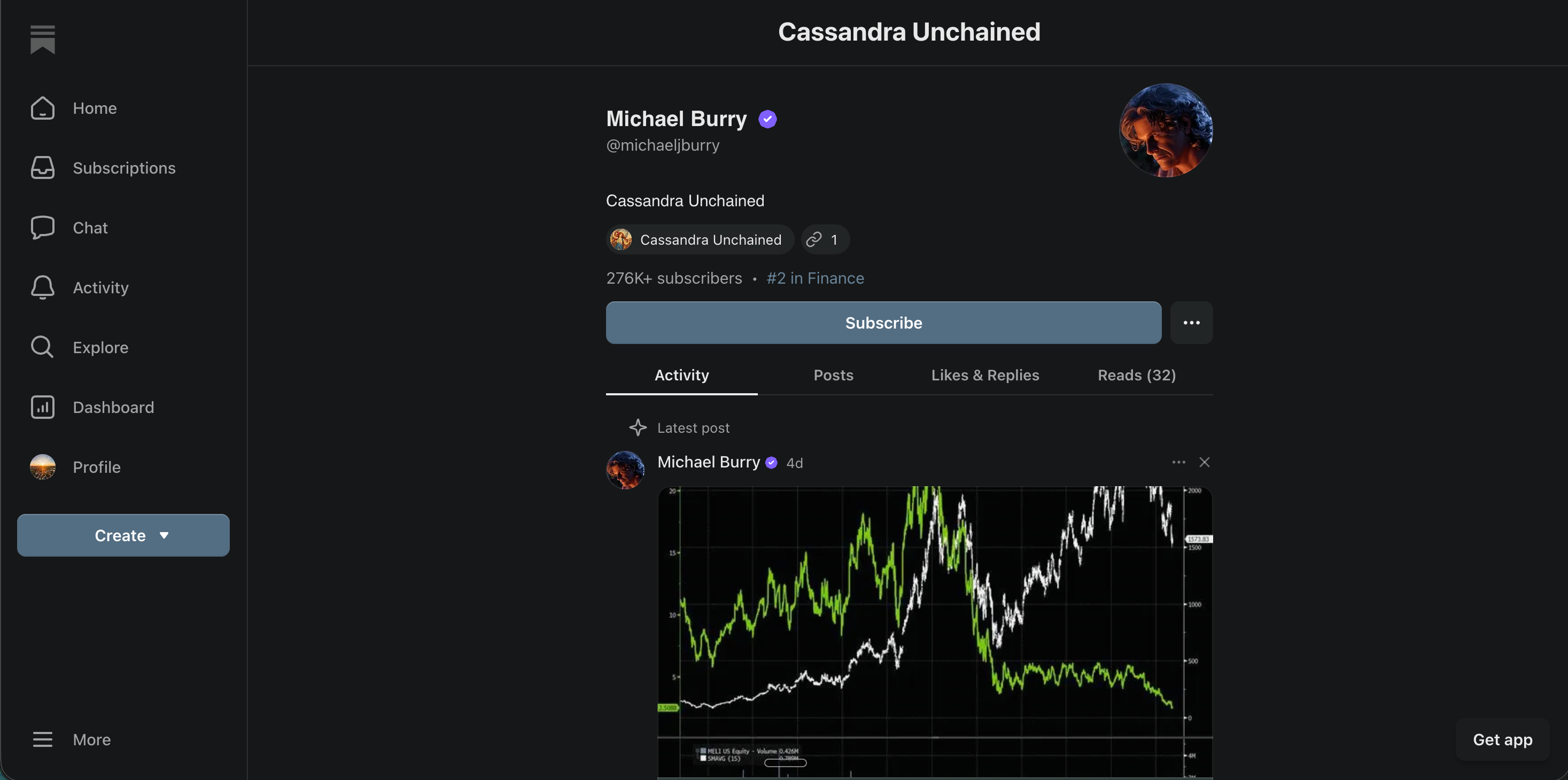
Posts
Published posts
Show the latest free newsletter posts from your Substack RSS feed with title, excerpt, date, author, and cover image where available.
Embed your posts, paid teasers and podcast episodes in 90 seconds. Pulled live from your Substack RSS feed. No code.
Built for no-code website teams























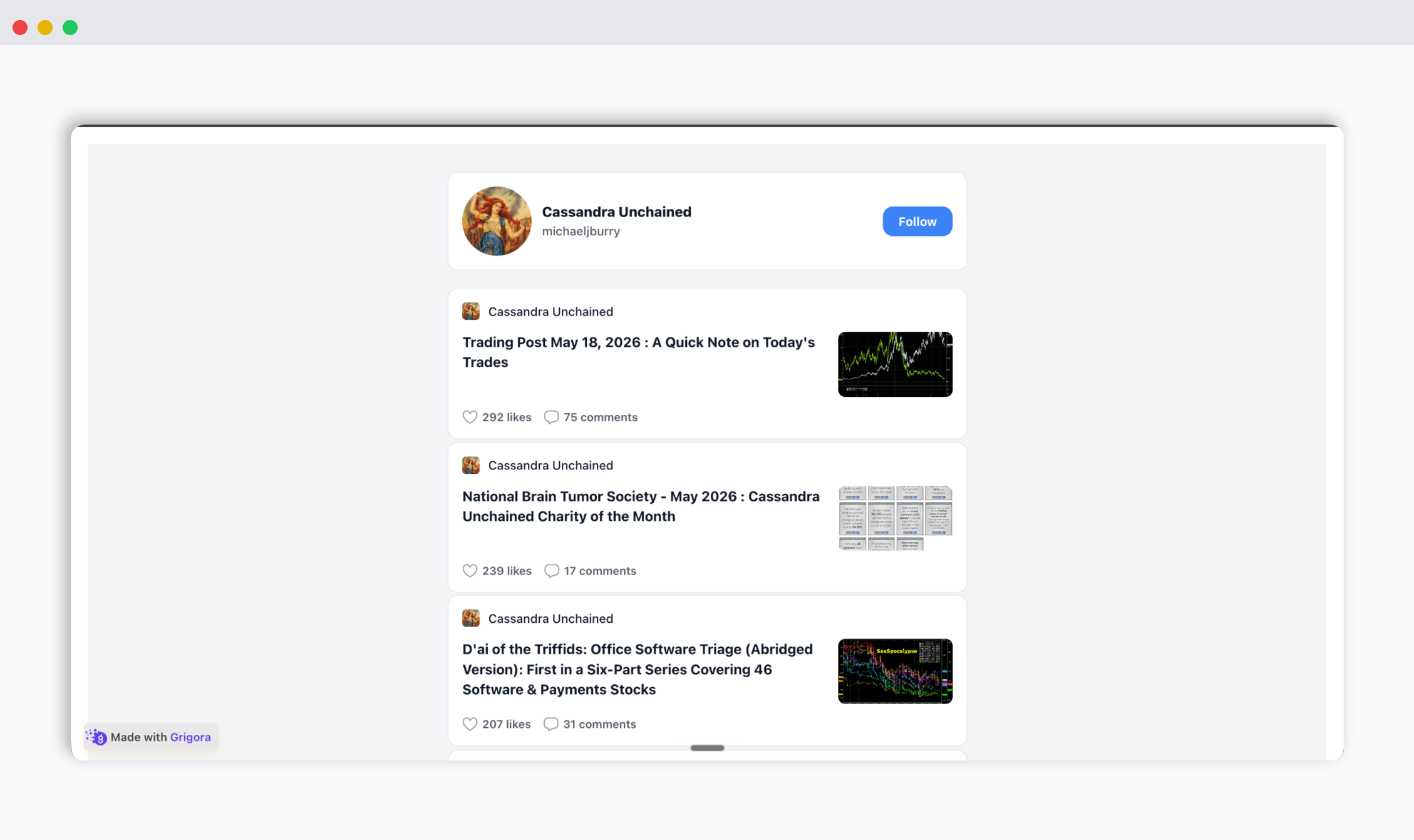
Live demo, not a screenshot. Style it, brand it, embed it. What you see here is what ships to your site.
Walkthrough
A short walkthrough: connect, customize, embed. End-to-end from blank account to live widget.
Want a deeper dive? Read the full setup guide below or jump straight into the live builder.
Substack feed
Render public posts, paid previews, and podcast episode posts from a single Substack RSS feed. Keep the Subscribe CTA on brand with a focused one-publication setup.
Show the latest free newsletter posts from your Substack RSS feed with title, excerpt, date, author, and cover image where available.
Render the public teaser for paid posts with a clear Subscribe to read more CTA that sends readers back to your Substack paid tier.
Display podcast episode posts from the RSS feed and use inline audio when the feed includes an enclosure.
Match CTA copy, color, and placement to your site so readers move from your article archive to your Substack signup flow.
One widget connects one Substack publication RSS feed. Create a separate widget if you want to show another publication elsewhere.
From Substack to your site
Poper pulls your public Substack feed and renders it inline on your website, fully branded to match your design. No API keys, no manual updates.
 Poper widget live
Mockups for illustration. Pull your real Substack feed and embed in 90 seconds.
How to use it
Three steps. Under two minutes. No developer needed.
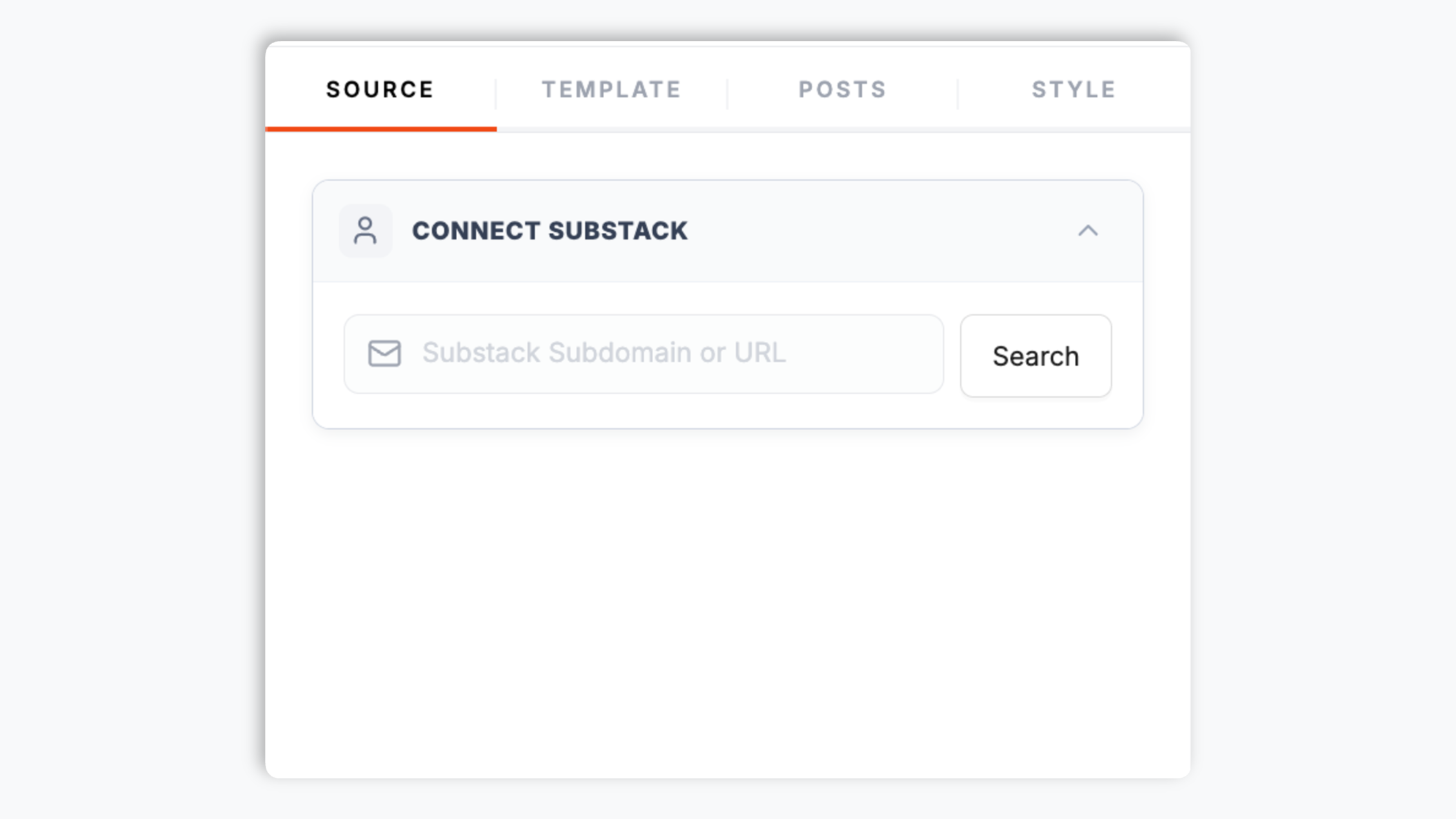
Search for your publication name in the Poper builder (Letters from Acme → acme.substack.com). The widget reads your public RSS feed at /feed and pulls posts, podcast enclosures, and paid teasers, with the source badge where available and subscriber count detected automatically.
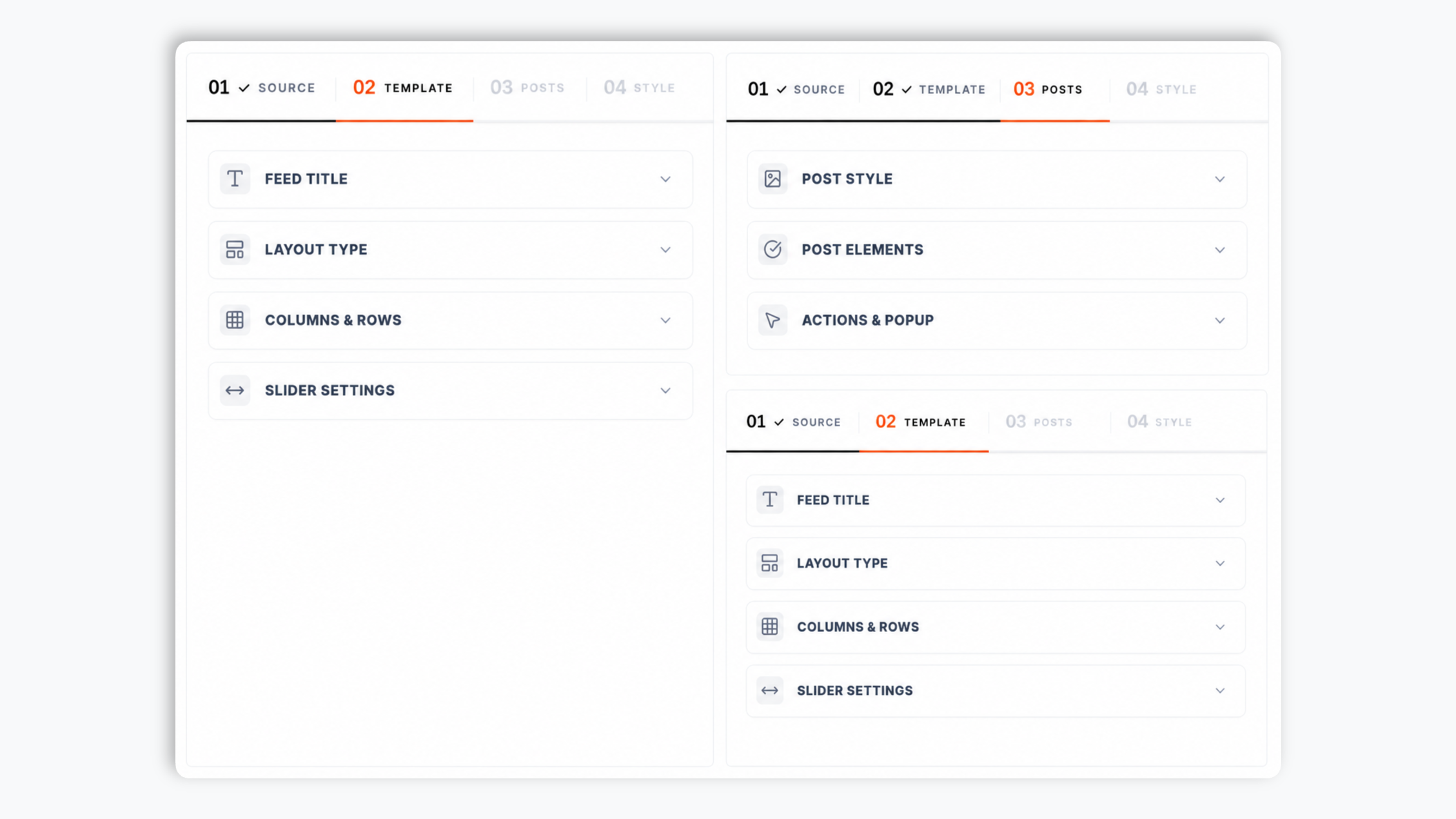
Choose from grid, slider, masonry, list, highlight, and several other layouts. Tweak colors, fonts, post-card style, and subscribe CTA copy to match your site exactly.
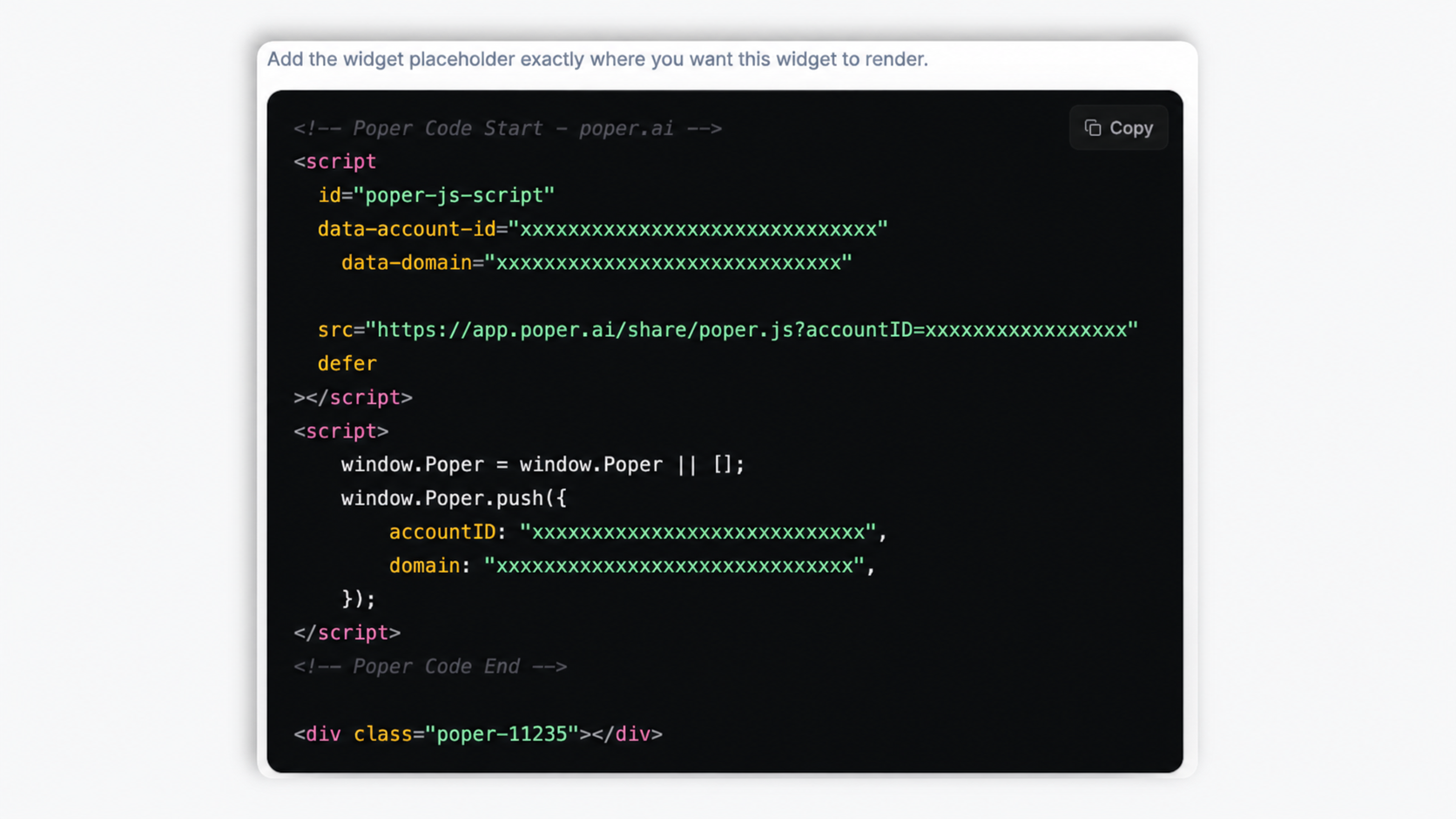
Paste the Poper embed snippet into your site. Works on Webflow, Framer, Carrd, Notion Sites, Ghost, WordPress, and 250+ platforms.
Works everywhere
Drop-in install on WordPress, Shopify, Wix, Squarespace, Webflow, Framer, Ghost, and any HTML-friendly stack. No build step, no developer needed.


Plus 250+ other platforms via the embed snippet. If your site can render a <script> tag, it can render the Substack Feed Widget: Embed Newsletters and Paid Posts on Any Site.
Six things that matter when you are paying for a Substack widget, not 30 features no one uses.
Substack does not have an official API, but every publication exposes a public RSS feed at /feed. Poper reads that feed continuously, parses posts, podcast enclosures, and paid teaser blocks, and renders them with native Substack styling on your site. No scraping, no fragile workarounds. Your RSS is the source of truth, and your widget always reflects it.
Paid Substack posts include a public preview in the RSS feed. Poper renders the preview with a clean Subscribe to read more CTA wired straight back to your Substack paid tier signup. Your paywall stays intact, your free-to-paid funnel runs from your own domain.
Connect one Substack publication RSS feed per widget so the source stays clear. Add another widget if you want a second publication on a different page or section.
Substack podcasts are RSS-native. Poper renders episodes with cover art, episode summaries, and an inline HTML5 audio player so listeners hit play without leaving your site. Perfect for podcast-newsletter hybrids.
The embed loads through the Poper snippet. Validate layout and performance on your own page after embedding.
The default Subscribe button drops readers into your Substack signup with the source attributed back. Customize button copy, color, and placement. Use a sticky footer pill, an inline subscribe form, or a per-post badge. Use your site analytics to evaluate widget performance.
Use cases
Four buyer types who get the most lift from embedding Substack Feed Widget: Embed Newsletters and Paid Posts on Any Site on their site.

Operators and engineers shipping weekly briefings on infra, latency, and software taste from Substack. Surface your insights chart, RSS feed, and latest posts on your company homepage so every visitor sees the newsletter is active.

Use your own analytics to validate this feed on your site.

Use your own analytics to validate this feed on your site.

Critics writing on cinema, books, theatre, and the public square from Substack. The widget puts your latest essays on your publication site with a Subscribe CTA wired to your paid tier, building a direct relationship with the reader.
A few widget platforms can pull a Substack feed onto a website, alongside Substack's own native embed. Here is how Poper stacks up against the common widget providers on what actually matters.
| Recommended Poper | Elfsight | Common Ninja | Substack Native Embed | |
|---|---|---|---|---|
| Poper workspace available | Limited free tier | Limited free tier | ||
| Posts feed (RSS-based) | ||||
| Paid post teaser handling | Partial | Partial | ||
| Podcast episodes with inline audio | Partial | Partial | ||
| Available design controls | ||||
| Substack-branded vs your branding | Your brand | Your brand | Your brand | Substack-branded |
| Inline subscribe CTA | Partial | Partial | Substack-only | |
| Bundled with popups, forms, quizzes |
Comparison reflects external competitor positioning. Verify current details on each provider's site.
Independent writers, founder-led newsletters, and podcast hybrids who switched from the default Substack embed to Poper.
“Poper's Substack Feed widget brought our latest newsletter posts onto our own domain without making the page feel like a Substack iframe. The paid teaser cards and Subscribe CTA now match the rest of our site.”
“I pasted my Substack URL, picked a layout, and had my public posts showing on my author site the same afternoon. New issues appear automatically, so I do not have to rebuild an archive by hand.”
“The widget handles our free posts, paid previews, and podcast episode posts cleanly. Readers can scan the feed on our site, then jump to the right Substack subscribe flow when they are ready.”
Pricing
All plans are billed yearly. Each card shows the per-month equivalent. Start free, then upgrade only when you need more campaigns, websites, or AI credits.
Yearly billing · save up to 40%Essential lead capture for solo creators and growing businesses.
billed $180/year
Full engagement suite with A/B testing, gamification & unlimited leads.
billed $348/year
Unlimited everything with white-label, API access & advanced analytics.
billed $948/year
Prices shown for the 50k monthly visitor tier on yearly billing. A Free Forever plan ($0) and a custom Enterprise plan are also available. No contracts, cancel anytime.
Use your own analytics to validate this feed on your site.
Unlike Twitter, Instagram, or LinkedIn, Substack has not shipped a public API. There is no developer portal, no OAuth flow, and no documented endpoint catalogue. What Substack does expose, by design, is a per-publication RSS feed at /feed (for example, yourname.substack.com/feed). The feed includes the post title, publish date, full HTML body for free posts, a public preview for paid posts, podcast episode enclosures with audio file URLs, cover image URLs, and author metadata. Every legitimate Substack widget on the market is built on top of this RSS feed, because it is the only stable, terms-of-service-friendly access point. Poper reads your RSS feed continuously, caches it on a global CDN edge, and re-renders it with the styling you choose. No scraping, no headless browser, no fragile workarounds. The RSS feed is your source of truth, and your widget always reflects it.
Use your own analytics to validate this feed on your site.
Use your own analytics to validate this feed on your site.
A Substack feed widget is an embeddable script that pulls posts, paid teasers, and podcast episodes from a Substack publication's public RSS feed and renders them on your website with custom branding and a Subscribe CTA wired to the paid tier.
Tutorial
A quick walkthrough of setting up and embedding this widget.
Tutorial video coming soon
Can't find the answer you're looking for? Chat with our support team.
Contact SupportPoper takes 90 seconds to embed and runs every issue through your own brand. Start from your Poper workspace.
Free plan available forever