Hashnode Feed Widget for Website. Free, GraphQL - Poper
Hashnode Feed Widget

Hashnode dev blogs on any website.

Embed your personal blog, engineering Publication, series, or tag stream in 90 seconds. GraphQL API native, custom-domain aware, code-block first. Free, no code.

No credit card required
14-day free trial
Cancel anytime

Trusted by 11,000+ brands

Timetics
Academie Digitale
Goldcast
nbcf
Seedstock
Wow
Linkxar
Gale Toyota
Skills
Rugby Sport
Lamp
Leaktronics
Steel
Theatre in Chicago
Globerto
Meetup
FYM
Zeben
Kraftix
IETraditionala
Meethires
Leadscrape
Happily
Timetics
Academie Digitale
Goldcast
nbcf
Seedstock
Wow
Linkxar
Gale Toyota
Skills
Rugby Sport
Lamp
Leaktronics
Steel
Theatre in Chicago
Globerto
Meetup
FYM
Zeben
Kraftix
IETraditionala
Meethires
Leadscrape
Happily
Free forever, paid plans from $19/mo

Try the live widget

Live demo, not a screenshot. Paste a Hashnode URL, pick a developer-friendly layout, tune the code-block theme, embed. What you see here is what ships to your site.

From Hashnode to your site

Your Hashnode reviews. Now on your own domain.

Poper crawls the official Hashnode review feed for your business and renders it inline on your website. Same reviews, your branding, your domain.

hashnode.com
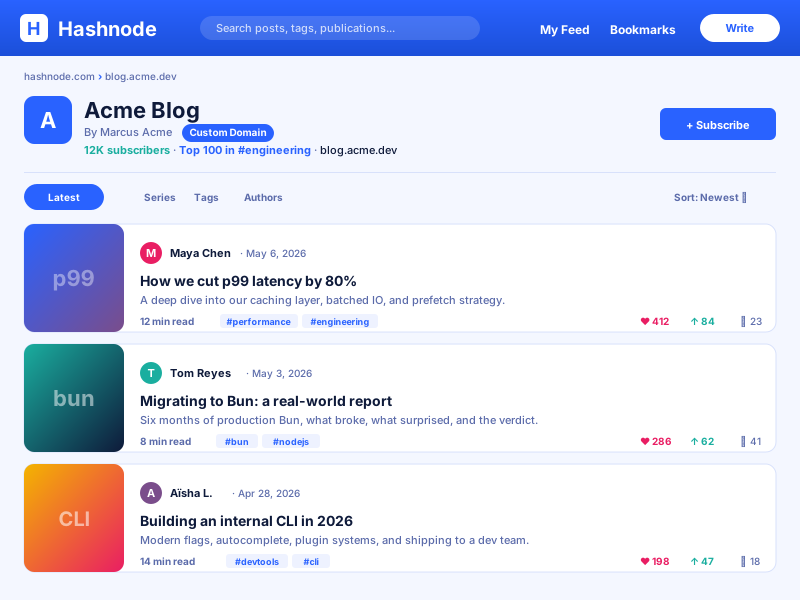
blog.acme.dev hosted on Hashnode showing Acme Blog by Marcus Acme with Custom Domain badge, 12K subscribers, Top 100 in #engineering, and three article cards by Maya, Tom, and Aïsha with reading time, tags, and reactionsSource: HashnodeOpen
blog.acme.dev hosted on Hashnode showing Acme Blog by Marcus Acme with Custom Domain badge, 12K subscribers, Top 100 in #engineering, and three article cards by Maya, Tom, and Aïsha with reading time, tags, and reactions
acme.dev
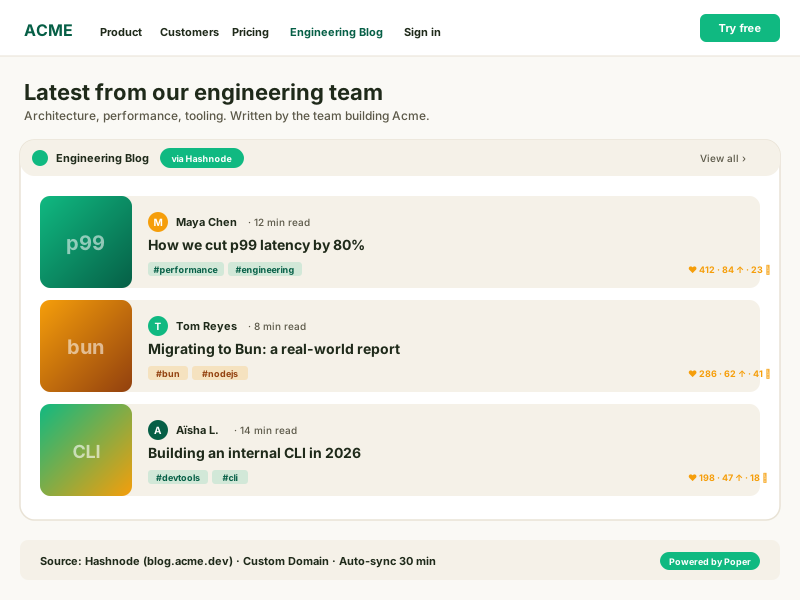
Acme corporate site at acme.dev with embedded Hashnode feed widget showing the same three engineering articles in a deep-emerald and warm-amber palette under a Latest from our engineering team headlinePoper widget live
Acme corporate site at acme.dev with embedded Hashnode feed widget showing the same three engineering articles in a deep-emerald and warm-amber palette under a Latest from our engineering team headline

Mockups for illustration. Pull your real Hashnode Feed Widget: Embed Developer Blogs and Publications on Any Site from Hashnode and embed in 90 seconds.

How to use it

How to add Hashnode to your website

Three steps. Under two minutes. No developer needed.

  1. 01

    Connect your Hashnode blog

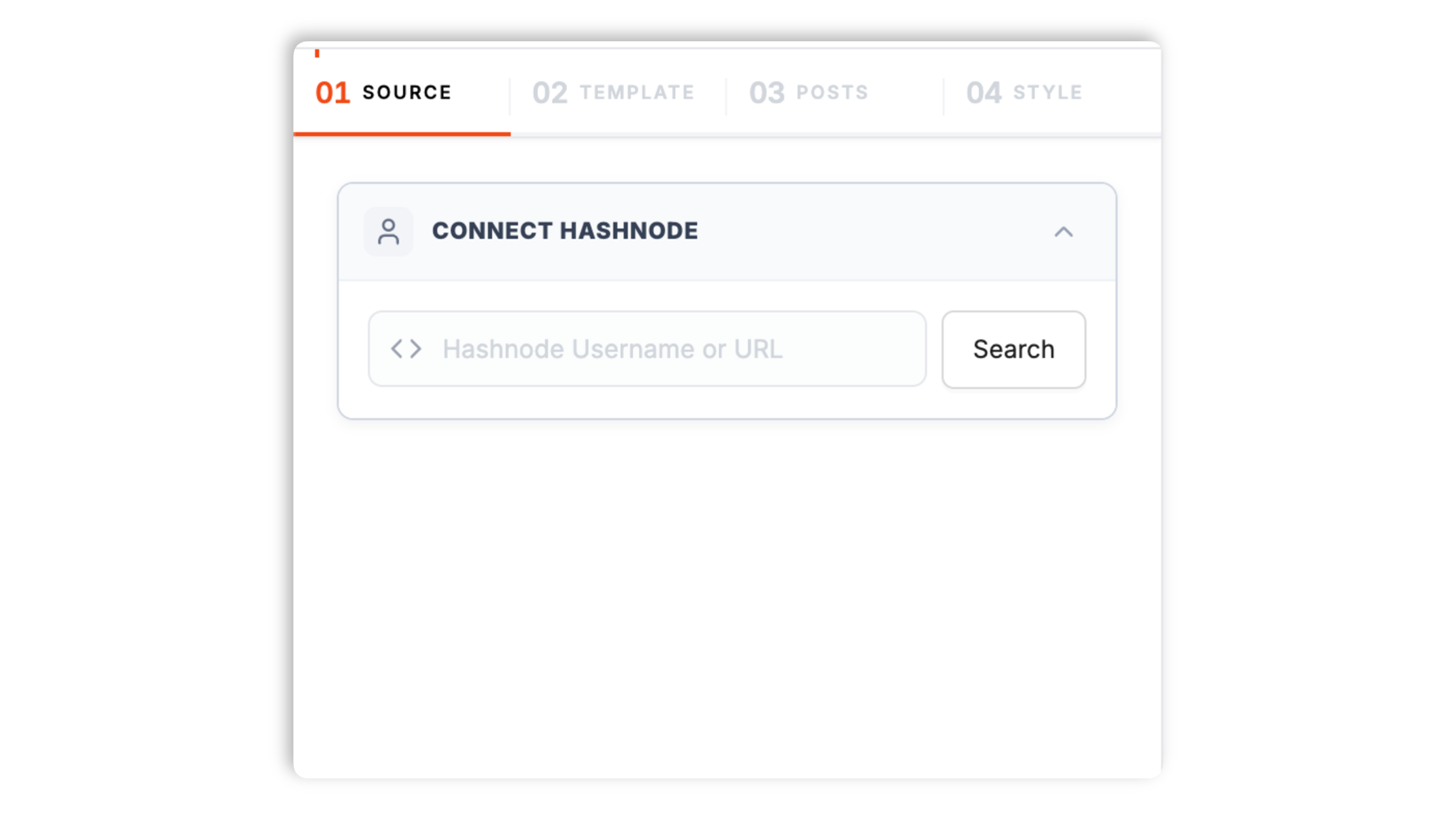
    Search Acme Blog, paste blog.acme.dev, or drop in any Hashnode Publication. Custom-domain aware. 12K-subscriber feeds load on the same Connect button.

    Poper widget builder searching Acme Blog with blog.acme.dev custom domain, 12K subscriber badge, and a Hashnode-blue Connect button querying GraphQL v2
  2. 02

    Pick a developer-friendly layout and brand it

    Choose Article List, Card Grid, Magazine, Stacked, Featured, or Series. Tune accent color, code-block theme (Dracula, Nord, GitHub), tag pills, reading-time, and author avatars to match your dev portfolio.
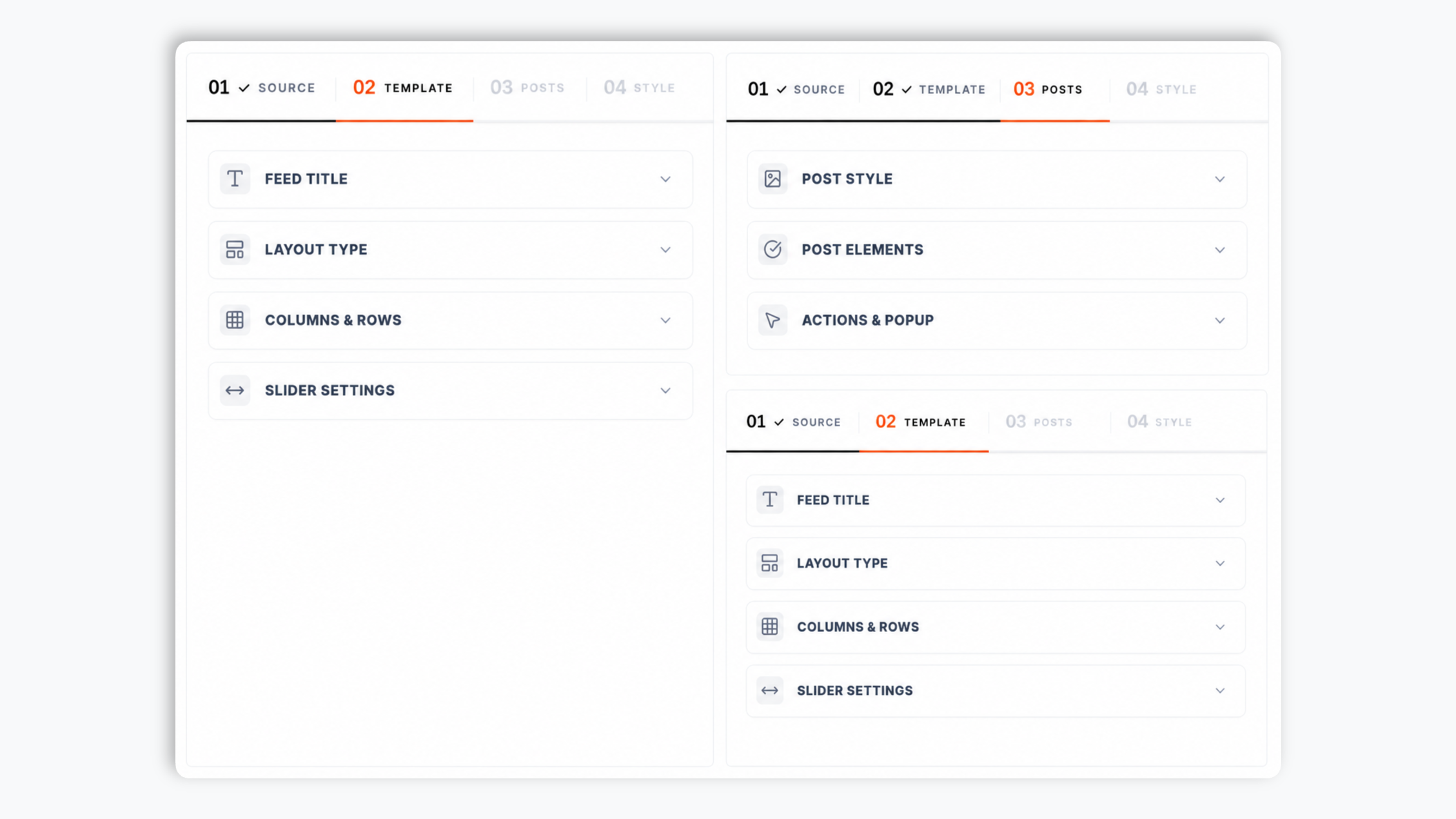
    Six Hashnode-style article-card layout thumbnails (Article List, Card Grid, Magazine, Stacked, Featured, Series) with Hashnode-blue accent and brand controls including code-theme picker and toggle pills
  3. 03

    Copy the snippet and embed

    Paste the one-line script tag into your site. Works on Webflow, Framer, Hugo, Eleventy, Next.js, Astro, Docusaurus, Mintlify, and 250+ platforms.
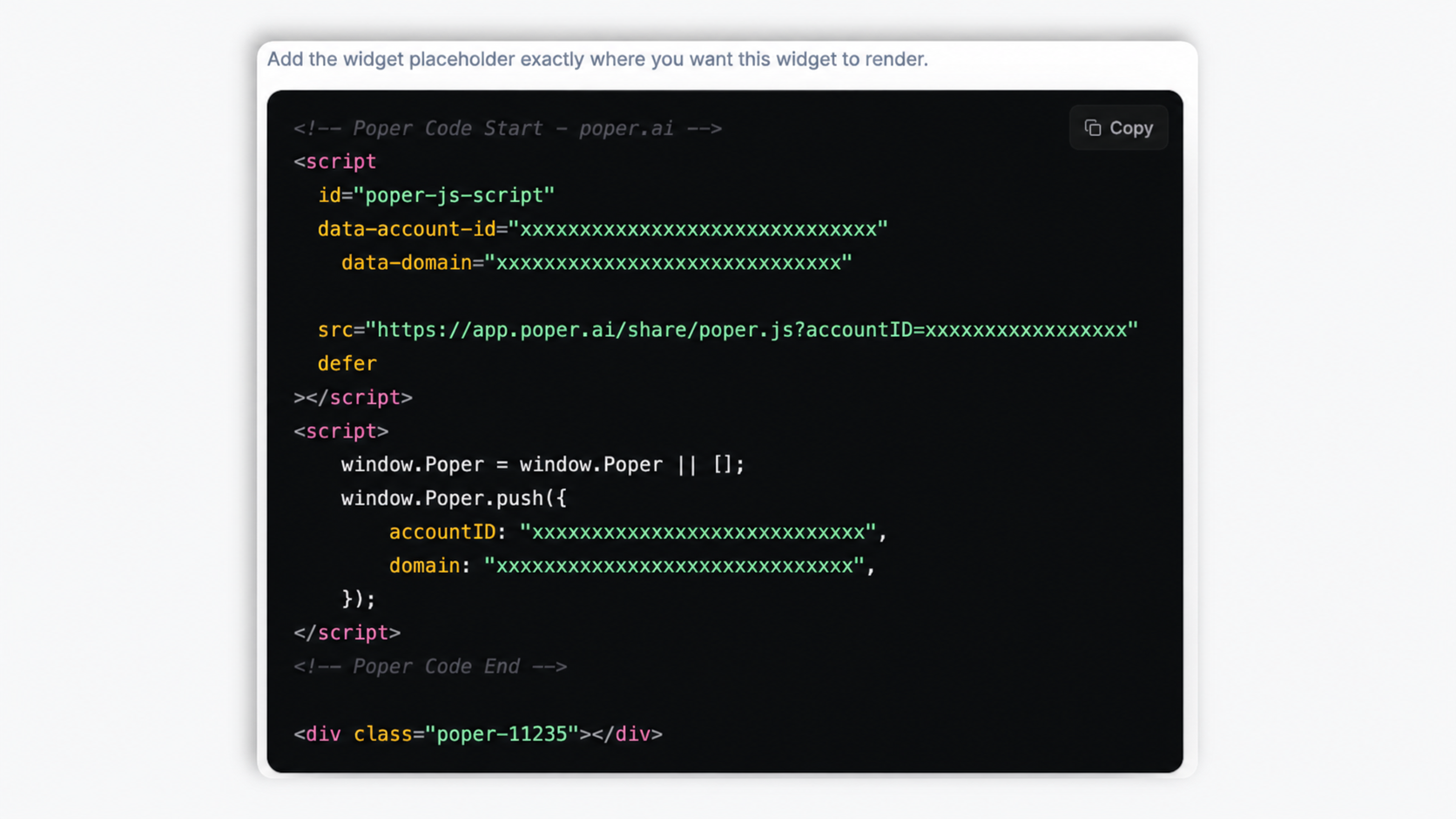
    One-line embed script tag for the Hashnode feed widget shown in a dark code editor with a Hashnode-blue Copy snippet button and Webflow, Framer, Hugo, Eleventy, Next.js platform badges

Works everywhere

Works with every website platform you already use

Drop-in install on WordPress, Shopify, Wix, Squarespace, Webflow, Framer, Ghost, and any HTML-friendly stack. No build step, no developer needed.

WordPress
Shopify
Wix
Squarespace
Webflow
Framer
Ghost
HTML

Plus 250+ other platforms via the embed snippet. If your site can render a <script> tag, it can render the Hashnode Feed Widget: Embed Developer Blogs and Publications on Any Site.

What you get with Poper Hashnode Feed

Six things that matter when you are paying for a Hashnode widget, not 30 features no one uses.

GraphQL API native, no scraping, no breakage

Hashnode ships a public GraphQL API at gql.hashnode.com (the Hashnode API v2) that returns structured posts, tags, series, reading time, cover images, and author data. Poper queries that documented API directly. When Hashnode ships a redesign or a new feature, your embed already supports it because the GraphQL contract is the source of truth, not the rendered HTML. No third-party widget that scrapes hashnode.dev rendered pages can match this.

Custom-domain dev blogs, fully resolved

Hashnode is famous for giving every developer a free custom domain. Paste blog.yourname.dev, engineering.yourcompany.com, or any custom Hashnode-mapped domain and Poper follows redirects, reads canonical metadata, and resolves the underlying Publication or personal blog automatically. Your embed reflects the exact source even when the public URL is fully white-labeled.

Code blocks rendered first-class

Hashnode posts are code-heavy. Poper preserves syntax highlighting, language badges, line numbers, and copy buttons in previews and click-throughs. Choose Dracula, Nord, GitHub, or One Dark themes to match your dev portfolio or docs site.

Personal blogs, Publications, series, tags

Embed a single developer's blog, an entire engineering Publication, a multi-part series like Building a Compiler in Rust, a tag stream like #rust or #webdev, or merge several sources into one developer feed.

Series treated as sequential reading lists

Hashnode series are first-class objects, not just tag groupings. Point the widget at a series slug and it renders posts in author-defined reading order with part numbers, total count, and progress indicators. Perfect for embedding a tutorial series as a course module.

Article Schema.org structured data per post

Each story rendered inside the widget emits Article JSON-LD with headline, author, datePublished, code language, and a canonical URL pointing back to the original Hashnode post. Search engines see your embedded articles as rich content while still crediting the original, which preserves your Hashnode SEO equity.

Use cases

Where Hashnode Feed Widget: Embed Developer Blogs and Publications on Any Site actually moves the needle

Four buyer types who get the most lift from embedding Hashnode Feed Widget: Embed Developer Blogs and Publications on Any Site on their site.

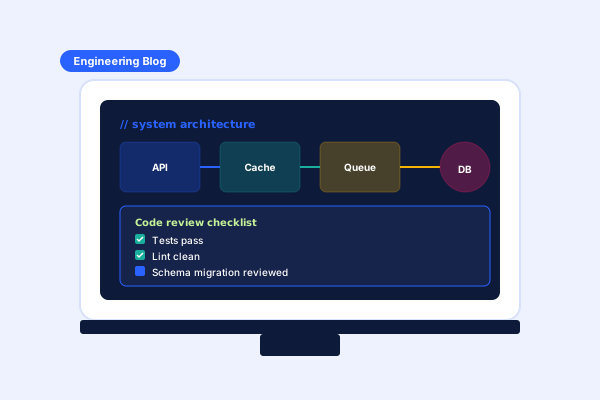
Engineering-blog scene with a laptop showing a system-architecture diagram (API, Cache, Queue, DB) and a code-review checklist where Hashnode posts feed the company tech blog

Engineering blog

Companies with a Hashnode Publication as the engineering blog mirror it onto the marketing site, careers page, and changelog page. Every contributor's post appears within the hour with the right byline, system-architecture diagrams, and code-review notes intact.

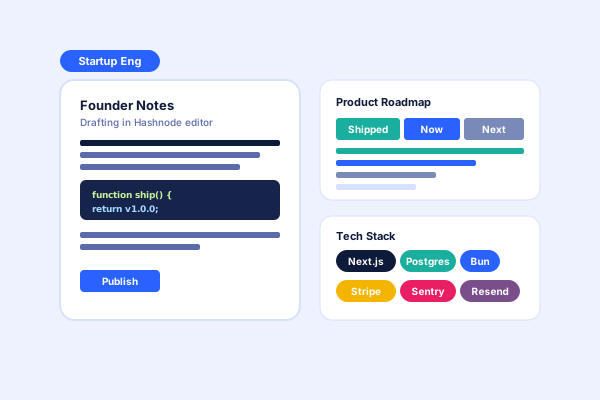
Startup engineering blog scene with founder writing in Hashnode editor next to a product roadmap (Shipped, Now, Next) and tech-stack badges (Next.js, Postgres, Bun, Stripe, Sentry, Resend)

Startup eng blog

Founders and early eng teams draft launch posts in Hashnode, then embed the latest into the marketing site, product roadmap page, and changelog. Tech-stack badges and ship notes flow from Hashnode to acme.dev within the hour.

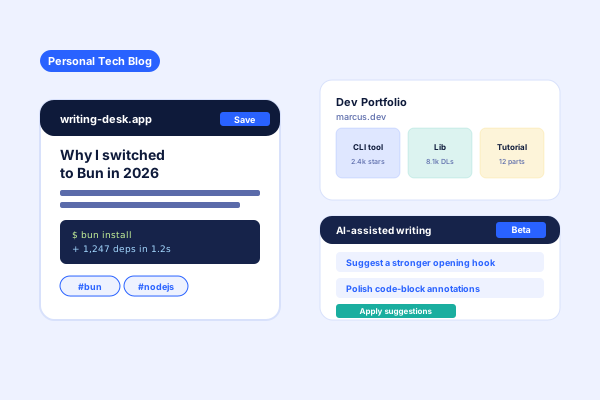
Personal tech blog scene with a writing desk drafting a Bun migration post, a dev portfolio panel showing CLI tool, library and tutorial cards, and an AI-assisted writing tab suggesting hooks and code-block annotations

Personal tech blog

Engineers and indie hackers run their personal blog on Hashnode with a free custom domain, draft with AI-assisted writing tools, then embed the latest posts on their dev portfolio so recruiters and clients see real technical writing alongside the project list.

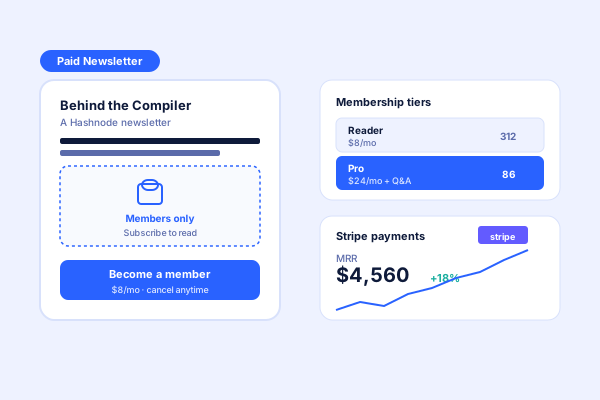
Paid newsletter scene on Hashnode with a Members-only paywall card on Behind the Compiler, two membership tiers (Reader $8, Pro $24), and a Stripe payments dashboard showing $4,560 MRR with a growth sparkline

Paid newsletter

Indie writers run a paid Hashnode newsletter with member tiers and Stripe-powered billing. Embed teaser cards on a public landing page, paywall the full read, and feed Stripe MRR straight back into the dashboard.

Poper vs other Hashnode embed options

Hashnode official RSS embed is free but minimal. Dev.to and Medium widgets cover sister platforms but not Hashnode-specific structures like Publications and series. Here is how the popular options stack up.

 Recommended
Poper
Hashnode official RSS
Dev.to widget
Medium widget
Free plan available
Embed Hashnode personal blog
RSS only
Embed Hashnode Publication
RSS only
Embed Hashnode series as reading list
Custom-domain blogs auto-resolved
GraphQL API native, no scraping
RSS-only feed
Code-block syntax highlighting in previews
Limited
Sync frequency (lowest plan)
1 hour
On RSS poll
1 hour
1 hour
Article Schema.org structured data
Pricing for unlimited posts
$19/mo (Starter)
Free
Free
Free
Bundled with popups, forms, quizzes

Comparison reflects publicly listed pricing and features as of 2026. Verify current details on each provider's site.

Real teams. Real outcomes.

Developers, engineering teams, and SaaS companies who put their Hashnode writing where their audience already lives.

Poper has improved our website's user engagement! Since integrating Poper's personalized popups, we've seen a dramatic surge in conversions and user interactions. The platform's intuitive design makes creating and customizing popups a breeze, even for those with minimal tech skills. What truly sets Poper apart are its…
Jayson Ang
Jayson Ang
Singapore Property Swapper · Singapore Property Swapper
Fantastic app and support team, they are very quick to help and provide a solution or improvement to their product. Highly recommended!
Alex
Alex
CEO · AH
Poper has been a total lifesaver for our agency! As a digital marketing agency, we’re always juggling a million things at once. Poper has been a real game-changer in terms of streamlining our workflow and keeping track of all our clients’ campaigns. The ability to track all our clients’ websites from one place is a…
Idris Basir
Idris Basir
-

Pricing

Simple pricing. Free plan covers most websites.

Free forever for one widget. Upgrade only when you need faster sync, multiple instances, or to drop the watermark.

Free

Everything you need to ship the widget today.

$0forever
  • 1 widget instance
  • All layouts & customization
  • Brand-match styling
  • 6-hour sync cadence
  • Poper watermark
Start free
Most popular

Pro

Remove the watermark, faster sync, more widget instances.

$19/mo
  • Unlimited widget instances
  • 30-minute sync cadence
  • No Poper watermark
  • Custom CSS
  • Priority email support
  • Shoppable tagging
Start 14-day trial

Business

Multi-site, multi-account, white-label.

$49/mo
  • Multi-account combined feeds
  • Real-time sync
  • White-label embed
  • API access
  • Dedicated success manager
  • Custom SLA
Start 14-day trial

All plans include unlimited page views, no contracts, cancel anytime. Annual billing saves 20%.

Guide · 7 min read

The complete guide to embedding Hashnode on your website

Hashnode has quietly become the default home for serious developer writing on the modern web. Founded in 2017, the platform deliberately built around developers first: free custom domains for every blog, a documented GraphQL API for reading and writing content, first-class code blocks with syntax highlighting, Publications for engineering teams, and Sponsors for indie monetization that does not require a paywall. If you write on Hashnode, or your engineering team runs a Hashnode Publication as the company engineering blog, the missing piece is usually a way to feature that writing on your own site without wiring up the Hashnode GraphQL API yourself. A hashnode feed widget closes that gap. This guide walks through what actually matters when you choose and configure a hashnode feed widget in 2026: the GraphQL API access model, custom-domain blogs, multi-author Publications, series and tag structures, indie-hacker monetization through Sponsors, and how Hashnode compares to Dev.to, Medium, and Substack for developer audiences.

01

Why every serious Hashnode widget runs on the GraphQL API, not RSS

Hashnode ships a public GraphQL API at gql.hashnode.com, called the Hashnode API v2, and it is the documented, supported, recommended way to read Hashnode content programmatically. The API returns posts, drafts, Publications, series, tags, reading time, cover images, code-block metadata, author profiles, and Sponsors data as fully structured GraphQL responses. RSS feeds also exist for personal blogs and Publications, but they expose a smaller subset of metadata: no series structure, no tag stream filtering, no co-author lists, no reading-time annotations, and no Sponsors information. A widget that runs on RSS can show recent posts but cannot render a series in author-defined reading order, cannot filter a Publication by tag, and cannot surface Hashnode-specific UI like contributor avatars on a multi-author engineering blog. Poper queries the GraphQL API directly. When Hashnode ships a new feature like a Newsletter integration or a content-type extension, the GraphQL schema gets a new field and Poper picks it up on the next deploy. Widget tools that rely on scraping the rendered hashnode.dev HTML are simultaneously slower, more brittle, and missing structured data that the official API hands out for free. The trade-off: GraphQL queries require a small amount of computation per request, so widgets need a CDN edge cache to avoid thundering herd against gql.hashnode.com. Poper caches every query at the edge with an hourly TTL on Free and a 5-minute TTL on Pro, so visitors hit our CDN, not Hashnode's API.

02

Custom-domain blogs and the indie-hacker free tier that built Hashnode

Hashnode's defining feature, and the reason most developers pick it over Medium or Dev.to, is the free custom domain on every blog. Sign up, paste your custom domain like blog.yourname.dev or thoughts.indiehacker.io, point a CNAME record at hashnode-managed infrastructure, and Hashnode handles SSL provisioning, CDN, and host headers automatically. Your blog runs on a domain you own, but the writing tool, comments, drafts, and analytics all live inside Hashnode. There is no fee for the custom domain, no tier gate, no SSL upcharge. This pricing posture is unique among major blogging platforms in 2026: Medium for Publishers requires a paid plan, Substack pushes you to substack.com URLs unless you upgrade, and Ghost is self-hosted unless you pay Ghost(Pro). Hashnode gives custom domains away because the platform monetizes through Sponsors and through hosting Publications for engineering teams that pay for advanced features. The complication for widget tools: when a developer pastes blog.yourname.dev into a widget builder, the tool has to resolve that custom domain back to the underlying Hashnode personal blog identifier before it can query GraphQL. Most third-party widgets do not handle this and either reject the URL or pull no data. Poper resolves custom-domain Hashnode blogs by following redirects, reading the canonical link tag in the blog homepage HTML, querying the publication-by-host GraphQL field, and embedding the correct feed. Paste a custom domain, Poper finds the underlying Hashnode handle, and your embed works regardless of whether the public URL says hashnode.dev or your own domain.

03

Publications, series, and the Hashnode-specific structures that matter for engineering teams

A Hashnode Publication is a multi-author blog with branded chrome, custom navigation, contributor lists, role-based permissions, and its own custom domain or hashnode.dev subdomain. Engineering teams use Publications as the company engineering blog: every engineer has a contributor account, every post has a real author byline, and the Publication itself has a brand identity separate from the writer profiles. Companies like ByteByteGo, Showwcase, and several mid-stage SaaS engineering teams run their public engineering writing on Hashnode Publications specifically because the platform handles multi-author logistics natively. A widget tool that only knows how to embed a single-user blog cannot represent this correctly. Poper queries the Publication GraphQL type, surfaces all contributors with avatars, renders the Publication brand in the embed header, and respects role-based permission cues like draft visibility. Series are another Hashnode-native concept: an author groups a multi-part tutorial into a series with author-defined reading order, and Hashnode renders the series with part numbers and progress UI on hashnode.dev itself. A series is the right unit to embed when you want to feature a tutorial as a course module on a learning platform, since it preserves reading order, total count, and current-position context. Tags work as filters on top: every post can carry tags like #rust, #webdev, #ai, or any custom tag, and the GraphQL API exposes tag-filtered post lists per Publication or per author. Build a topical landing page that surfaces only #rust posts from your engineering Publication, embed it as a course module that reads exactly one series, or merge a contributor's personal blog with the company Publication into one chronological feed for an SDR portfolio site. All of these patterns are first-class against the Hashnode GraphQL API and impossible against generic RSS.

04

Sponsors, indie monetization, and why Hashnode embedding does not cannibalize revenue

Hashnode monetizes writers through a feature called Sponsors, where readers can sponsor a writer monthly through the writer's Hashnode profile. Sponsors is fundamentally different from the Medium Partner Program in two important ways. First, Sponsors runs on direct reader payments to the writer, not on platform-mediated reading time, so the platform does not pay writers based on where reads happen. A read inside a third-party embed and a read on hashnode.dev count the same to the writer, which is to say neither earns money directly until a reader chooses to sponsor. Second, Sponsors does not gate any content. There is no member-only post type on Hashnode, no paywall, no half-rendered teaser to handle. Every post on Hashnode is free to read forever. This makes embedding Hashnode dramatically simpler than embedding Medium or Substack, where paywalled content forces widget tools to make awkward decisions about teaser-rendering and revenue cannibalization. With Hashnode, the widget renders public posts in full, the reader can click through to the original on Hashnode if they want to comment or sponsor, and the writer's Sponsors revenue is unaffected by where the read happened. Indie hackers and developer creators who picked Hashnode specifically for the no-paywall posture get a clean embedding model out of the box. The widget can also surface the writer's Sponsors button or link to the Hashnode profile on each card, which converts your embed into a discovery-and-sponsor funnel rather than just a content surface. This is one of the few cases where embedding a writer's content on your site can actually grow the writer's monetization rather than dilute it.

05

Hashnode vs Dev.to vs Medium vs Substack for developer writing in 2026

Most developer writers eventually have to pick a platform, so a quick honest comparison: Hashnode is the right pick for developers who want a personal brand on their own custom domain with no monetization paywall, structured GraphQL access for embedding, and Publications for team engineering blogs. The free tier is generous, the writing experience is technical-content-first with great code blocks, and the platform genuinely cares about developers as a primary audience. Dev.to is the right pick for developers who care more about reach and community than personal branding: posts are syndicated to a single dev.to URL, every post lives on a community feed, and reach can be huge but you do not own the URL. Medium is the right pick for thought leaders writing essays for a general audience, but the post-2023 reach decline and Partner Program churn make it a worse choice for technical writing in 2026 than it was five years ago. Substack is the right pick for writers monetizing through paid email subscriptions, especially long-form essays sent to an inbox, but it is not optimized for technical content with heavy code blocks. Most working developer writers in 2026 split: Hashnode for personal technical blog with a custom domain, Substack for a paid newsletter with subscribers, GitHub for code, LinkedIn for distribution. A hashnode feed widget on your portfolio site is the right surface to feature the technical writing in that split, because the audience visiting your portfolio is generally the technical buyer audience that converts on technical credibility. If you eventually decide to migrate from Hashnode to a self-hosted Ghost or to a Dev.to-only posture, the same Poper feed widget configuration works against any of those platforms by changing one URL, which keeps platform-migration cost close to zero. This is the boring but correct posture for any developer who takes their writing platform seriously.

Quick reference

What is Hashnode Feed Widget: Embed Developer Blogs and Publications on Any Site?

A Hashnode feed widget is an embeddable script that pulls posts from a Hashnode personal blog, Publication, series, or tag stream onto a third-party website using the documented Hashnode GraphQL API v2 at gql.hashnode.com.

Key facts

  • Hashnode was founded in 2017 and is positioned as the developer-first blogging platform on the open web, in deliberate contrast to Medium and Substack.
  • Hashnode ships a public, documented GraphQL API (the Hashnode API v2) at gql.hashnode.com that returns posts, Publications, series, tags, reading time, cover images, and author profiles as structured data.
  • Every Hashnode blog gets a free custom domain, with managed SSL, CDN, and host headers handled automatically. There is no upcharge or paid plan required to use a custom domain.
  • Hashnode Publications are multi-author blogs with branded chrome, contributor permissions, and their own custom domain. They are commonly used by SaaS engineering teams as the company engineering blog.
  • Hashnode monetizes writers through Sponsors, a direct reader-to-writer monthly support model. Posts are never paywalled, so embedding does not cannibalize Sponsors revenue and renders cleanly in widgets.
  • Hashnode series are author-curated multi-part tutorials with explicit reading order. Series are first-class GraphQL objects, not just tag groupings, which is why widget tools that handle series correctly can embed a tutorial as a course module.

Frequently asked questions

Can't find the answer you're looking for? Chat with our support team.

Contact Support

Stop sending visitors away to read your developer writing

Poper takes 90 seconds to embed and runs on the Hashnode GraphQL API so your code blocks render perfectly. Free plan, no credit card.

Free plan available forever