
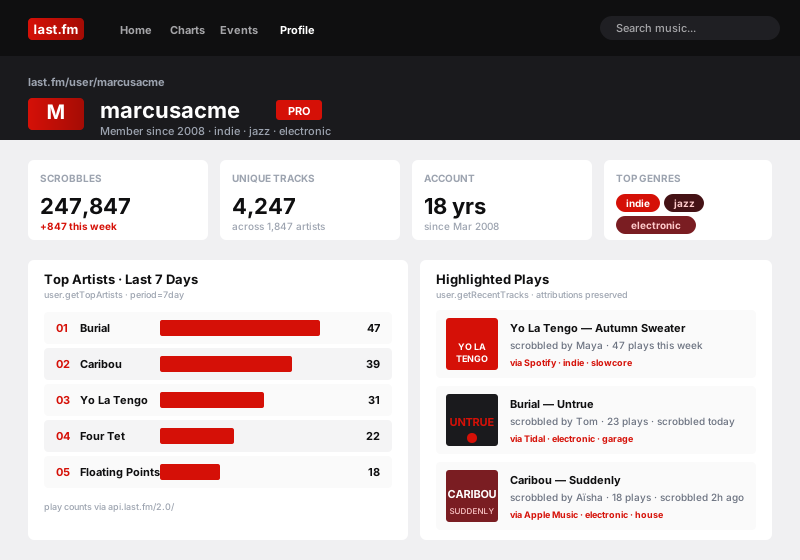
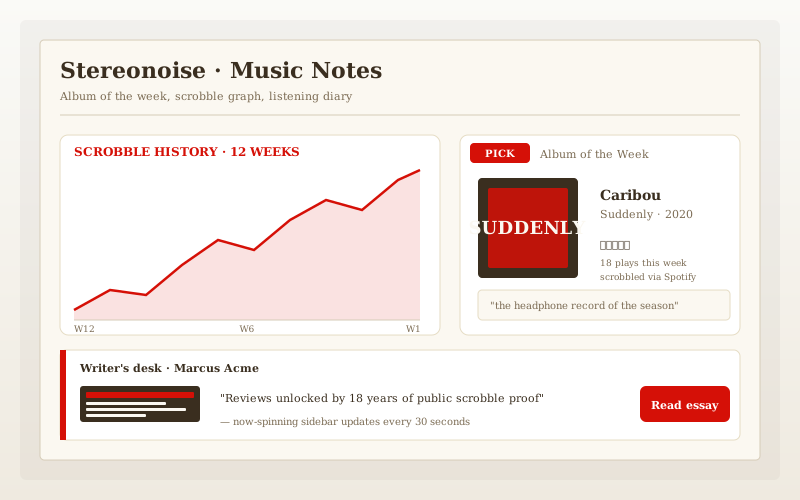
Music blog
Pair an artist profile or album review with that artist's Last.fm top tracks. Readers can scan the songs fans actually return to without leaving your site.
Embed an artist's Last.fm top tracks in 90 seconds. Powered by the public Last.fm API. No-code.
Built for no-code website teams























Live demo, not a screenshot. Type a Last.fm artist name or URL, pick a layout and preview the embed exactly as it ships to your site.
From Last.fm to your site
Poper pulls your public Last.fm feed and renders it inline on your website, fully branded to match your design. No API keys, no manual updates.
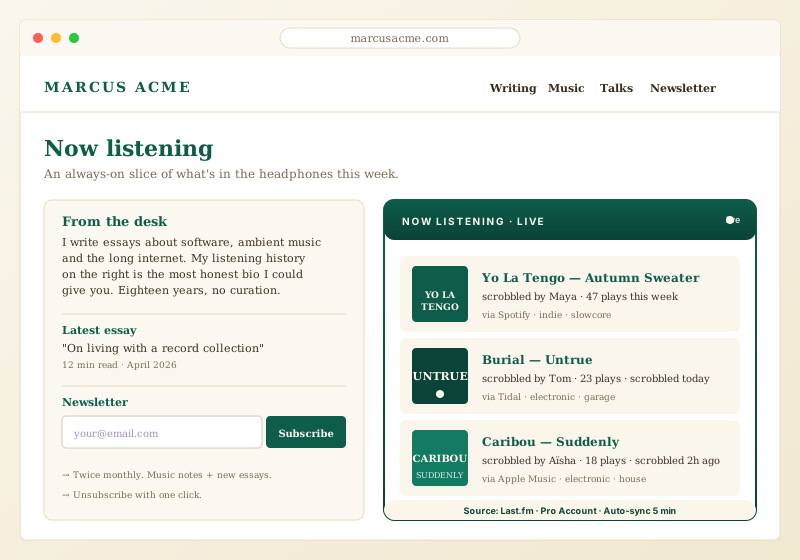 Poper widget live
Mockups for illustration. Pull your real Last.fm feed and embed in 90 seconds.
How to use it
Three steps. Under two minutes. No developer needed.
Drop in a public Last.fm artist name or URL. The widget pulls that artist's top tracks from Last.fm. No OAuth, no password, no Last.fm Pro subscription required.
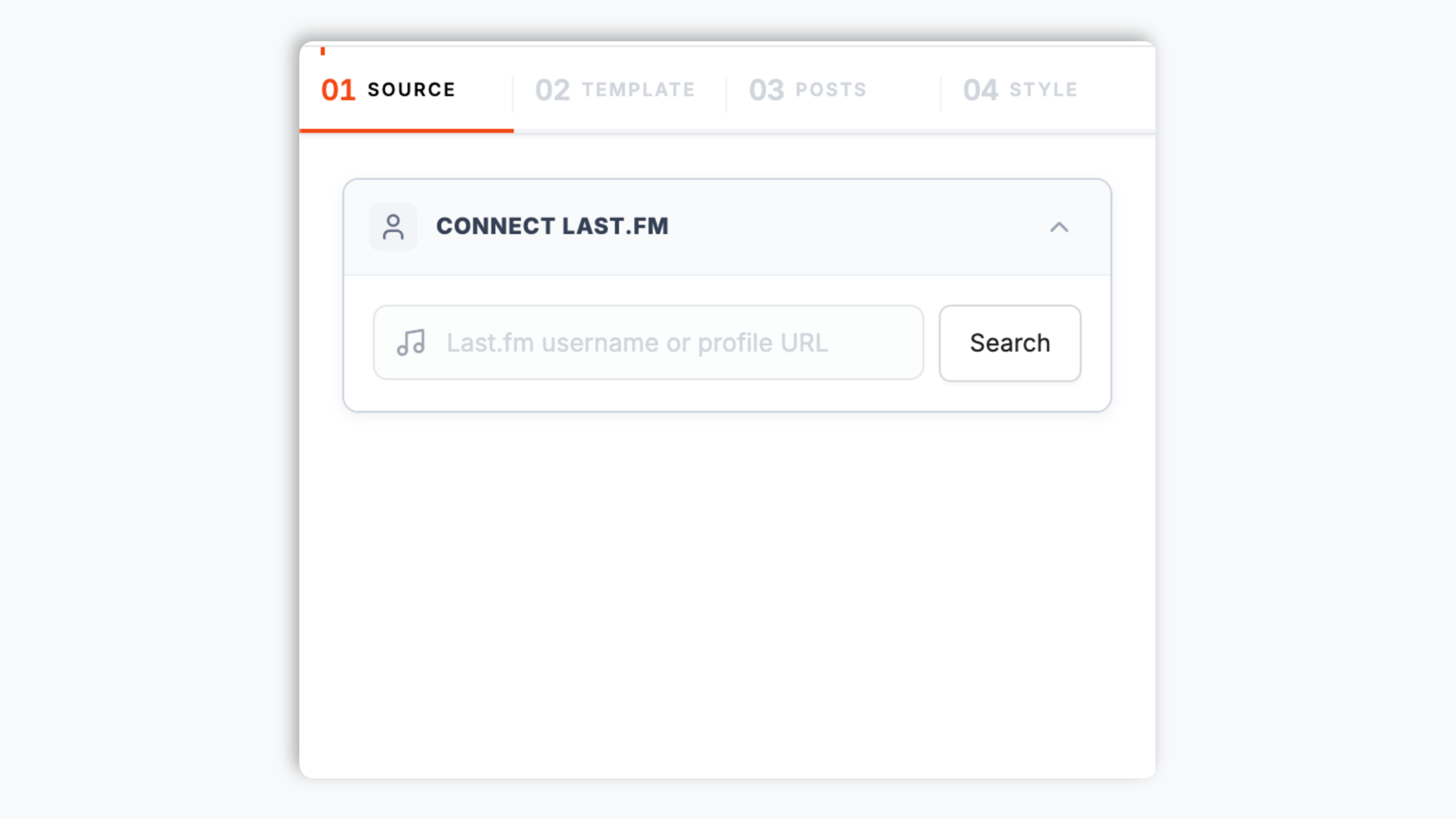
Poper renders supported Last.fm artist top-track content using Default, List, and Grid layouts.
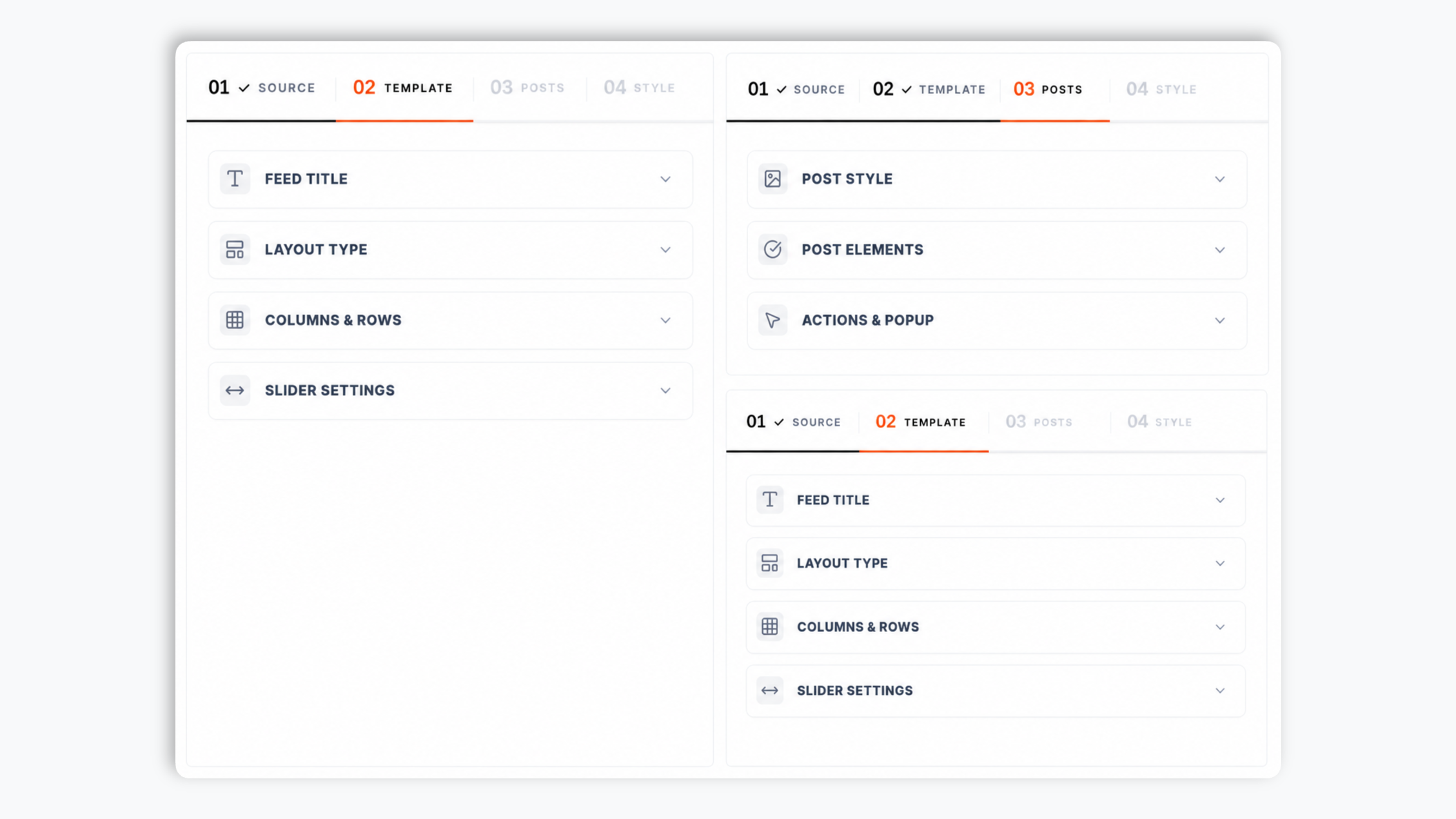
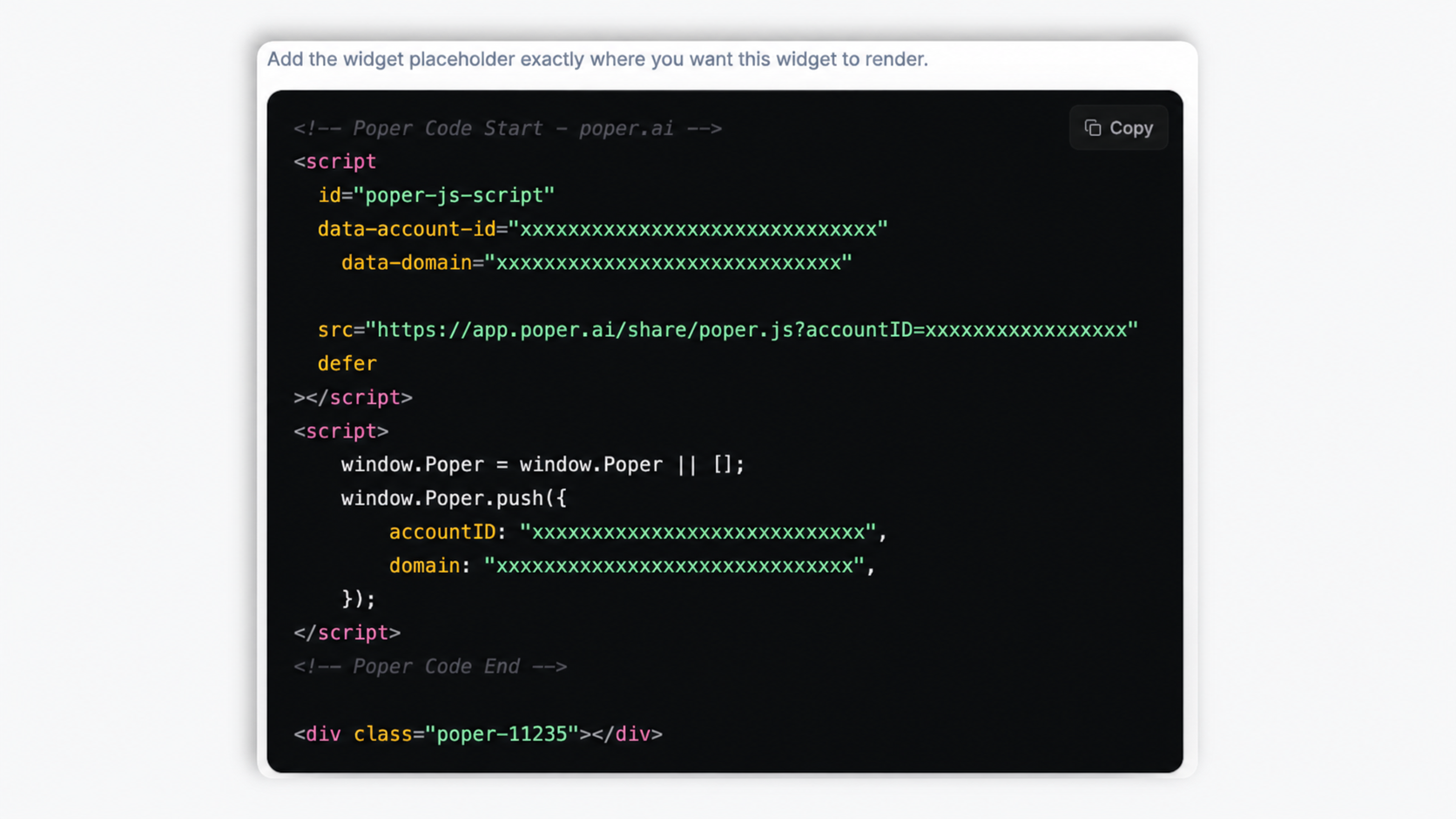
Paste the one-line script tag into any page. Works on WordPress, Shopify, Wix, Squarespace, Webflow, Ghost, Framer and 250+ platforms.
Works everywhere
Drop-in install on WordPress, Shopify, Wix, Squarespace, Webflow, Framer, Ghost, and any HTML-friendly stack. No build step, no developer needed.


Plus 250+ other platforms via the embed snippet. If your site can render a <script> tag, it can render the Last.fm top-track feed.
Seven things that matter when you are paying for a Last.fm widget, not 30 features no one uses.
Poper renders supported Last.fm artist top-track content using Default, List, and Grid layouts.
The widget is built for one job: embed a Last.fm artist's top tracks on your own site. It does not render other account or chart views, so the feed stays focused and predictable.
Poper renders supported Last.fm artist top-track content using Default, List, and Grid layouts.
Use the styling controls available for this feed layout.
The embed loads through the Poper snippet. Validate layout and performance on your own page after embedding.
The official Last.fm badge is a static image, which search engines cannot read. Poper renders artist and track names as real HTML inside your page, so the top tracks are crawlable text rather than baked into a picture.
Refresh cadence follows your Poper plan: Free every 15 days, Starter every 3 days, and Pro/Business every 1 day.
Use cases
Four buyer types who get the most lift from embedding Last.fm top-track feed on their site.
Pair an artist profile or album review with that artist's Last.fm top tracks. Readers can scan the songs fans actually return to without leaving your site.
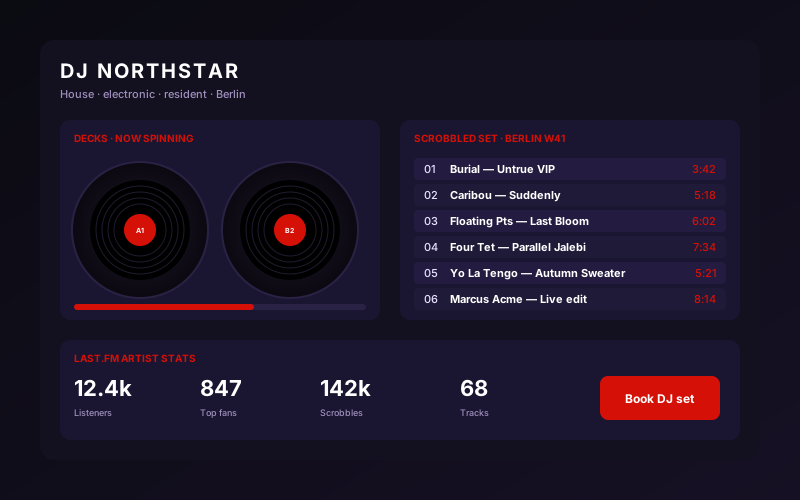
Show the top tracks for a featured artist, label roster pick or influence page beside your set notes. Promoters and listeners get a clear entry point into the catalog.
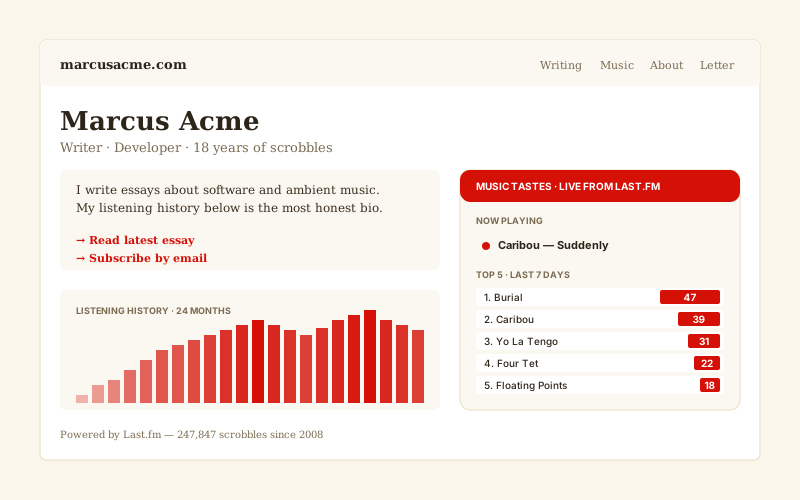
Writers, developers and lifelong listeners can feature a favorite artist's top tracks on a personal site. It turns a recommendation into a browsable music block.
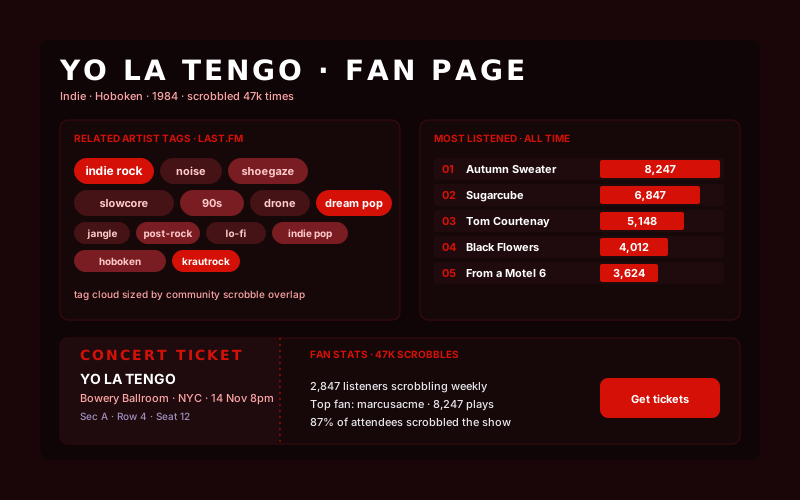
Build the definitive Yo La Tengo (or any band) fan page with a Last.fm top tracks block and your own context around albums, shows and recommendations. Fans recognize the data signal instantly.
Last.fm top-track feed
| Recommended Poper | Elfsight | Common Ninja | Last.fm official badge | |
|---|---|---|---|---|
| Poper workspace available | Limited | Limited | ||
| Last.fm top-track feed | Limited | Limited | Static image | |
| Custom theming past default frame | Paid only | Paid only | ||
| Layout options | Default, Grid, List | Limited | Limited | |
| Sync frequency | Refresh cadence follows your Poper plan: Free every 15 days, Starter every 3 days, and Pro/Business every 1 day. | Vendor timing varies | Vendor timing varies | Static |
| Pricing for unlimited embeds | Plan details vary | Vendor pricing varies | Vendor pricing varies | Free |
| Bundled with popups, forms, quizzes |
Comparison reflects external competitor positioning. Last.fm's official widget is a free static badge image generated by the Last.fm extra-stats endpoint. Verify current details on each provider's site.
Last.fm top-track feed
“I use Last.fm data throughout artist explainers, but screenshots always looked cheap. Poper lets me drop an artist's top tracks into the page as real text, then style the block so it feels like part of the review.”

“I write album reviews and wanted a cleaner way to point readers to an artist's essential songs. The Grid layout gives each review a useful Last.fm top tracks block without sending people away from the page immediately.”

“For each episode page we feature the artist we are discussing and add their Last.fm top tracks underneath. The List layout is compact enough for show notes, and we do not have to rebuild the block by hand.”

Pricing
All plans are billed yearly. Each card shows the per-month equivalent. Start free, then upgrade only when you need more campaigns, websites, or AI credits.
Yearly billing · save up to 40%Essential lead capture for solo creators and growing businesses.
billed $180/year
Full engagement suite with A/B testing, gamification & unlimited leads.
billed $348/year
Unlimited everything with white-label, API access & advanced analytics.
billed $948/year
Prices shown for the 50k monthly visitor tier on yearly billing. A Free Forever plan ($0) and a custom Enterprise plan are also available. No contracts, cancel anytime.
Refresh cadence follows your Poper plan: Free every 15 days, Starter every 3 days, and Pro/Business every 1 day.
Poper renders supported Last.fm artist top-track content using Default, List, and Grid layouts.
Last.fm was acquired by CBS Interactive in 2007 for around 280 million dollars, and CBS Interactive's parent merged into what is now Paramount Global, so Last.fm is currently a Paramount property. The radio-streaming side of Last.fm was shut down in 2014, and the service today exists primarily as a music stats and recommendation service. Last.fm Pro is not required for this widget. Poper manages the API key on your behalf and fetches public artist top-track data through its own refresh path, so you do not need to register a Last.fm developer application.
The Last.fm feed widget has three layouts. Default gives you a native-style artist top-tracks block. Grid works when album art or track cards need to sit in a visual section. List is the compact option for sidebars, footers and editorial pages where the track names matter more than a large visual treatment. All three layouts share the same source: one Last.fm artist's top tracks.
Add page-level structured data separately when it matches your page content. The feed widget focuses on rendering the selected public feed.
Poper renders supported Last.fm artist top-track content using Default, List, and Grid layouts.
Refresh cadence follows your Poper plan: Free every 15 days, Starter every 3 days, and Pro/Business every 1 day.
Tutorial
A quick walkthrough of setting up and embedding this widget.
Tutorial video coming soon
Can't find the answer you're looking for? Chat with our support team.
Contact SupportLast.fm top-track feed
Free plan available forever