
DJs and mix archives
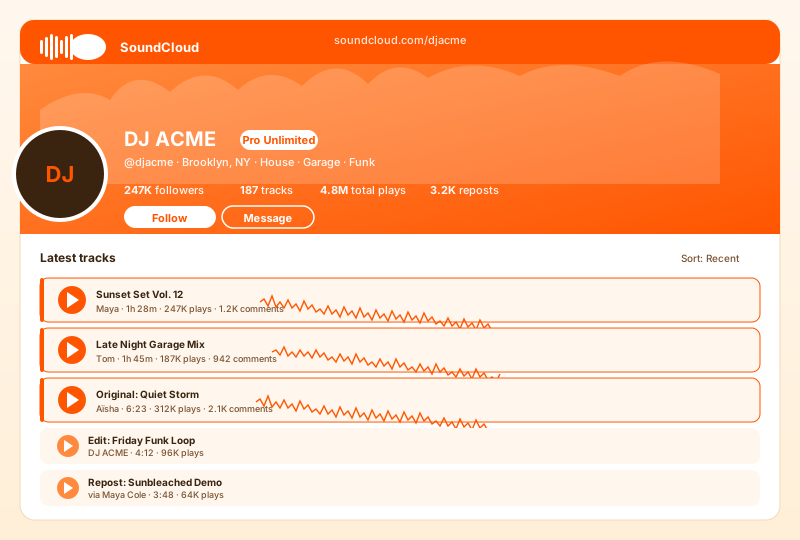
Upload mixes to SoundCloud, embed your profile feed on your booking page, and let promoters preview every recent set inline. Hour-long mixes stream from SoundCloud's CDN without you paying audio hosting bills.
Embed your SoundCloud profile feed in 90 seconds. Auto-syncs new uploads, newest-first. Orange waveform included. No code.
Built for no-code website teams























Live demo, not a screenshot. Style it, brand it, embed it. What you see here is what ships to your site.
From SoundCloud to your site
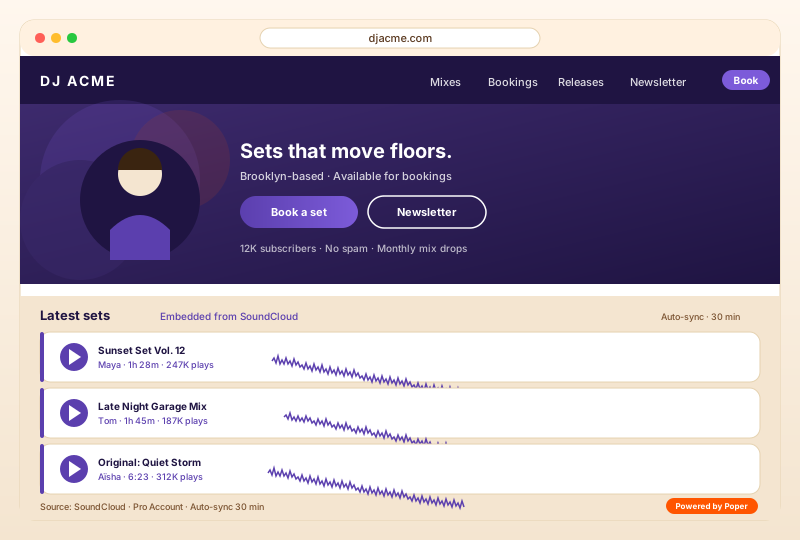
Poper pulls your public SoundCloud feed and renders it inline on your website, fully branded to match your design. No API keys, no manual updates.
 Poper widget live
Mockups for illustration. Pull your real SoundCloud feed and embed in 90 seconds.
How to use it
Three steps. Under two minutes. No developer needed.
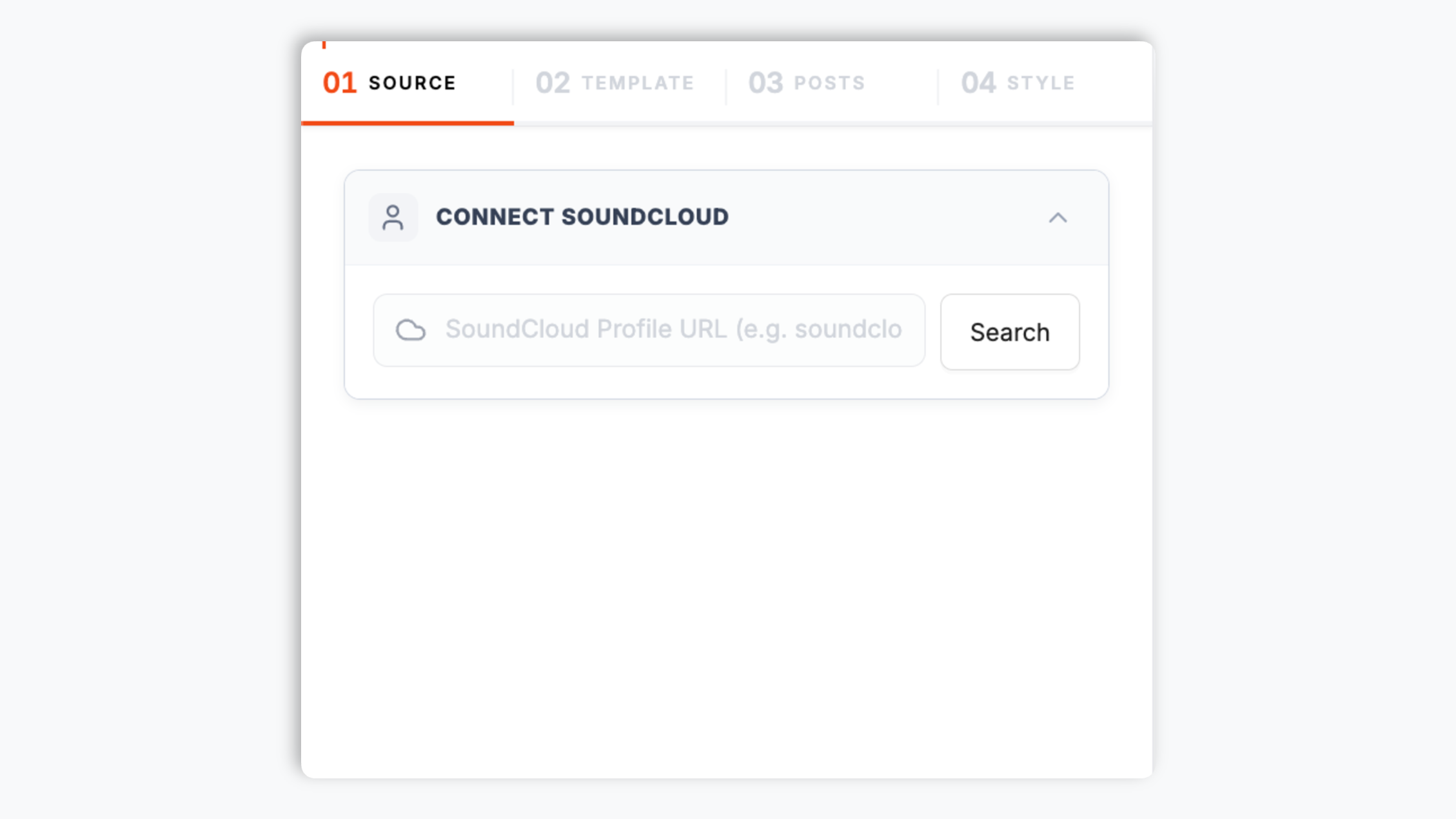
Paste your SoundCloud profile URL (soundcloud.com/username) into the Poper builder, or connect your account so the widget can pull your public uploads.
Choose the native default SoundCloud layout, a stacked List, or a Track grid. Tweak colors, fonts, theme presets, and card density to match your site.
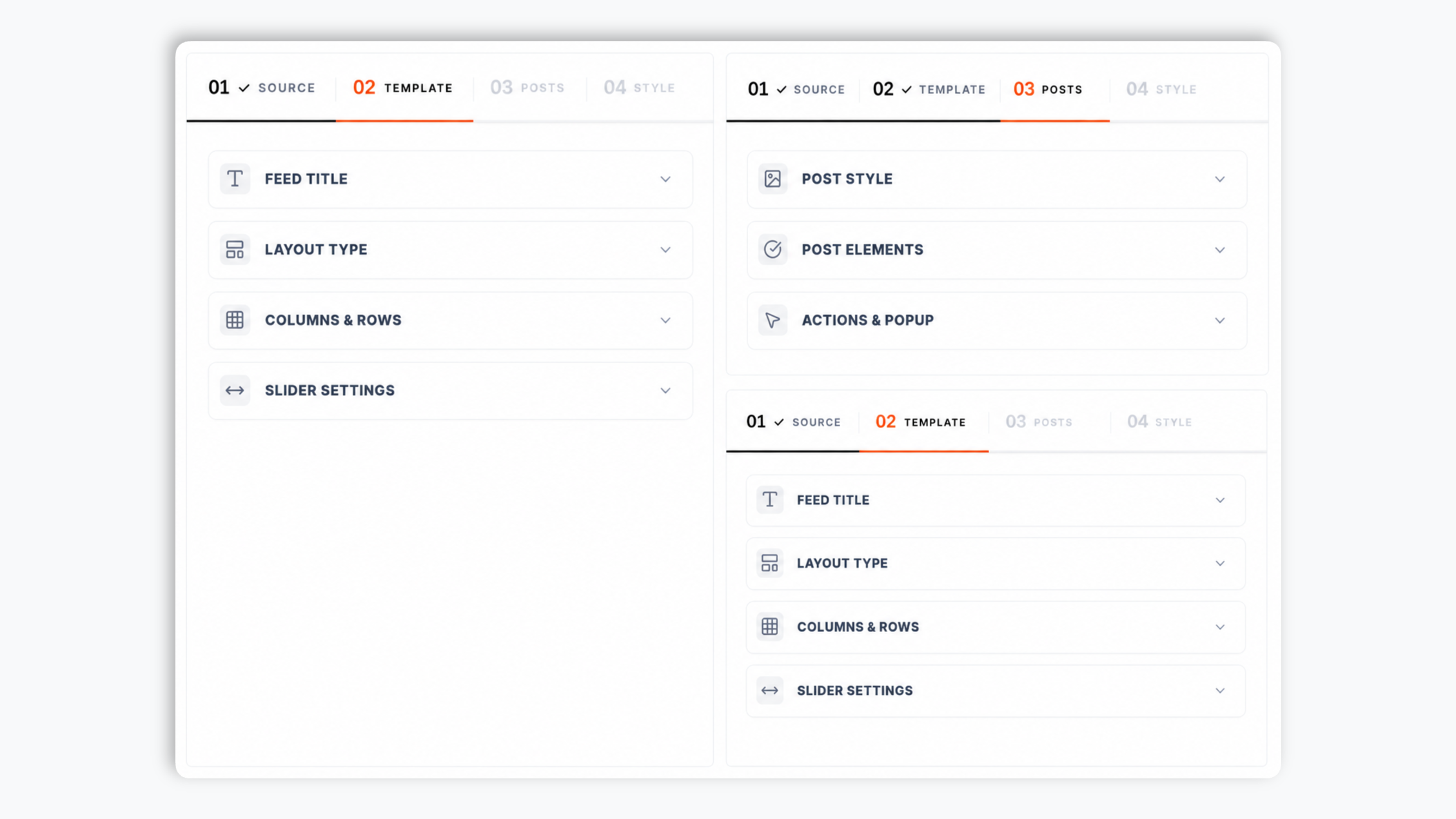
Paste the Poper embed snippet into your site. Works on WordPress, Shopify, Wix, Squarespace, Webflow, Ghost, Framer, and 250+ platforms.
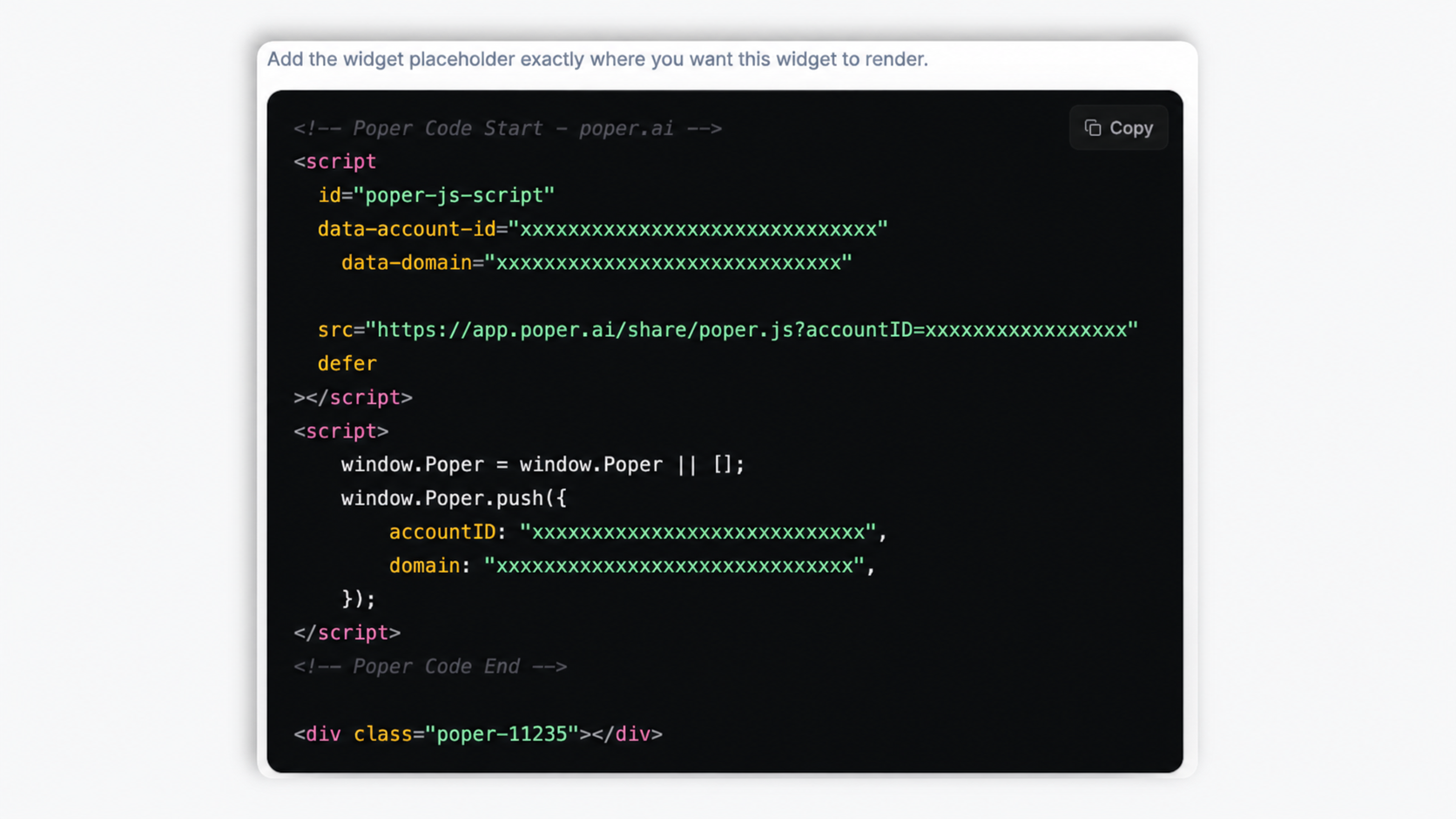
Works everywhere
Drop-in install on WordPress, Shopify, Wix, Squarespace, Webflow, Framer, Ghost, and any HTML-friendly stack. No build step, no developer needed.


Plus 250+ other platforms via the embed snippet. If your site can render a <script> tag, it can render the SoundCloud Feed Widget: Embed Your Tracks and Profile Feed on Any Site.
Six things that matter when you are paying for a SoundCloud widget, not 30 features no producer or DJ uses.
SoundCloud's orange peak waveform is one of the most recognized UI elements in independent music. Poper renders the real waveform pulled from SoundCloud's CDN, with optional brand-color override, at any width or height your layout demands. Buyers, bookers, and fans see the visual cue they associate with serious music, on your site, with your branding around it. No screenshots, no static thumbnails, no broken iframe sizing on mobile. Click a track to open the inline player and stream straight from SoundCloud's CDN, with the full official SoundCloud player and its scrub, comments and waveform interaction.
Point the widget at a SoundCloud profile and it pulls every public upload, sorted newest-first. New tracks you post appear automatically on the next sync, so a release page or booking page stays evergreen with no manual updates.
The feed sorts your uploads newest-first, so the latest mix, single or EP is always the first thing a visitor sees. Set how many tracks display per layout.
Use the styling controls available for this feed layout.
The widget renders only artwork and a play button until a visitor clicks. The full official SoundCloud iframe (which weighs around 400KB and ships analytics cookies) loads on demand on interaction, not on page view. Validate layout and performance on your own page after embedding.
Point each widget at one SoundCloud profile and keep that account's public uploads sorted newest-first. To show another artist, show, or project, create a separate widget for that account.
Use cases
Four buyer types who get the most lift from embedding SoundCloud Feed Widget: Embed Your Tracks and Profile Feed on Any Site on their site.
Upload mixes to SoundCloud, embed your profile feed on your booking page, and let promoters preview every recent set inline. Hour-long mixes stream from SoundCloud's CDN without you paying audio hosting bills.

Drop your latest single, EP, or full project onto your release page with the recognizable orange waveform. Fans preview every track inline, hit follow without leaving your domain, and your release stays evergreen as you upload.
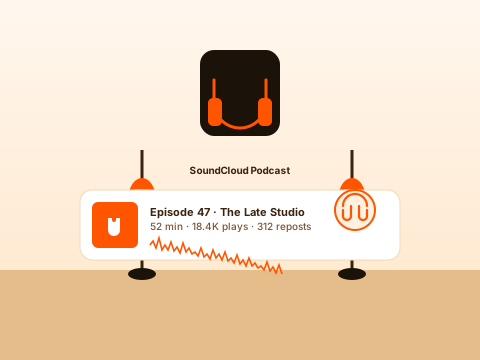
SoundCloud is still one of the most permissive hosts for long-form audio and indie podcasts. Embed your show feed on your homepage so every new episode auto-appears with a clean waveform player and chapter timestamps.
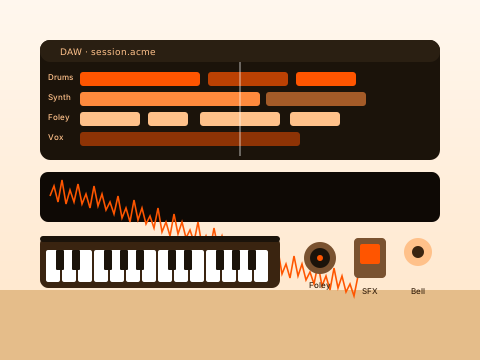
Show your sound-design reel, foley library, and synth patches as a SoundCloud feed on your portfolio. Clients hear waveforms before they read a brief and book you for the work that matches their next project.
Several platforms sell social and music feed embed widgets. Here is how Poper stacks up against the widget providers on what actually matters for independent music.
| Recommended Poper | Elfsight | Common Ninja | SoundCloud native embed | |
|---|---|---|---|---|
| Poper workspace available | Limited free | Limited free | ||
| Dedicated SoundCloud feed widget | Generic player | N/A | ||
| Profile feed (auto-sync new uploads) | Paid only | |||
| Newest-first track ordering | Limited | Manual | ||
| Lite player (defers iframe until click) | ||||
| Custom waveform color | Paid only | Paid only | ||
| Sync frequency (lowest paid plan) | Refresh cadence follows your Poper plan: Free every 15 days, Starter every 3 days, and Pro/Business every 1 day. | 1 hour | 1 hour | Manual |
| Layout styling controls | Paid only | Paid only | ||
| Pricing for unlimited tracks | Plan details vary | Vendor pricing varies | Vendor pricing varies | Free |
| Bundled with popups, forms, quizzes |
Comparison reflects external competitor positioning. Poper pricing shown is the Starter plan billed yearly. The SoundCloud native embed is the platform's own free iframe and is single-track focused. Verify current details on each provider's site.
Producers, DJs, label teams, and podcast hosts who switched from broken SoundCloud widgets to Poper.
“Poper has improved our website's user engagement! Since integrating Poper's personalized popups, we've seen a dramatic surge in conversions and user interactions. The platform's intuitive design makes creating and customizing popups a breeze, even for those with minimal tech skills. What truly sets Poper apart are its…”

“Fantastic app and support team, they are very quick to help and provide a solution or improvement to their product. Highly recommended!”

“Poper has been a total lifesaver for our agency! As a digital marketing agency, we’re always juggling a million things at once. Poper has been a real game-changer in terms of streamlining our workflow and keeping track of all our clients’ campaigns. The ability to track all our clients’ websites from one place is a…”

Pricing
All plans are billed yearly. Each card shows the per-month equivalent. Start free, then upgrade only when you need more campaigns, websites, or AI credits.
Yearly billing · save up to 40%Essential lead capture for solo creators and growing businesses.
billed $180/year
Full engagement suite with A/B testing, gamification & unlimited leads.
billed $348/year
Unlimited everything with white-label, API access & advanced analytics.
billed $948/year
Prices shown for the 50k monthly visitor tier on yearly billing. A Free Forever plan ($0) and a custom Enterprise plan are also available. No contracts, cancel anytime.
The embed loads through the Poper snippet. Validate layout and performance on your own page after embedding.
Refresh cadence follows your Poper plan: Free every 15 days, Starter every 3 days, and Pro/Business every 1 day.
The Poper SoundCloud feed widget reads a profile feed: the public tracks uploaded to the SoundCloud account you point it at. You give the widget a profile URL (soundcloud.com/yourname) or connect the account in the Poper builder, and the widget pulls the upload list, artwork, play counts, like counts and other public metadata, sorted newest-first. This is the right model for the jobs most artists actually have: an indie musician's homepage where the latest release should always sit at the top, a producer's beat showcase, a DJ's booking page that should always show recent mixes, or a podcaster's show page where every new episode should appear without manual work. Because it is a live feed rather than a hand-placed single-track embed, you do not maintain it. You upload to SoundCloud the way you already do, and the next sync brings the new track onto your site. The widget renders the recognizable SoundCloud metadata (play count, likes, artwork, the orange waveform) so the embed feels like SoundCloud rather than a stripped-down shell, and clicking a track opens the official SoundCloud player for full playback, scrubbing and comments. If you only ever want a single fixed track on a page, SoundCloud's own one-track iframe still does that job; the Poper widget is for the case where you want your evolving catalog on your own domain.
Refresh cadence follows your Poper plan: Free every 15 days, Starter every 3 days, and Pro/Business every 1 day.
Use the styling controls available for this feed layout.
The embed loads through the Poper snippet. Validate layout and performance on your own page after embedding.
A SoundCloud feed widget is an embeddable script that pulls a SoundCloud profile's public uploads and renders them on a website with the recognizable orange waveform, newest-first ordering, custom branding, and a lite player that defers the official SoundCloud iframe until a visitor clicks play.
Tutorial
A quick walkthrough of setting up and embedding this widget.
Tutorial video coming soon
Can't find the answer you're looking for? Chat with our support team.
Contact SupportPoper takes 90 seconds to embed and survives every SoundCloud API v2 update. Start from your Poper workspace.
Free plan available forever