Hiking outfitter
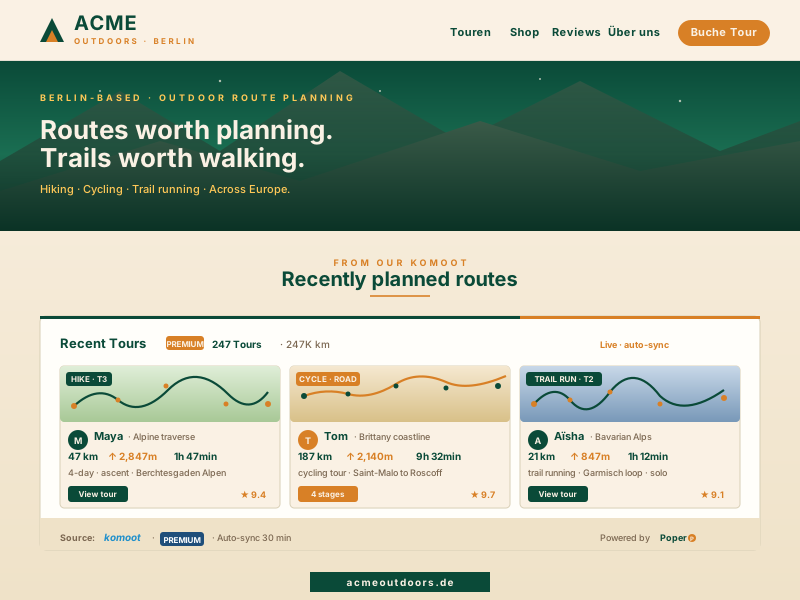
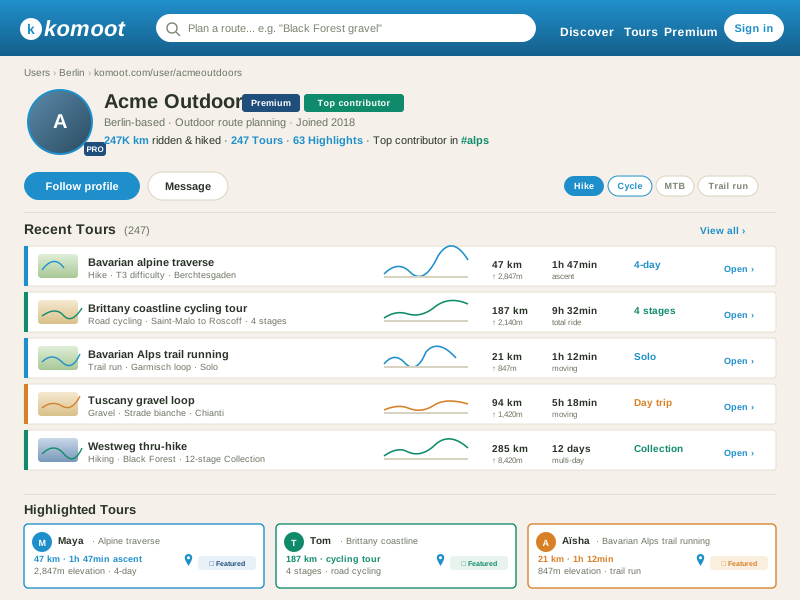
Show clients the exact trails you guide before they book. Embed your Komoot Tour library with elevation profiles and Highlights so a Patagonia trek or a Tour du Mont Blanc hut tour sells itself.
Embed your hiking, cycling and trail running Tours in 90 seconds. Route maps, elevation profiles, and Highlights. Free, no code.
Trusted by 11,000+ outdoor brands



Live demo, not a screenshot. Paste a Komoot profile URL or handle. Style it, brand it, embed it. What you see here is what ships to your site.
From Komoot to your site
Poper crawls the official Komoot review feed for your business and renders it inline on your website. Same reviews, your branding, your domain.
Mockups for illustration. Pull your real Komoot Feed Widget: Embed Hiking, Cycling and Running Tours on Any Site from Komoot and embed in 90 seconds.
How to use it
Three steps. Under two minutes. No developer needed.
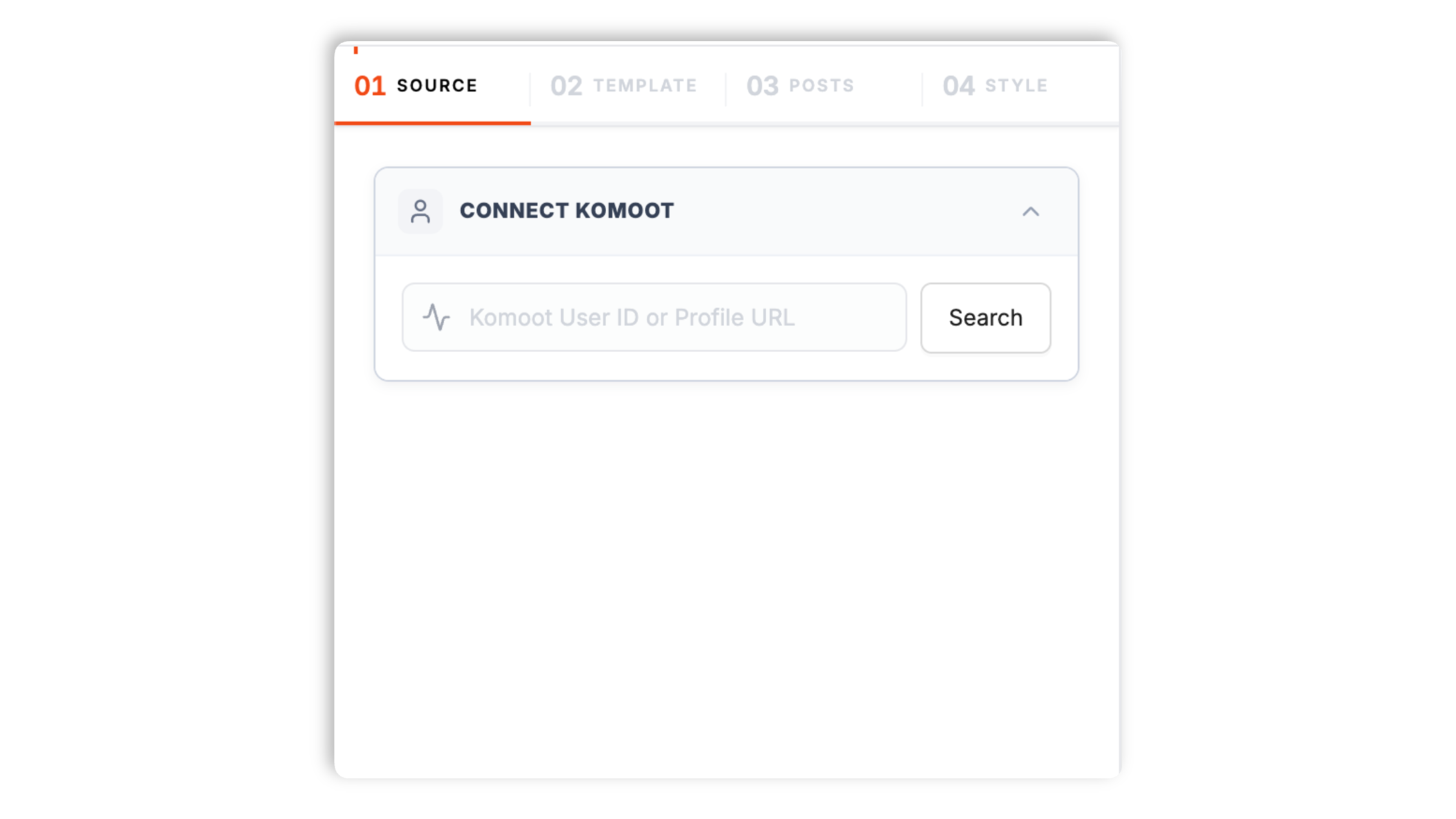
Paste your public Komoot profile URL or your handle. Poper resolves the user ID, queries the Komoot Tour API, and starts pulling planned and completed Tours immediately.
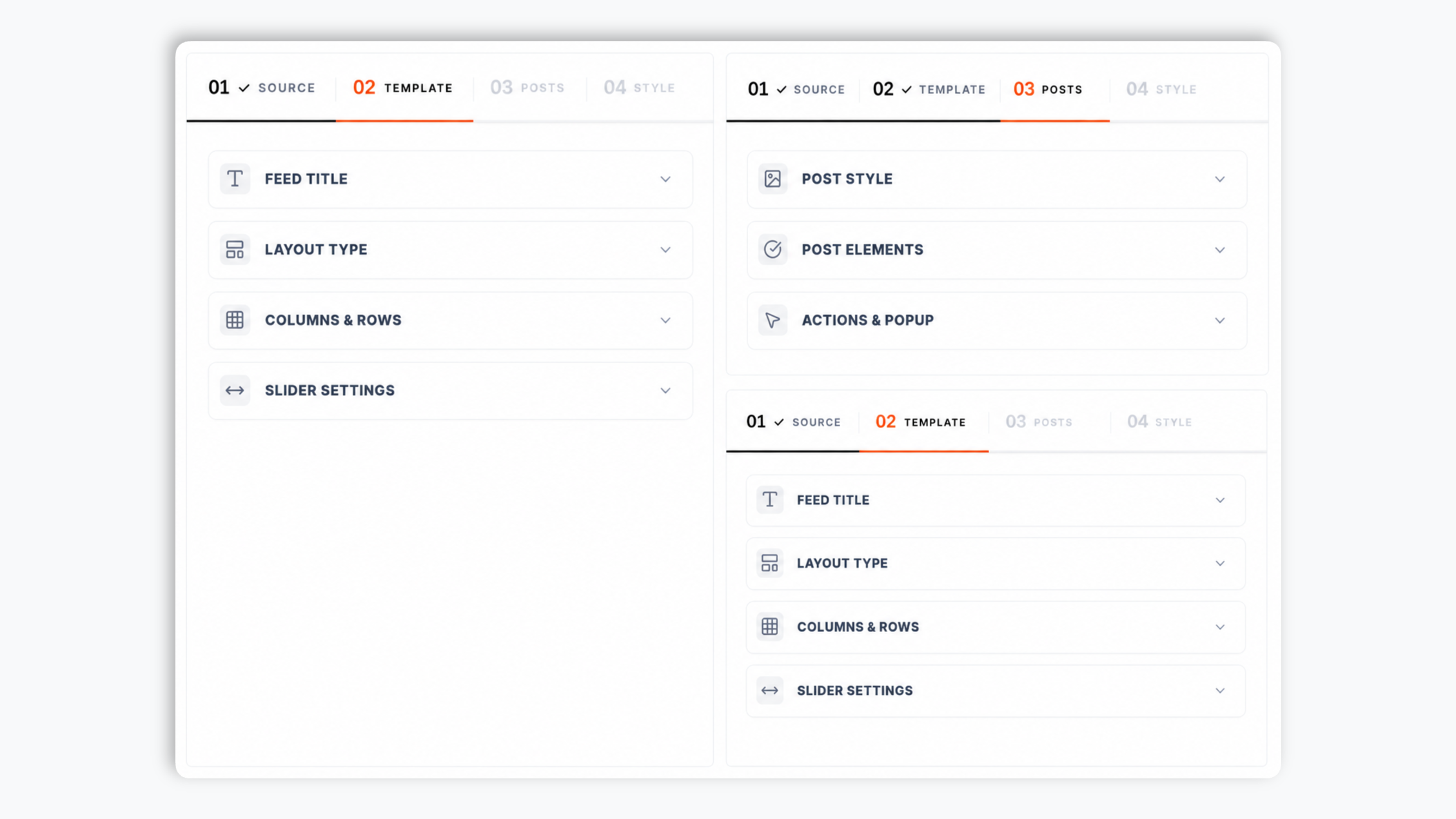
Choose Tour Grid, Route Map, Elevation Strip, Highlight Wall, Trip Journal, or Magazine. Tweak colors, fonts, basemap style, and card design to match your site exactly.
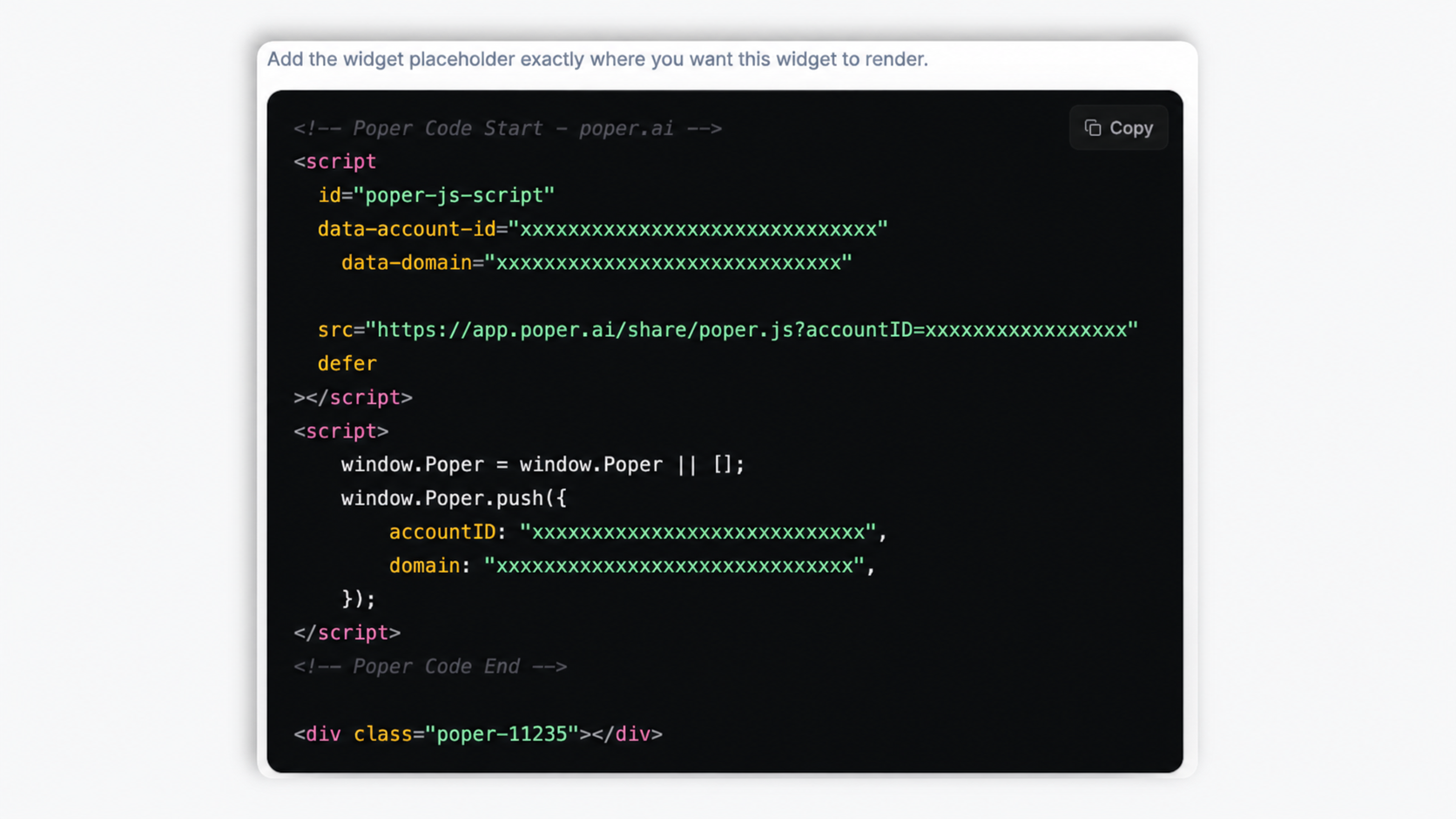
Paste the one-line script tag into your site. Works on Webflow, Framer, Carrd, AllTrails, Wahoo, WordPress, Shopify, and 250+ platforms.
Works everywhere
Drop-in install on WordPress, Shopify, Wix, Squarespace, Webflow, Framer, Ghost, and any HTML-friendly stack. No build step, no developer needed.
Plus 250+ other platforms via the embed snippet. If your site can render a <script> tag, it can render the Komoot Feed Widget: Embed Hiking, Cycling and Running Tours on Any Site.
Seven things that matter when you are embedding outdoor route data on your site, not 30 features no one uses.
Komoot is built around the route itself, not the workout. Poper renders Tours the way Komoot does: full polyline on the map, elevation profile across the bottom, surface and waytype color coding, and the Highlights pinned along the line. If your visitors care about where to go (not how fast you got there), this is the right widget.
Every Tour card shows the elevation profile, total ascent and descent, and the surface or waytype split (asphalt, gravel, singletrack, hiking path). The numbers outdoor audiences actually care about, rendered the way they expect.
Komoot Highlights (community-curated viewpoints, water sources, photo spots) appear pinned along the route with their photos and tips, just like in the Komoot app.
Combine Tours from a Komoot Pioneer, a guide team, or a club into one shared feed. Built for outfitters, tour operators, and outdoor publications.
Lazy-loaded below the fold, async-injected, scoped CSS that does not bleed into your design system. Under 40KB gzipped. No CLS, no LCP regression, no Lighthouse hit.
Hiking, road cycling, mountain biking, gravel, trail running, ski touring. Pick which sports show on your embed and Poper picks the right basemap for each (terrain for hikers, OpenStreetMap with cycle routes for cyclists, satellite for bikepackers).
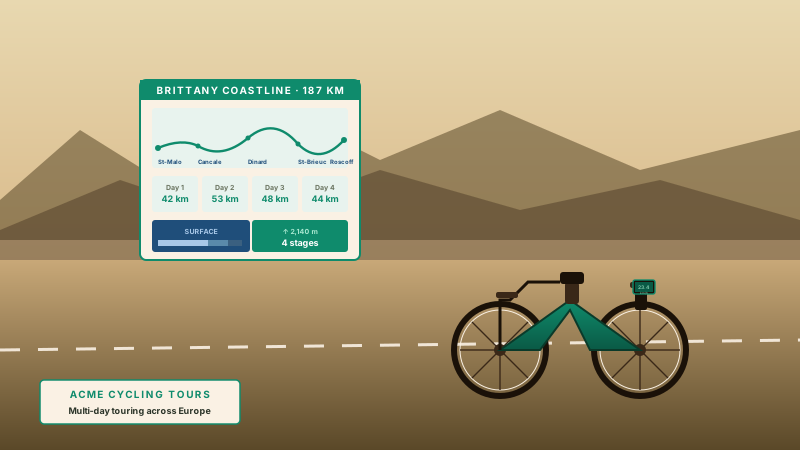
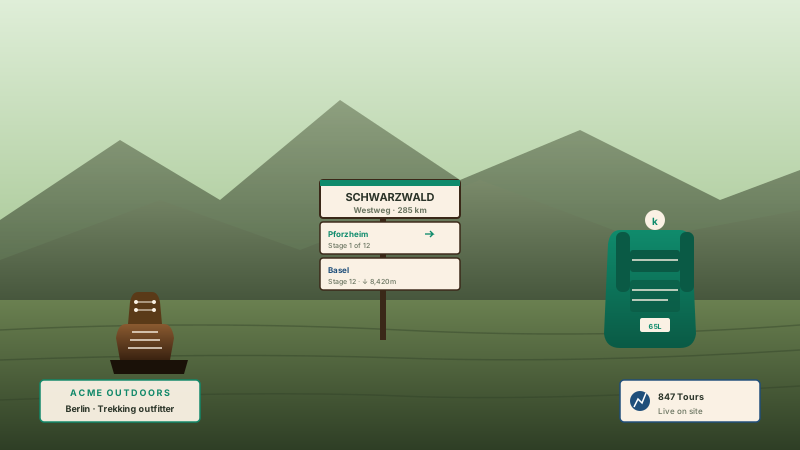
Komoot is one of the few platforms that treats multi-day touring as a first-class object. Poper renders Komoot Collections (multi-Tour bundles for bikepacking trips, hut-to-hut hikes, week-long thru-rides) as connected Tour journals with per-day stats.
Use cases
Four buyer types who get the most lift from embedding Komoot Feed Widget: Embed Hiking, Cycling and Running Tours on Any Site on their site.
Show clients the exact trails you guide before they book. Embed your Komoot Tour library with elevation profiles and Highlights so a Patagonia trek or a Tour du Mont Blanc hut tour sells itself.
Bikepacking and road cycling holidays live or die on the route. Embed your Komoot Collections as day-by-day itineraries with surface breakdown and elevation, so customers can scout the ride before they wire the deposit.
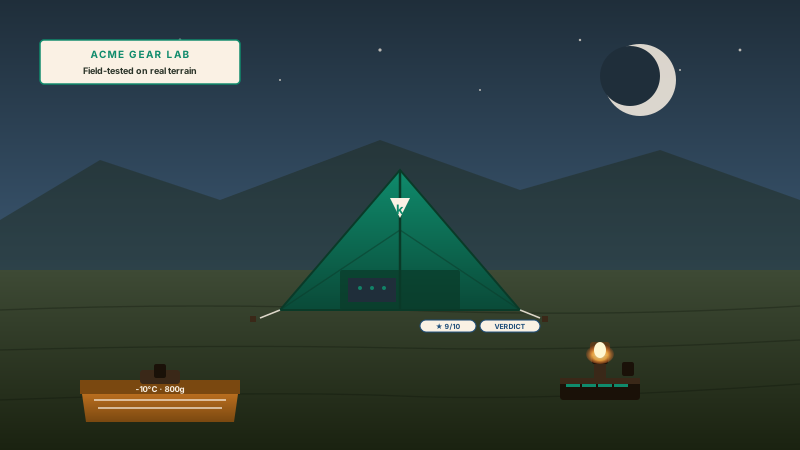
Reviewing a pair of trail runners or a touring bike? Embed the Komoot Tours where you actually tested them so readers can see the terrain, the climb, and the surface that produced your verdict.
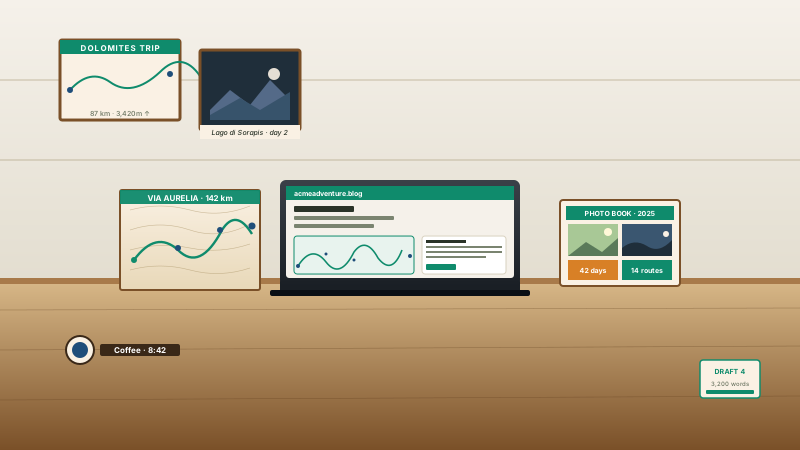
Hiking, cycling, and bikepacking travel content is at its best when readers can follow the route. Embed your Tours and Collections on each trip recap so readers can study the line, the climb, and the views you described.
Komoot ships a free per-Tour iframe and a few third-party builders cover Strava and AllTrails. Here is how the realistic options stack up for a website embed.
| Recommended Poper | Komoot native Tour embed | Strava widget alternative | AllTrails widget | |
|---|---|---|---|---|
| Free plan available | Limited | |||
| Embed multiple Tours from one feed | Paid only | |||
| Komoot Tour API native | ||||
| Elevation profile per Tour | Paid only | |||
| Komoot Highlights pinned on map | ||||
| Multi-user Tour aggregation | ||||
| Komoot Collection (multi-day) support | One Collection at a time | |||
| Sport filtering (hike, road, MTB, trail run) | All shown together | Hiking-heavy | ||
| Custom CSS / total design control | Paid only | |||
| Sync frequency (lowest plan) | 6 hours | On page load only | 12 hours | 24 hours |
| Pricing for unlimited Tours | $19/mo (Starter) | Free per Tour | $15/mo | $30/mo |
| Bundled with popups, forms, quizzes |
Comparison reflects publicly listed pricing and features as of 2026. Verify current details on each provider's site.
Outfitters, tour operators, gear reviewers, and adventure bloggers who embedded Komoot on their sites.
“Poper has improved our website's user engagement! Since integrating Poper's personalized popups, we've seen a dramatic surge in conversions and user interactions. The platform's intuitive design makes creating and customizing popups a breeze, even for those with minimal tech skills. What truly sets Poper apart are its…”

“Fantastic app and support team, they are very quick to help and provide a solution or improvement to their product. Highly recommended!”

“Poper has been a total lifesaver for our agency! As a digital marketing agency, we’re always juggling a million things at once. Poper has been a real game-changer in terms of streamlining our workflow and keeping track of all our clients’ campaigns. The ability to track all our clients’ websites from one place is a…”

Pricing
Free forever for one widget. Upgrade only when you need faster sync, multiple instances, or to drop the watermark.
Everything you need to ship the widget today.
Remove the watermark, faster sync, more widget instances.
Multi-site, multi-account, white-label.
All plans include unlimited page views, no contracts, cancel anytime. Annual billing saves 20%.
Komoot is the route-planning app that quietly powers most serious outdoor adventures across Europe. Founded in Potsdam, Germany in 2010, the platform has grown into a community of roughly thirty million hikers, cyclists, mountain bikers, and trail runners with a Tour library that now spans every alpine pass and gravel loop the continent has to offer. Komoot is fundamentally different from the activity trackers it is often compared to. Strava is built around the workout: pace, kudos, segments, leaderboards. Komoot is built around the route: where to go, what surface to expect, how much you climb, what view waits at the top. That distinction shapes everything about how a Komoot embed should work, and why a generic social-feed widget will not do the platform justice. This guide walks through what actually matters when you choose and configure a komoot feed widget in 2026: the Tour API, elevation profiles and Highlights, the route-planning vs activity-tracking distinction, multi-day Collections, and the European outdoor audience that lives on the platform.
Komoot was founded in 2010 by a small team in Potsdam, Germany, and the original product was a turn-by-turn voice navigation app for outdoor activities, not a social fitness tracker. That heritage shows up everywhere in the Tour data the API returns. Every Tour carries a planned polyline on the map, a surface breakdown (asphalt, gravel, paved cycleway, forest path, singletrack, hiking trail), a waytype breakdown (street, road, cycle path, forestry road), an elevation profile with total ascent and descent, an estimated duration based on the user's stated fitness level, and a difficulty rating tuned to the activity (T1 to T6 for hiking, S0 to S5 for mountain biking). The platform was acquired by Bending Spoons in 2024 and continued to grow, but the route-first design philosophy stayed intact. For an embed widget, this means you are not just rendering a list of workouts; you are rendering navigable routes with full geographic context. Poper treats every Tour as a first-class route object: full polyline on the basemap, elevation strip below, surface badges, and Highlights pinned along the line, all the way down to the per-segment metadata that the Komoot app shows when you tap a Tour. The German engineering culture also means the data is unusually consistent across user-generated Tours. Komoot enforces strict typing for sport, surface, and waytype, so a Tour exported from a hiker in the Black Forest renders the same way as one from a road cyclist in Tuscany or a bikepacker in the Highlands. There is no equivalent to the messy, freeform tag salad you find on some other community route platforms. That consistency is what lets a single embed component render every Tour your audience will care about, without per-Tour branching logic on your side.
The single most common confusion about Komoot is that it is the European Strava. It is not. Strava and Komoot are adjacent platforms with overlapping users but completely different value propositions. Strava is an activity-tracking and social-fitness platform: you record a workout, the app calculates pace and power, you get kudos from your friends, you see how you ranked on segments. Komoot is a route-planning and turn-by-turn navigation platform: you plan a route, the app gives you voice navigation and a printed cue sheet, you log a recorded version of that route once you have ridden or walked it, and you can save it back to the platform as a completed Tour. The two platforms are often used together (plan in Komoot, record in Strava, sync between them) but they answer different questions. A Strava embed shows your recent workouts to prove you are training. A Komoot embed shows your Tour library to prove you know where to go. For outdoor outfitters, cycling tour operators, gear reviewers, and adventure bloggers, the Komoot embed is the right call almost every time, because the audience question they are answering is the routes, not the splits. Practically, this distinction matters for how you place the widget on your page. A Strava feed makes sense on a personal coach bio (proof of training), an athlete profile, or a marathon training journal. A Komoot feed makes sense on a guided tour booking page (proof of route knowledge), a gear review (proof you tested on real terrain), a trip itinerary (proof of the day-by-day path), and a destination page (proof of what is rideable or hikeable in the region). Get the placement right and the conversion lift compounds with the credibility lift, because visitors who came to evaluate a guide or an itinerary suddenly have the actual map of where they would be going. We see operators report measurable lifts in booking inquiries within the first month of swapping a screenshot or a static map for the live Komoot embed.
Most route-planning platforms treat each Tour as an isolated object: one ride, one hike, one entry. Komoot is one of the few that treats multi-day touring as a first-class concept through its Collections feature. A Collection is a curated bundle of Tours that belong together: a five-day bikepacking loop through the Pyrenees, a Tour du Mont Blanc hut-to-hut hike with one Tour per day, a week-long Dolomites cycling holiday with rest-day variants, a thru-hike of the Westweg with each day broken into a separate Tour. For outfitters and tour operators in particular, Collections are the natural unit of presentation because a customer is buying the multi-day experience, not the individual day. Komoot's own Pioneer program (where the platform pays curated experts to publish high-quality Collections) has produced a library of professionally guided Collections that any operator can fork as the basis for their own offerings. Poper renders Collections as connected Tour journals: per-day stats, cumulative distance and elevation across the trip, day-by-day photo galleries, and the option to embed the entire Collection as one card or each Tour individually. For a hiking outfitter or cycling tour operator, this turns a marketing page into a functional itinerary that customers can browse before they book. Collections also unlock a kind of content marketing that competing platforms make awkward. A bikepacking publication can drop a Collection of the ten best gravel routes in Catalonia onto the homepage as one embedded module, and each Tour inside it stays clickable and navigable on the reader's phone. A trail running coach can ship a Collection of every long run in a half-marathon plan, embedded as a training calendar on the coaching page. The Komoot data model rewards anyone who thinks in trips rather than individual workouts, and the embed inherits that same advantage on the open web.
Komoot's user base is heavily concentrated in Europe, with particular strength in the DACH region (Germany, Austria, Switzerland, where the platform was born) and the United Kingdom (where the cycling and hill-walking communities have adopted it as their default planner). Coverage across France, Italy, Spain, Benelux, the Nordic countries, and Eastern Europe is also strong, and recent growth in North America and Australasia has been substantial. The most common alternative for an outdoor embed widget is AllTrails, which has the inverse profile: dominant in the United States and Canada, weaker in Europe outside of the bigger national parks, and overwhelmingly hiking-focused with relatively thin cycling coverage. If your audience is European, or if you serve cyclists and bikepackers as well as hikers, Komoot is almost always the right platform to embed. If your audience is American hikers visiting national parks, AllTrails coverage may be deeper. The two are not mutually exclusive: a transatlantic outfitter might embed Komoot for European tours and AllTrails for North American ones. Poper supports both alternatives via separate widgets so you can mix and match by region. The other consideration is language and unit handling. Komoot defaults to metric units everywhere except the United States and the United Kingdom (where it offers imperial), the interface ships in fifteen languages, and Tour titles and descriptions are typically authored in the local language of the route. Poper passes those values through verbatim and lets you override the unit display per embed, so a German operator can ship Tours in kilometers and meters to a German audience, then publish a parallel English-language landing page with the same data converted to miles and feet. The result is a route library that travels well, both literally and editorially.
A Komoot feed widget is an embeddable script that pulls hiking, cycling, mountain biking, and trail running Tours from the Komoot Tour API and renders them on a website with route polylines on a basemap, elevation profiles, surface and waytype breakdown, Highlights pinned along each route, and Schema.org ExerciseAction markup for outdoor activity search visibility.
Can't find the answer you're looking for? Chat with our support team.
Contact SupportPoper takes 90 seconds to embed your Komoot Tours on your site. Free plan, no credit card.
Free plan available forever