Documentary filmmakers
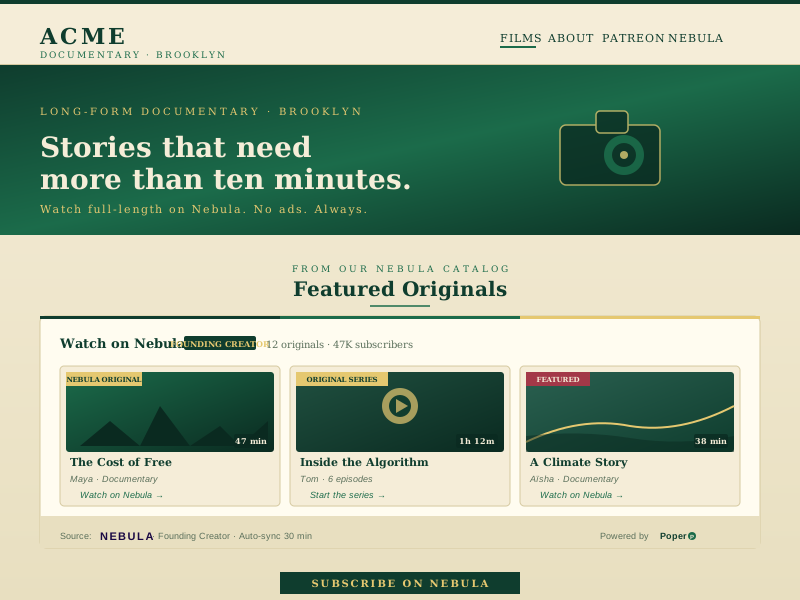
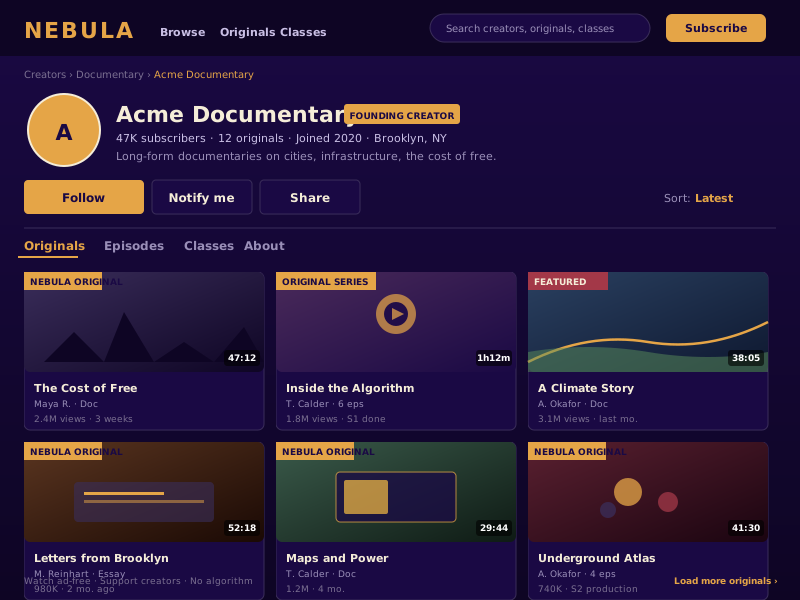
Long-form filmmakers who chose Nebula as a home for ad-free, longer cuts can hub their Originals on a personal site. Each series gets a polished landing page with trailer, episode list, and subscribe CTA.
Promote your Nebula creator profile, trailers, and Originals on any website. Honest preview-and-link approach since Nebula content is gated to subscribers.
Trusted by 11,000+ brands


Live demo, not a screenshot. Style it, brand it, embed it. What you see here is what ships to your site.
From Nebula to your site
Poper crawls the official Nebula review feed for your business and renders it inline on your website. Same reviews, your branding, your domain.
Mockups for illustration. Pull your real Nebula Feed Widget: Embed Creator Profiles, Trailers and Originals on Any Site from Nebula and embed in 90 seconds.
How to use it
Three steps. Under two minutes. No developer needed.
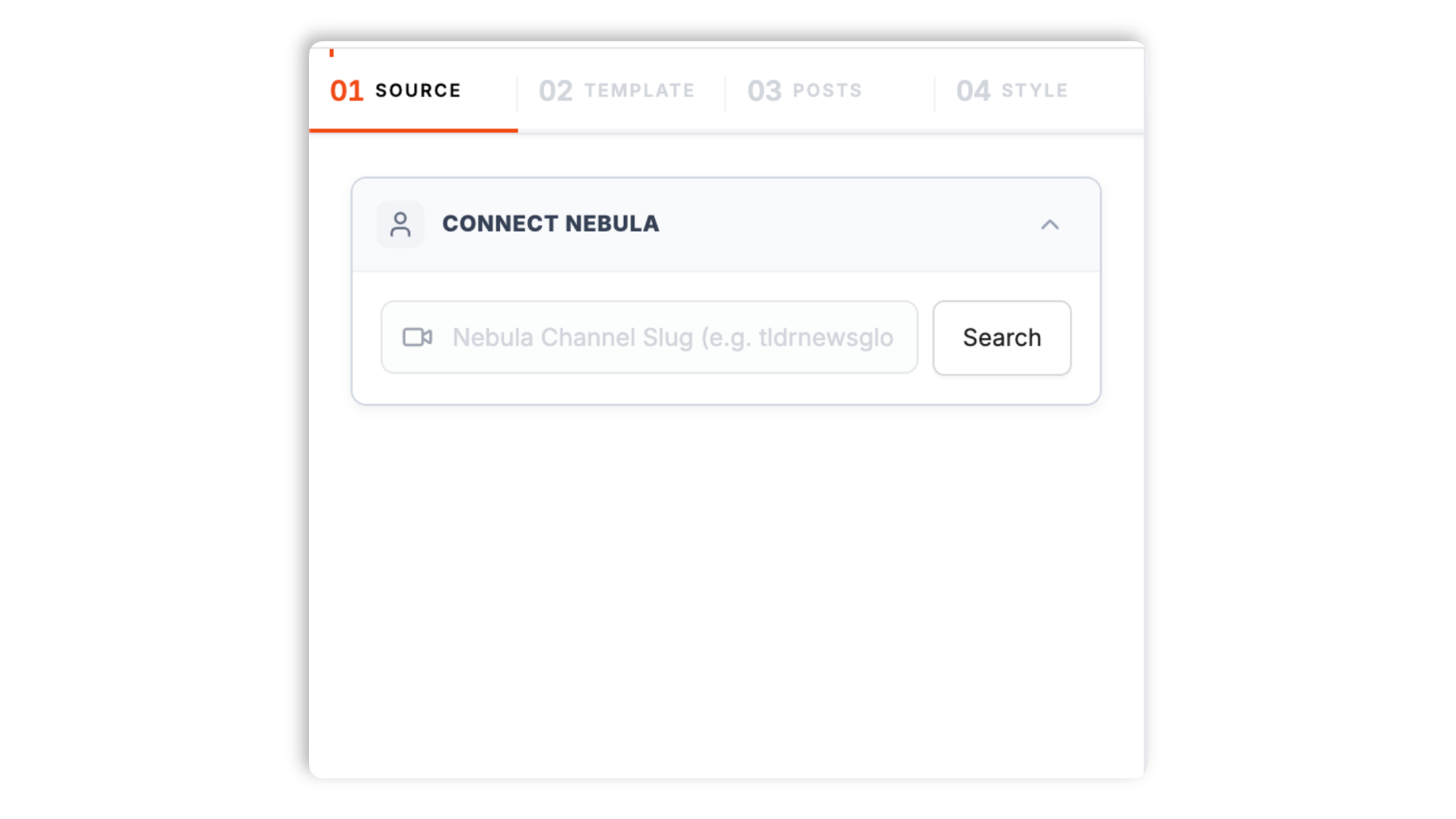
Drop in your nebula.tv creator handle, an Original series page, or a Nebula Class URL. Poper extracts the public metadata, thumbnail, and trailer where one is available.
Choose Profile card, Trailer wall, Series landing, or Class chapter list. Tweak colors, fonts, thumbnail style, and the Watch on Nebula button to match your site.
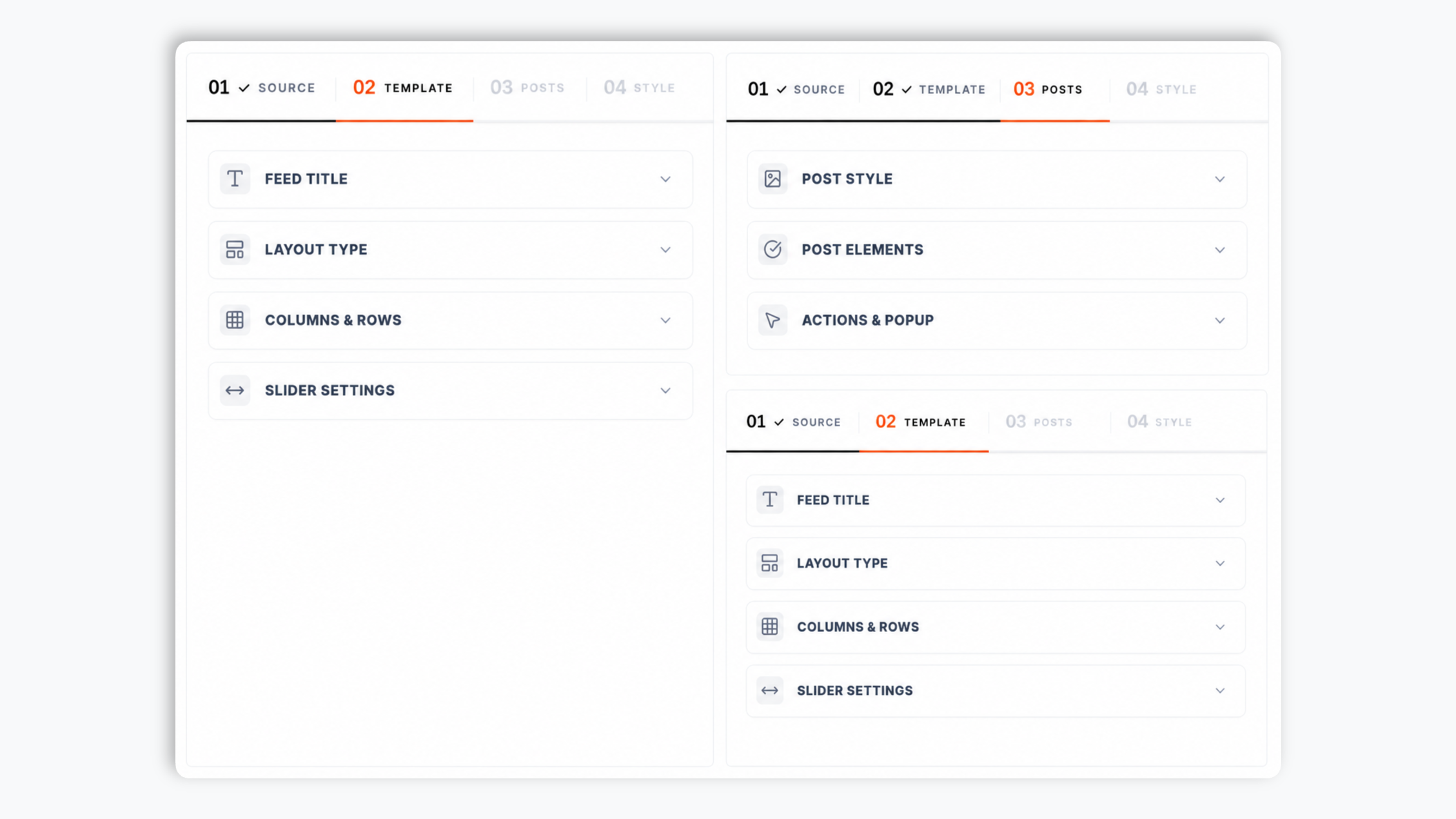
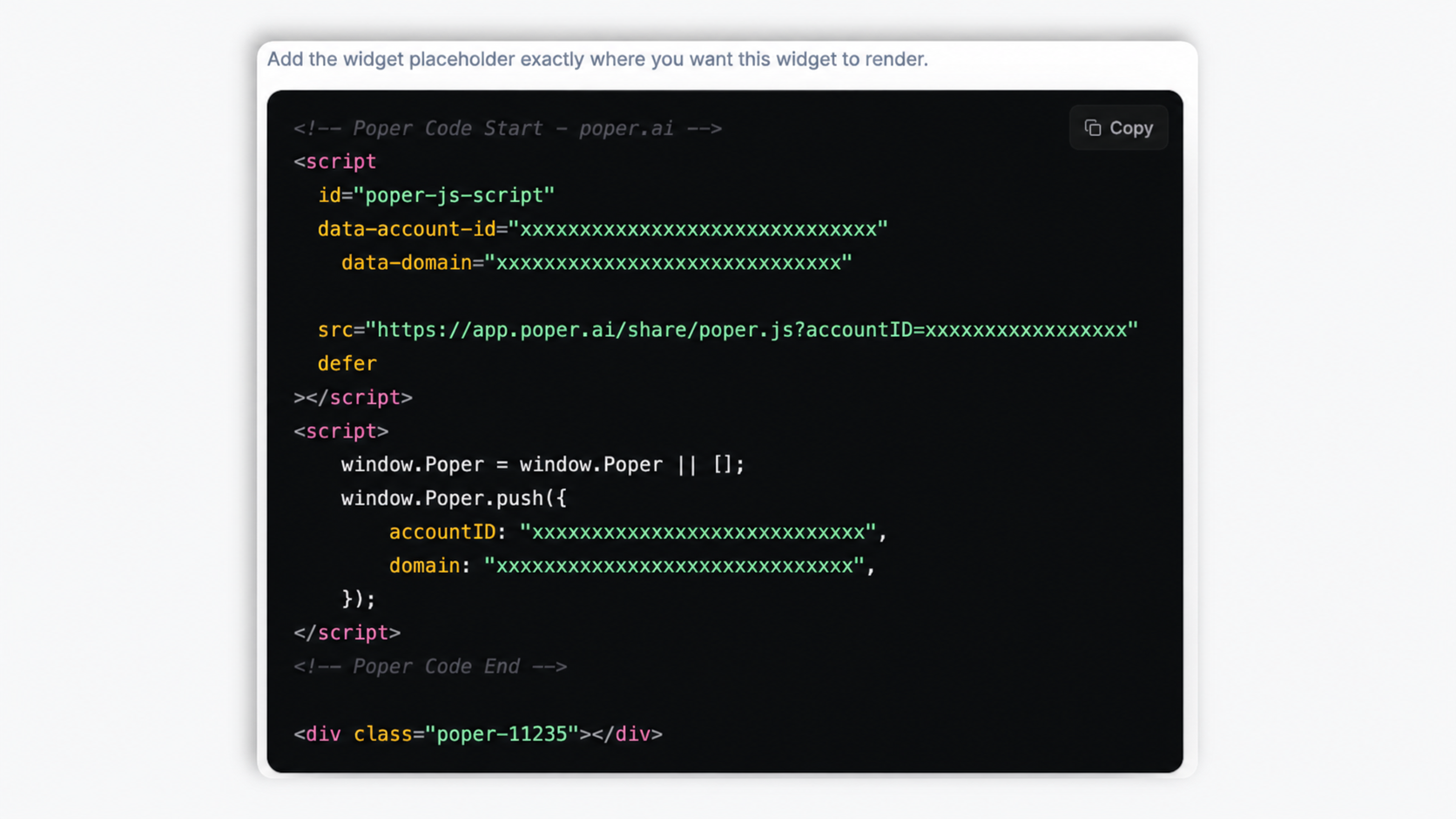
Paste the one-line script tag into your site. Works on WordPress, Shopify, Wix, Squarespace, Webflow, Ghost, Framer, and 250+ platforms.
Works everywhere
Drop-in install on WordPress, Shopify, Wix, Squarespace, Webflow, Framer, Ghost, and any HTML-friendly stack. No build step, no developer needed.
Plus 250+ other platforms via the embed snippet. If your site can render a <script> tag, it can render the Nebula Feed Widget: Embed Creator Profiles, Trailers and Originals on Any Site.
Six things that matter when you are featuring a creator-owned subscription platform on your site, not 30 features no one uses.
Nebula is a creator-owned subscription platform built specifically because the founding creators (Tom Scott, Wendover Productions, Real Engineering, Half as Interesting, and dozens more under the Standard banner) wanted a place where their long-form work lived behind a sustainable paywall. That design decision means there is no public embedding API, and any widget that claims to inline a Nebula player is either misleading you or scraping content the creators did not authorize. Poper takes the honest path: we surface the public-facing surface (profile photos, titles, durations, descriptions, and YouTube-mirrored trailers when available) and ship a polished Watch on Nebula CTA that respects the subscription. The result is a marketing page that converts visitors into Nebula subscribers, not a leaky bootleg.
Three distinct source types from the same widget config. Showcase your full creator catalog, build a marketing page for a single Nebula Original series, or hub a Nebula Class with chapter previews and a clean subscribe path.
When a creator has dual-published a trailer to YouTube (which most do), the widget surfaces the trailer inline so visitors can sample the production quality before clicking through.
Colors, fonts, thumbnail shapes, custom CSS, and full control over the Watch on Nebula CTA. Looks native to your site, not the generic Nebula chrome.
Because the widget links out instead of embedding a gated iframe, the payload stays under 30KB and there is zero CLS or LCP regression. A Nebula widget with a dozen videos costs less than a single YouTube iframe in standard mode.
Detect whether a video is a Nebula Original or part of a Nebula Class and overlay the right badge so the premium framing is visible at a glance. Original series get an episode list; Classes get a chapter list.
Use cases
Four buyer types who get the most lift from embedding Nebula Feed Widget: Embed Creator Profiles, Trailers and Originals on Any Site on their site.
Long-form filmmakers who chose Nebula as a home for ad-free, longer cuts can hub their Originals on a personal site. Each series gets a polished landing page with trailer, episode list, and subscribe CTA.
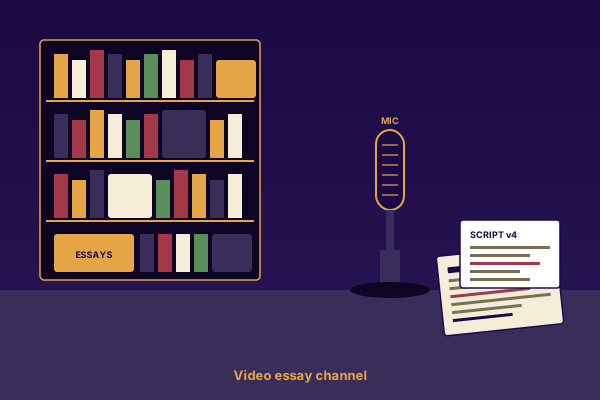
Essay channels with research-heavy, longer cuts on Nebula get a clean marketing surface on their own site. Surface the Nebula essay catalog beside the YouTube discovery feed and convert engaged readers into subscribers.
History creators who produce documentary-quality work on ancient civilizations, geopolitics, or modern conflict get a destination for their longest pieces. Embed your Nebula catalog on the brand site fans already trust.
Science educators producing animated explainers, lab walkthroughs, and structured Classes use Nebula for the deep cuts. Pair the Nebula widget with a YouTube feed to model the discovery-plus-conversion stack.
Nebula does not publish an embedding API, so most options come down to manual links or YouTube widgets pulling the trailer. Here is how Poper stacks up against the realistic alternatives.
| Recommended Poper | Manual hand-coded links | YouTube widget (trailer only) | Patreon embed widget | |
|---|---|---|---|---|
| Free plan available | ||||
| Pulls Nebula creator profile metadata | ||||
| Surfaces Nebula Originals badge | ||||
| Nebula Class chapter list | ||||
| Auto-finds dual-published YouTube trailer | Manual | |||
| Watch on Nebula CTA styling | Hand-coded | |||
| Lighthouse-safe (under 30KB) | ||||
| Auto-refresh of public metadata | Hourly (Pro) | Manual | Manual | |
| Brand-match custom CSS | Paid only | Paid only | ||
| Honest about no embed API | N/A | |||
| Pricing for unlimited embeds | $19/mo (Starter) | Free | $5/mo+ | $10/mo+ |
| Bundled with popups, forms, quizzes |
Comparison reflects publicly listed pricing and the reality that Nebula does not provide a public embedding API as of 2026. Verify current details on each provider's site.
Nebula creators, studios, and educational sites who turned their personal pages into Nebula subscription funnels.
“Poper has improved our website's user engagement! Since integrating Poper's personalized popups, we've seen a dramatic surge in conversions and user interactions. The platform's intuitive design makes creating and customizing popups a breeze, even for those with minimal tech skills. What truly sets Poper apart are its…”

“Fantastic app and support team, they are very quick to help and provide a solution or improvement to their product. Highly recommended!”

“Poper has been a total lifesaver for our agency! As a digital marketing agency, we’re always juggling a million things at once. Poper has been a real game-changer in terms of streamlining our workflow and keeping track of all our clients’ campaigns. The ability to track all our clients’ websites from one place is a…”

Pricing
Free forever for one widget. Upgrade only when you need faster sync, multiple instances, or to drop the watermark.
Everything you need to ship the widget today.
Remove the watermark, faster sync, more widget instances.
Multi-site, multi-account, white-label.
All plans include unlimited page views, no contracts, cancel anytime. Annual billing saves 20%.
A nebula feed widget is how you turn a Nebula creator profile or Original series into a marketing surface on your own domain. Nebula is a creator-owned subscription video platform that launched around 2019, co-founded by the company Standard (the team behind Wendover Productions, Half as Interesting, and Real Engineering) along with CuriosityStream as an early infrastructure partner. Subscriptions run roughly five dollars per month, every minute of viewing is ad-free, and a meaningful portion of subscription revenue is paid out to creators based on watch time at a rate substantially higher than YouTube. Crucially for anyone trying to embed Nebula on a website: the platform does not publish a public embedding API. Full video playback is gated behind the subscription, and creator-owned really does mean creator-owned. This guide explains what is and is not possible when you want to feature Nebula content on your own site, and how Poper's widget threads the needle without compromising the subscription model.
Most video platforms in 2026 ship an embed iframe whose entire job is to make their content viewable off-platform. YouTube, Vimeo, Dailymotion, Wistia, and Twitch all publish official embed players you can drop on any website with a single iframe tag. Nebula does not. The platform was designed from the start as a closed subscription product, and the founders, who are also the largest equity holders, made an explicit decision not to expose embed code outside nebula.tv itself. Two reasons. First, full episodes are part of the value proposition customers pay for, so leaking them through arbitrary third-party sites would erode the subscription. Second, Nebula's revenue share to creators is structured around watch time inside Nebula's player, where they can measure attention accurately and compensate fairly. Embedded players on third-party sites would muddy that accounting. The result is that any tool that claims to inline a Nebula video player is either scraping content the creators did not authorize (legally and ethically suspect) or showing only content that is also on YouTube anyway (which is just a YouTube widget with extra steps). Poper takes a different approach: we treat Nebula as what it is, a subscription product, and we build the widget around the public surface that creators do want promoted. Profile imagery, video titles, descriptions, durations, Originals badges, Class chapter lists, and YouTube-mirrored trailers when those exist. The widget functions as a marketing block that converts site visitors into Nebula subscribers rather than a bootleg player that undermines them. This is the only honest way to ship a Nebula widget, and it is the design intent the platform asks third-party developers to respect.
Nebula's founding story matters because it determines what kinds of content live on the platform and therefore what your widget can usefully feature. The platform was created by the company Standard in partnership with the Standard creator pool, which at launch included Tom Scott, Wendover Productions, Half as Interesting, Real Engineering, Practical Engineering, Polyphonic, LegalEagle, and roughly forty other educational and analytical YouTubers who were tired of watching the YouTube algorithm punish long-form, niche, or ad-unfriendly content. CuriosityStream provided early bundling and capital, but Nebula has since grown into its own standalone platform with Standard creators holding meaningful equity. Almost every creator on Nebula also publishes to YouTube because YouTube is where audience discovery happens. The strategy is consistent across the creator pool: ship the regular ad-supported version on YouTube to catch search and recommendation traffic, then ship a longer or more ambitious version (extended cuts, deeper essays, full documentary series, structured Classes) on Nebula for the audience willing to pay for ad-free, more substantial work. A Nebula creator's site usually wants to feature both the YouTube-discoverable surface (which is what most fans encounter first) and the Nebula-exclusive premium tier (which is where the creator actually makes most of their money per minute of watch time). Poper supports this by letting you combine a YouTube feed widget for the discovery layer and a Nebula feed widget for the conversion layer on the same page. The Nebula widget surfaces the Originals and Classes that exist only on Nebula, ships a clean Watch on Nebula CTA, and tracks subscription click-through so you can attribute conversions to specific embed placements. The two widgets together model the dual-publish strategy that has made Nebula viable as a creator-owned alternative to YouTube monetization.
Beyond the regular creator uploads (which are essentially Nebula-exclusive long cuts of YouTube content), Nebula has two flagship product surfaces that carry premium framing and convert subscribers especially well: Nebula Originals and Nebula Classes. Nebula Originals are produced documentary series, often funded directly by the platform with bigger budgets than a creator could amortize on YouTube alone. Examples have included historical documentary series from established creators, multi-episode investigations, and produced narrative formats that look closer to streaming-service quality than to YouTube. Nebula Classes are structured educational courses taught by working creators in their domain, with chapter lists, learning objectives, and downloadable companion materials. Both formats are designed to be the pieces of content that justify the subscription. If you are building a marketing page for a Nebula Original series or a Nebula Class, the widget should surface the right framing automatically. Poper detects the source URL and adjusts the layout: an Original gets the series name, a hero trailer, an episode list with thumbnails and durations, and a Watch the series on Nebula CTA. A Class gets the course title, instructor profile, the chapter outline, learning outcomes, and a Start the class on Nebula CTA. A regular creator profile gets the standard video grid with the Originals and Class badges overlaid on the relevant titles. The detection happens at connect time and you can override it manually if you want a non-default layout. The result is that a Nebula widget on your site does not just look like a generic video grid; it looks like the official Nebula marketing surface for whatever you are featuring, which converts noticeably better than a flat list of titles.
Because Nebula does not publish an embed iframe, the question of how a Nebula widget affects page performance has a refreshingly clean answer: it does not. The widget renders thumbnails, titles, descriptions, and a Watch on Nebula button. Total payload sits under thirty kilobytes gzipped, with thumbnails served from our CDN as WebP and lazy-loaded below the fold. There is no third-party iframe to load, no advertising tracker to fire, no main-thread blocking, and no Cumulative Layout Shift cost. A Nebula widget with twelve videos costs less in Lighthouse than a single YouTube iframe in standard mode. From an SEO perspective, the widget is also easier to optimize than a video embed because there is no iframe blocking Google's crawl. We render the video metadata as semantic HTML inside the widget container, which means titles and descriptions are crawlable. We do not auto-emit VideoObject Schema.org JSON-LD by default, because VideoObject requires a contentUrl that points to actual playable video, and the playable video is gated behind the Nebula subscription. Emitting a VideoObject with a contentUrl that returns a paywall is a Schema spec violation and Google will not honor it for video carousel placement. Instead, the widget emits CreativeWork JSON-LD for each video (with the Nebula URL as the canonical link), which is the correct schema for content that requires authentication to view in full. For Originals series, the widget emits TVSeries schema with episode markup, and for Classes the widget emits Course schema, both of which are eligible for their own Google rich result formats independent of the video carousel. The marketing-page math works out the same way the conversion case does: a Nebula widget on your site is not a video player, it is a high-converting subscription funnel that happens to look like a video grid. Embed it on the pages where your most engaged visitors land, point them at the catalog the creators actually built, and let Nebula handle the playback in the environment its creators designed and own.
A Nebula feed widget is an embeddable script that surfaces a Nebula creator profile, Original series, or Class hub on a website using publicly available metadata and a Watch on Nebula call-to-action, since Nebula does not publish a public embedding API for its gated subscription content.
Can't find the answer you're looking for? Chat with our support team.
Contact SupportEmbed your Nebula creator profile, Original series, or Class hub on your own domain. Honest about the subscription gate, ruthless about converting visitors.
Free plan available forever