
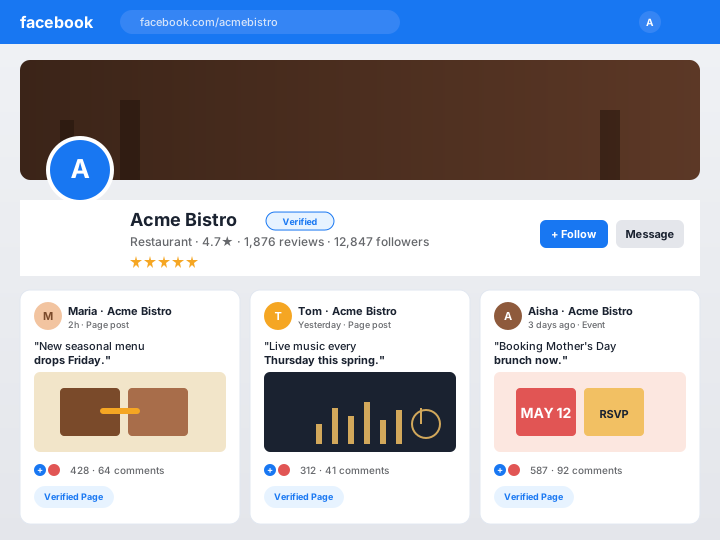
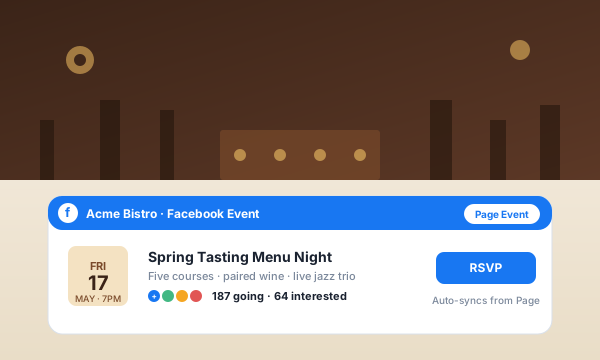
Restaurant specials and menu updates
Mirror recent Facebook Page posts about daily specials, menu photos, seasonal announcements, and kitchen updates on your restaurant site.
Embed posts from any public Facebook Page in 90 seconds. Show captions, attached photos or videos, reactions, comments, and shares. No code.
Built for no-code website teams























Live demo, not a screenshot. Style it, brand it, embed it. What you see here is what ships to your site.
From Facebook Pages to your site
Poper pulls your public Facebook Pages feed and renders it inline on your website, fully branded to match your design. No API keys, no manual updates.
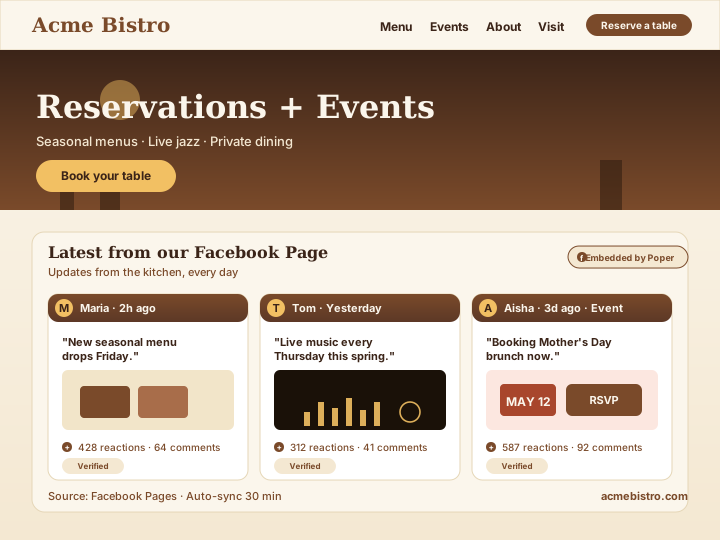 Poper widget live
Mockups for illustration. Pull your real Facebook Pages feed and embed in 90 seconds.
How to use it
Three steps. Under two minutes. Page admin login required.
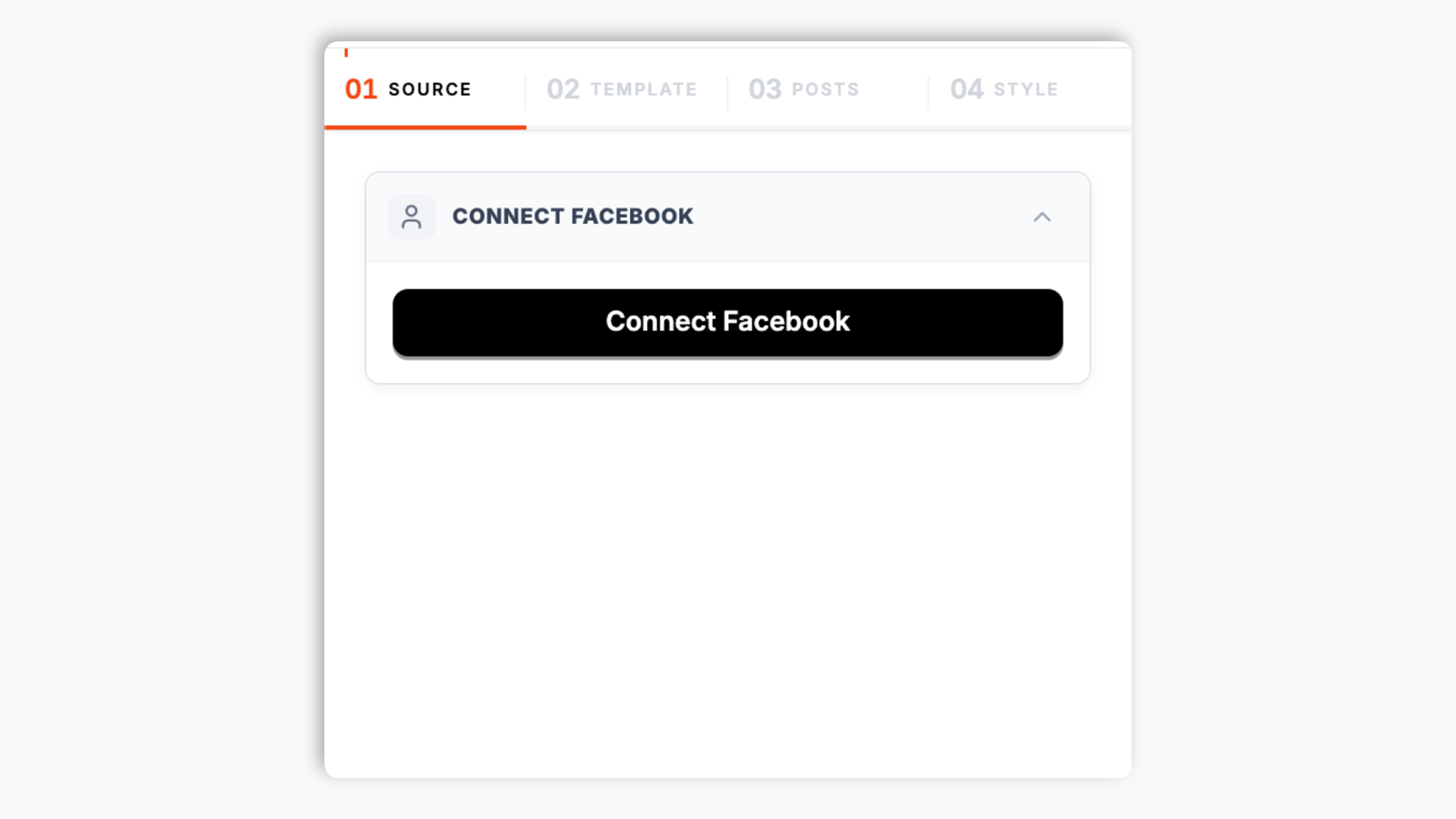
Sign in via Meta's official Facebook Login flow. You must be an admin (or editor with Page-content permissions) of the Page you want to embed.
Choose Default, Grid, Masonry, or List. Tweak colors, fonts, spacing, post elements, and the header display so the feed matches your page.
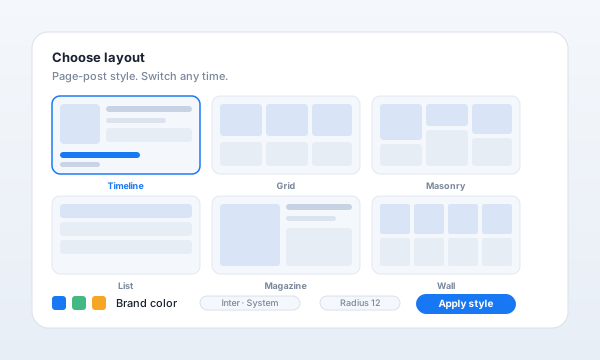
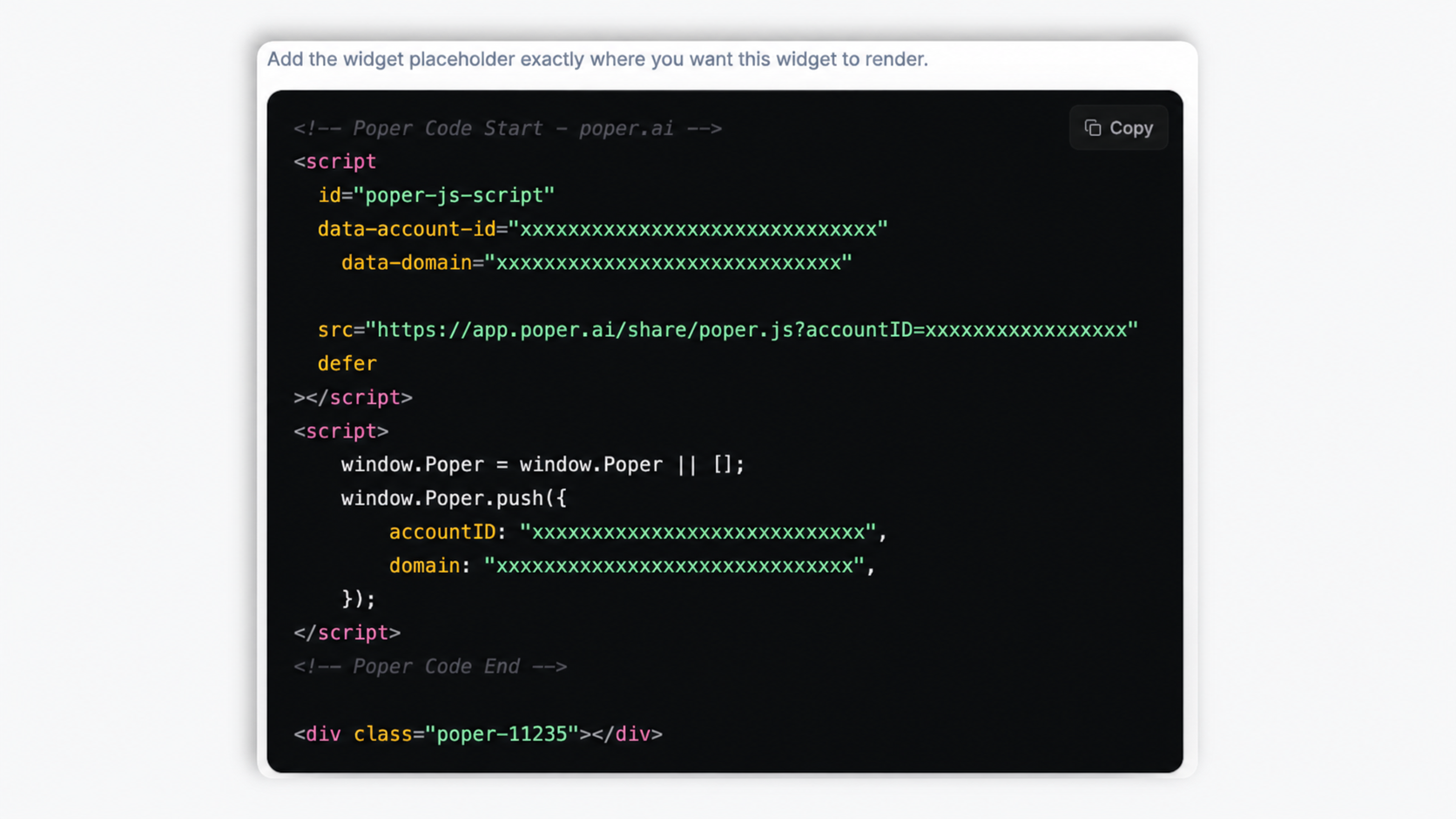
Paste the Poper embed snippet into your site. Works on WordPress, Shopify, Wix, Squarespace, Webflow, Ghost, Framer, and 250+ platforms.
Works everywhere
Drop-in install on WordPress, Shopify, Wix, Squarespace, Webflow, Framer, Ghost, and any HTML-friendly stack. No build step, no developer needed.


Plus 250+ other platforms via the embed snippet. If your site can render a <script> tag, it can render the Facebook Feed Widget: Embed Page Posts on Any Site.
Six things that matter when you are paying for a Facebook Page widget, not 30 features no one uses.
Meta deprecated the legacy Facebook Page Plugin (v15) in 2024 and has tightened Graph API permissions every year since. Most Facebook widgets are still wired to APIs that no longer exist or fail Meta's App Review. Poper runs an automated token-refresh job nightly, monitors every Graph endpoint we use, and ships hot-fix deploys within hours of any breaking change. Your Page feed keeps showing posts when competitors show empty states.
Poper displays the posts returned by Facebook's published posts feed: captions, attached photos or videos, dates, reactions, comments, and share counts. It does not pull Facebook Events, Page reviews, or local business profile details.
Render Like, Love, Haha, Wow, Sad, and Angry counts plus comment and share totals. Real social proof, not a static badge.
Use the styling controls available for this feed layout.
The embed loads through the Poper snippet. Validate layout and performance on your own page after embedding.
Use Default, Grid, Masonry, or List. Each layout is designed around Facebook Page posts, so visitors can scan recent updates in the format that fits your page.
Use cases
Four buyer types who get the most lift from embedding Facebook Feed Widget: Embed Page Posts on Any Site on their site.
Mirror recent Facebook Page posts about daily specials, menu photos, seasonal announcements, and kitchen updates on your restaurant site.
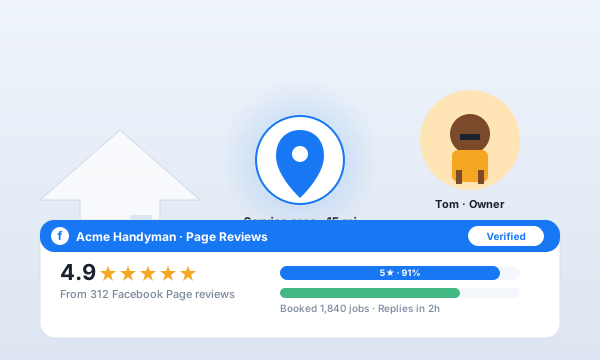
Surface recent Page posts about completed projects, service updates, and customer thank-you notes near your booking form.
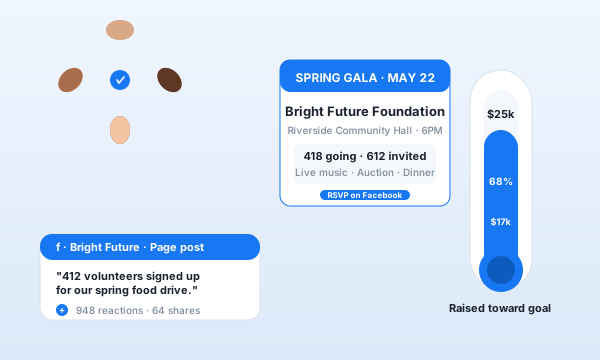
Facebook Pages are still the announcement channel for many nonprofits. Embed Page posts about campaigns, volunteer updates, and donor stories on the organization site.
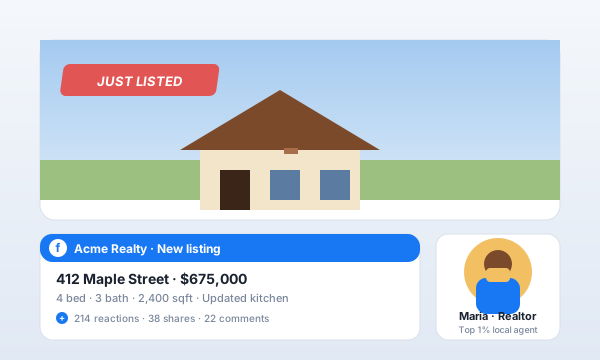
Listing updates and property photos live on your Facebook Page already. Embed those Page posts so buyers see fresh activity on your site.
Several platforms ship embeddable widgets that can pull a Facebook Page onto a website. Here is how Poper compares to the common widget providers in 2026.
| Recommended Poper | Elfsight | Common Ninja | SnapWidget | |
|---|---|---|---|---|
| Poper workspace available | Limited free tier | Limited free tier | ||
| Page posts feed | ||||
| Post media attachments | Paid only | |||
| Native video playback inline | Paid only | |||
| Reaction and share counts shown | Limited | Paid only | ||
| Default, list, grid, and masonry layouts | Limited | |||
| Theme presets and color controls | Limited | |||
| Layout styling controls | Paid only | Paid only | Paid only | |
| Pricing for unlimited widgets | Plan details vary | Vendor pricing varies | Vendor pricing varies | Vendor pricing varies |
| Bundled with popups, forms, quizzes, more widgets |
Comparison reflects external competitor positioning. Verify current details on each provider's site.
Restaurants, nonprofits, and local services who switched off the deprecated Page Plugin to Poper.
“We run a farm-to-table restaurant and our Facebook Page is where we post daily specials and menu photos. I pointed Poper at our Page and now our website's What's Fresh section shows those Page posts without sending customers to Facebook.”

“Our nonprofit uses Facebook Page posts for campaign updates, volunteer calls, and donation milestones. The Poper Facebook Feed widget lets us mirror those posts on our site without rebuilding the page every week.”

“The embed loads through the Poper snippet. Validate layout and performance on your own page after embedding.”

Pricing
All plans are billed yearly. Each card shows the per-month equivalent. Start free, then upgrade only when you need more campaigns, websites, or AI credits.
Yearly billing · save up to 40%Essential lead capture for solo creators and growing businesses.
billed $180/year
Full engagement suite with A/B testing, gamification & unlimited leads.
billed $348/year
Unlimited everything with white-label, API access & advanced analytics.
billed $948/year
Prices shown for the 50k monthly visitor tier on yearly billing. A Free Forever plan ($0) and a custom Enterprise plan are also available. No contracts, cancel anytime.
The embed loads through the Poper snippet. Validate layout and performance on your own page after embedding.
Use your own analytics to validate this feed on your site.
The embed loads through the Poper snippet. Validate layout and performance on your own page after embedding.
If you are evaluating a Facebook widget because you feel like fewer of your followers see your Page posts than they used to, that feeling is correct. Meta has progressively down-ranked Page content in the Facebook News Feed since the 2018 algorithm update that prioritized meaningful interactions between friends and family over Page broadcasts. Industry analyses from Hootsuite and Social Insider consistently show organic reach for Pages has fallen into the low single-digit percentages of follower count: most posts reach 1 to 5 percent of the people who follow the Page. Video posts and Facebook Live broadcasts get a small relative boost, but in absolute terms the curve has only gone one direction. Embedding your Page posts on your own website flips that dynamic. Your owned-channel visitors can see the latest Page posts you publish, and the engagement counts act as social proof for visitors who never opened Facebook in the first place. The widget will not fix declining reach inside Facebook, but it does mean your best posts stop being trapped behind News Feed throttling and start working on the surface where you own the visitor relationship.
The embed loads through the Poper snippet. Validate layout and performance on your own page after embedding.
Four buyer types get outsized value from embedding Page posts today. Restaurants and food businesses use it to mirror daily specials, menu photos, and kitchen updates. Local services use it to surface recent work, community announcements, and customer thank-you posts near their booking form. Nonprofits and community organizations use Facebook Page posts as their announcement channel for campaigns, volunteer updates, and donor stories. Real estate and property businesses post listing updates, property photos, and open-house reminders on their Facebook Page already, so embedding the post feed keeps those updates visible on the company site too. None of these use cases require Personal profile embedding, Events feeds, Page reviews, or local business profile blocks. They benefit from owned-channel distribution that does not depend on Facebook ad spend, and they justify the one-time Page admin OAuth setup because after that the integration updates through Poper's feed sync.
A Facebook feed widget is an embeddable script that displays public posts from a Facebook Page on your own website. It pulls post text, attached media, dates, reactions, comments, and shares via the Meta Graph API after a Page admin grants OAuth access, then refreshes automatically without manual updates.
Last fact-checked: . We re-verify every quarter.
Tutorial
A quick walkthrough of setting up and embedding this widget.
Tutorial video coming soon
Can't find the answer you're looking for? Chat with our support team.
Contact SupportPoper takes 90 seconds to embed and survives every Meta Graph API change. Start from your Poper workspace.
Free plan available forever