
Fan-art creators
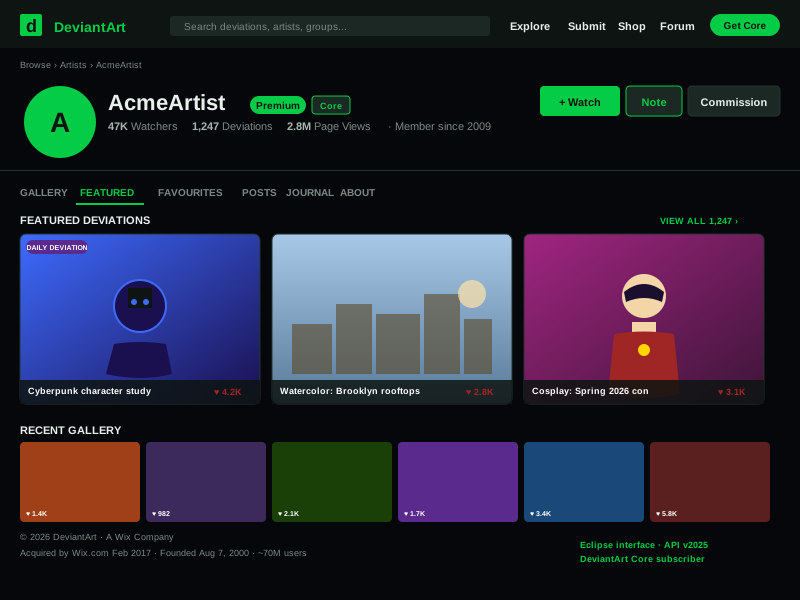
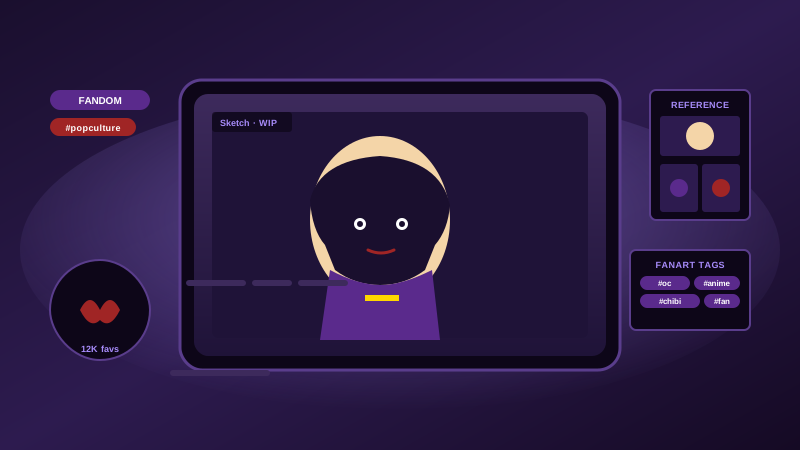
Fan artists drawing original characters, anime, chibi and pop-culture portraits embed their latest DeviantArt deviations directly onto a personal site so commission clients can browse recent work without leaving the page.
Embed your latest public DeviantArt deviations in 90 seconds. Pick from 8 layouts, match your brand, and publish with no code.
Built for no-code website teams























Live demo, not a screenshot. Pick a layout, switch to Bento, brand it. What you see here is what ships to your site.
From DeviantArt to your site
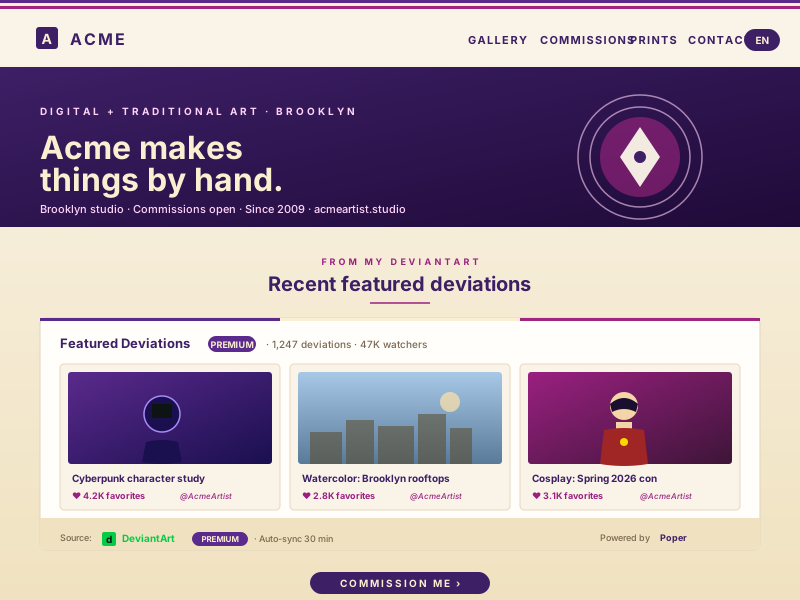
Poper pulls your public DeviantArt feed and renders it inline on your website, fully branded to match your design. No API keys, no manual updates.
 Poper widget live
Mockups for illustration. Pull your real DeviantArt feed and embed in 90 seconds.
How to use it
Three steps. Under two minutes. No developer needed.
Sign in via DeviantArt's official OAuth 2.0 flow and authorize Poper to read your public deviations. Connection takes 30 seconds and is fully revocable from your DeviantArt settings any time.
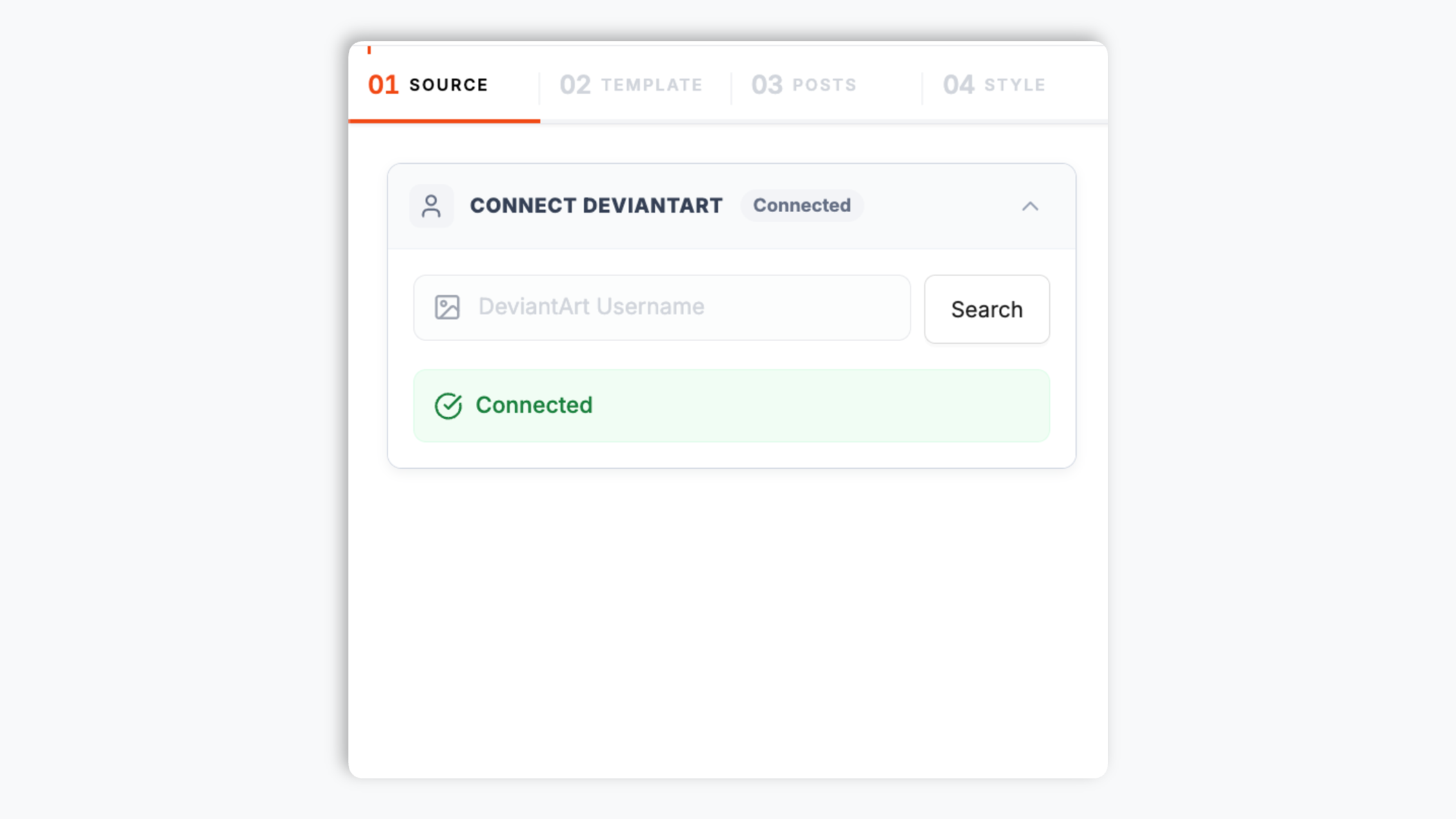
Choose one of 8 DeviantArt feed layouts: Default, Grid, Highlight, Bento, Polaroid, Filmstrip, Shape or Neon. Tweak colors, gutters and card style to match your portfolio.
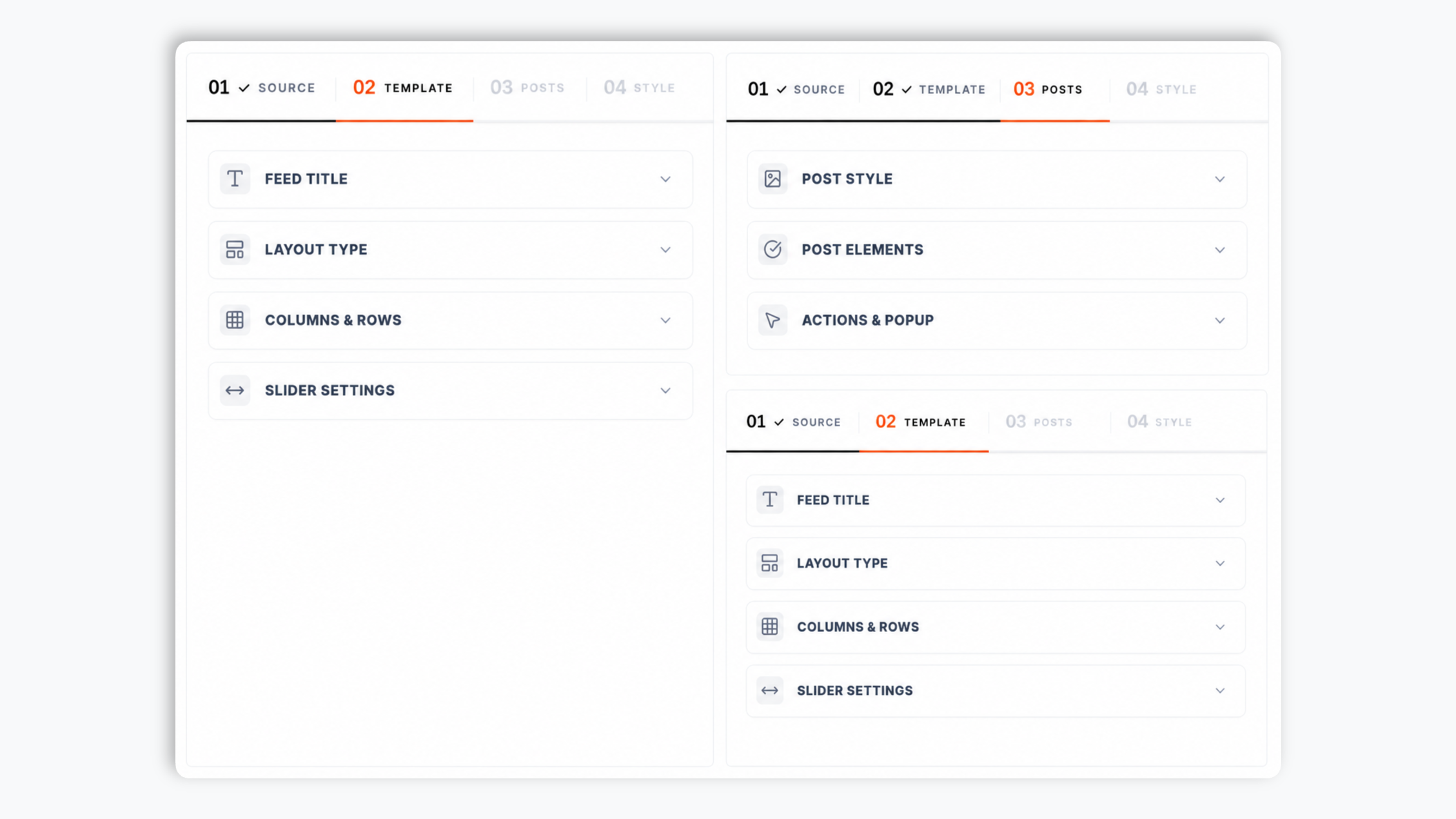
Paste the Poper embed snippet into your site. Works on WordPress, Shopify, Wix, Squarespace, Webflow, Ghost, Framer and 250+ platforms.
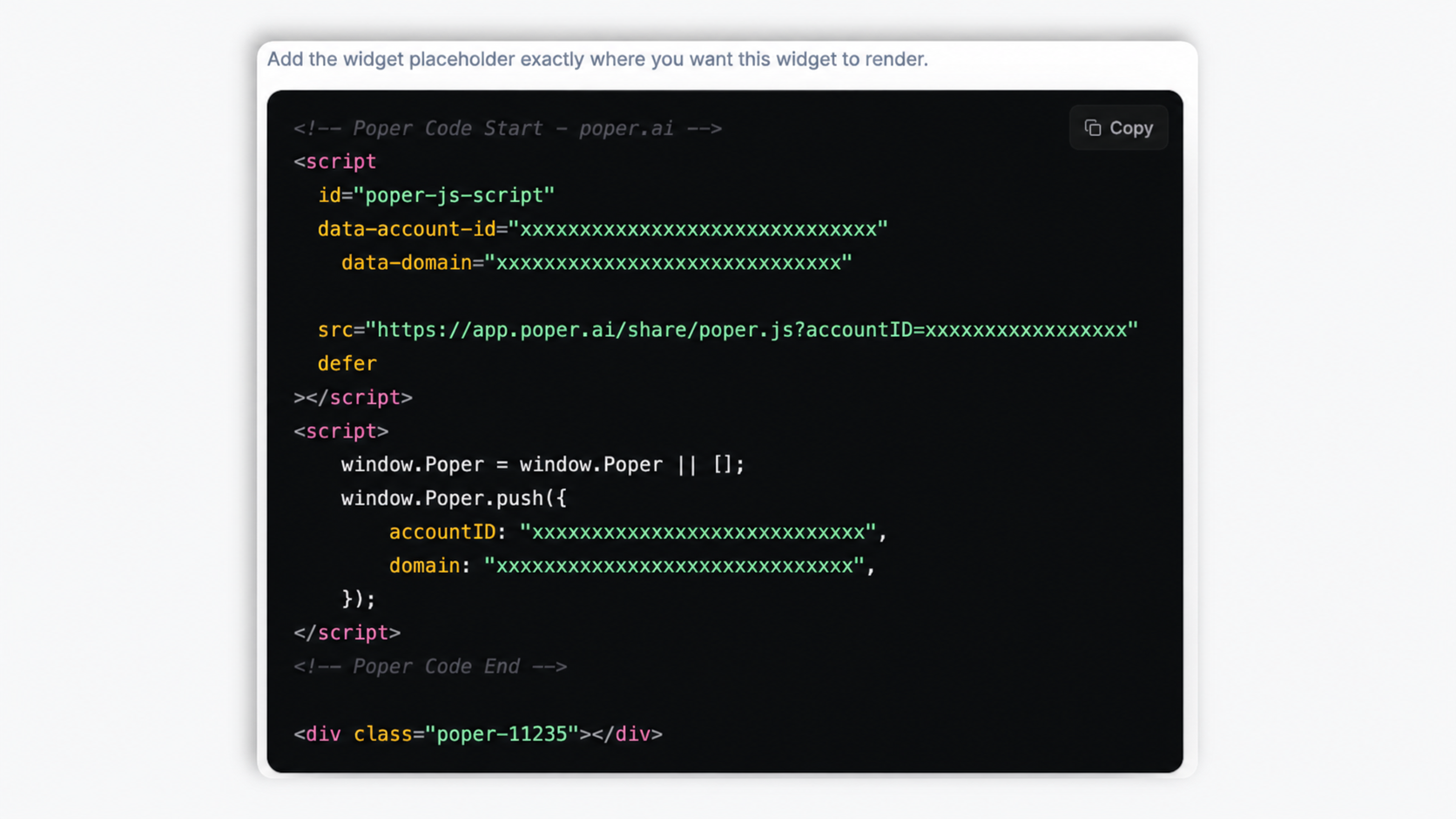
Works everywhere
Drop-in install on WordPress, Shopify, Wix, Squarespace, Webflow, Framer, Ghost, and any HTML-friendly stack. No build step, no developer needed.


Plus 250+ other platforms via the embed snippet. If your site can render a <script> tag, it can render the DeviantArt Feed Widget: Embed Deviations on Any Site.
Six things that matter when you are paying for a DeviantArt widget, not 30 features no one uses.
DeviantArt is the longest-running art community on the open web, founded August 7, 2000, with roughly 70 million registered users and the original vocabulary the medium runs on. Poper preserves the words artists actually use: deviations for artwork, favourites for saves, watch for the artist follow graph, and groups for community collectives. No generic Posts or Photos rebranding, no community context stripped at embed time.
Choose Default, Grid, Highlight, Bento, Polaroid, Filmstrip, Shape or Neon. The live builder lets you switch layouts, adjust spacing, tune post cards, and match the feed to a portfolio, commission page, or creator homepage.
Show recent public artwork from the connected DeviantArt profile with titles, thumbnails, dates, favourites, comments and view counts.
Cards can show the same engagement signals DeviantArt visitors expect: favourites, comments, views, profile identity and links back to the original deviation.
The embed loads through the Poper snippet. Validate layout and performance on your own page after embedding.
Use the styling controls available for this feed layout.
Use cases
Four buyer types who get the most lift from embedding DeviantArt Feed Widget: Embed Deviations on Any Site on their site.
Fan artists drawing original characters, anime, chibi and pop-culture portraits embed their latest DeviantArt deviations directly onto a personal site so commission clients can browse recent work without leaving the page.
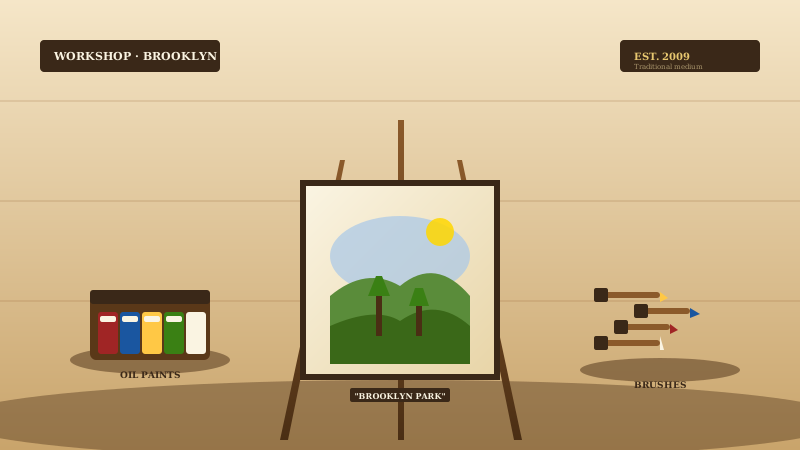
Oil painters, watercolorists and traditional-medium illustrators who post work on DeviantArt embed a fresh feed on a workshop site so studio visitors see recent canvases before bouncing.
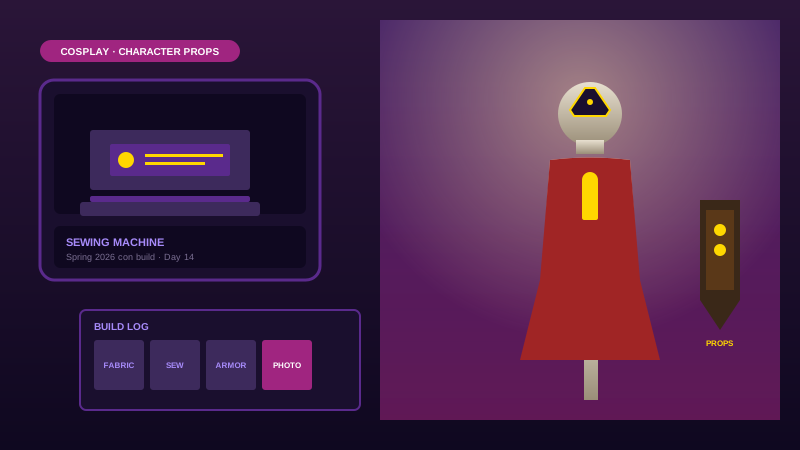
Cosplayers and convention photographers can show recent DeviantArt deviations on a booking site, with prop builds and finished costume photography appearing in the same branded feed.
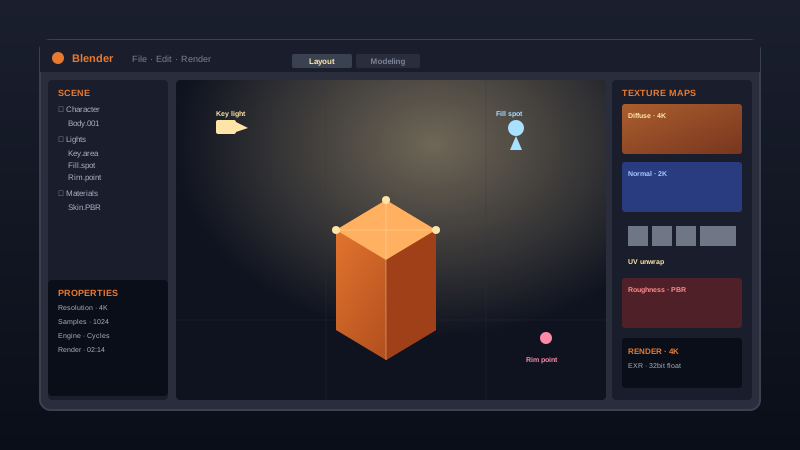
3D character artists, environment modelers and motion-graphic creators working in Blender, Maya and Cinema 4D embed their recent DeviantArt renders onto a portfolio site so studios see the current range of models, lighting and texture work.
Most widget platforms have no DeviantArt support, and DeviantArt's own native embed ships one deviation at a time. Here is how Poper stacks up against other embeddable widget options.
| Recommended Poper | Elfsight | Common Ninja | DeviantArt native embed | |
|---|---|---|---|---|
| Poper workspace available | Limited free tier | Limited free tier | ||
| DeviantArt feed support | ||||
| Connected profile feed | N/A | N/A | ||
| Public deviations rendered | N/A | N/A | ||
| Layout options (default, grid, bento, polaroid, more) | 8 layouts | Generic image widgets only | Generic image widgets only | Single deviation only |
| Sync frequency (lowest paid plan) | Refresh cadence follows your Poper plan: Free every 15 days, Starter every 3 days, and Pro/Business every 1 day. | Refresh cadence follows your Poper plan: Free every 15 days, Starter every 3 days, and Pro/Business every 1 day. | Refresh cadence follows your Poper plan: Free every 15 days, Starter every 3 days, and Pro/Business every 1 day. | On page load |
| Available design controls | Paid only | Paid only | ||
| Starting paid price | Plan details vary | Vendor pricing varies | Vendor pricing varies | Free |
| Bundled with popups, forms, quizzes |
Comparison reflects external competitor positioning. Verify current details on each provider's site.
Digital painters, cosplayers, fandom collectives and comic creators who switched from per-deviation embeds to Poper.
“The DeviantArt Feed widget gave my portfolio a live artwork section without rebuilding the page after every upload. I connected my account, picked the Bento layout, matched the colors to my site, and new deviations now show up where clients already browse my commissions.”
“We wanted our convention photography site to feel current without sending visitors away immediately. The DeviantArt Feed widget let us embed recent deviations in a Polaroid-style layout that fits the rest of the booking page.”
“I tried static screenshots first, but they were stale within a week. With Poper's DeviantArt Feed widget, I can keep my latest renders on my portfolio and switch layouts without touching the embed code again.”
Pricing
All plans are billed yearly. Each card shows the per-month equivalent. Start free, then upgrade only when you need more campaigns, websites, or AI credits.
Yearly billing · save up to 40%Essential lead capture for solo creators and growing businesses.
billed $180/year
Full engagement suite with A/B testing, gamification & unlimited leads.
billed $348/year
Unlimited everything with white-label, API access & advanced analytics.
billed $948/year
Prices shown for the 50k monthly visitor tier on yearly billing. A Free Forever plan ($0) and a custom Enterprise plan are also available. No contracts, cancel anytime.
DeviantArt is older than YouTube, older than Facebook, older than every social network most people remember. Founded on August 7, 2000 by Scott Jarkoff, Matthew Stephens and Angelo Sotira, it has been the longest-running art-first community on the open web for the better part of a quarter century. Today it sits inside Wix.com, which acquired the platform in 2017 for around $36 million, and it serves roughly 70 million registered users across digital painters, traditional artists, photographers, fan creators, comic artists and the broad fandom communities that defined art online before art Twitter existed. A deviantart feed widget on your own site captures that heritage at the moment a visitor lands on your portfolio. This guide walks through what actually matters when you choose and configure a DeviantArt widget in 2026: the OAuth 2.0 reality, public deviation embeds, the Wix-era roadmap and the 8 layout choices that make an embedded feed feel native to your site.
DeviantArt has been a Wix.com subsidiary since the February 2017 acquisition. The platform kept its own brand, its own roadmap and a separate engineering team based out of Hollywood, California, and Wix has largely run it as an art-community standalone rather than folding it into the main site builder. Two strategic chapters define the post-acquisition era. First, the launch of DeviantArt Core (the paid premium subscription) and DeviantArt Eclipse (the redesigned interface that fully replaced the legacy site by 2020), which together modernized the product without abandoning the vocabulary the community grew up with. Second, the 2021 NFT pivot via DeviantArt Protect (an image-recognition tool that scanned NFT marketplaces for stolen artwork) and the short-lived DreamUp generative-art service, both of which reflected DeviantArt's attempt to position the longest-running art community as the trust layer for the AI and crypto art waves. The community pushback on AI-generated content was loud and DeviantArt has since rolled back most of the AI-forward defaults, but the underlying lesson stuck: artists trust DeviantArt because it has been the home of art-first norms longer than any generative-AI platform will exist. For a portfolio site in 2026, that heritage is the reason to embed a DeviantArt feed rather than a generic photo block. The audience already knows how to read the layout.
DeviantArt exposes a public REST API, branded as the DeviantArt API, that uses OAuth 2.0 with scoped read tokens and requires app-level approval before any third party can call the production endpoints. Poper holds that platform-level approval, which means your widget calls go through Poper's vetted application credentials and you do not have to register your own developer client, wait for review, or maintain refresh-token rotation. The current Poper widget reads the connected profile, public deviations, deviation metadata, thumbnails, favourite counts, comment counts and view counts. It does not ask visitors to log in to DeviantArt, does not read private account areas, and does not post on your behalf. Quota is handled by Poper's server-side refresh and cache path so normal embeds do not send every visitor directly to the DeviantArt API.
The current DeviantArt feed widget is intentionally simple: connect a DeviantArt account, render the latest public deviations, and style the feed for your site. The builder focuses on the presentation layer rather than source picking. That means artists can set up the widget quickly, choose a layout, adjust the visual treatment, and publish without rebuilding a custom feed by hand. Each card can include the artwork preview, title, publish date, favourites, comments, views and a link back to the original deviation on DeviantArt.
DeviantArt's native embed is a per-deviation script that renders one piece of art at a time inside an article. It is fine when you want to feature a single character study in a long-form blog post, but it becomes tedious when you want a living portfolio section on your own domain. Poper focuses the setup around the layout decision: connect the account, preview the feed, choose the layout, brand the card style, and publish the snippet. The source stays the connected profile's public deviations, while the site owner controls how those deviations look on the page. That simpler workflow is useful for artists who want their latest work on a portfolio, commission page, studio site or resource page without maintaining a second image archive.
The embed loads through the Poper snippet. Validate layout and performance on your own page after embedding.
A DeviantArt feed widget is an embeddable script that renders recent public deviations from a connected DeviantArt profile on your website, with 8 customizable layouts.
Tutorial
A quick walkthrough of setting up and embedding this widget.
Tutorial video coming soon
Can't find the answer you're looking for? Chat with our support team.
Contact SupportPoper takes 90 seconds to embed and ships 8 layout options for your DeviantArt feed. Start from your Poper workspace.
Free plan available forever