





















Reverb Feed Widget for Website. Free, Unlimited - Poper
Reverb Feed Widget

Reverb feed widget for any website.

Embed your Reverb shop in 90 seconds. Vintage guitars, boutique pedals, synths, and studio gear with live pricing, condition badges, and Reverb Bump awareness. Free, no code.

No credit card required
14-day free trial
Cancel anytime

Trusted by 11,000+ brands

Timetics
Academie Digitale
Goldcast
nbcf
Seedstock
Wow
Linkxar
Gale Toyota
Skills
Rugby Sport
Lamp
Leaktronics
Steel
Theatre in Chicago
Globerto
Meetup
FYM
Zeben
Kraftix
IETraditionala
Meethires
Leadscrape
Happily
Timetics
Academie Digitale
Goldcast
nbcf
Seedstock
Wow
Linkxar
Gale Toyota
Skills
Rugby Sport
Lamp
Leaktronics
Steel
Theatre in Chicago
Globerto
Meetup
FYM
Zeben
Kraftix
IETraditionala
Meethires
Leadscrape
Happily
Free forever, paid plans from $19/mo

Try the live Reverb widget

Live demo, not a screenshot. Style it, brand it, embed it. What you see here is what ships to your site.

From Reverb to your site

Your Reverb reviews. Now on your own domain.

Poper crawls the official Reverb review feed for your business and renders it inline on your website. Same reviews, your branding, your domain.

reverb.com
Reverb.com shop page for AcmeGuitars in Brooklyn NY, 4.9 stars from 1,247 sales, Preferred Seller badge, six-gear grid with 1962 Fender Stratocaster, Boss DS-1, Moog Sub37 highlighted as Bumped listingsSource: ReverbOpen
Reverb.com shop page for AcmeGuitars in Brooklyn NY, 4.9 stars from 1,247 sales, Preferred Seller badge, six-gear grid with 1962 Fender Stratocaster, Boss DS-1, Moog Sub37 highlighted as Bumped listings
acmeguitars.shop
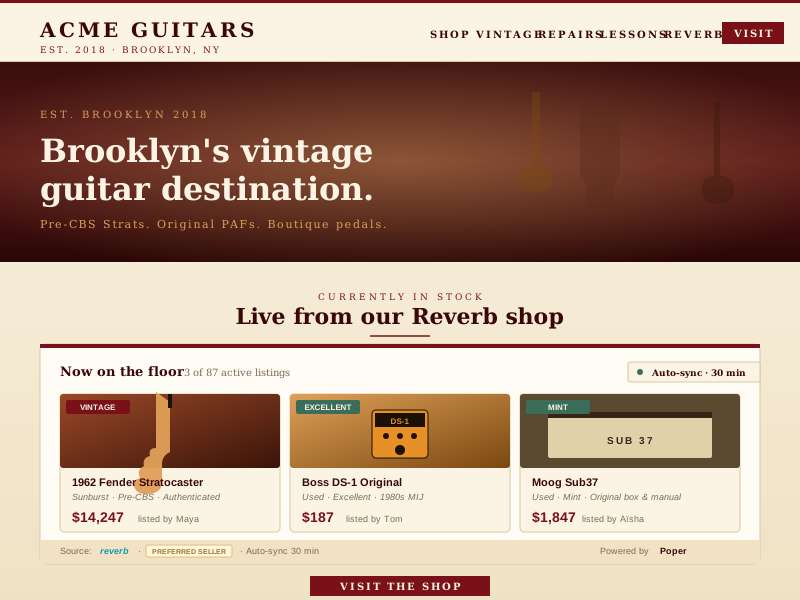
AcmeGuitars own branded music store website acmeguitars.shop with the Poper Reverb feed widget embedded inline showing the same three highlighted listings in a deep burgundy and warm cream palettePoper widget live
AcmeGuitars own branded music store website acmeguitars.shop with the Poper Reverb feed widget embedded inline showing the same three highlighted listings in a deep burgundy and warm cream palette

Mockups for illustration. Pull your real Reverb Feed Widget: Embed Music Gear Listings, Vintage Guitars, and Pedals on Any Site from Reverb and embed in 90 seconds.

How to use it

How to add Reverb to your website

Three steps. Under two minutes. No developer needed.

  1. 01

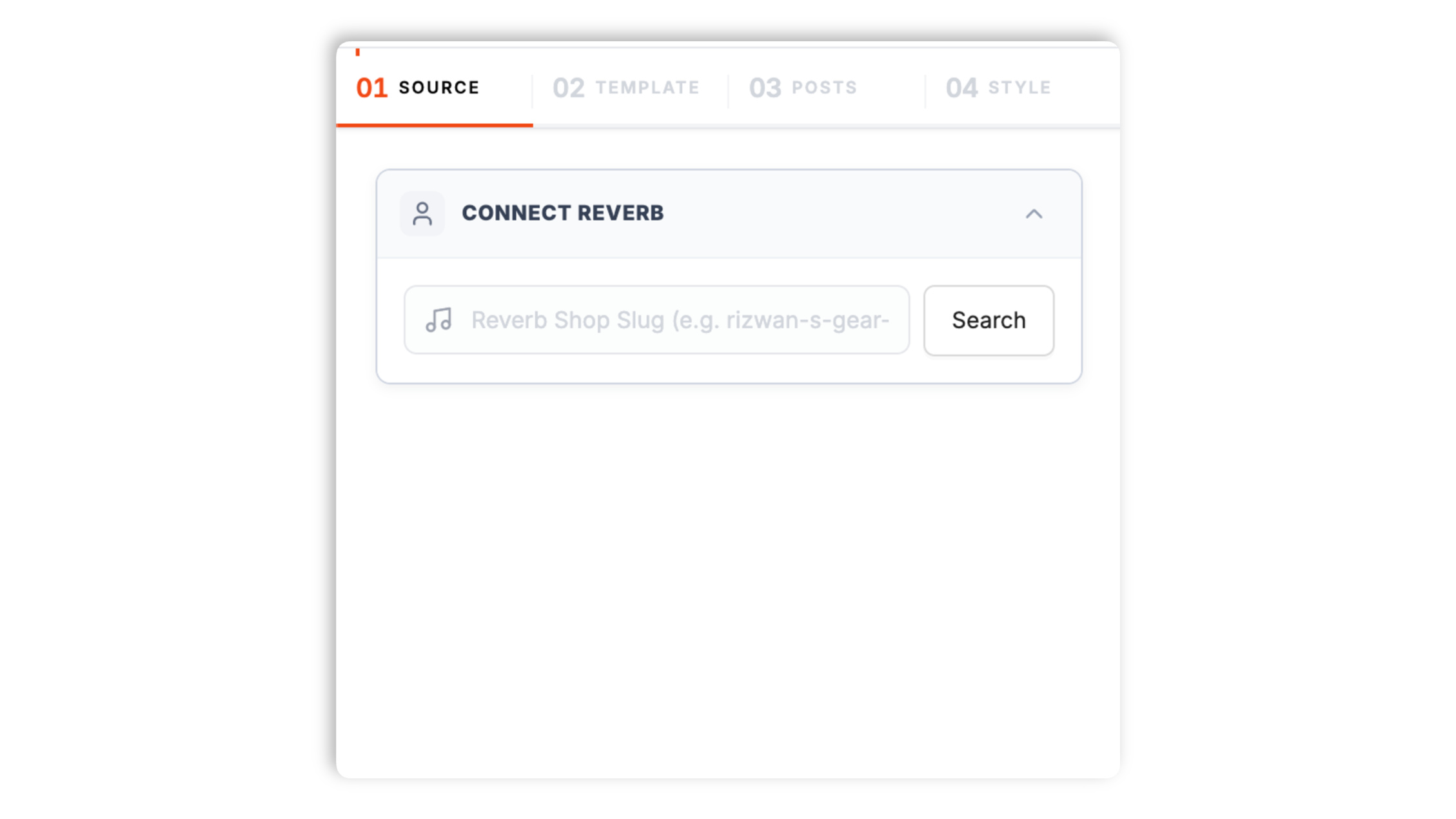
    Connect your Reverb shop

    Sign in via Reverb's official OAuth flow or paste your shop URL. The widget pulls your listings, photos, condition tags, and Reverb Price Guide context through the official Reverb API.

    Poper widget builder showing reverb.com/shop/acmeguitars connected with 4.9 stars from 1,247 sales, Preferred Seller badge, and a teal Connect shop button
  2. 02

    Pick a layout and brand it

    Choose Gear grid, Vintage shelf, Pedalboard, Spec sheet, Sold-history wall, or Featured carousel. Tweak colors, fonts, condition badge styling, and Price Guide display to match your shop.

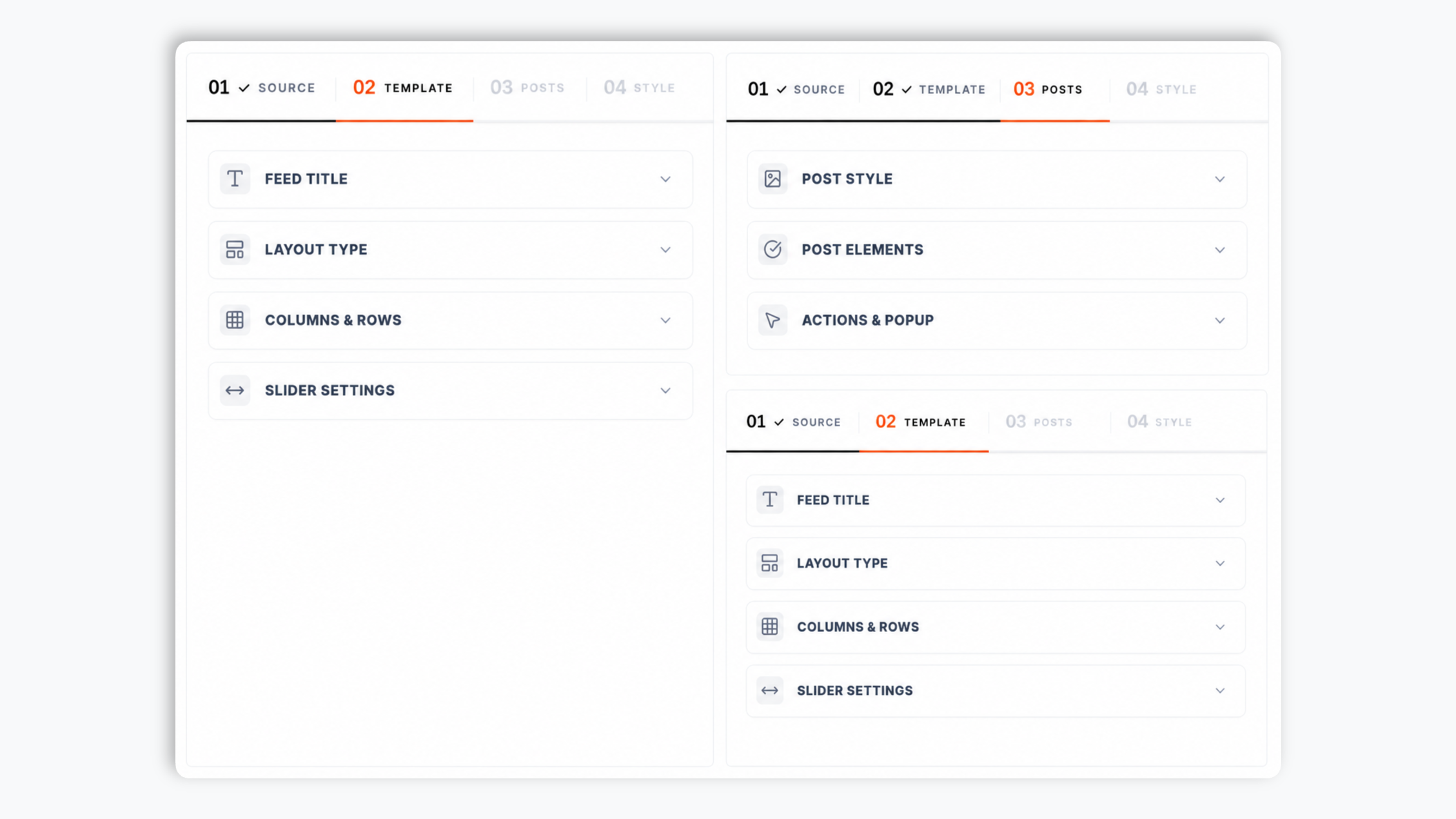
    Layout picker showing six Reverb widget layouts (gear grid, listing card, vintage row, photo gallery, recently sold, mobile stacked) plus brand color picker and condition badge controls
  3. 03

    Copy the snippet and embed

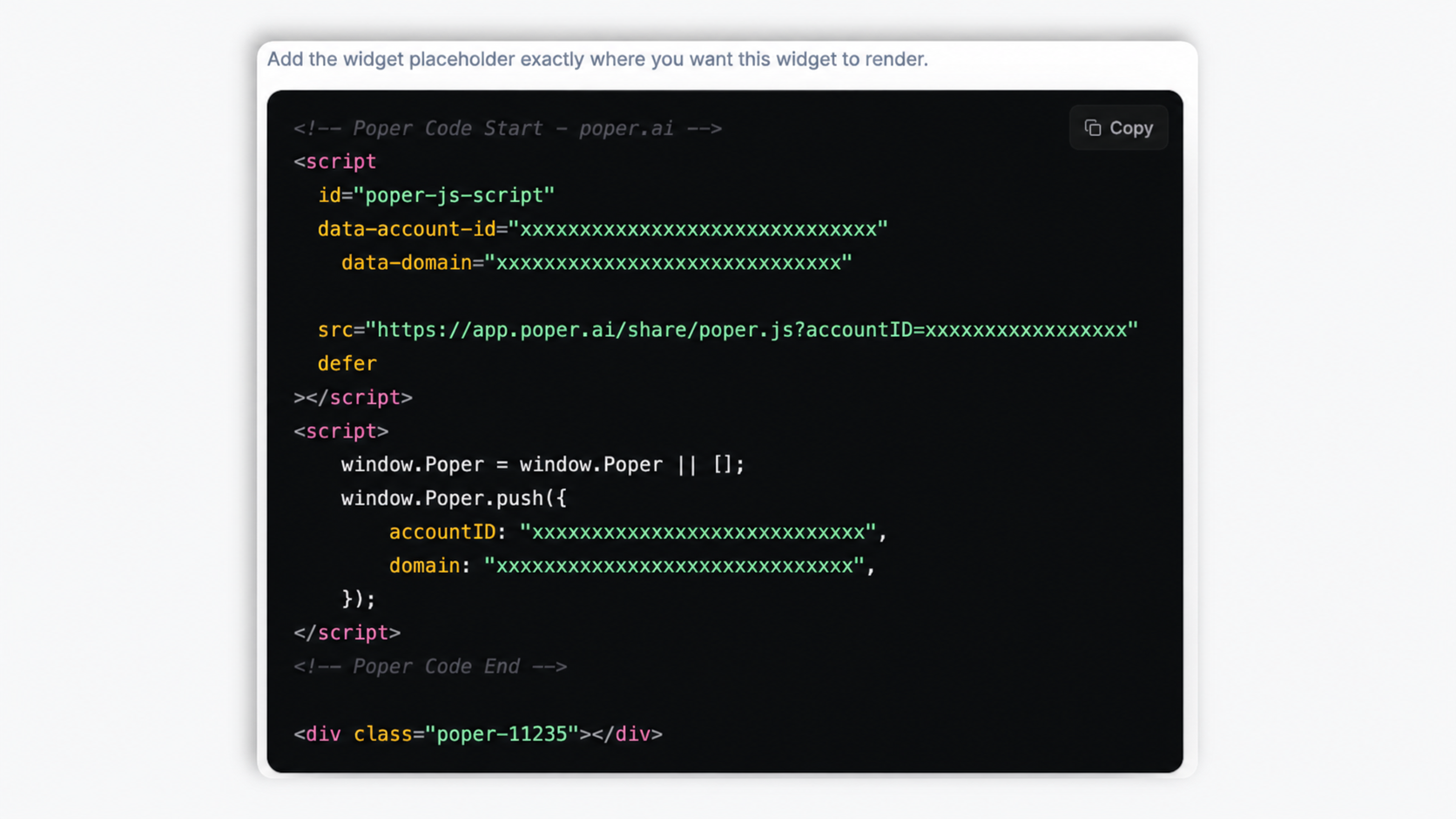
    Paste the one-line script tag into your site. Works on Webflow, Framer, Carrd, Bandzoogle, Squarespace, WordPress, and 250+ platforms.

    One-line embed script for the Reverb feed widget shown in a code editor with a teal Copy button and Webflow, Framer, Carrd, Bandzoogle, Squarespace platform badges

Works everywhere

Works with every website platform you already use

Drop-in install on WordPress, Shopify, Wix, Squarespace, Webflow, Framer, Ghost, and any HTML-friendly stack. No build step, no developer needed.

WordPress
Shopify
Wix
Squarespace
Webflow
Framer
Ghost
HTML

Plus 250+ other platforms via the embed snippet. If your site can render a <script> tag, it can render the Reverb Feed Widget: Embed Music Gear Listings, Vintage Guitars, and Pedals on Any Site.

What you get with Poper Reverb Feed

Six things that matter when you are paying for a Reverb widget, not 30 features no working dealer or builder uses.

Music gear economics, native to your domain

Reverb is the global marketplace for musical instruments and gear, the default home for vintage guitar dealers, boutique pedal builders, synth collectors, and studio engineers liquidating outboard. Reverb handles payment processing, Reverb Protection coverage on shipping disputes, and the buyer-trust layer that converts cold visitors into checkout. What Reverb does not do is own your discovery surface. Buyers who already know your shop by name search you, find your domain, and want to see live inventory without bouncing to a generic marketplace browse page. Poper renders your full Reverb listing catalog inline on your site with condition badges, Price Guide context, year and provenance tags, and direct deep-links to the original Reverb listing for checkout. Your domain owns the brand, your inventory stays in one place, and Reverb handles the transaction the way it always has.

Aggregate listings across categories and brands

Most Reverb widgets only show one category at a time. Poper supports multi-category aggregation from the same widget config. Show electric guitars, effects pedals, synths, and recording gear in interleaved grids or filtered tabs without re-embedding the snippet.

Vintage vs new categorization

Decade filters (50s through 90s), boutique vs factory tags, and provenance fields render natively. Vintage dealers get the spec page; new-gear shops get the catalog grid.

Reverb Bump promoted listings, surfaced

Listings you Bump on Reverb get a featured slot on your embed too. Same promoted inventory, your site, no double-management of which gear is on sale.

Lighthouse-safe even on 200-listing dealer pages

Cover photos lazy-load through an edge layer with WebP conversion. Listing detail iframes only mount on click. Lighthouse Mobile stays at 90+ across all four categories on a typical vintage-dealer catalog page.

Multi-shop aggregation for collectives and consignors

Combine listings from 2 or more Reverb shops into one feed. Built for vintage dealer collectives, gear consignment networks, and boutique pedal-builder collaboratives running shared catalog pages.

Use cases

Where Reverb Feed Widget: Embed Music Gear Listings, Vintage Guitars, and Pedals on Any Site actually moves the needle

Four buyer types who get the most lift from embedding Reverb Feed Widget: Embed Music Gear Listings, Vintage Guitars, and Pedals on Any Site on their site.

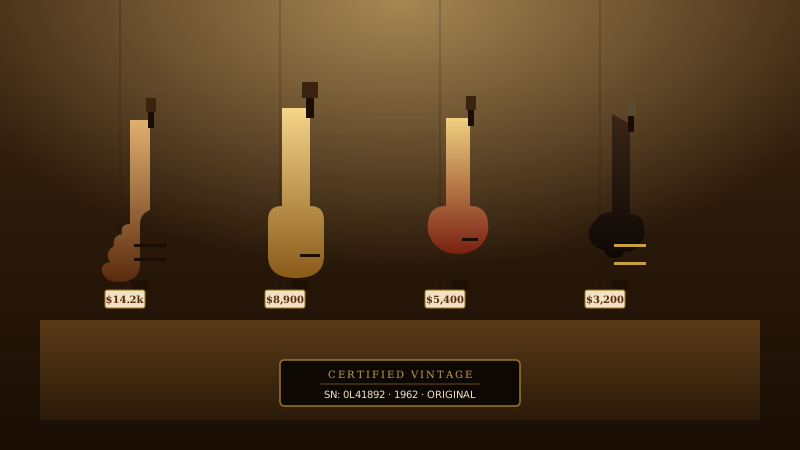
Vintage guitar shop interior with four classic guitars on stands under spotlight, hanging price tags, and a certified vintage serial-number plaque on the back wall

Vintage guitar shops

Pre-CBS Stratocasters, 50s Goldtops, Japanese vintage Mosrites, and hand-built boutique acoustics deserve a proper showcase. Embed your full Reverb catalog on your dealer site with detailed condition photos, Reverb Price Guide references, year and provenance fields, and the sold-item social proof serious collectors want before paying five figures.

Luthier workshop with handmade guitar in progress on a wood workbench, chisels and clamps laid out, wood shavings scattered, and warm window light from the right

Luthiers + builders

Hand-built archtops, neck-through electrics, and one-off acoustic builds finished on a workbench, photographed in good light, then sold through Reverb. Embed your current builds on your luthier site so buyers see the actual instrument on your bench rather than a stock-photo gallery.

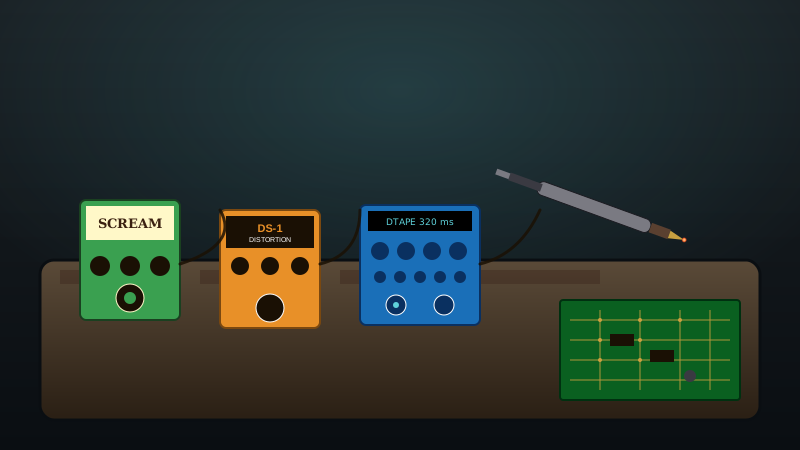
Effects pedal builder workbench with three boutique guitar pedals on a velcro pedalboard, soldering iron with hot tip glow, and an exposed circuit board ready for assembly

Effects pedal builders

Custom pedal makers and small amp builders running their primary sales channel through Reverb. Embed your shop on a Webflow or WordPress builder site as the live product catalog with stock counts, build-queue lead times, and limited-edition variant tags surfaced inline.

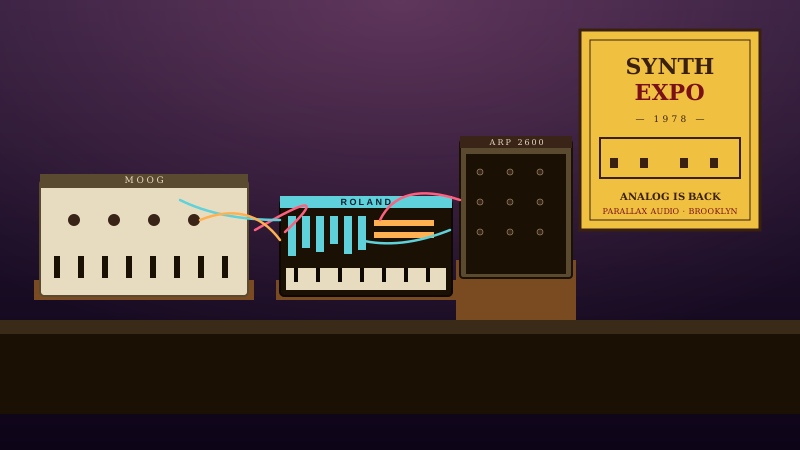
Vintage synth shop with three classic analog synthesizers (Moog, Roland Juno, ARP 2600) on a wood shelf connected by colorful patch cables and a vintage Synth Expo 1978 poster on the wall

Vintage synth shops

Studios and dealers liquidating analog synths and rack outboard list everything from a Juno-106 to a Moog Sub37 to a Urei 1176 on Reverb. Embed your synth catalog on your shop site with patch-cable photography and condition notes that serious studio engineers want before paying for vintage outboard.

Poper vs other Reverb widgets

Reverb ships a free official shop widget for verified shops, but it locks you into Reverb-default chrome and stops at single-shop embeds. Here is how Poper stacks up against the most common alternatives on what actually matters for music gear sellers.

 Recommended
Poper
Reverb Native Shop Widget
eBay Feed Widget (Generic)
Sweetwater Embed (Retailer Only)
Free plan available
Wholesale only
Reverb-specific listing rendering (condition, Price Guide)
Multi-category aggregation in one feed
Generic only
Decade filters for vintage gear (50s, 60s, 70s)
Multi-shop combined feed (collectives, consignors)
Reverb Bump promoted-listing surfacing
Native flag
Sold-item history wall (social proof)
Product and Offer JSON-LD
Retailer-only
Custom theming past Reverb default chrome
Two presets only
Sync frequency (lowest paid plan)
30 minutes
Real-time native
12 hours
Manual
Bundled with popups, forms, quizzes

Comparison reflects publicly listed pricing and features as of 2026. Verify current details on each provider's site.

Real dealers. Real builders. Real sales.

Vintage guitar dealers, luthiers, boutique pedal makers, and recording-studio gear sellers who switched from static Reverb links to embedded shops on Poper.

Poper has improved our website's user engagement! Since integrating Poper's personalized popups, we've seen a dramatic surge in conversions and user interactions. The platform's intuitive design makes creating and customizing popups a breeze, even for those with minimal tech skills. What truly sets Poper apart are its…
Jayson Ang
Jayson Ang
Singapore Property Swapper · Singapore Property Swapper
Fantastic app and support team, they are very quick to help and provide a solution or improvement to their product. Highly recommended!
Alex
Alex
CEO · AH
Poper has been a total lifesaver for our agency! As a digital marketing agency, we’re always juggling a million things at once. Poper has been a real game-changer in terms of streamlining our workflow and keeping track of all our clients’ campaigns. The ability to track all our clients’ websites from one place is a…
Idris Basir
Idris Basir
-

Pricing

Simple pricing. Free plan covers most websites.

Free forever for one widget. Upgrade only when you need faster sync, multiple instances, or to drop the watermark.

Free

Everything you need to ship the widget today.

$0forever
  • 1 widget instance
  • All layouts & customization
  • Brand-match styling
  • 6-hour sync cadence
  • Poper watermark
Start free
Most popular

Pro

Remove the watermark, faster sync, more widget instances.

$19/mo
  • Unlimited widget instances
  • 30-minute sync cadence
  • No Poper watermark
  • Custom CSS
  • Priority email support
  • Shoppable tagging
Start 14-day trial

Business

Multi-site, multi-account, white-label.

$49/mo
  • Multi-account combined feeds
  • Real-time sync
  • White-label embed
  • API access
  • Dedicated success manager
  • Custom SLA
Start 14-day trial

All plans include unlimited page views, no contracts, cancel anytime. Annual billing saves 20%.

Guide · 8 min read

The complete guide to embedding Reverb on your website

A reverb feed widget is how a music gear seller turns the global Reverb marketplace into a live catalog living on their own domain. Reverb is the eBay-and-Etsy hybrid for musical instruments and gear, the default platform for vintage guitar dealers, boutique pedal builders, synth collectors, recording engineers liquidating studios, and brick-and-mortar music shops running their primary online channel. Founded in 2013 by David Kalt of Chicago Music Exchange, acquired by Etsy in 2019, then sold back to its founders in 2024, Reverb has stayed remarkably consistent through the ownership changes: a music-specific marketplace with category taxonomy that knows the difference between a Tube Screamer clone and an original Hideaway, condition grading that respects vintage provenance, and a Price Guide built from real sold-listing data that buyers and sellers actually trust. This guide walks through what actually matters when you choose and configure a Reverb widget in 2026: the API access model, multi-listing aggregation, vintage vs new categorization, Product schema for music-gear search visibility, the Reverb Bump promoted-listings system, and what a Reverb embed really costs in Lighthouse on a 200-listing dealer page.

01

Why Reverb still owns music gear marketplace economics in 2026

Reverb launched in 2013, founded by David Kalt of Chicago Music Exchange to fix the problem that eBay and Craigslist were the only options for selling used and vintage musical instruments and neither understood the category. Kalt and his team built a marketplace specifically for music gear from day one, with category taxonomy that knew the difference between a P-90 and a humbucker, condition grading that respected vintage provenance, and a Price Guide built from real sold-listing data the platform aggregated from its own transactions. The bet paid off. By 2019 Reverb had become the dominant music gear marketplace globally, and Etsy acquired the platform in a deal that valued Reverb at roughly 275 million USD. The Etsy era brought scale and infrastructure investment but also strategic drift, with Reverb sitting awkwardly inside Etsy's broader handmade-and-vintage portfolio that did not really know what to do with electric guitar amplification or boutique synthesizer modules. In April 2024 Etsy sold Reverb back to its founders (Kalt and a group of original Reverb investors) at a reported price below the original acquisition. The founder return has so far been a stabilizing force for the platform: the Reverb API for sellers continues to operate with full read access to shop listings, sold history, Price Guide data, and category taxonomy. Bump (Reverb's promoted-listings auction system) still runs the same way it has since 2017. Reverb Protection coverage on shipping disputes is intact. The platform that vintage dealers, boutique builders, and recording studio gear sellers depend on is still operating and still embeddable. For a huge slice of the music gear economy (vintage guitar dealers, hand-built pedal companies, small amp builders, used studio outboard sellers, brick-and-mortar music shops running primary online sales through Reverb) the platform is the actual store. Embedding the Reverb feed on your own site is how you connect your domain to the marketplace without losing the visitor to reverb.com's discovery surfaces or sending them to a checkout that lives outside your brand identity.

02

Multi-listing aggregation, decade filters, and the embed primitives a Reverb dealer actually wants

Reverb publishes a documented public API for sellers with read access to shop listings, sold history, Price Guide data, category taxonomy, and condition grades. Authentication is OAuth-based for full shop access, with a fallback structured-data path through public reverb.com/shop/shop-name URLs for sellers who do not want to authorize an OAuth scope. The widget exposes five distinct embed primitives. A full shop inventory feed pulls every active listing on a shop sorted by creation date or price, with optional sold-history interleaving for social proof. This is the primitive most dealer homepages use as the primary catalog. A category filter narrows the feed to a specific Reverb category (electric guitars, effects pedals, synths and keyboards, drums and percussion, recording gear) which is essential for a multi-category dealer that wants different page sections to surface different inventory. A brand filter narrows to specific manufacturers (Fender, Gibson, Boss, Strymon, Moog) which is gold for shops with brand-specialty pages or for builders showcasing their own inventory alongside vintage examples. A decade filter for vintage gear (50s, 60s, 70s, 80s, 90s) is the primitive vintage dealers need most: a serious collector landing on a vintage-focused page wants to see only pre-CBS Strats or only 70s Marshall stack, not the full inventory diluted by modern reissues. The fifth primitive is a manually-curated featured listings selection for hero placements: pick five gear pieces by listing ID, render them in a hero carousel above the full catalog grid, and rotate the selection without re-embedding. Poper supports all five primitives from the same widget config, with the ability to combine them on a single page (a hero featured carousel above a category-filtered grid above a sold-history wall is a typical dealer-page configuration).

03

Vintage authentication, condition grading, and the Reverb Price Guide as social proof

The single biggest difference between a vintage music gear listing and a generic marketplace product listing is the authentication story. A 1959 Gibson Les Paul with original PAF pickups can sell for over 400,000 USD. A 1973 Marshall Super Lead with original transformers and intact PCB sells for 4,000 USD. A reissue of either, while often a great-sounding instrument or amplifier, sells for a small fraction of the originals. Buyers paying serious money for vintage gear need to trust the provenance, condition grading, and seller reputation before they hit checkout, and Reverb's category-specific tooling exists exactly to make that trust legible. Condition grades on Reverb run on a six-tier scale (Mint, Excellent, Very Good, Good, Fair, Poor) with each grade carrying specific guidance about expected wear, originality, and playability. The Reverb Price Guide aggregates real sold-listing data across the platform to surface a fair-market value range for any specific instrument, amp, or pedal model and year combination. Buyers reference the Price Guide before they make an offer; sellers reference it before they price a listing. Reverb Protection is the platform's third-party trust layer that covers shipping disputes, item-not-as-described claims, and authentication challenges, and the badge appears on every shop listing that qualifies. Poper renders all three layers natively on the embed. Condition badges color-code by grade. Price Guide reference figures appear inline on listings where the seller has opted to display them. Reverb Protection eligibility is surfaced where present. Vintage provenance fields (year, country of origin, original vs refinish, original-case yes/no) render on a dedicated spec strip below the listing photo for instruments where the seller has filled them out. A vintage dealer's catalog page on a Poper-embedded site reads more like a curator's portfolio than a generic e-commerce grid, and the buyer trust signals that close five-figure deals all surface inline.

04

Product, Offer, and AggregateRating Schema.org for music-gear search visibility

Reverb embeds present a structured-data SEO opportunity that most music-gear widgets miss entirely. A typical Reverb listing is a Product (a specific instrument, amplifier, pedal, or piece of recording gear) with an Offer (the price and availability), often with an AggregateRating (the seller's reputation score from completed transactions). The right structured data on the page where the widget is embedded therefore includes Product schema for each listing with brand, model, year, mpn where applicable, and category mapping to Schema.org's MusicalInstrument or product subtype. Offer schema for each listing includes price, priceCurrency, availability set to InStock or OutOfStock based on Reverb's inventory state, and itemCondition mapped from Reverb's condition grade to Schema.org's NewCondition or UsedCondition vocabularies. AggregateRating schema for the seller pulls reputation count and average rating from the public shop profile. Most Reverb widgets emit none of this. The native Reverb shop iframe (the default embed Reverb gives to verified shops) is invisible to Google's product index because Google cannot crawl what is inside an iframe. Poper auto-injects all three schema types as JSON-LD on the page where the widget is embedded, populated from the structured listing data returned by the Reverb API. Validate with Google's Rich Results Test on any embedded page. Beyond Google, Product structured data shows up in Google Shopping, Bing Shopping, the merchant carousel results that appear for product-intent queries, and increasingly in AI search engines like Perplexity that build product answer cards for gear-shopping queries. The combined effect for a vintage dealer is that long-tail searches like 1959 Gibson Les Paul Standard for sale, Strymon Timeline used, or Neve 1073 mic preamp can turn your domain into a third option alongside reverb.com itself in the search results, with your shop's reputation and condition grading visible inline in the SERP.

05

Sweetwater retail comparison, marketplace vs catalog economics, and what a Reverb embed really costs in Lighthouse

It is worth comparing Reverb to Sweetwater because both are dominant in the music gear category and the comparison helps clarify what a Reverb widget is actually for. Sweetwater is a Fort Wayne, Indiana retailer founded in 1979 that sells primarily new gear from manufacturer wholesale relationships, with a famous customer-engineer sales-rep model and a catalog that tops out at roughly 30,000 SKUs across guitars, recording gear, synthesizers, drums, and live sound. Sweetwater is a retailer; the inventory is theirs and the customer relationship is theirs. Reverb is a marketplace; the inventory belongs to thousands of independent shops, builders, dealers, and individual sellers, and the customer relationship is split between Reverb (transaction trust) and the shop (catalog and brand). Sweetwater publishes affiliate links and an embeddable product widget for partners but does not let an outside seller embed the Sweetwater catalog as their own shop. Reverb does, because every Reverb shop is independently operated and the marketplace structure is designed to surface third-party shops on third-party sites. This is why a Reverb widget has a use case that a Sweetwater widget structurally cannot: a vintage guitar dealer with a 200-listing Reverb shop wants their own domain to be the catalog, not a Sweetwater rep page. The Lighthouse cost story is the second piece. A Reverb shop iframe pulls roughly 350 to 500KB of JavaScript on initial load (heavier than a Bandcamp player, lighter than a YouTube embed), sets first-party cookies for cart and watch-list state, and frequently regresses Largest Contentful Paint by 600 to 1,000ms on a typical 4G connection. A 200-listing dealer page with the native iframe loaded 200 times in a grid is essentially a non-starter for Core Web Vitals. The Poper widget renders only listing-card thumbnails on initial load (cover photo, title, price, condition badge, Reverb Bump flag where applicable, all under 8KB per listing in WebP). The full Reverb listing detail iframe only loads on click for a buyer who wants to see the full description, full photo set, and Reverb Protection badge before checkout. Visitors who scroll past the catalog pay zero performance cost. The combined result is that a 200-listing vintage dealer page with Poper embedded routinely hits Lighthouse Mobile 90+ across all four categories, where the same page with native Reverb iframes lands in the 30s. If page speed matters to your SEO or your bounce rate matters to your dealer-page sales, this is the single biggest reason to choose carefully which Reverb widget you embed.

Quick reference

What is Reverb Feed Widget: Embed Music Gear Listings, Vintage Guitars, and Pedals on Any Site?

A Reverb feed widget is an embeddable script that pulls listings from a Reverb shop through Reverb's official seller API or structured public shop URL pattern and renders them on a website with native condition badges, Reverb Price Guide context, decade filters for vintage gear, sold-history social proof, Reverb Bump promoted-listing surfacing, and Schema.org Product, Offer, and AggregateRating markup for music-gear marketplace search visibility.

Key facts

  • Reverb was founded in 2013 by David Kalt of Chicago Music Exchange as a marketplace specifically built for buying and selling musical instruments, amplifiers, effects pedals, synthesizers, and recording gear.
  • Reverb was acquired by Etsy in 2019 in a deal valued at roughly 275 million USD, then sold back to its founders in April 2024 at a reported lower valuation.
  • Reverb is the dominant global marketplace for vintage and boutique music gear, with a Price Guide built from real sold-listing data the platform aggregates across its own completed transactions.
  • The Reverb API for sellers exposes documented read access to shop listings, sold history, Price Guide data, condition grades, and category taxonomy, with OAuth authentication for full shop access.
  • Reverb Bump is the platform's promoted-listings auction system through which sellers bid a percentage of the sale price to surface their listings higher in Reverb search and category browse results.
  • Reverb Protection is the platform's buyer-trust layer covering shipping disputes, item-not-as-described claims, and authentication challenges on qualifying shop listings.

Frequently asked questions

Can't find the answer you're looking for? Chat with our support team.

Contact Support

Stop sending gear buyers to reverb.com and hoping they come back

Poper takes 90 seconds to embed and turns your domain into a real music gear shop with native condition badges and Price Guide context. Free plan, no credit card.

Free plan available forever