
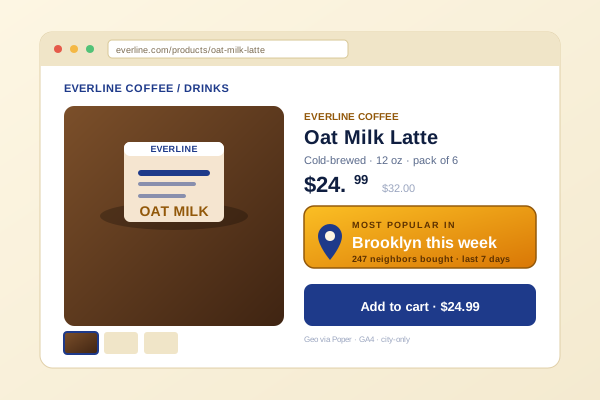
Local popular callout
On a product page, a card reading 'people from Brooklyn saw this' makes the activity feel local instead of generic best-seller copy.
A localized activity card that names the visitor's own city, like 'people from Brooklyn saw this'. Poper detects the city automatically, so there is nothing to connect. No code.
Built for no-code website teams























Live demo, not a screenshot. Style it, brand it, embed it.
Before and after Poper
Here is the widget embedded on a real page layout, before and after. Style it to match your brand, then copy one snippet to go live.
 Before
 Poper widget live
Mockups for illustration. Style the widget to match your site and embed in 90 seconds.
How to use it
Three steps. Under two minutes. No code required.
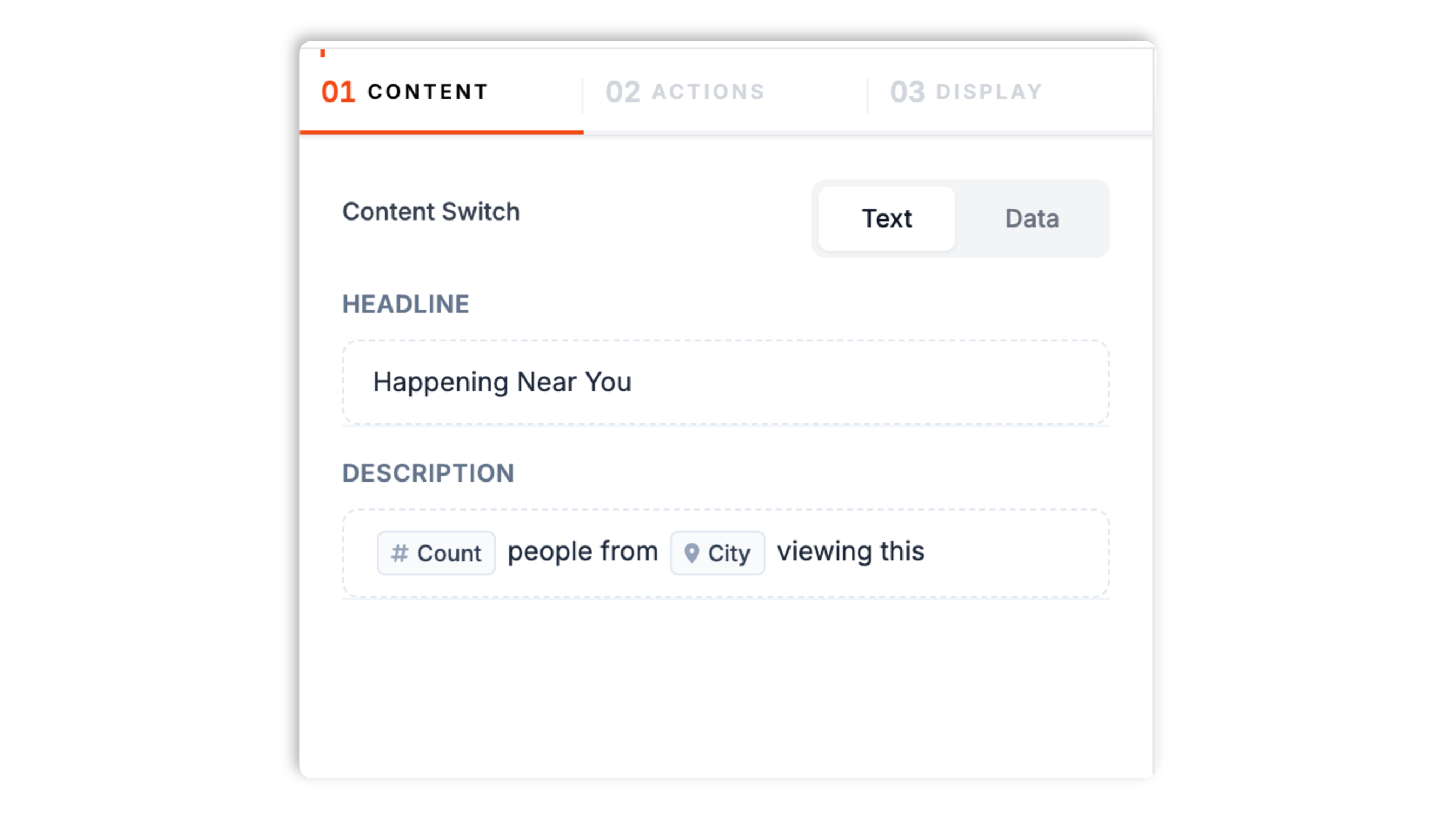
Open the Poper builder and write the headline and description. Drop a city token and a count token into the copy so the widget can show a detected or fallback city and a count.
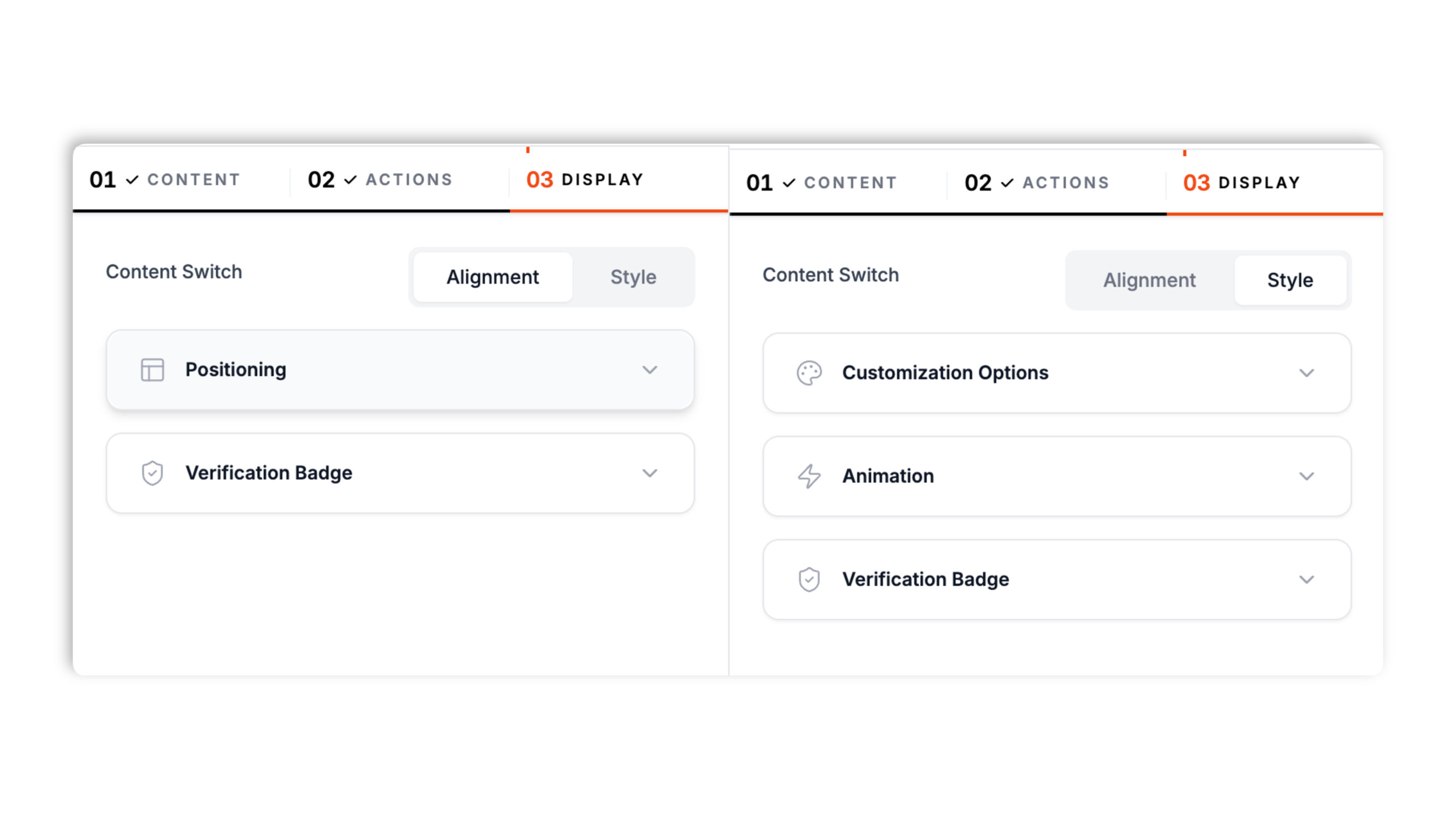
Match the card to your brand: background, text, accent, and button colors, font, and shadow preset. Set the on-screen position and entrance animation separately for desktop and mobile.
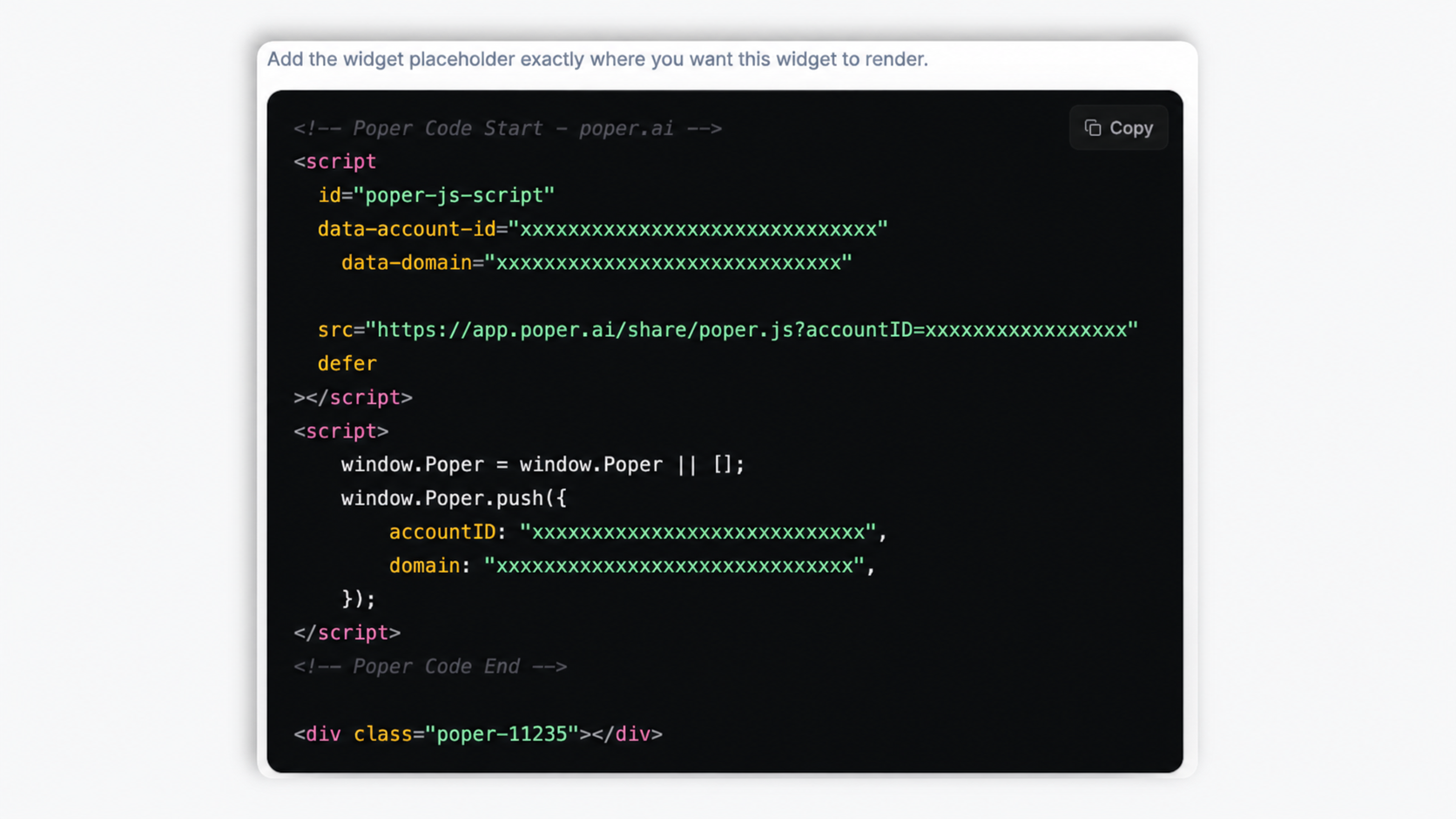
Paste the one-line Poper script on your site. Works anywhere your Poper embed snippet is supported.
Works everywhere
Drop-in install on WordPress, Shopify, Wix, Squarespace, Webflow, Framer, Ghost, and any HTML-friendly stack. No build step, no developer needed.


Plus 250+ other platforms via the embed snippet. If your site can render a <script> tag, it can render the Geolocation Activity Widget for Website. No-code - Poper.
What the geolocation activity widget actually does, with no invented features.
A focused card with a map-pin icon, a headline, and a description that can name the visitor's own city through a city token. It is built to make activity feel local with basic setup.
Poper detects the visitor's city from their connection and fills the city token. There is no GA4, IP-API, or geo source to connect; the city resolves on its own.
Set a minimum and maximum, and the card shows a count from that range through a count token, so the activity reads as a specific number.
Background, text, accent, and button colors, font, and shadow preset. Matches your site.
Async-injected with scoped CSS that does not leak into your design system. It loads without blocking your page render.
Choose the corner, entrance animation, and zoom level separately for desktop and mobile. A close button dismisses the card for the current page state.
Use cases
Four buyer types who get the most lift from embedding Geolocation Activity Widget for Website. No-code - Poper on their site.
On a product page, a card reading 'people from Brooklyn saw this' makes the activity feel local instead of generic best-seller copy.
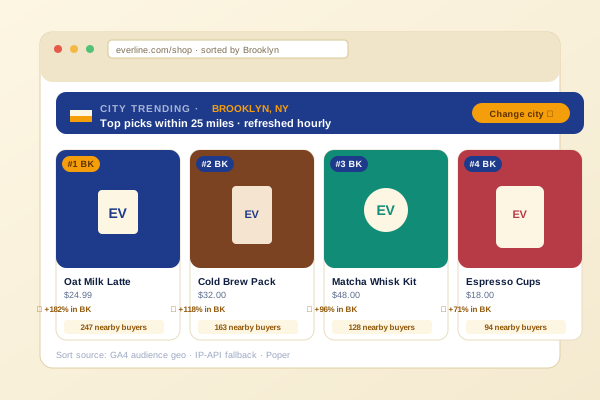
On shop and category pages, the card names the visitor's own city, so the proof reads as relevant to where they are.
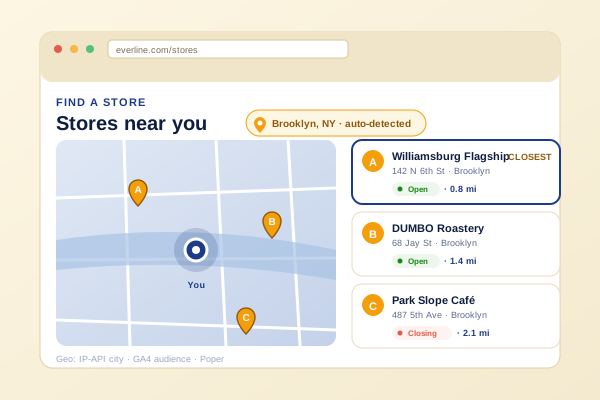
On a campaign landing page, a card that names the visitor's city makes a national page feel addressed to the local reader.
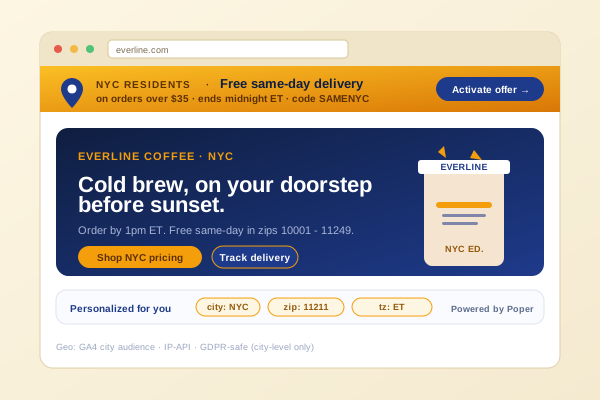
On a pricing or signup page, a card reading 'people near your city saw this' adds nearby-feeling momentum for hesitant visitors.
How Poper compares to the platforms that also sell a geolocation activity widget.
| Recommended Poper | WiserNotify | Fomo | TrustPulse | |
|---|---|---|---|---|
| Poper workspace available | Limited | Limited | ||
| Automatic visitor-city detection | Partial | |||
| City and count tokens in copy | Partial | Partial | ||
| Configurable count range | Partial | |||
| Brand color and font controls | ||||
| Per-device placement | Partial | |||
| Optional call-to-action button | ||||
| Plan details | Plan details vary | Vendor pricing varies | Vendor pricing varies | Vendor pricing varies |
| Works alongside other Poper tools |
Comparison reflects external competitor positioning. Verify current details on each provider's site.
Teams using the Poper geolocation activity card on their sites.
“There was no geo integration to wire up. We embedded the widget and it just named the visitor's city in the card on its own.”

“Naming the visitor's city in the card made our national landing page feel local. The city token does all the work.”

“We styled the card to our brand and embedded with one snippet. It loads in the corner of the page with a normal embed setup.”

Pricing
All plans are billed yearly. Each card shows the per-month equivalent. Start free, then upgrade only when you need more campaigns, websites, or AI credits.
Yearly billing · save up to 40%Essential lead capture for solo creators and growing businesses.
billed $180/year
Full engagement suite with A/B testing, gamification & unlimited leads.
billed $348/year
Unlimited everything with white-label, API access & advanced analytics.
billed $948/year
Prices shown for the 50k monthly visitor tier on yearly billing. A Free Forever plan ($0) and a custom Enterprise plan are also available. No contracts, cancel anytime.
A geolocation activity widget makes activity feel local by naming the visitor's own city. This guide covers what Poper's geolocation activity widget actually does: it detects the visitor's city automatically, drops it into your copy through a city token, and shows a count from a range you set. There is no GA4 or IP-API integration to connect.
A line that names the visitor's own city feels more relevant than a generic 'someone bought this'. Poper's geolocation activity widget shows a card with a map-pin icon, a headline like 'Happening Near You', and a description such as 'people from Brooklyn saw this'. It is a single, focused card that makes a national page feel local to each reader.
There is no geo source to connect. When the widget loads, Poper detects the visitor's city from their connection and fills a city token in your copy. If the city cannot be resolved, the card can use fallback location text. There is no GA4 audience-geo connection and no IP-Geolocation API to set up; detection is automatic.
The headline and description are written in the Poper builder. A city token inserts the detected city, and a count token inserts a number. You set a minimum and a maximum, and the card shows a count from that range, so a description like 'people from Brooklyn saw this' reads as a specific figure rather than a vague claim.
The card is styled in the builder: background, text, accent, and button colors, font, and a shadow preset. Placement is per device, so desktop uses corner placement while mobile uses top, center, or bottom, each with its own entrance animation and zoom level. There is no layout picker and no custom-CSS field.
The card works well on a product page, a category page, or a campaign landing page, where making the moment feel local helps a hesitant visitor. The card uses only the visitor's city, not a street address, so keep the copy framed around city-level activity.
A geolocation activity widget shows a card that names the visitor's own city to make activity feel local. Poper's version detects the city automatically and shows a count from a configurable range.
Last fact-checked: . We re-verify every quarter.
Tutorial
A quick walkthrough of setting up and embedding this widget.
Tutorial video coming soon
Can't find the answer you're looking for? Chat with our support team.
Contact SupportPoper takes about 90 seconds to embed, then the card names each visitor's own city automatically.
Free plan available forever