
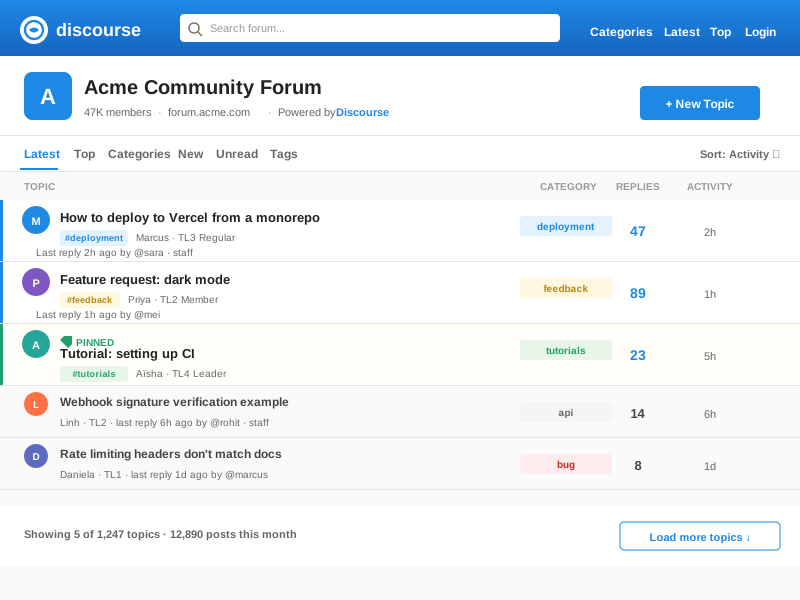
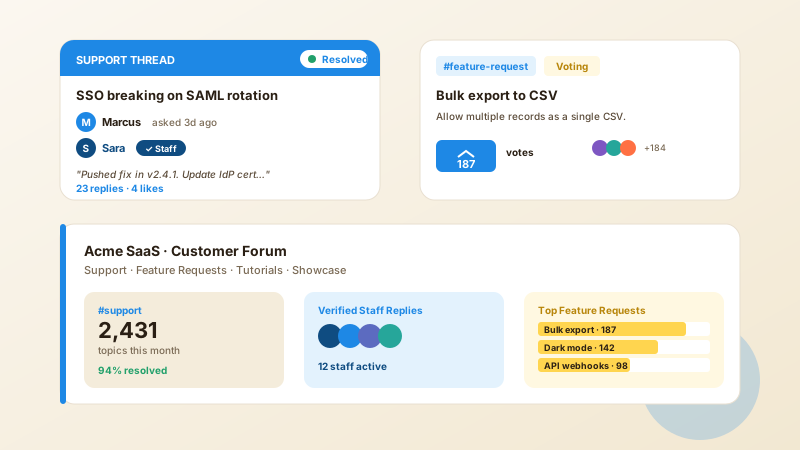
SaaS customer forum
Embed the public topic feed from your customer forum on your help center or product site. Real questions and community activity make the page feel current without maintaining a static FAQ by hand.
Layout styling controls
Built for no-code website teams























Live demo, not a screenshot. Paste a forum URL, edit the header, theme it, embed it. What you see here ships to your site.
From Discourse to your site
Poper pulls your public Discourse feed and renders it inline on your website, fully branded to match your design. No API keys, no manual updates.
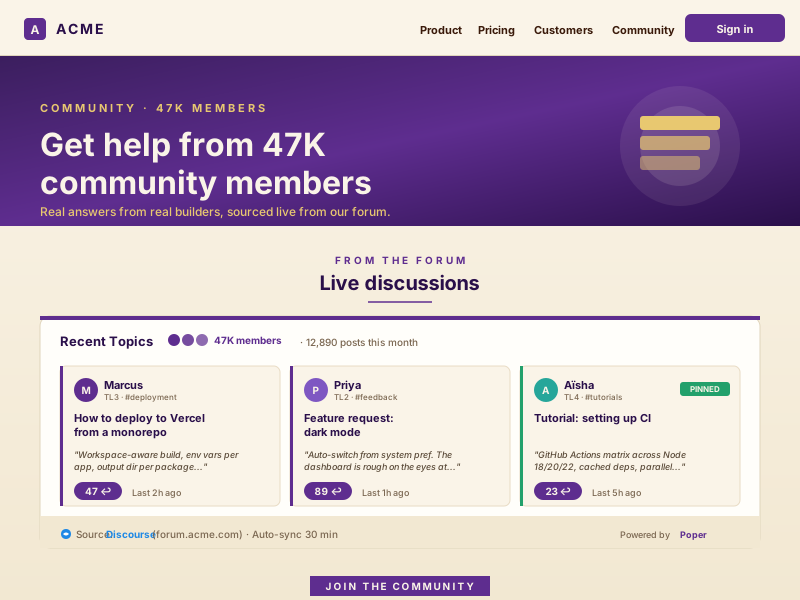 Poper widget live
Mockups for illustration. Pull your real Discourse feed and embed in 90 seconds.
How to use it
Three steps. Under two minutes. No developer needed. Works with one public Discourse community per widget.
Drop in any public Discourse forum URL. Poper appends.json to read the public JSON API that every Discourse instance ships with by default. No API key needed for public Topics.
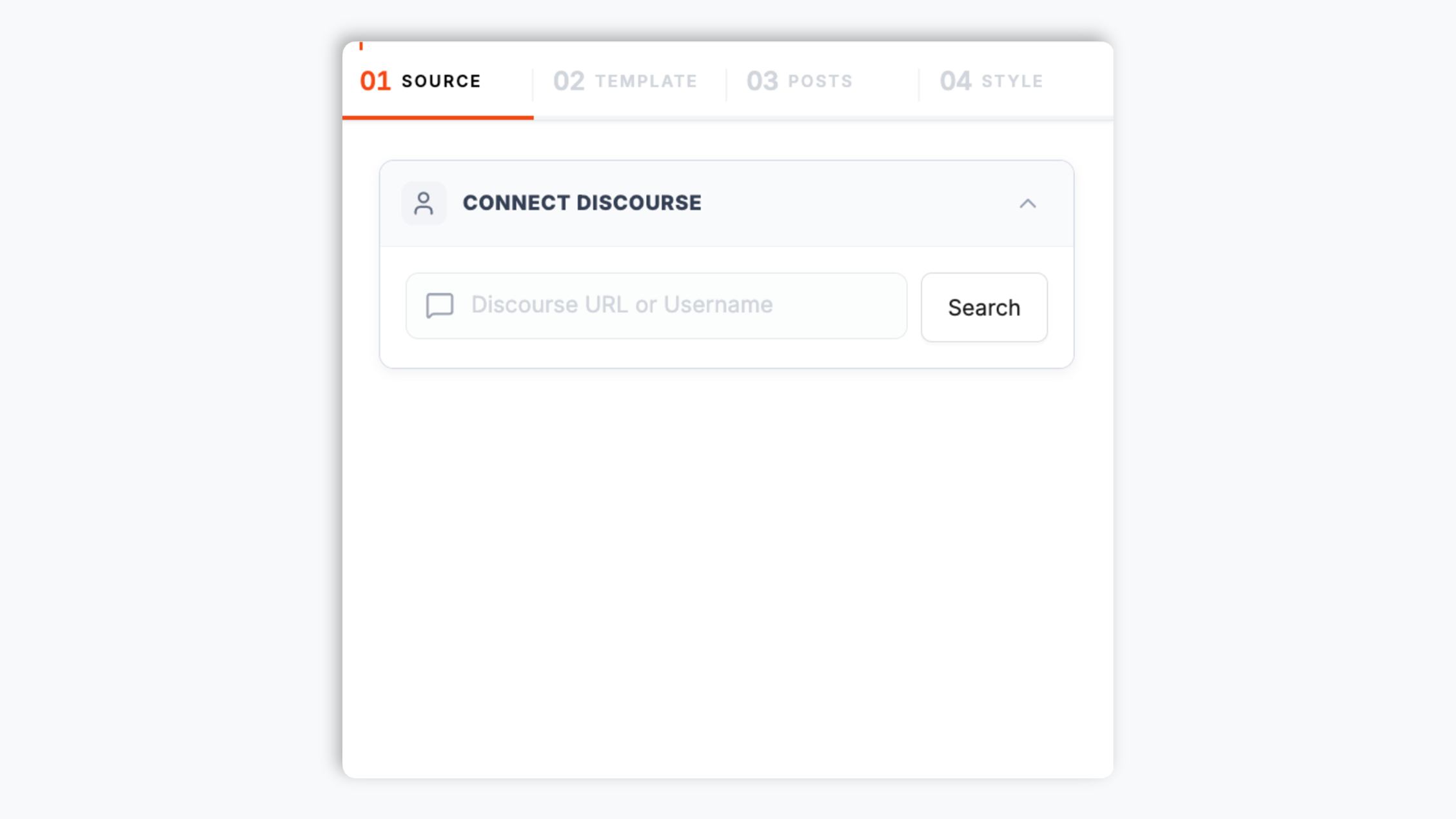
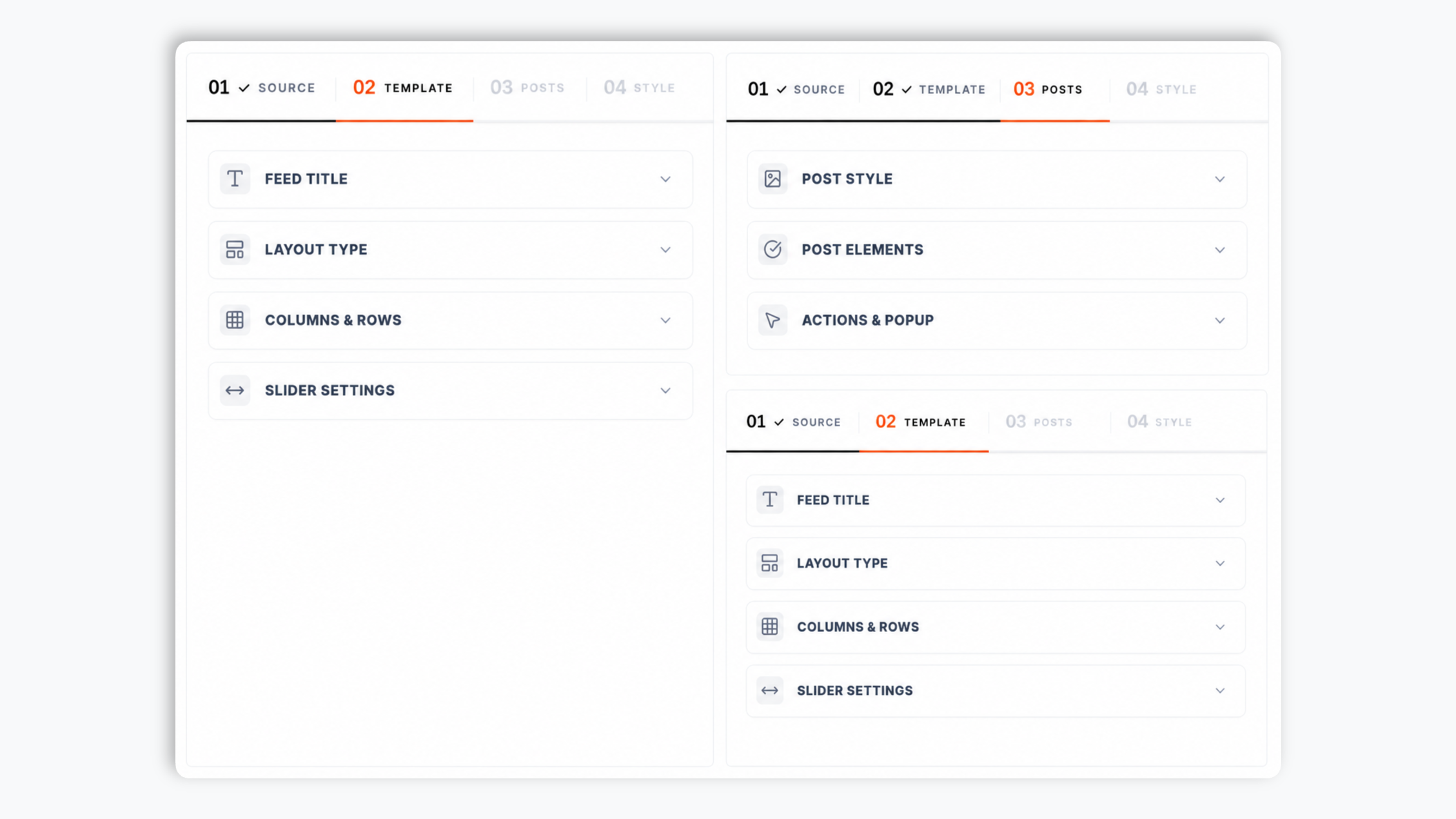
Use the styling controls available for this feed layout.
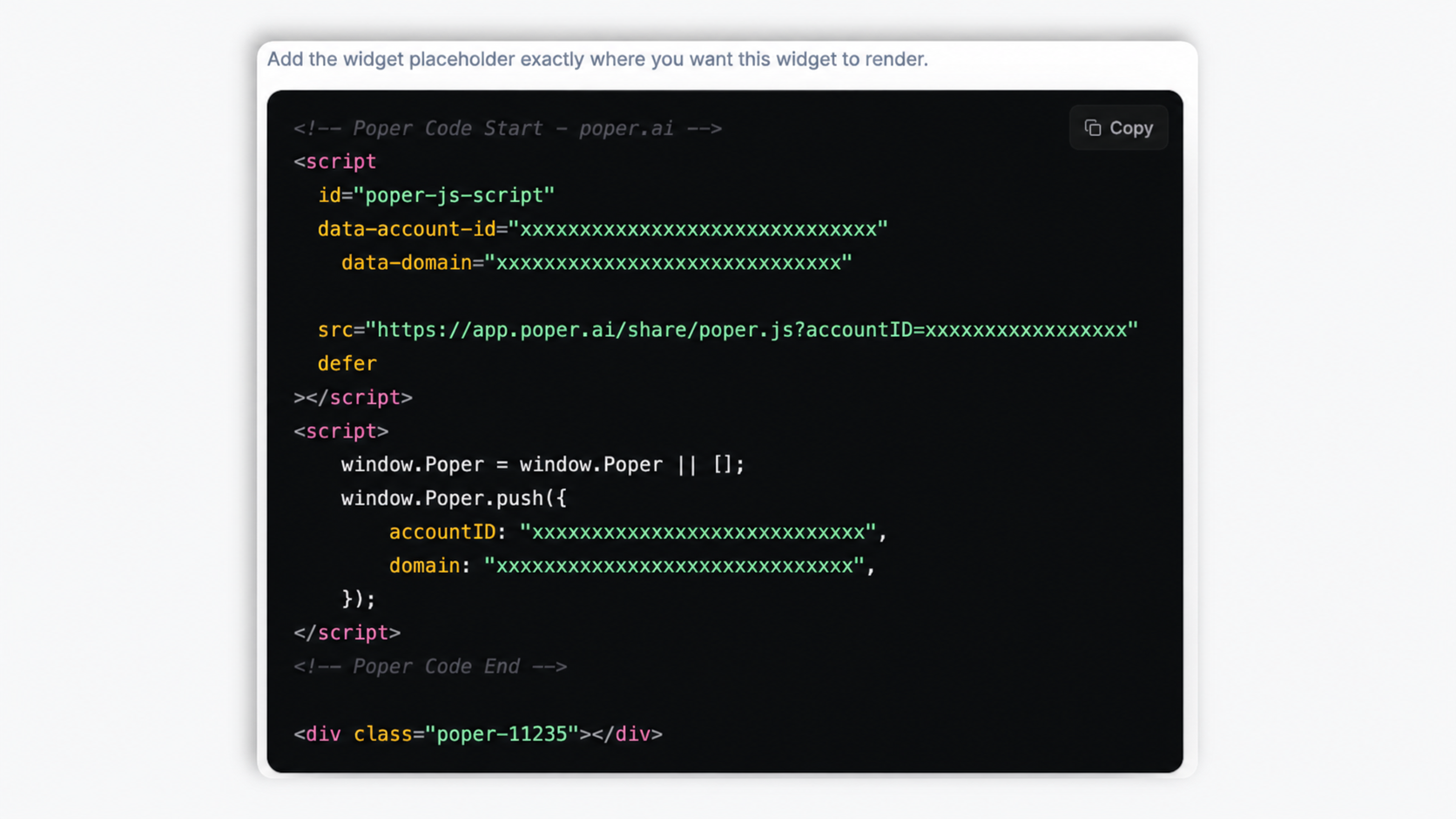
Paste the Poper embed snippet into your site. Works on Webflow, Framer, self-hosted Discourse, Circle.so, Ghost and 250+ platforms.
Works everywhere
Drop-in install on WordPress, Shopify, Wix, Squarespace, Webflow, Framer, Ghost, and any HTML-friendly stack. No build step, no developer needed.


Plus 250+ other platforms via the embed snippet. If your site can render a <script> tag, it can render the Discourse Feed Widget: Embed Forum Topics on Any Website.
Six things that matter when you embed a Discourse forum on a brand site, not 30 features no one uses.
Every public Discourse community exposes topic data through JSON endpoints. Paste one public community URL, and Poper renders its topic feed without OAuth, a developer account, or a visitor-side API call.
Each widget connects to one Discourse community. Create separate widgets when you want to show separate communities, rather than merging multiple forums into one feed.
Edit the feed title and header section, then choose which post elements appear, including captions, dates, counts, and share actions.
Use the styling controls available for this feed layout.
Discourse is open-source MIT-licensed software, so half the forums in the wild are self-hosted on your own infrastructure and half run on Discourse-on-server hosted plans. The widget treats both identically. Paste any forum URL and we figure out the rest.
The embed loads through the Poper snippet. Validate layout and performance on your own page after embedding.
Embedded topics can show reply counts, view counts, like counts, dates, and share actions. Visitors see live community activity, not a static screenshot, and each topic links back to the canonical Discourse thread.
Use cases
Four buyer types who get the most lift from embedding Discourse Feed Widget: Embed Forum Topics on Any Website on their site.
Embed the public topic feed from your customer forum on your help center or product site. Real questions and community activity make the page feel current without maintaining a static FAQ by hand.
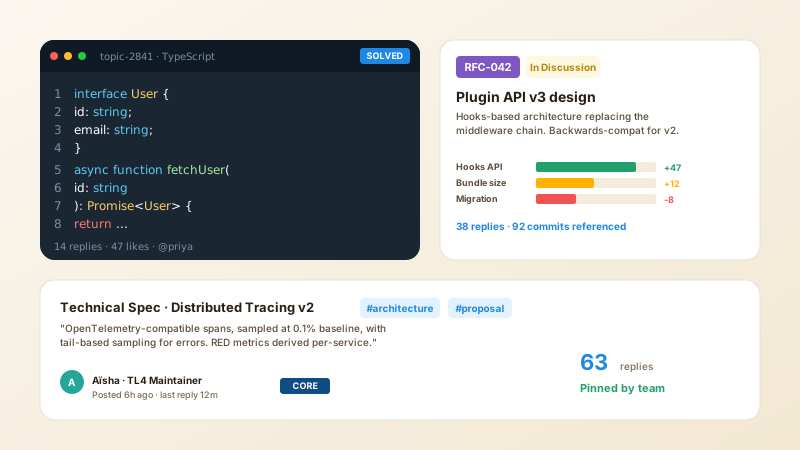
Mirror recent public topics from a developer-focused Discourse community on your project README or docs site. Code snippets, RFC discussions and technical specs render as live community activity.
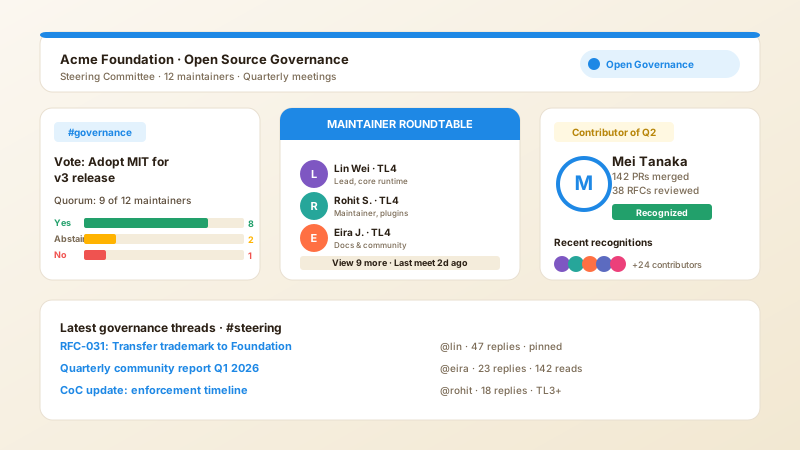
Discourse is the home of open-source governance. Embed steering-committee threads, maintainer roundtables and contributor recognition feeds on your foundation site so the community sees the work happening in the open.
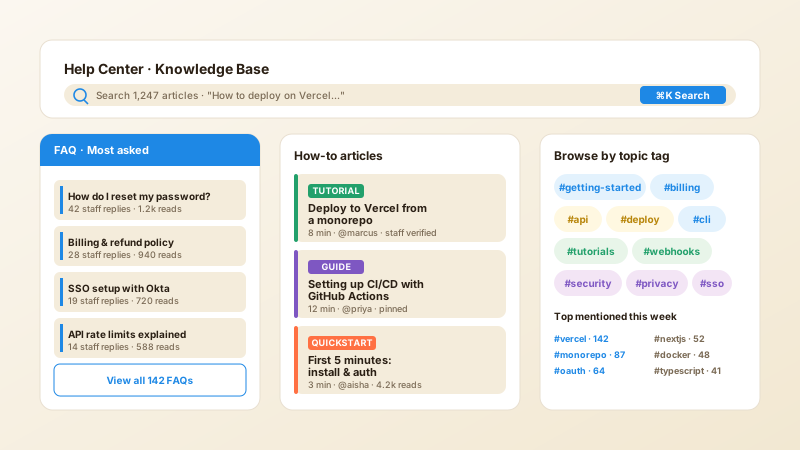
Turn your public Discourse community into a living help-center preview. Recent discussions, how-to topics, and tutorial threads can appear directly in your docs or marketing site.
Discourse's own embed is limited to comments or simple snippets, and most widget platforms have no Discourse support at all. Here is how Poper stacks up on what matters for a branded, single-community topic feed.
| Recommended Poper | Elfsight | Common Ninja | Discourse native widgets | |
|---|---|---|---|---|
| Poper workspace available | Limited free tier | Limited free tier | ||
| Discourse feed support | ||||
| One community per widget | N/A | N/A | JS snippet only | |
| Editable feed header | N/A | N/A | Limited | |
| Theme presets and color controls | N/A | N/A | Limited | |
| Layout styling controls | N/A | N/A | ||
| Post element controls | Caption, date, counts, share | N/A | N/A | Limited |
| Self-hosted and Discourse-hosted alike | N/A | N/A | ||
| Uses public JSON API (no paid tier) | Public.json | N/A | N/A | Public.json |
| Sync frequency (lowest paid plan) | Plan details vary | Refresh cadence follows your Poper plan: Free every 15 days, Starter every 3 days, and Pro/Business every 1 day. | Refresh cadence follows your Poper plan: Free every 15 days, Starter every 3 days, and Pro/Business every 1 day. | On page load |
| Starting paid price | Plan details vary | Vendor pricing varies | Vendor pricing varies | Free |
| Bundled with popups, forms, quizzes |
Comparison reflects external competitor positioning. Discourse native widgets refers to the official JS snippet and embed.js loader from discourse.org. Verify current details on each provider's site.
Open-source maintainers, SaaS product managers and community admins who replaced static FAQs and closed roadmaps with Poper.
“We embedded our Discourse community on the docs site so visitors can see that the project is active before they join. Poper let us match the topic feed to our docs theme without building a custom forum block.”

“The Discourse Feed widget gave our customer portal a live community section with our own header, colors, and card styling. It is much cleaner than sending every visitor straight to the forum.”

“Use the styling controls available for this feed layout.”

Pricing
All plans are billed yearly. Each card shows the per-month equivalent. Start free, then upgrade only when you need more campaigns, websites, or AI credits.
Yearly billing · save up to 40%Essential lead capture for solo creators and growing businesses.
billed $180/year
Full engagement suite with A/B testing, gamification & unlimited leads.
billed $348/year
Unlimited everything with white-label, API access & advanced analytics.
billed $948/year
Prices shown for the 50k monthly visitor tier on yearly billing. A Free Forever plan ($0) and a custom Enterprise plan are also available. No contracts, cancel anytime.
Use the styling controls available for this feed layout.
One of the most under-appreciated design choices in Discourse is that public forum pages can return JSON when you append.json to the URL. Visit a Discourse community in a browser and you get the human topic list; request the JSON version and you get structured topic data with metadata such as title, slug, posters, replies, views, like counts, last activity, and created dates. This was a deliberate API-first choice from Jeff Atwood and Robin Ward back in the 2013 launch, and it is the reason Discourse has a strong third-party tool ecosystem. The Poper Discourse Feed Widget connects to one public community per widget, reads the public topic data needed for the embed, caches the result, and serves it to your site. The forum sees far fewer requests than it would if every visitor loaded the forum directly, which makes embedding friendlier to your community's performance budget.
Use the styling controls available for this feed layout.
Use the styling controls available for this feed layout.
Use the styling controls available for this feed layout.
When you choose Discourse for your community, you are choosing a fundamentally different relationship to your data than you would get from Reddit, Circle.so, Slack Communities or any closed forum platform. Discourse is open-source MIT-licensed software founded in 2013 by Jeff Atwood and Robin Ward (Atwood previously co-founded Stack Overflow with Joel Spolsky in 2008). You can read every line of the source on GitHub, fork it, modify it, run it on your own server with a single docker run command, and export every Topic and every reply as a Postgres dump or a JSON archive any time you want. Discourse the company sells hosted plans (Discourse-on-server) starting around USD 100 per month, which is the right call if you do not want to run a Rails app and a Postgres database yourself. But the software is the same software whether you self-host or pay Discourse to host it for you, which means a third-party widget like Poper works identically on both. The corporate forum alternatives are a different story. Circle.so is a closed SaaS at USD 89 per month minimum, your data is hostage to your subscription, and the embed surface is a screenshot script that breaks if you cancel. Slack Communities are even worse: messages older than 90 days are inaccessible on free plans, and you cannot embed Slack content on a public website at all. Reddit is corporate, ad-supported, and locked the API behind a paid tier in 2023. Discourse stands alone as the serious open-web alternative, which is why open-source projects (the Rust language forum, the Cargo registry, the WordPress.org community), education programs (Recurse Center, freeCodeCamp), and brand-owned communities (Discourse itself, the Helium network, BoardGameGeek) all converged on it. The Poper widget is the natural embed surface for that ecosystem.
Use the styling controls available for this feed layout.
Tutorial
A quick walkthrough of setting up and embedding this widget.
Tutorial video coming soon
Can't find the answer you're looking for? Chat with our support team.
Contact SupportPoper takes 90 seconds to embed and uses Discourse's free public JSON API. Start from your Poper workspace.
Free plan available forever