The complete guide to embedding PeerTube on your website
PeerTube is the federated video platform of the Fediverse, built by Framasoft (a French non-profit founded in 2004) and released under the AGPL-3.0 open-source license. Where YouTube runs on a single corporate stack with surveillance advertising and opaque algorithmic deboosting that creators have no real recourse against, PeerTube runs on thousands of independent instances that federate via ActivityPub and deliver video peer-to-peer through WebTorrent so popular content does not crush small servers. Since its v1 launch in 2018 with funding from a public crowdfunding campaign, PeerTube has become the serious open alternative for anyone who wants video hosting without the YouTube ads-and-tracking model, the algorithmic feed, the demonetization roulette, or the platform-policy whiplash that defines centralized video in 2026. This guide walks through what actually matters when you choose and configure a PeerTube widget: the instance model, ActivityPub federation with Mastodon and the wider Fediverse, WebTorrent peer-to-peer video delivery, Creative Commons licensing as a first-class citizen, and the AGPL ethos that makes Framasoft's flagship project structurally different from any corporate video platform.
04
Creative Commons licensing and the post-YouTube creator economy
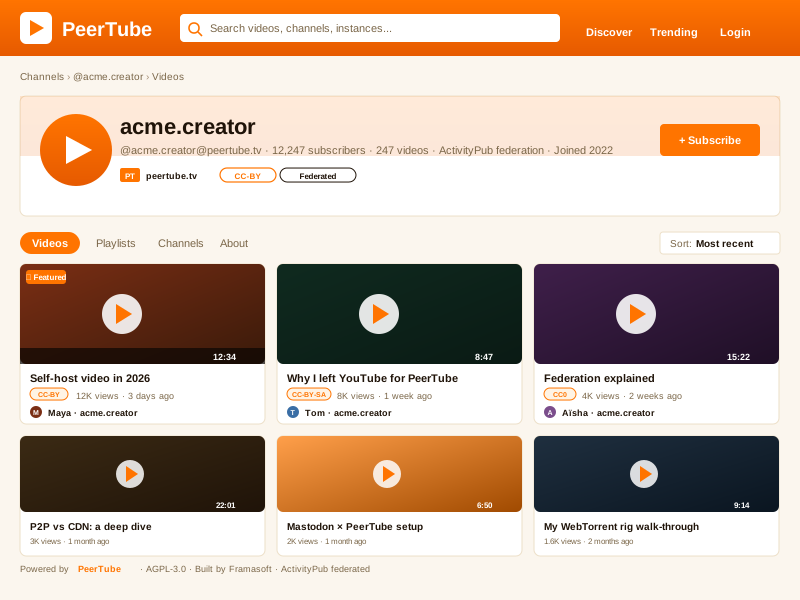
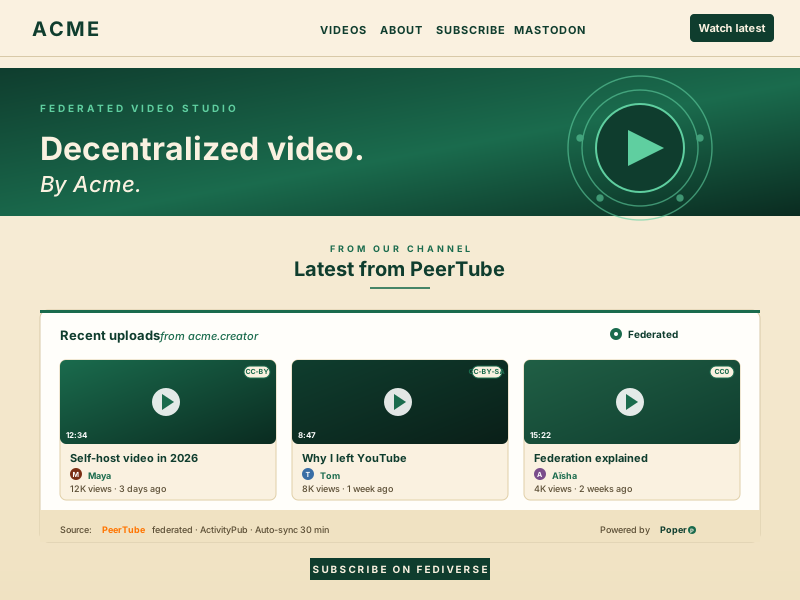
PeerTube creators choose an explicit Creative Commons license on every upload: CC-BY (attribution required), CC-BY-SA (attribution plus share-alike), CC-BY-ND (no derivatives), CC-BY-NC (non-commercial), CC-BY-NC-SA, CC-BY-NC-ND, CC0 (public domain dedication), public domain, or all rights reserved. The license metadata is part of the standard PeerTube REST API response and is rendered prominently in the official web client as a badge on the video page. This is a structural difference from YouTube, where the default license is the platform's standard terms and Creative Commons is buried as an opt-in option most creators never touch. PeerTube's Creative Commons-first culture has attracted a specific kind of creator since the platform's 2018 launch: educators publishing open-access lectures, scientists sharing public-funded research talks, activists distributing public-interest journalism, open-source projects (Blender, GNOME, KDE, Krita, Inkscape, Godot) hosting tutorials and conference recordings, indie filmmakers releasing CC-BY shorts that anyone can remix, libraries and archives digitizing public-domain footage, and public broadcasters experimenting with permissive licensing for educational programming. The license-first design has practical knock-on effects: educators can confidently embed CC-BY videos on lecture sites without copyright clearance reviews, journalists can quote and reuse footage with clear attribution rules, and remix communities can build derivative works on a known legal foundation. A PeerTube widget that surfaces the license on each video card respects the creator's licensing choice and helps viewers understand what they can legally do with the work. Because the license is part of the standard PeerTube REST API response, the Poper widget can show it on the video card, so attribution and reuse rights stay visible instead of being dropped. This is one of the easier ways to tell a serious PeerTube widget from a YouTube clone with PeerTube branding, because most YouTube-influenced widgets ignore license metadata entirely.