Auto-generation
Scans page headings and builds a clickable navigation list automatically.

Help visitors navigate long-form content with an auto-generated, sticky table of contents that improves readability, engagement, and SEO.
Auto-generate navigation from page headings with zero maintenance.
Scans page headings and builds a clickable navigation list automatically.
Pin the TOC to the sidebar for always-visible navigation on long pages.
Enable Google jump links and improve content structure signals.
Add once and the TOC updates automatically as you edit content.
Set heading levels, style the navigation, and enable sticky mode.






















Auto-generation, smooth scrolling, active highlighting, and SEO benefits.
Automatically creates navigation links from your page headings — no manual setup.
Click any item and the page scrolls smoothly to the corresponding section.
The current section is automatically highlighted as visitors scroll through content.
Pin the TOC to the sidebar so it stays visible during long page scrolls.
Include or exclude specific heading levels (H2, H3, H4) to control depth.
Customize fonts, colors, indentation, numbering style, and container appearance.
Structured headings enable Google jump links and improve content discoverability.
Compatible with WordPress, Ghost, Webflow, and any platform using HTML headings.
A table of contents transforms long-form content from a wall of text into an organized, navigable experience. Visitors can instantly see the structure of your article and jump to the section most relevant to them.
From an SEO perspective, a table of contents signals to search engines that your content is well-structured. Google frequently pulls TOC links into search results as jump links, which can significantly boost click-through rates.
Poper's Table of Contents widget auto-generates from your existing headings, so there is zero manual maintenance. Add the widget once and every page update is reflected automatically.
Lower bounce rates, more pages read, and improved search visibility.
Help readers jump to the section that matters most in comprehensive guides and tutorials.
Provide structured navigation for technical docs, API references, and knowledge bases.
Make terms of service, privacy policies, and compliance documents easier to navigate.
Give students a clear overview of lesson structure with clickable section links.
See what community is saying about Poper.
Join 10,000+ businesses using Poper to improve their websites.
Tips, tutorials, and insights for better websites.
In the competitive digital landscape, it's crucial to keep visitors engaged and convert their interest into action. Time on page popups play a significant role in this process. By timing the popup to appear when a visitor is most engaged, you can provide relevant offers, gather valuable leads, and enhance the overall user experience. Understanding Time on Page Popups Definition and Characteristics of Time on Page Popups Time on page popups are triggered after a visitor has been on a webpage for a specified duration. These popups aim to engage users who have shown interest by staying on the page for a while. They can offer discounts, prompt newsletter sign-ups, or highlight special content. How Time on Page Popups Differ from Other Popups Unlike entry or exit-intent popups, time on page popups are specifically designed to appear based on the amount of time a visitor spends on a page. This timing strategy ensures that the popup appears when the visitor is most engaged, rather than immedia
In the world of e-commerce, flash sales are the perfect storm: they create urgency, fuel excitement, and drive immediate action. Flash sales have become a staple in the e-commerce landscape, offering businesses a powerful tool to boost sales, clear out inventory, and engage customers. The success of a flash sale hinges on creating a sense of urgency and scarcity, compelling customers to make quick purchasing decisions. This is where popups come into play. Why Flash Sales Work Flash sales capitalize on the psychology of urgency and scarcity, two key drivers that can significantly influence consumer behavior. When customers perceive that a product is available for a limited time or in limited quantities, they are more likely to make a purchase to avoid missing out. This "fear of missing out" (FOMO) can lead to a surge in sales and a heightened sense of excitement. The Anatomy of a High-Converting Flash Sale Popup Creating an effective flash sale popup requires a thoughtful blend of design
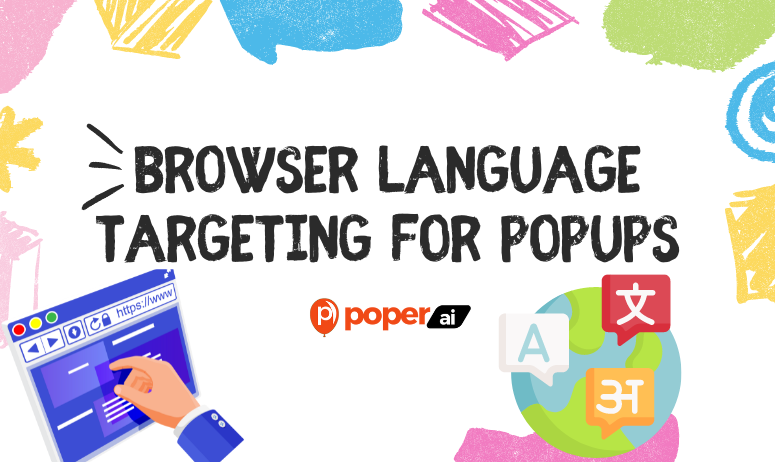
The limits of my language mean the limits of my world. This quote by Ludwig Wittgenstein reflects the profound impact language has on interaction and understanding. In the realm of digital marketing, this impact is magnified through the use of browser language targeting in popups, a strategy that tailors content based on the user's language, thereby fostering a more engaging and personalized browsing experience. Browser language targeting isn't just a technical functionality—it's a transformative approach to user engagement. By detecting the language settings of a user's browser, businesses can deliver content that resonates on a cultural level, making interactions feel more thoughtful and user-focused. This not only enhances the user experience but also significantly improves the effectiveness of communication and marketing strategies. The Basics of Browser Language Targeting Understanding browser language targeting is crucial for implementing it effectively. This technology adapts con
Track TOC clicks, section navigation, bounce rates, and SEO impact.
Impressions vs Clicks
Articles with TOC see 52% lower bounce rates and 38% more sections read.
Sticky sidebar TOCs get 3x more clicks than inline TOCs.
Google jump links from TOC-enabled pages see 27% higher CTR.
Configure headings, style the TOC, and embed.
Choose which heading levels to include and set filtering rules.
Customize fonts, colors, indentation, numbering, and sticky behavior.
Add the snippet and your table of contents auto-generates from page headings.
Install on WordPress, Ghost, Webflow, and any platform with HTML headings.
Poper supports 250 plus integrations across CMS, ecommerce platforms, site builders, headless CMS, and storefronts. You can connect your Instagram feed to WordPress, Shopify, Webflow, Wix, Squarespace, Framer, Ghost, BigCommerce, and many more. These integrations let you publish live social content without manual uploads, keeping your site fresh, visual, and highly engaging for visitors.
Can't find the answer you're looking for? Chat with our support team.
Contact SupportNo credit card required. Setup takes under 2 minutes.
Free plan available forever


