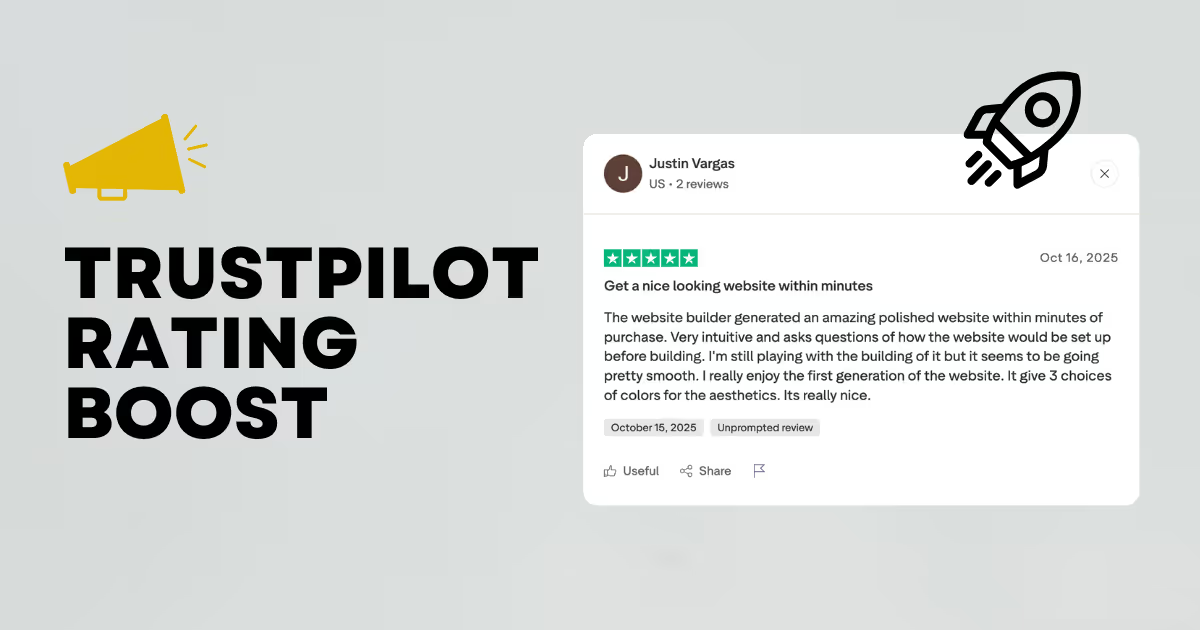
A few months ago a founder I know sent me a screenshot of his Trustpilot page with one line: "3.4 stars. Help." He was not lying about a bad product. His product was good. The problem was that only his angriest customers ever bothered to leave a review, while the hundreds of happy ones stayed silent. That gap is where most mediocre scores come from, and it is exactly why a real trustpilot rating boost is possible without a single fake review.
I want to walk you through how we think about this at Poper, because we help thousands of businesses display and collect reviews, and we see the same fixable mistakes over and over. The good news is that an honest trustpilot rating boost is mostly a math and habit problem, not a reputation death sentence.
Why a Mediocre Trustpilot Score Happens in the First Place
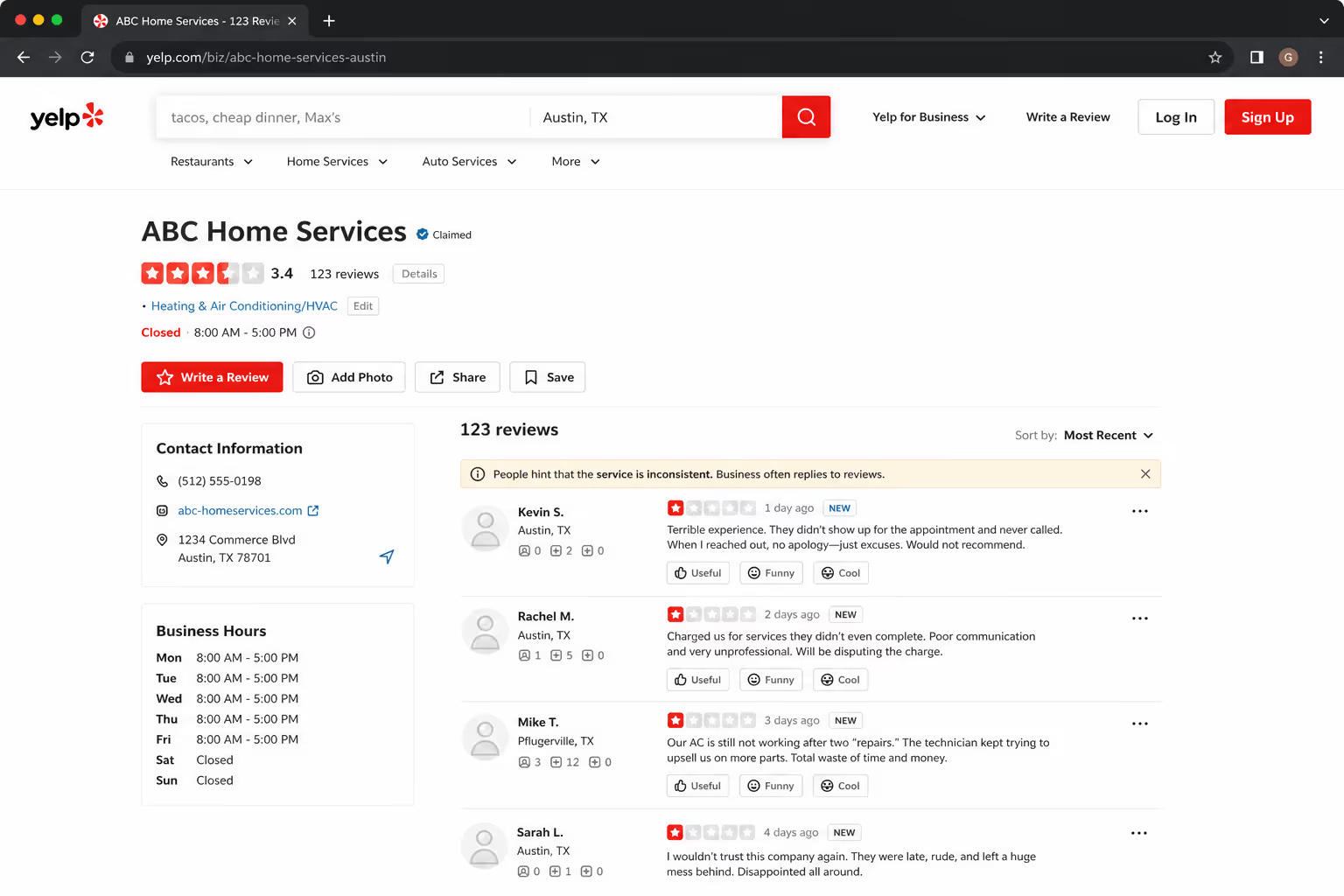
Most low scores are not a verdict on quality. They are a sampling problem. People who feel wronged are motivated to shout, and people who are quietly satisfied move on with their day. So your page ends up showing the loudest 5% instead of the honest average.
The stakes are real. According to PowerReviews analysis, products rated between 4.2 and 4.7 stars convert the best, because shoppers read a perfect 5.0 as suspicious and anything under 4.0 as risky. Sitting at 3.4 puts you in the danger zone where buyers hesitate. That is the whole reason a steady trustpilot rating boost matters so much for revenue and not just vanity.
Reviews also carry more weight than ever. Recent data compiled by review researchers shows that roughly 93% of consumers read reviews before making a purchase, and low one and two star ratings deter the large majority of prospective buyers. When your average is mediocre, you are not losing a few sales. You are quietly filtering out most of your traffic.
The One Rule: Never Game Your Score
Before we talk tactics, I need to be blunt about the shortcut everyone is tempted by. Buying reviews does not give you a trustpilot rating boost. It gives you a liability.
Trustpilot's own Trust Report notes the platform removed around 7.8 million fake reviews in a single year, with most caught automatically by detection systems. The year before, that number was about 4.5 million, and roughly 90% were flagged by machines rather than humans. Fake reviews are not slipping through quietly anymore.
Regulators are just as aggressive. The U.S. Federal Trade Commission announced a multi-million dollar settlement tied to tens of thousands of purchased reviews across platforms including Trustpilot, and its rules now allow penalties that can climb into tens of thousands of dollars per fake review. So the "cheap" path to a trustpilot rating boost can end up being the most expensive decision you ever make. We tell every Poper customer the same thing: the only score worth having is one you earned.
Ask Everyone, Not Just the Angry Few
Here is the single highest-leverage move for a genuine trustpilot rating boost. Invite every customer to review you, automatically, right after a good experience. When you widen the sample, your true average shows up, and for most healthy businesses that true average is far higher than the score their loudest critics left behind.
Timing is everything. Send the invitation when the customer is feeling the value: after a delivery lands, after a support ticket is happily closed, after onboarding clicks. Verified invitations also carry more trust weight than unsolicited ones, because Trustpilot can confirm a real transaction sits behind them.
Volume compounds the effect. A steady flow of fresh, genuine reviews does two things at once: it lifts your average toward reality, and it keeps your page current, which matters because shoppers discount reviews that look old. This is the quiet engine behind almost every trustpilot rating boost I have seen work.
Respond to the Bad Reviews (Yes, Publicly)
You cannot delete honest criticism, and you should not want to. What you can do is respond like a human. A calm, specific, non-defensive reply to a one or two star review tells every future reader that you take problems seriously.
Two things happen when you respond well. First, some customers update or remove their review once you fix the issue, which directly helps your trustpilot rating boost. Second, and more importantly, the people who read that thread months later see a business that owns its mistakes. That is more persuasive than a wall of flawless five star praise.
Responding to a bad review is not damage control. It is the most public sales pitch you will ever give to the customer who has not bought yet.
Small Star Changes, Big Revenue Swings
People underestimate how sensitive conversion is to tiny movements in your average. The upside of even a modest trustpilot rating boost is much larger than the decimal on the badge suggests.
The ratings data reported by Troof and echoed across conversion research found that a star-rating increase of just 0.1 can raise conversion rates by around 25%, and larger half-star jumps can lift conversions 20% to 30% across many industries. That is why moving from 3.4 to 4.1 is not a cosmetic win. It can reshape your entire funnel.
Here is a simple way to think about where different scores land and what a trustpilot rating boost should aim for.
| Trustpilot Score Range | How Shoppers Read It | What to Do Next |
|---|---|---|
| Below 3.5 | Risky, avoid | Fix root issues, then start collecting reviews from every happy customer |
| 3.5 to 3.9 | Uncertain, needs proof | Increase invitation volume and respond to every negative review |
| 4.0 to 4.7 | Trusted and realistic | Protect the streak and display reviews prominently on your site |
| 4.8 to 5.0 | Sometimes "too perfect" | Keep it honest and make sure real critical reviews are visible too |
Fix the Root Cause, Then Collect
A trustpilot rating boost built on top of an unsolved problem will not hold. If shipping is slow or a feature is broken, more reviews just document the same pain at higher volume. So I always sequence it this way: read your existing one and two star reviews, find the two or three complaints that repeat, fix those, and only then turn up your invitation engine.
When you do this in order, something satisfying happens. The new reviews start reflecting the fixed experience, your average climbs on its own merits, and the boost sticks because it is real. That is the difference between a durable trustpilot rating boost and a number that sags again in three months.
Show Off the Reviews You Earn
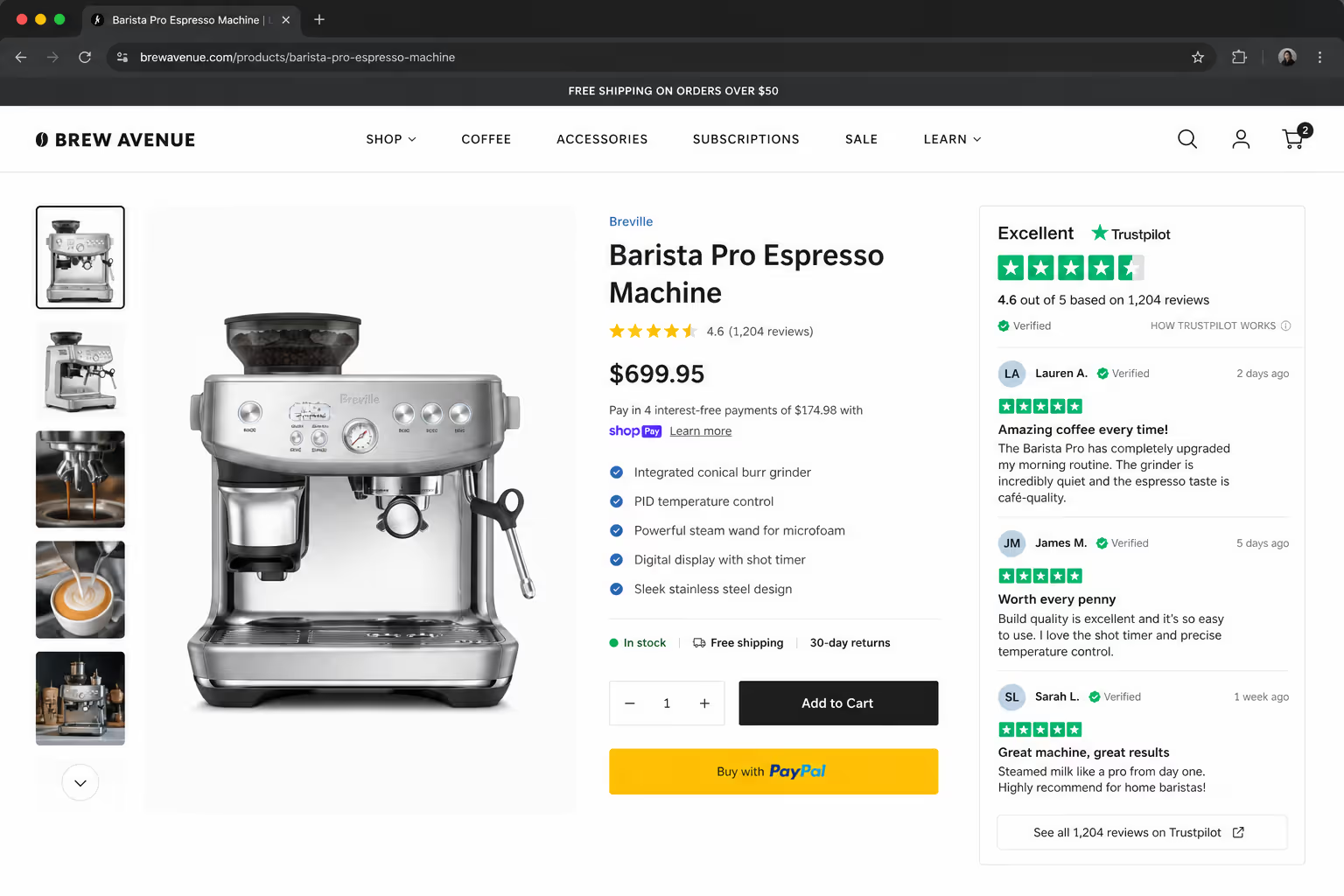
Collecting a better score and then hiding it on Trustpilot alone is a waste. Once you have earned genuine social proof, put it where buyers actually make decisions: on your product pages, your checkout, and your landing pages.
This matters because placement drives clicks. A trustpilot rating boost that lives only on a third-party page is a boost you are barely using.
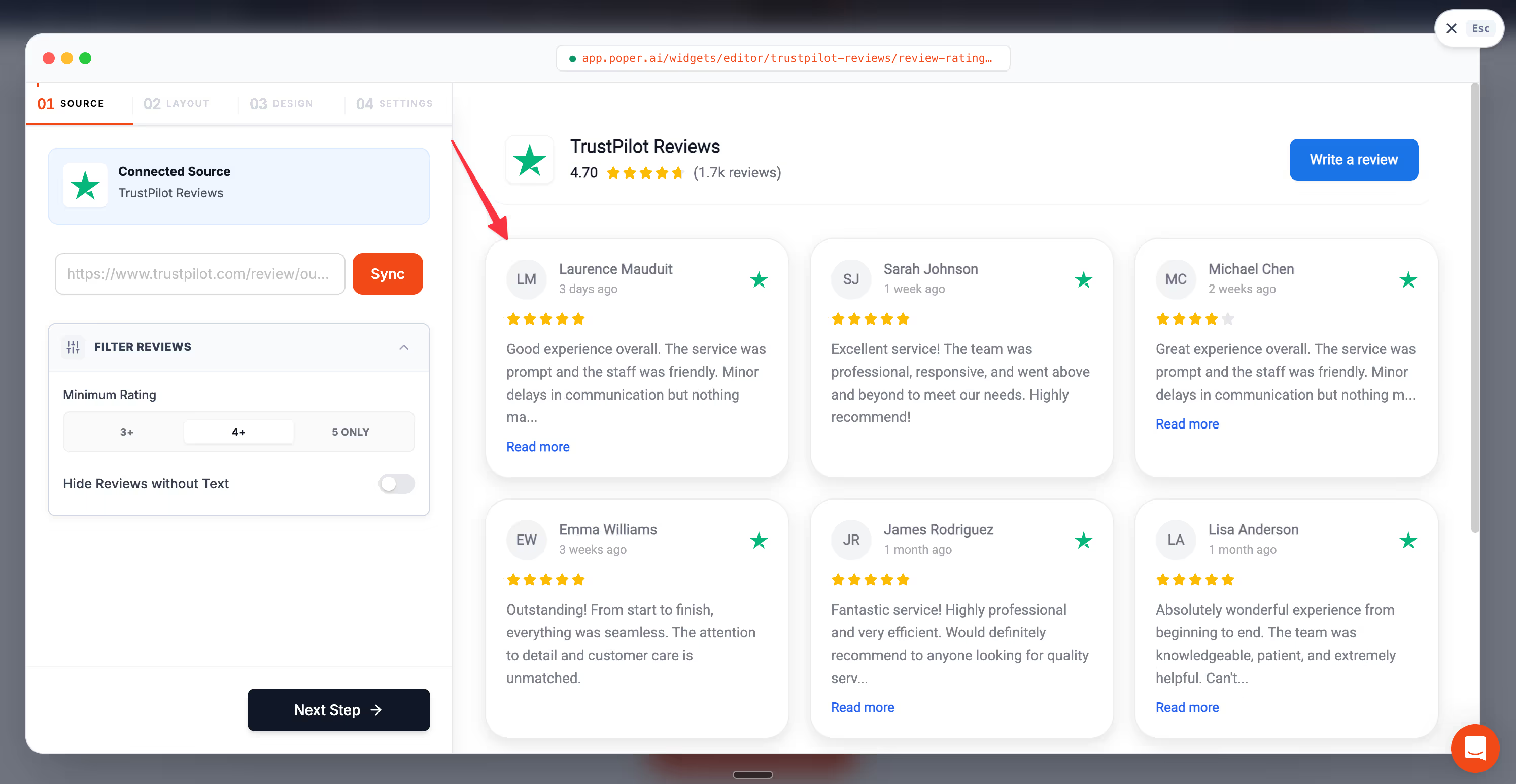
This is where our tooling fits in. With the Poper Trustpilot Reviews widget, you can embed your real, verified Trustpilot ratings on any site in about two minutes, no code required. It works on WordPress, Shopify, Webflow, Wix, and anything else, and it updates as your score improves.
Many of our customers pair it with a Poper review-request popup so the whole loop, from asking to displaying, runs on autopilot. If you want to build even more trust, our library of Social Proof widgets adds real-time activity notifications on top of your reviews.
The Habit That Keeps Your Score High
The businesses with strong Trustpilot pages are not lucky. They just made review collection a permanent habit instead of a one-time panic project. Ask every happy customer, respond to every unhappy one, fix what repeats, and display the proof everywhere. Do that for ninety days and your trustpilot rating boost stops being a project and becomes your baseline.
A mediocre score is rarely the truth about your business. It is usually just an incomplete story. Your job is to let the quiet, satisfied majority finally get a word in, and then to make sure everyone sees it. That is the whole game, and it is one you can win honestly.
References
Trustpilot, "Trust Report." corporate.trustpilot.com
PowerReviews, "Average Rating Impact on Conversion". powerreviews.com
Capital One Shopping, "Online Review Statistics". capitaloneshopping.com