I want to tell you about the first time I watched a sales team lose a deal on a Tuesday morning, in real time, in front of me. Their marketing was sending in fresh leads from a paid campaign, and the reps were all online, but the routing was being done in a shared spreadsheet that someone forgot to update on Monday.
The lead sat there for two hours. By the time anyone called, the prospect had already booked a demo with the competitor. The reps were not lazy, the leads were not bad, the process was just broken in the middle. That morning is why I now talk to so many founders about a round robin scheduling team setup, because it fixes that exact failure point and protects the deals you already paid for.
So in this guide I want to walk you through how I would build a round robin scheduling team flow today, with no lead leakage, in a way that works for a five person sales team or a fifty person one.
We will look at what round robin really means, where teams quietly bleed leads even after they "turn on" round robin, what 2026 data is telling us about response time, and how I would set the whole thing up step by step. By the end you will have a clear picture of a round robin scheduling team process that is fair to your reps, fast for your buyers, and tight enough to keep every paid lead inside your pipeline.
What a Round Robin Scheduling Team Setup Really Is
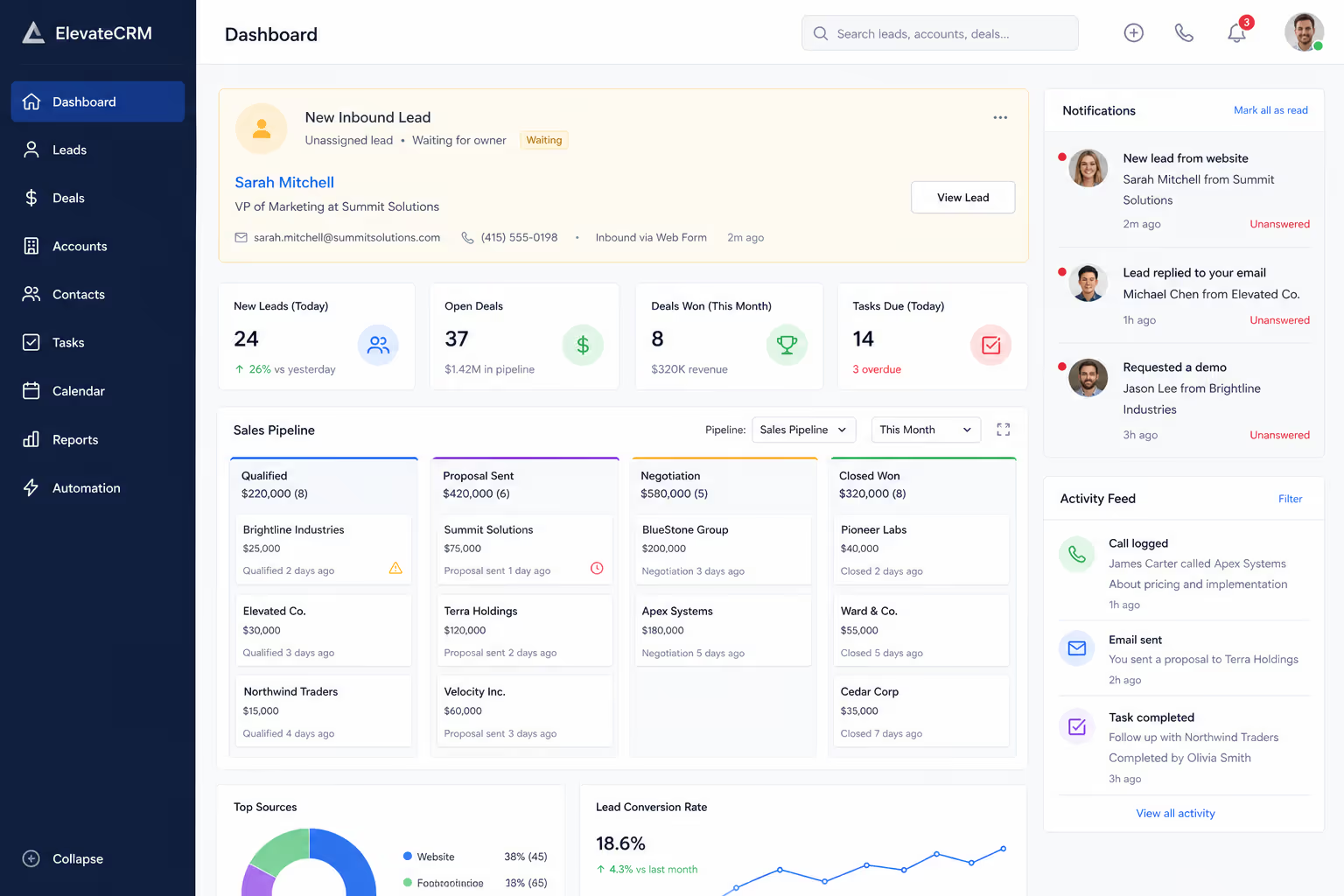
Let me start with the simple version. A round robin scheduling team setup is a routing rule that hands each new inbound lead, demo request, or booked meeting to the next available sales rep in a rotating queue. Rep one gets the first lead, rep two gets the second, rep three gets the third, and then the rotation comes back to rep one. Over time, every rep on the round robin scheduling team gets roughly the same number of leads, within one or two of each other, without a manager sitting in the middle assigning them.
That is the textbook description. In real life, a good round robin scheduling team setup does a lot more than just rotate. It checks if the rep is online, if they are inside their working hours, if the prospect matches their territory or language, and whether the rep already has a relationship with that company. Without those checks, the rotation is fair on paper but messy in practice, because leads end up with reps who are out sick, off shift, or working an unrelated patch.
The reason this matters now is speed. According to Apten's 2026 speed-to-lead benchmarks, a RevenueHero study of roughly 1,000 companies found that 63.5% never responded to inbound leads at all, and those that did averaged more than 29 hours to first reply. A manual handoff sits at the heart of most of those stories. A working round robin scheduling team removes the manual handoff, which is the single biggest reason leads die between marketing and sales.
Why Lead Leakage Happens, Even on Teams That “Have” Round Robin
Here is the part most teams underestimate. Turning on round robin in your CRM does not, by itself, stop lead leakage. I have seen plenty of teams flip the switch and still lose a quarter of their inbound. The leakage happens in the gaps the rotation does not cover.
The first gap is response time. Kixie's 2026 speed-to-lead roundup highlights data showing that responding within five minutes can lift conversion by up to 100 times compared with a 30 minute delay, and that calling a lead within one minute boosts conversion by 391%. If your round robin scheduling team assigns the lead instantly but the rep does not see it for an hour, the rotation worked and the deal still died. So routing speed and response speed are two different problems, and you need both solved.
The second gap is availability. Landbase's 2026 lead routing report notes that 69.1% of teams using manual operators report lead leakage, roughly 15 percentage points worse than teams using AI-driven routing, and that companies with a formal response time service level agreement are nearly twice as likely to respond within 15 minutes as those without one. If your round robin scheduling team does not check whether the next rep is actually online and available, you are just rotating leads into voicemail.
The third gap is fairness drift. Round robin is meant to be fair, but if one rep keeps stepping out of their queue or claiming "this is mine, I met them at a trade show", the queue stops being fair, and resentment quietly builds.
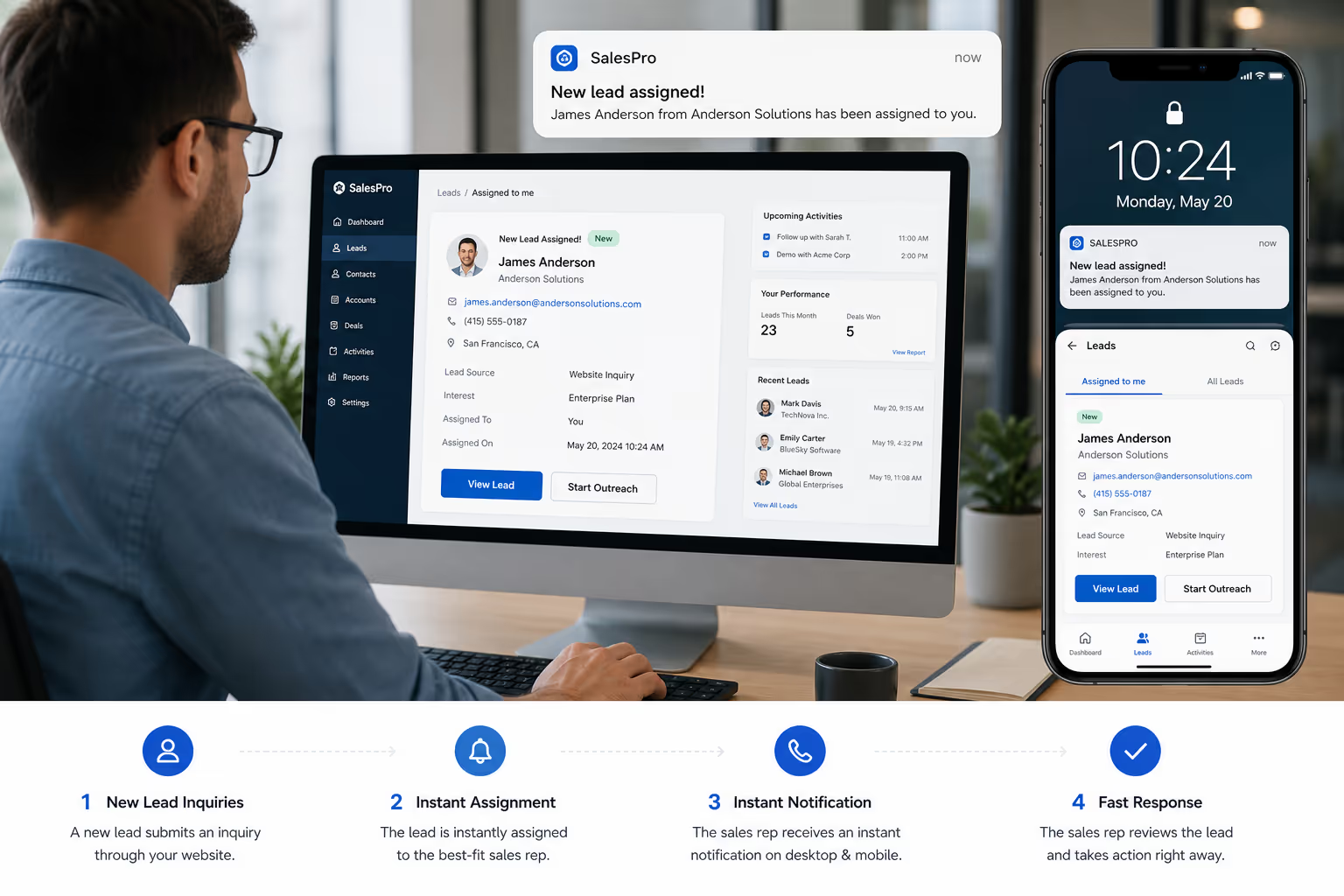
A Rework guide on round robin assignment makes the point bluntly, that the trust your reps have in the queue is part of the system, and that visible, auditable assignment is what keeps the round robin scheduling team culturally healthy, not just mathematically even.
The Numbers That Justify a Tight Round Robin Scheduling Team Setup
Before I show you the setup, I want to share the table I keep coming back to in board decks.
These are the data points I cite when a founder asks me whether a round robin scheduling team is really worth the wiring effort. Every line is from a 2026 source.
| Signal | What recent years data says | Why it matters for a round robin scheduling team |
|---|---|---|
| 5 minute response window | Replying inside 5 minutes can lift conversion up to 100x vs a 30 minute delay | Routing must be instant, not "by the end of the day" |
| 1 minute callback | Calling in under 1 minute boosts conversion by 391% | The next rep in queue needs an alert, not just an assignment |
| Manual routing leakage | 69.1% of manual operators report lead leakage, ~15pt worse than AI users | Automate the rotation; do not run it from a spreadsheet |
| Industry average reply | Average B2B reply time sits around 47 hours; only 23% reply inside 5 minutes | A working round robin scheduling team is a real competitive edge |
| SLA effect | 54.9% of teams with a written SLA reply within 15 minutes, vs 29.5% without one | Pair the round robin rule with a written SLA per rep |
| Never-responded leads | 63.5% of companies studied never responded to inbound at all | Round robin closes the "no one picked it up" gap by design |
What I read in that table is simple. A round robin scheduling team is not a productivity nicety. It is the difference between being one of the 23% who reply fast and one of the 63.5% who never reply at all. The lift on offer is huge, and most of your competitors are not capturing it.
How I Would Set Up a Round Robin Scheduling Team Without Lead Leakage
Now to the build. When I sit down with a sales leader and design a round robin scheduling team flow that does not leak, I work through six layers, in order. I am going to walk them in plain language, because the order matters more than the tooling.
The first layer is the entry point. Every inbound lead, whether from a paid ad, a demo request, a chatbot, or a pricing page, must flow into one single intake. If you have three forms feeding three different inboxes, your round robin scheduling team is already leaking before the rotation even begins. So I unify the intake first, into one pipeline stage, before I rotate anything.
The second layer is qualification. A fair round robin scheduling team does not just rotate raw inbound, because a 5 person team selling to enterprise should not have to take a freelancer signing up for a free trial. I add a quick qualifying step that splits the queue into "sales handles this" and "marketing nurtures this", so reps only get leads they should actually call.
The third layer is the rotation rule itself. This is where I configure the round robin scheduling team in the CRM, scheduler, or routing tool. I include availability checks, working hours, and a fallback rep so that if the next person in line is off, the lead jumps to the next available teammate instead of sitting in their queue. A LeanData guide on round robin best practices makes the point that the rotation is only as good as its fallback rules, because the gaps are where leakage hides.
The fourth layer is speed. The round robin scheduling team must notify the assigned rep immediately, by Slack, by SMS, by phone ring, by something they cannot miss. Given the 1 minute and 5 minute thresholds in the Kixie 2026 data, a five minute Slack delay is the difference between a closed deal and a missed one. I attach the SLA right to the alert, so the rep sees their countdown the moment they receive the lead.
The fifth layer is the booking step. This is where the round robin scheduling team meets the calendar. The lead should be able to pick a slot on the assigned rep's calendar without anyone emailing back and forth.
A Zeeg guide on round robin lead distribution highlights that real time calendar sync with conflict detection is what separates a round robin scheduling team that books meetings from one that just argues over Outlook. I always insist on live, conflict-aware booking, not "we will get back to you".
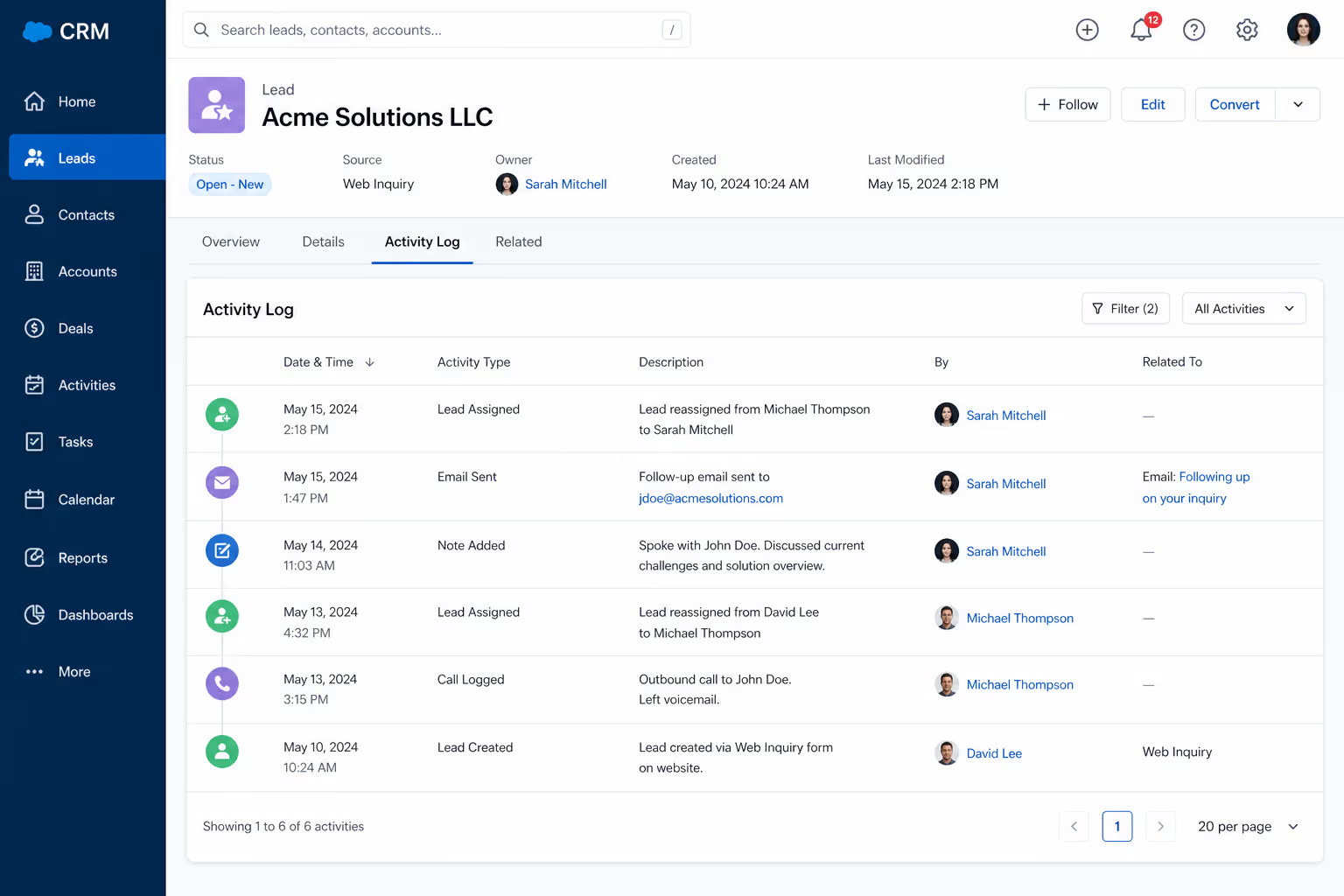
The sixth layer is the audit trail. The round robin scheduling team needs a visible log: which rep took which lead, when, and what happened next. This is how you keep the queue fair, prove it to the reps, and find the leaks. If a rep can see the history, they trust the rotation, and trust is what keeps people from quietly cherry picking leads outside the queue.
Common Mistakes I See in Round Robin Scheduling Team Rollouts
Once I have helped a few teams roll this out, the same mistakes keep coming back. The first one is treating round robin as a set-and-forget switch. A round robin scheduling team needs review every quarter, because reps leave, territories shift, and quotas change. If you do not revisit the rotation, it drifts.
The second mistake is making the round robin scheduling team too rigid. If your rule has no fallback, no out-of-office handling, and no way for a manager to override a clearly mis-assigned enterprise account, the team will start working around it within a week. The fix is not to remove the rotation, it is to add sensible exceptions and log them.
The third one is forgetting the buyer. A round robin scheduling team should feel invisible to the prospect. They should not see five reps reply, they should not get bounced between calendars, and they should not have to repeat themselves. If your rotation creates a worse buyer experience, you have engineered fairness for your team at the cost of conversion, and the data above tells you that costs real money.
Where a Tool Like Poper Fits Into a Round Robin Scheduling Team
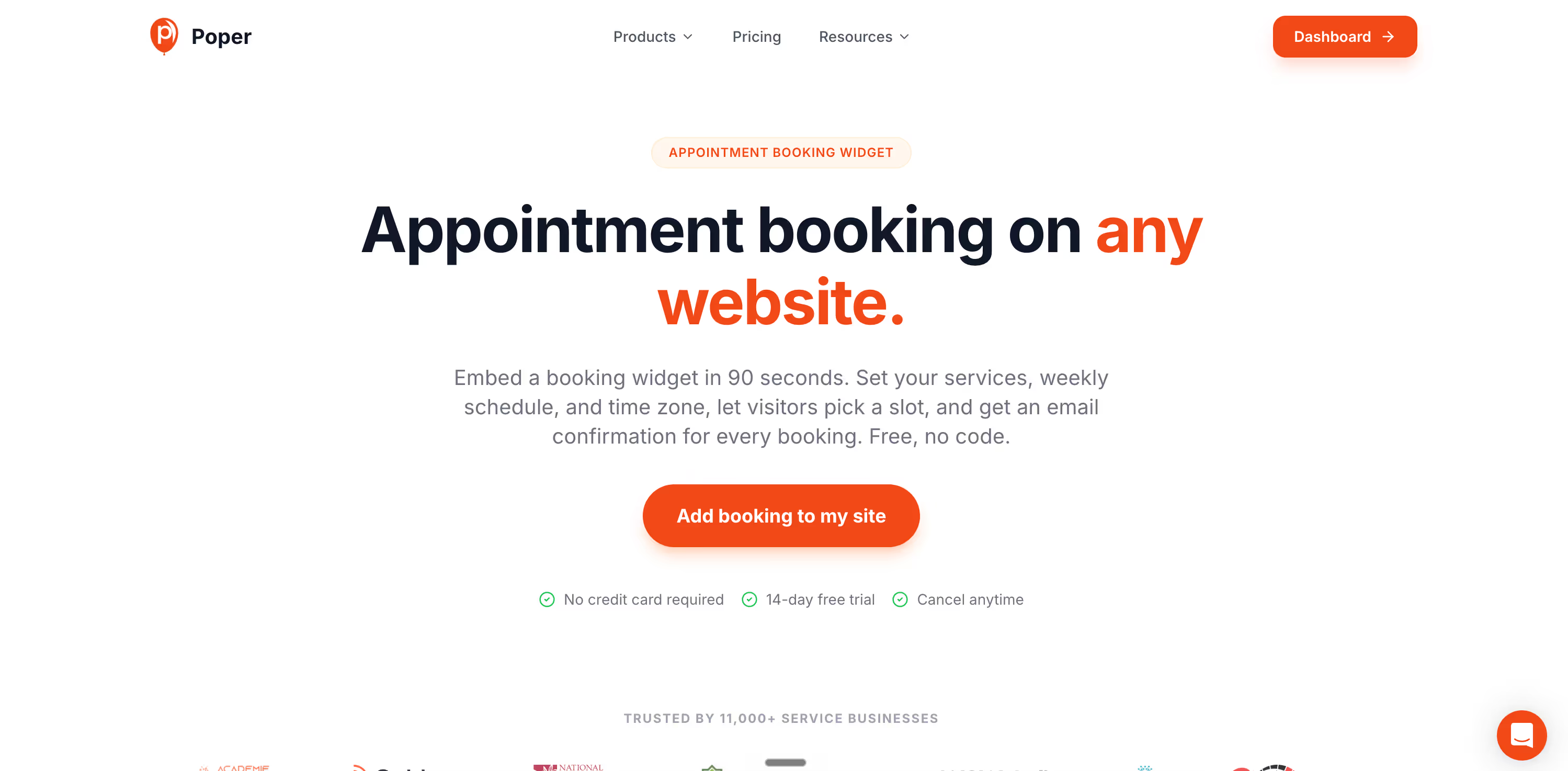
If you are picking the tools to make this real on your own website, this is where I would point you toward Poper. Poper is an AI powered engagement platform, and its Appointment Booking widget lets a round robin scheduling team embed live, conflict-aware booking right on the page where the lead is hottest, instead of bouncing them to a separate scheduler link. The form stays short, the calendar is live, and the booking lands directly on the assigned rep's calendar.
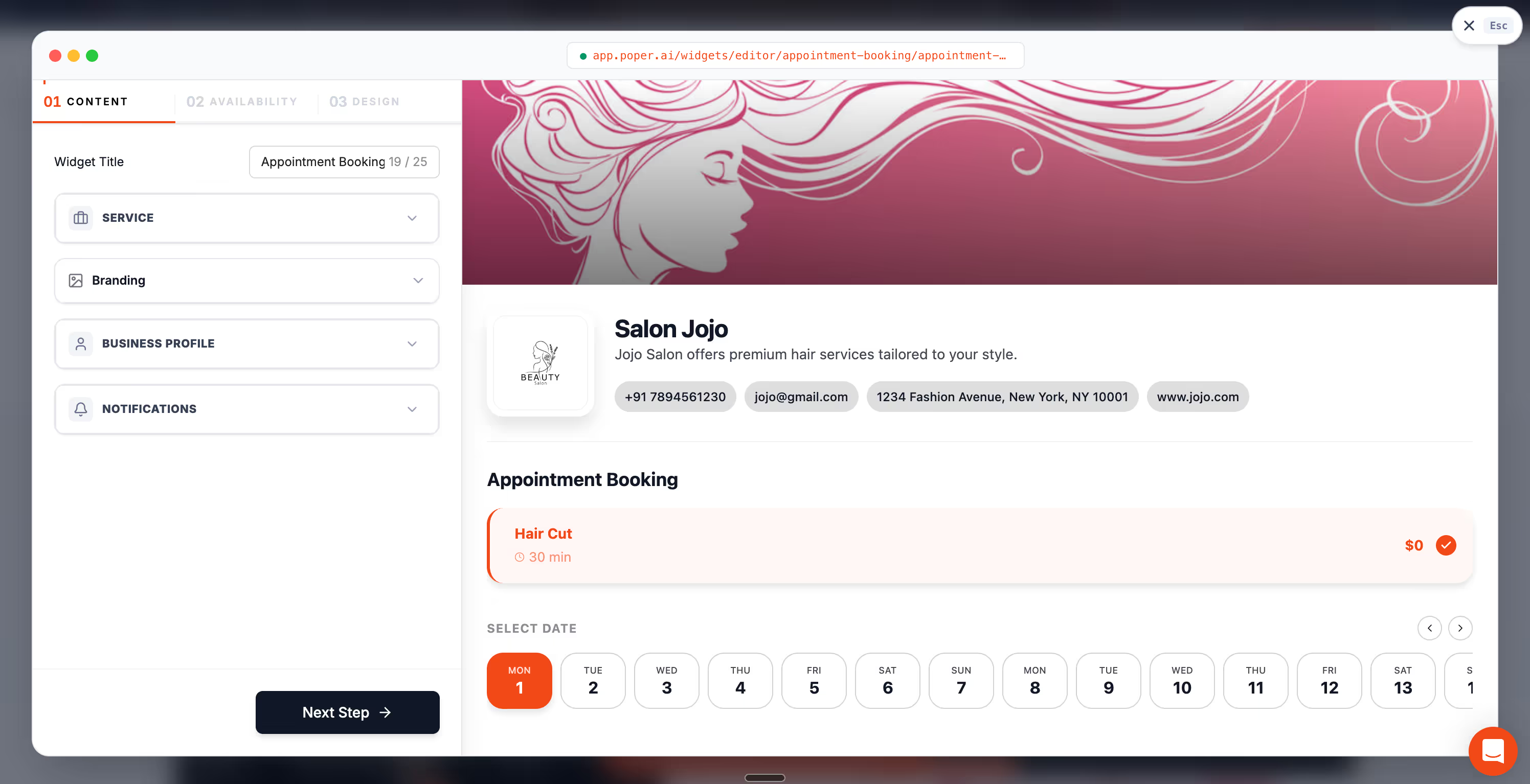
What I like about it for a round robin scheduling team is that you can combine the booking widget with Poper's targeting rules, so the booking prompt shows up at the right moment, like after a pricing page view or on exit intent, and you can layer in a quick qualifying form before the calendar opens. That keeps low fit prospects out of the round robin while letting the right ones book straight into a rep's slot. It works on WordPress, Shopify, Webflow, Wix, and Squarespace, and there is a free plan you can run a pilot on before you scale it across the round robin scheduling team.
A Quick Checklist Before You Call Your Round Robin Scheduling Team Setup Done
So if you take one thing away from this guide, take this. A round robin scheduling team without lead leakage is not just a CRM toggle. It is a chain of small decisions, intake, qualification, rotation, alerting, booking, and auditing, and a leak in any one of them costs you deals you have already paid for in marketing spend.
Review each layer, automate the rotation, write down an SLA, and watch the audit trail for a few weeks. The 2026 benchmark data is loud on this point: most teams are still not replying inside five minutes, and a round robin scheduling team that does will quietly out-convert the rest of your market.
Do that, and the Tuesday morning I described at the start of this post stops happening. The lead lands, the right rep is alerted in seconds, the buyer books a slot they can see, and the deal stays inside your pipeline where it belongs. That is the whole point of a round robin scheduling team, and that is why it is worth the setup work.