I still remember the Tuesday my friend Maya, who runs a small physiotherapy clinic, called me almost in tears. Four clients had not turned up that morning. Four empty rooms, four paid staff hours, and no income to show for any of it. She asked me one simple thing: how do I reduce appointment no-shows before this sinks me? That conversation is what got me deep into this topic, and the good news is that the fixes are simpler than most owners expect.
So in this guide I want to walk you through the exact playbook I gave Maya. We will cover reminder timing, deposits, and the scripts you actually say to people. None of it needs a big budget. It just needs a system. By the end you should have a clear plan to reduce appointment no-shows by a wide margin, and her clinic ended up cutting hers by about 70%.
Why Appointment No-Shows Cost More Than You Think
Let me start with the real damage, because it is bigger than the missed payment. When you fail to reduce appointment no-shows, you lose the slot, the staff time, and the chance to have booked someone else into that hour. The loss multiplies.
The numbers are sobering. A guide from Curogram puts the average no-show rate across industries at around 23%, with healthcare ranging from 15% to 30% and mental health services hitting 30% to 45%. An analysis by Etisia notes that missed appointments cost the United States healthcare system well over $150 billion every year. That is not a rounding error, it is a structural leak.
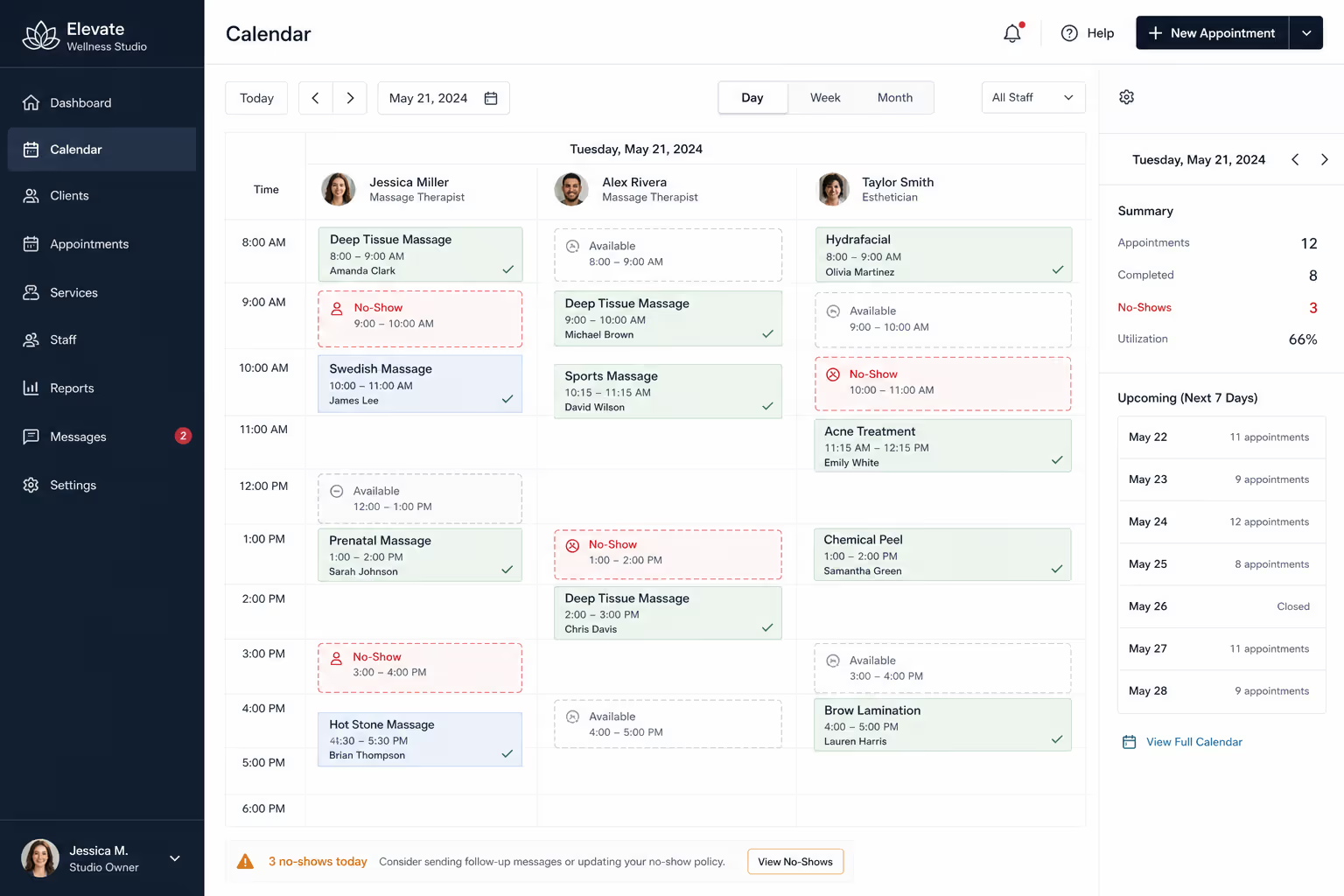
Here is the part that gives me hope though. Most of those misses are not people who changed their mind. They are people who simply forgot, lost track of the date, or felt no real commitment to the booking. That means the problem is fixable. Almost every tactic that helps reduce appointment no-shows works by fixing memory or fixing commitment, and often both at once.
Get Your Reminder Timing Right
Reminders are the first and biggest lever you have to reduce appointment no-shows. Research summarized by Curogram shows that appointment reminders cut no-show rates by 30% to 60%, and a study covered by Klara found that text reminders alone reduced no-shows by 38%. If you do nothing else from this guide to reduce appointment no-shows, set up reminders.
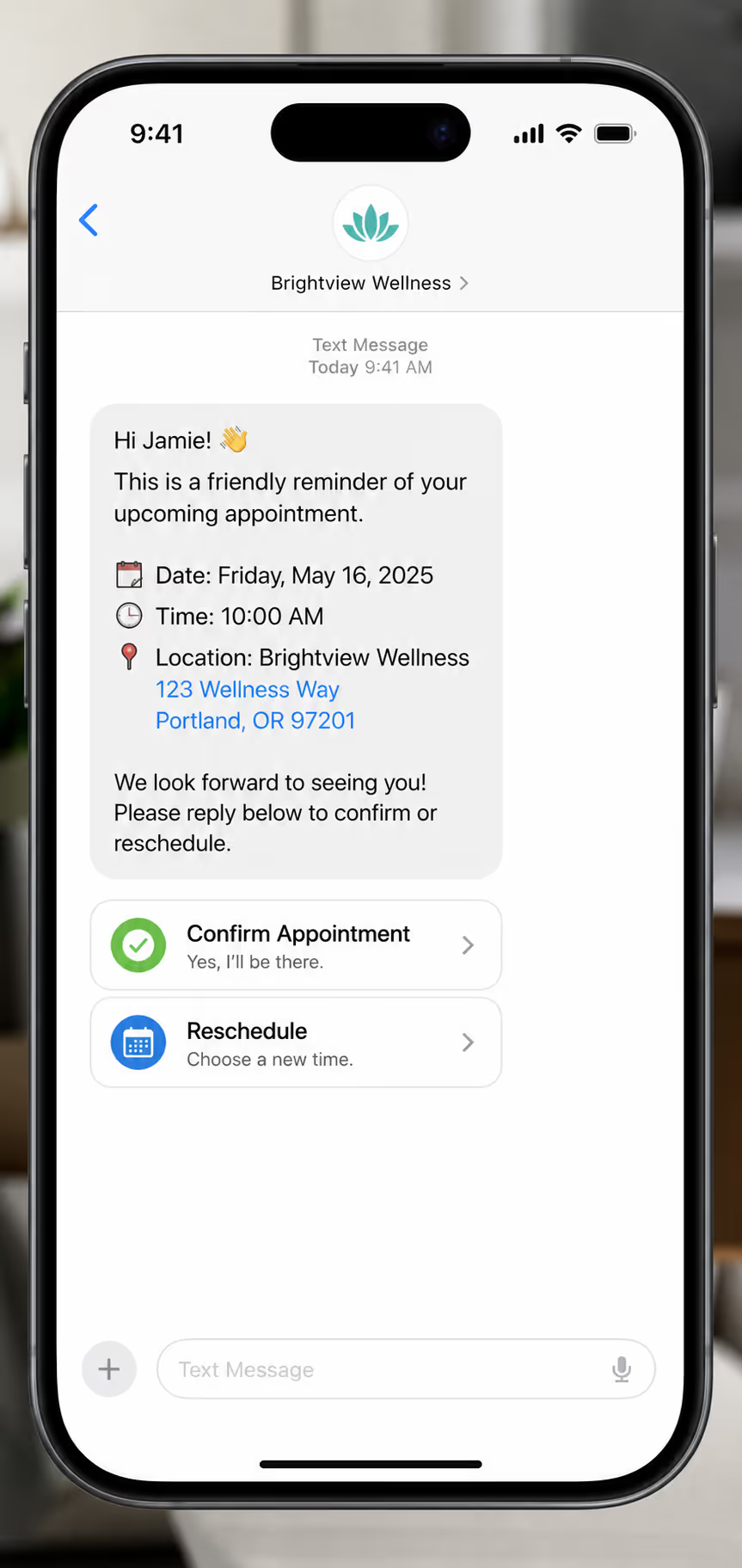
But the timing matters as much as the reminder itself. One reminder is good, a sequence is far better. To reduce appointment no-shows reliably, I tell every owner to send a short series rather than a single message, since each touchpoint is another chance to reduce appointment no-shows before the day arrives. Here is the schedule that works well for most service businesses.
| When | Message | Why it works |
|---|---|---|
| At booking | Confirmation with date, time, and location | Locks the details in while intent is high |
| 3 days before | Friendly reminder with a reschedule link | Gives early warning so cancellations free the slot |
| 24 hours before | Final reminder asking for a reply to confirm | Catches the people who simply forgot |
That dual reminder pattern, one a few days out and one the day before, is one of the most reliable ways to reduce appointment no-shows. Curogram's data shows it can push no-show rates as low as 4.4%. Send time matters too, because evening messages reach people when they are home and planning their day, and that lifts confirmation rates by more than 40%.
One more detail that helps reduce appointment no-shows: use text, not just email. SMS reminders are roughly three times more effective than email at preventing missed visits. Even better, make the SMS two way so the client can confirm or reschedule with a single reply. Two way reminders reduce no-shows about 23% more than one way blasts, because they turn a silent cancellation into a freed up slot you can resell.
Use Deposits To Create Real Commitment
Reminders fix memory. Deposits fix commitment. If a booking costs nothing, skipping it also costs nothing, and that is the quiet reason so many slots go empty. To reduce appointment no-shows for good, you have to address both at once.
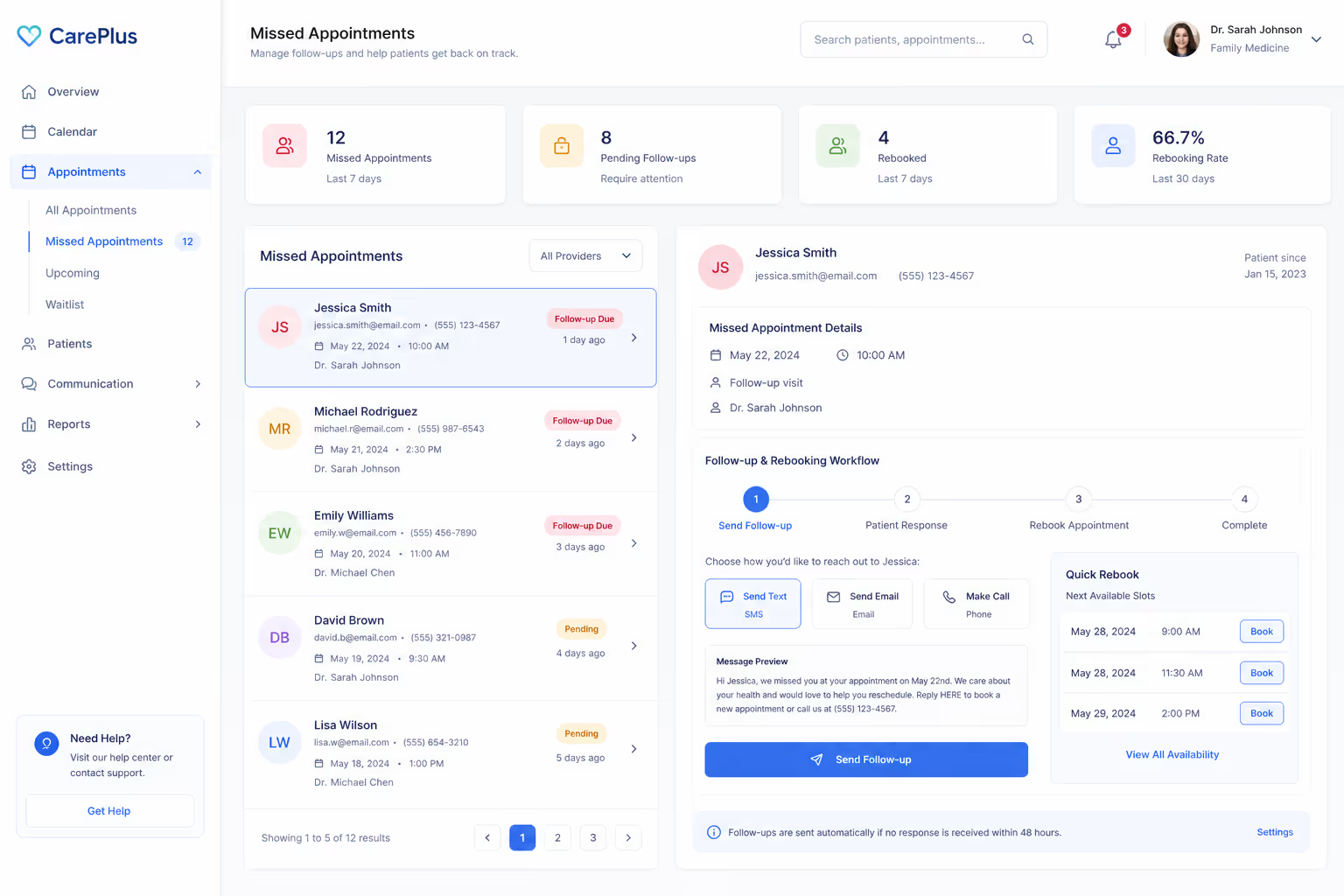
Asking for a small deposit at the moment of booking changes the psychology completely, and it is one of the fastest ways to reduce appointment no-shows. Once a client has money on the line, the appointment becomes a real plan rather than a loose idea. You do not need to charge the full price. Even a modest deposit, credited toward the final bill, is enough to reduce appointment no-shows sharply because it creates a tiny sense of loss for skipping.
I always suggest pairing the deposit with a clear, kind cancellation policy. Tell people they can move the appointment freely with 24 hours notice and keep their deposit. That feels fair, not punishing. The goal is not to keep the money, the goal is to make people show up or tell you early so you can rebook the time.
Write Scripts That Actually Make People Show Up
The words you use carry more weight than most owners realize, and the right script can reduce appointment no-shows on its own. Randomized trials covered in healthcare research found that simply rephrasing a reminder, and stating what the appointment is worth, measurably lowered no-show rates. So let me give you the script principles I trust to reduce appointment no-shows.
First, make it personal. Use the client's name and the specific service, never a generic "you have an appointment." Second, state the value. A line like "Dr. Lee has reserved this 45 minute slot just for you" gently signals that the time has real worth. Third, make the next step obvious. Always include a one tap way to confirm or reschedule, because friction is the enemy of a reply.
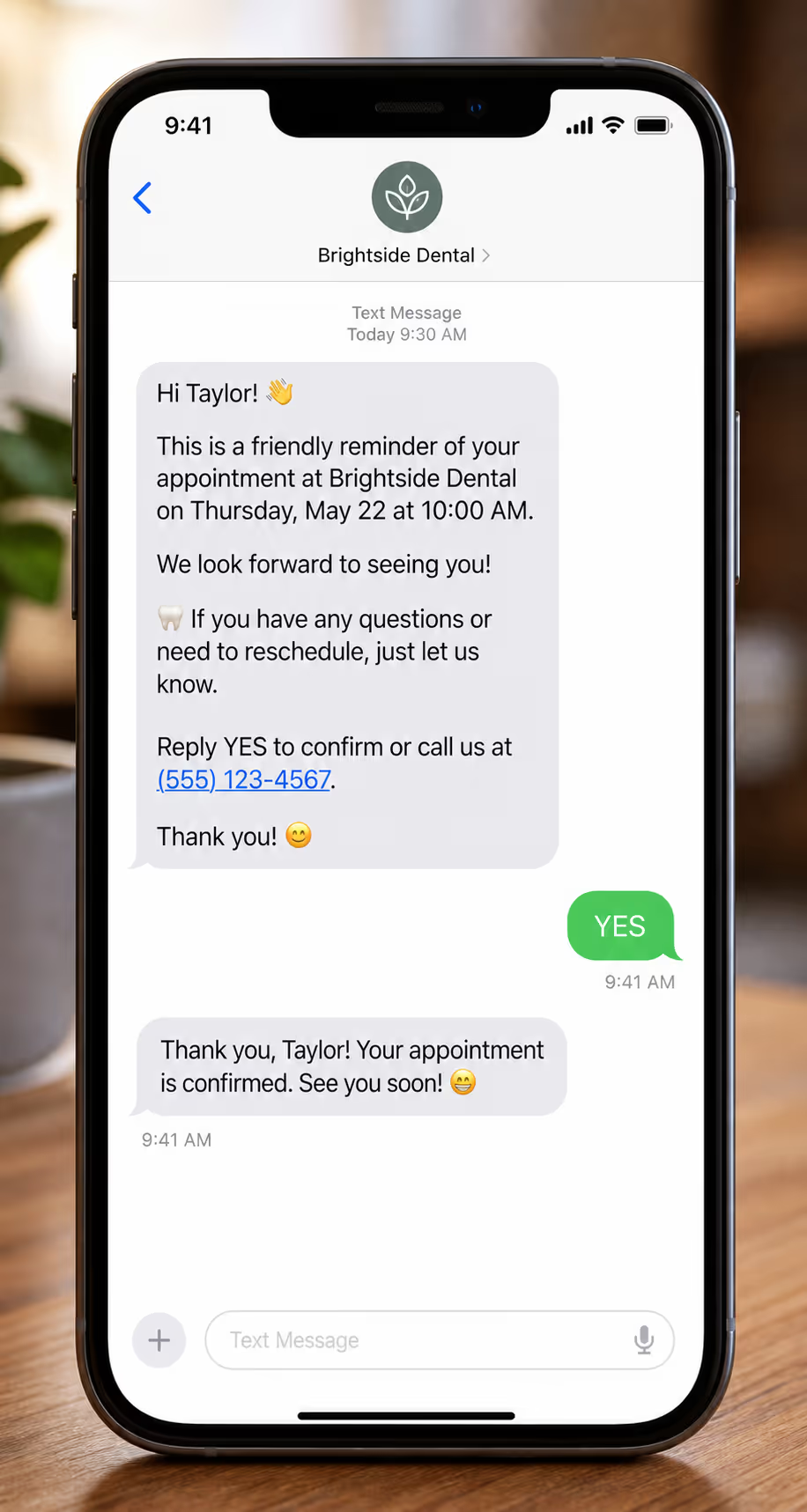
For the day-before message, a warm and direct tone works best. Something like: "Hi Sara, this is a reminder of your appointment tomorrow at 2pm with our team. Reply YES to confirm, or tap here to reschedule." It is short, it is human, and it gives an easy exit that still protects your calendar. Scripts like that reduce appointment no-shows because they remove every excuse not to respond.
Track the Data and Follow Up Fast
You cannot fix what you do not measure. To truly reduce appointment no-shows over time, write down your no-show rate every month and watch the trend. If it climbs, something in your reminder flow has broken.
Following up also matters, because a good follow-up routine helps you reduce appointment no-shows on the very next visit. When someone does miss a visit, reach out the same day with a friendly message, not a scolding one. Many no-shows are happy to rebook if you make it easy and do not shame them. A Epic Research finding showed that clients connected through a digital portal had a 6.2% no-show rate versus 7.9% for those without one, which tells you that staying digitally connected to people keeps them engaged. Every follow-up channel you keep open is another small way to reduce appointment no-shows.
How Poper Helps You Reduce Appointment No-Shows
I want to be honest about where our tool fits in your plan to reduce appointment no-shows. Poper is an AI-powered engagement platform, and our Appointment Booking widget is built to remove friction at the exact moment someone decides to book. Less friction at booking means a stronger commitment, and that is the first step to reduce appointment no-shows.
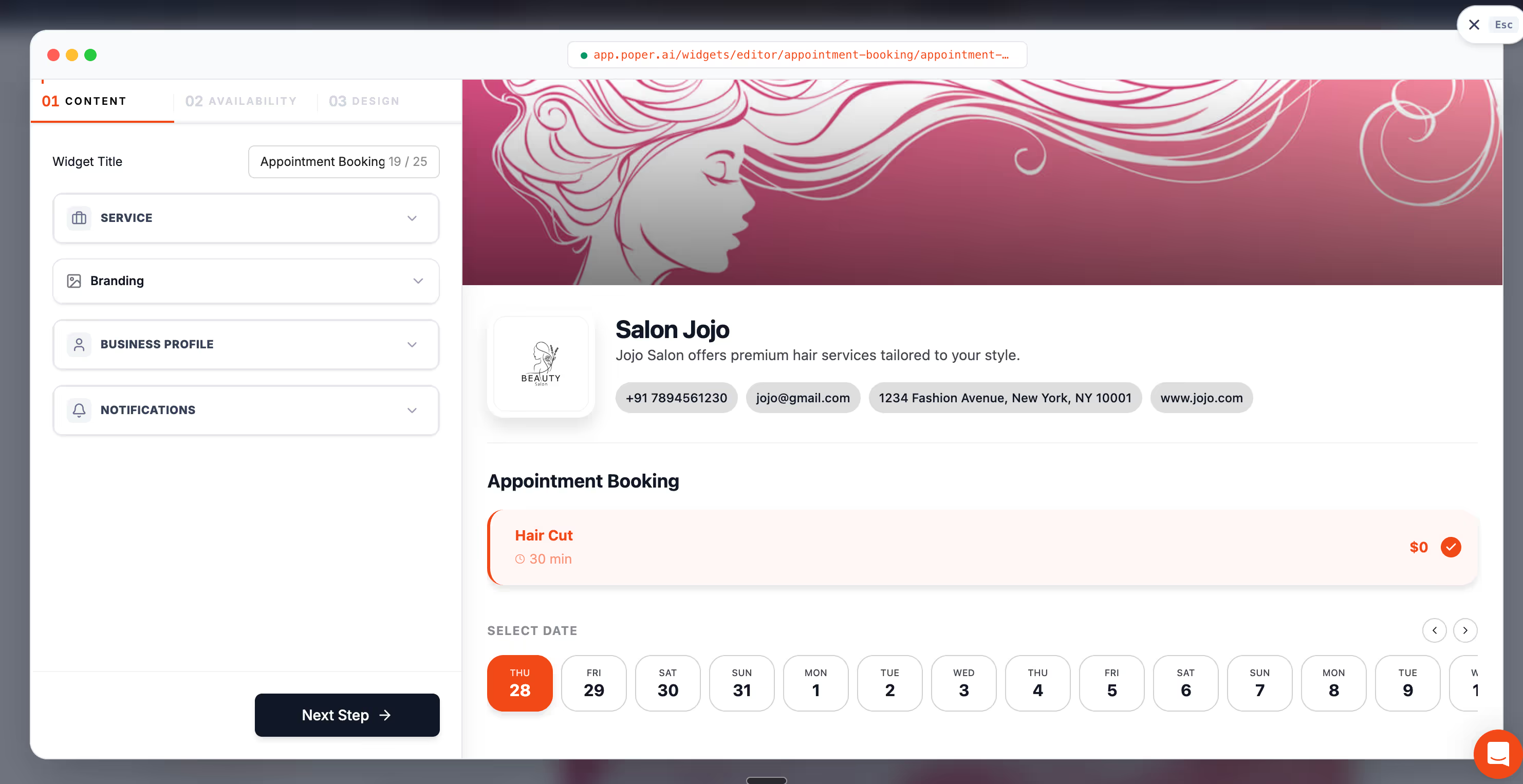
With Poper you can add a no-code booking widget to any page in under two minutes, on WordPress, Shopify, Webflow, Wix, or Squarespace. You can collect a deposit at booking, capture the client's phone number for SMS reminders, and use our targeting rules to surface the booking option at the right moment. It pairs cleanly with whatever reminder tool you already use.
So here is my closing thought. You do not reduce appointment no-shows with one magic trick. You do it with a simple system: a reminder sequence that respects timing, a small deposit that creates commitment, and scripts that sound like a person. Maya put all three in place and watched her empty rooms turn back into booked, paying hours. You can do the same, and you can start this week.