I had a conversation recently with a support lead who was tired of hearing the same advice from every software vendor. One tool promised more channels. Another promised better automation. A third promised a full omnichannel stack. He said, "I do not need more buzzwords. I need customers to stop repeating themselves." That is exactly where I think the real omnichannel customer support conversation should start.
Too many teams still treat omnichannel customer support and multichannel support like a branding choice. They are not. They solve different problems. Multichannel support helps you show up in more places. Omnichannel customer support helps the conversation stay intact when the customer moves between those places. If you confuse the two, you buy software for coverage when what you really need is continuity.
So in this guide I want to explain the difference the way I would explain it to my own team. I will show you where multichannel support is enough, where omnichannel customer support starts paying for itself, and what actually matters in 2026 if you want faster resolutions and less customer effort.
Why This Debate Matters More in 2026
The channel mix is getting messier, not simpler. Customers still want voice for some issues, chat for others, and self-service when they are in a hurry. According to Forrester's Consumer Pulse Survey, Baby Boomers still lean heavily toward voice, with 61% preferring phone support, while Gen Z splits its preferences across email, text, chat, and voice much more evenly [1]. That tells me something important. The future is not one winning channel. The future is a support system that handles channel switching without making the customer start over.
Zendesk's guide to omnichannel support made the same point with a cleaner data cut. It reported that 63% of respondents expected a choice of channels, and 50% expected the service rep to have access to previous interactions with the company. That split matters. Customers do want options, which is the multichannel part. But just as many want memory, which is the omnichannel customer support part.
That is why I keep saying the real comparison is not omnichannel versus multichannel as if one replaces the other. Multichannel support is the starting layer. Omnichannel customer support is the operating model that makes those channels feel like one conversation.
The Simplest Way I Explain Multichannel Support vs Omnichannel Customer Support
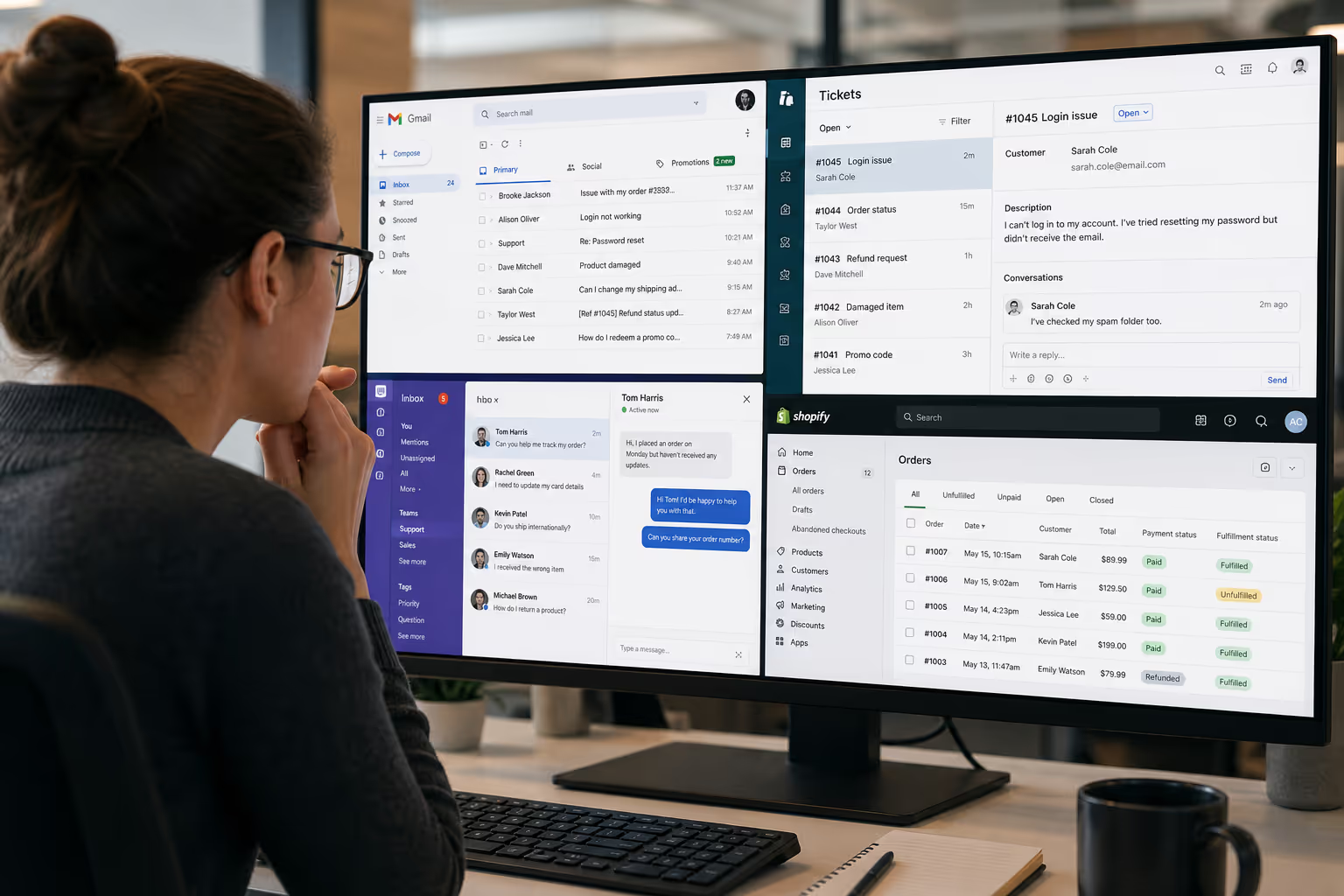
Multichannel support means your business offers several contact paths, usually email, phone, chat, messaging apps, social DMs, or a help center. That is useful, and often necessary. But each channel can still behave like its own silo. A customer might email you on Monday, open chat on Tuesday, and call on Wednesday, only to repeat the issue three times.
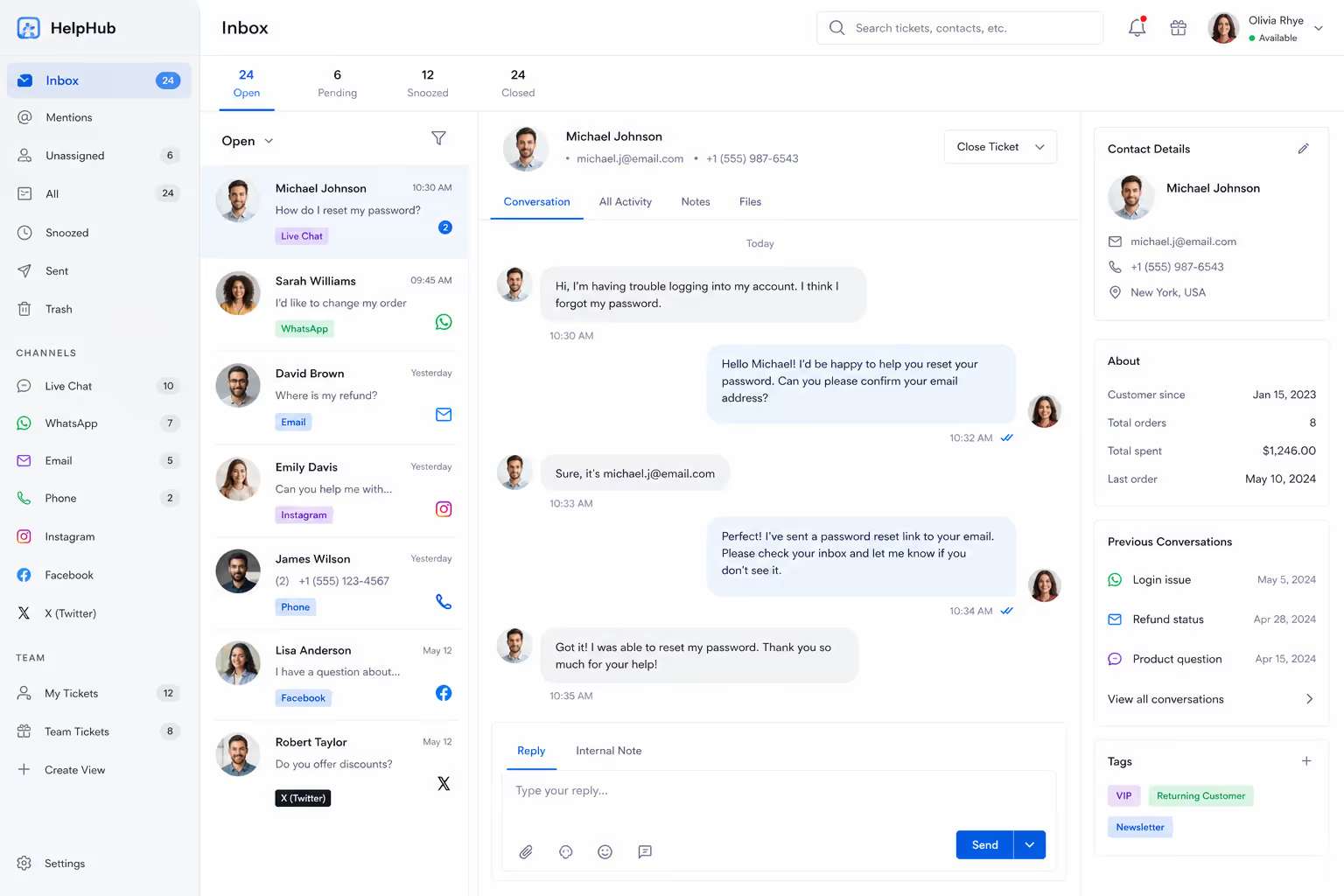
Omnichannel customer support goes one step further. It connects the channels, the customer record, and the interaction history so the context follows the customer. Zendesk defines it plainly: the conversation history and context should travel with the customer from channel to channel. That is the practical line I use in every buying discussion.
| Dimension | Multichannel support | Omnichannel customer support | What the customer feels |
|---|---|---|---|
| Channel availability | Several channels are available | Several channels are available and connected | Choice versus choice with continuity |
| Conversation history | Often stays inside each channel | Moves with the customer across channels | Repeat yourself versus pick up where you left off |
| Agent view | Separate inboxes or tools | Unified timeline and shared context | Fragmented answers versus coherent answers |
| Handoffs | Manual and lossy | Structured and context-rich | Friction versus flow |
| Best fit | Simple, low-volume support | Complex journeys, teams, or escalations | Basic reach versus lower effort |
That table is the whole story. Multichannel support answers, "Can customers reach us where they want?" Omnichannel customer support answers, "Can we continue helping them without losing context?" In 2026, the second question is usually the more expensive one to ignore.
Give Your Channels One Front Door
Whichever label you land on, the visitor still has to find you. Poper's All in One Chat widget puts live chat, WhatsApp, email, and your social handles behind a single launcher, so nobody has to guess which contact route is the fast one. It goes live with the same snippet on every page.
<script id="poper-js-script" data-account-id="YOUR_ACCOUNT_ID" src="https://app.poper.ai/share/poper.js" defer></script>What the Current Data Says
I do not like making support architecture decisions from slogans, so I keep coming back to recent research. The pattern across recent research is consistent: customers want flexibility, but they punish fragmentation.
Start with self-service. Gartner reported that only 14% of customer service issues were fully resolved in self-service, and even among issues customers described as very simple, only 36% resolved fully there [4]. To me, this is one of the strongest arguments for omnichannel customer support. Self-service matters, but it must hand off cleanly to a human when it stalls. If the customer has to abandon the bot, switch channels, and explain everything again, the self-service layer did not save effort, it only delayed real help.
Now look at internal systems. Salesforce's State of Service reporting found that 82% of high-performing organizations use the same CRM platform across service, sales, and marketing [5]. I read that less as a software endorsement and more as an operating principle. High performers do not win because they have the most channels. They win because their data is not scattered across five disconnected tools. Omnichannel customer support works only when the underlying customer context is unified.
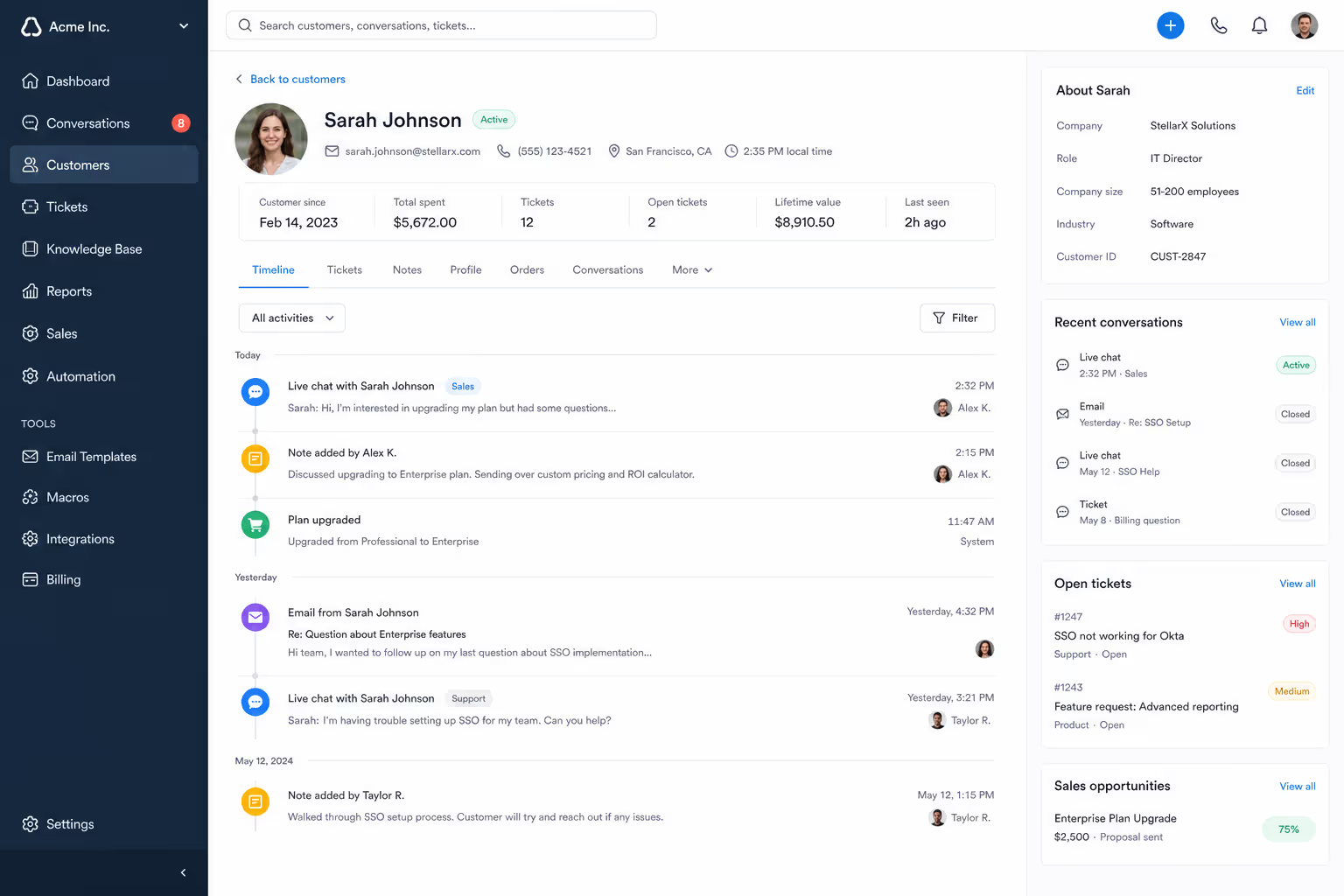
The 2026 expectation is even clearer. Zendesk said in its release for the 2026 CX Trends report that 76% of consumers would choose a company that lets them use text, voice, and visuals in one conversation. That is not a vote for channel sprawl. It is a vote for continuity. Customers are saying, very directly, that they want to move between modes without restarting the relationship each time.
I also pay attention to the softer expectation signals. Zendesk's analysis said 62% of customers expect personalized and consistent interactions regardless of channel [7]. That phrase, "regardless of channel," is the heart of omnichannel customer support. It tells us customers do not evaluate your email team, chat team, and phone team separately. They evaluate the company as one service experience.
Where Multichannel Support Is Enough
I do not think every company needs full omnichannel customer support on day one. If you are a small business with low ticket volume, one or two human responders, and straightforward issues, multichannel support may be enough for now. The key is that the conversations stay simple. A customer asks a question on WhatsApp, you answer it there, and the issue ends there. No escalation, no handoff, no technical diagnosis, no compliance trail.
In that situation, pushing for enterprise-grade omnichannel customer support too early can be wasteful. You end up paying for routing logic, deep integrations, and reporting layers you do not actually use. I would rather see a small team run clean multichannel support with disciplined response times than buy a heavy platform and configure half of it badly.
But I would still keep an eye on warning signs. If your team copies notes between tools, asks customers to resend screenshots, or loses momentum every time a conversation moves from web chat to email, you are already feeling the cost of not having omnichannel customer support.
When Omnichannel Customer Support Stops Being Optional
When customers switch channels mid-issue
This is the clearest trigger. If your typical issue starts on one channel and ends on another, omnichannel customer support is no longer a nice upgrade. It is basic infrastructure. Customers might start with a chatbot, move to live chat, then request a phone call for a complex explanation. The moment that happens regularly, disconnected tools turn every escalation into customer effort.
That is why I keep returning to the Zendesk data point that 50% of customers expect reps to see previous interactions. They are not asking for magic. They are asking not to repeat the case history you already collected.
When support, sales, and success all touch the same account
Omnichannel customer support matters even more when customer-facing teams overlap. A support issue can become a renewal risk. A product question can become an upsell. A billing complaint can turn into a retention conversation. If each team works from a different system, the customer experiences your org chart instead of your service.
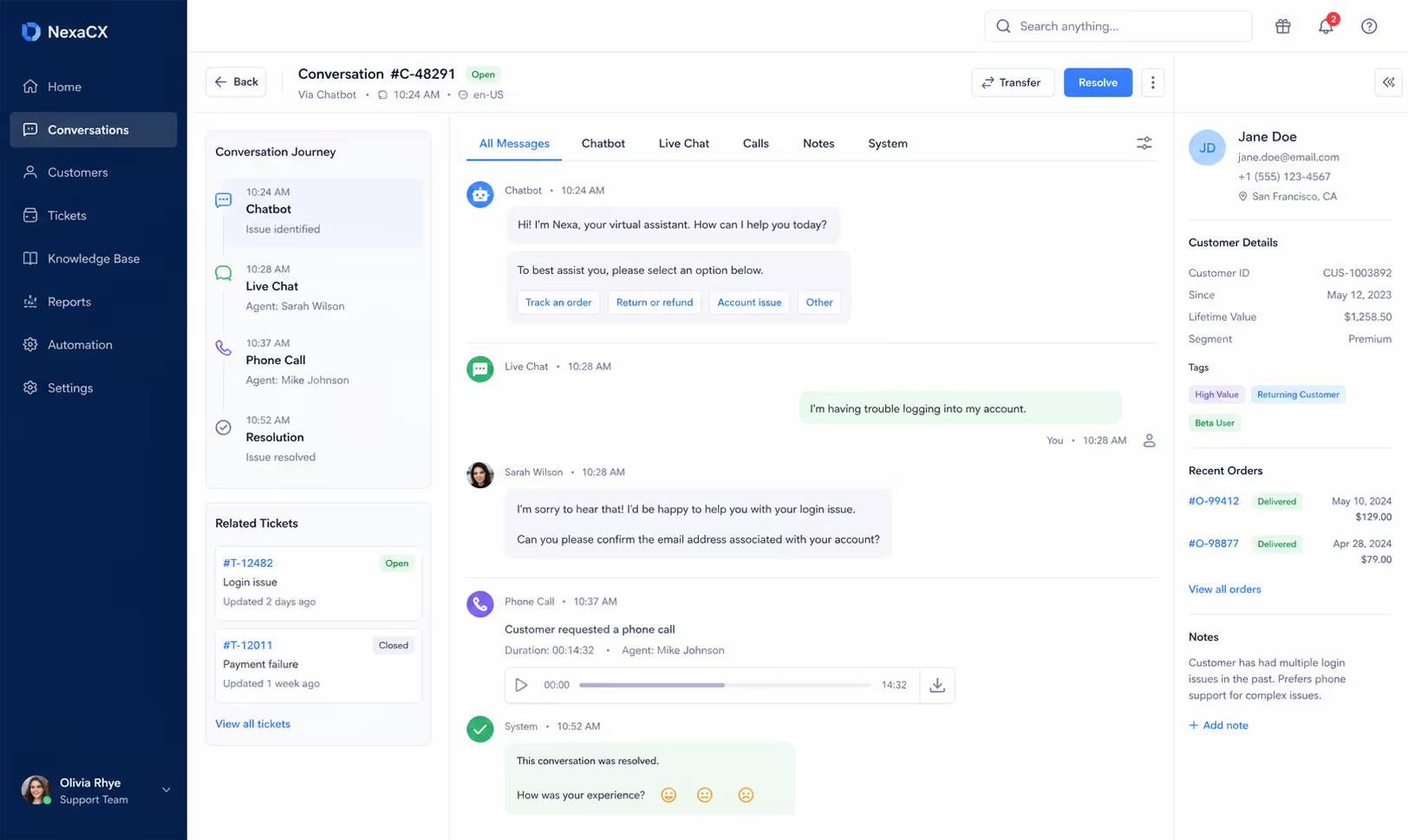
Salesforce's finding that 82% of high-performing service organizations run on the same CRM across service, sales, and marketing is useful here. It shows that unified context is not just about agent convenience. It is how companies make one coherent decision about the customer instead of three disconnected ones.
When self-service needs a clean human fallback
I am a big believer in self-service, but only when it shortens the path to resolution. Gartner's numbers should be a warning to every support leader who thinks a help center or bot can replace human continuity by itself. If only 14% of issues resolve fully in self-service, then the handoff path becomes part of the product. Omnichannel customer support turns that handoff into a continuation. Multichannel support often turns it into a restart.
What actually matters in 2026
If I were evaluating tools for omnichannel customer support this year, I would care less about the feature grid and more about four practical outcomes.
First, does context carry over automatically? I want the full timeline, attachments, prior replies, and account metadata visible to the next person who touches the case. If that fails, the platform is not delivering real omnichannel customer support, no matter how many channel logos appear on the pricing page.
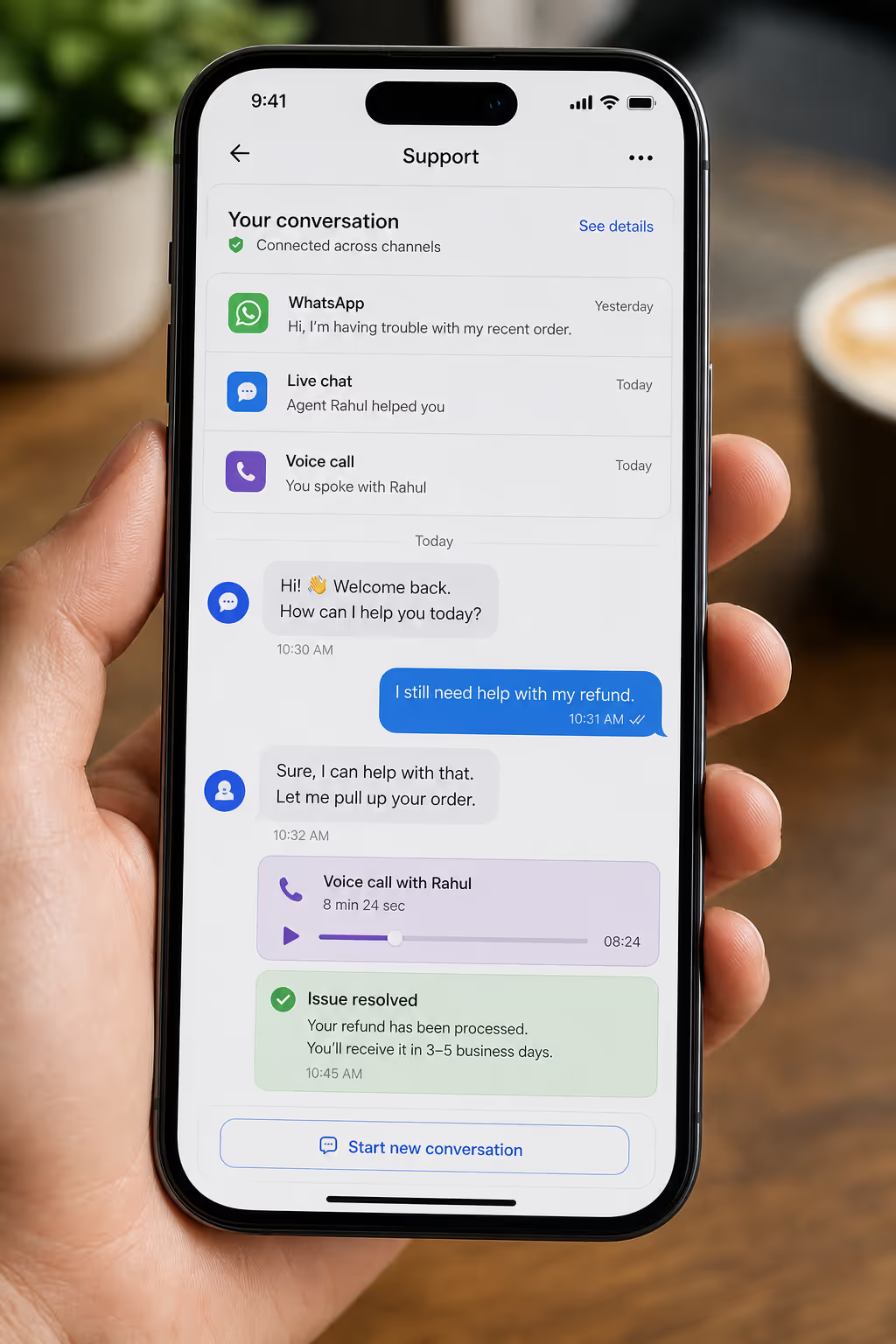
Second, can the customer change modes without friction? The 2026 Zendesk research on text, voice, and visuals in one conversation is the benchmark I keep in mind. If your workflow supports chat and phone but breaks the moment a customer needs to send an image, the experience is still fragmented.
Third, does the system route work intelligently? A true omnichannel customer support stack should not just collect messages into one place. It should move the right case to the right person, with the right urgency and history attached.
Fourth, can you measure customer effort across the whole journey? Channel-by-channel dashboards are not enough anymore. I want to know how many touches it took to resolve the issue, whether the case bounced between teams, and where context got lost. That is where the real cost of weak omnichannel customer support usually hides.
Turn Those Four Questions Into Something Live This Week
Context carryover and smart routing are platform decisions that take months. The contact layer your visitors actually touch is not. Start there, learn which channels people pick, then buy the bigger system with evidence instead of a slogan.
Set It Up In PoperWorks on Shopify, WordPress, Webflow, Wix, and plain HTML.- 1Embed the All in One Chat widget so chat, WhatsApp, and email sit behind one launcher sitewide.
- 2Trigger a help prompt on exit intent or after time on page, before a frustrated visitor opens a second channel.
- 3Read the conversion analytics dashboard to see which channel people actually choose, and staff that one first.
The Most Common Mistake I See
The biggest mistake is buying more channels when the real problem is broken memory. Teams add Instagram DMs, WhatsApp, SMS, and a new chat widget, then wonder why CSAT still feels flat. More entry points do not create better service by themselves. They only create more places for context to leak.
I would take a smaller, cleaner omnichannel customer support setup over a sprawling multichannel setup every time. Five disconnected channels feel impressive in a demo and exhausting in production. One shared customer record, one routing layer, and one coherent timeline usually move the needle much faster.
A Practical Path for Smaller Teams
If you are not ready for a full rebuild, the sensible move is to stage it. Start by deciding which channels customers actually use most. Then centralize the conversation history for those channels first. Next, make sure self-service, chat, and email can hand off to a human without losing case context. Only after that would I expand the channel mix.
This is the order I prefer because it matches the real value of omnichannel customer support. Continuity first, expansion second. If you reverse that order, you create more operational complexity before you have earned the service gains.
Where Poper fits
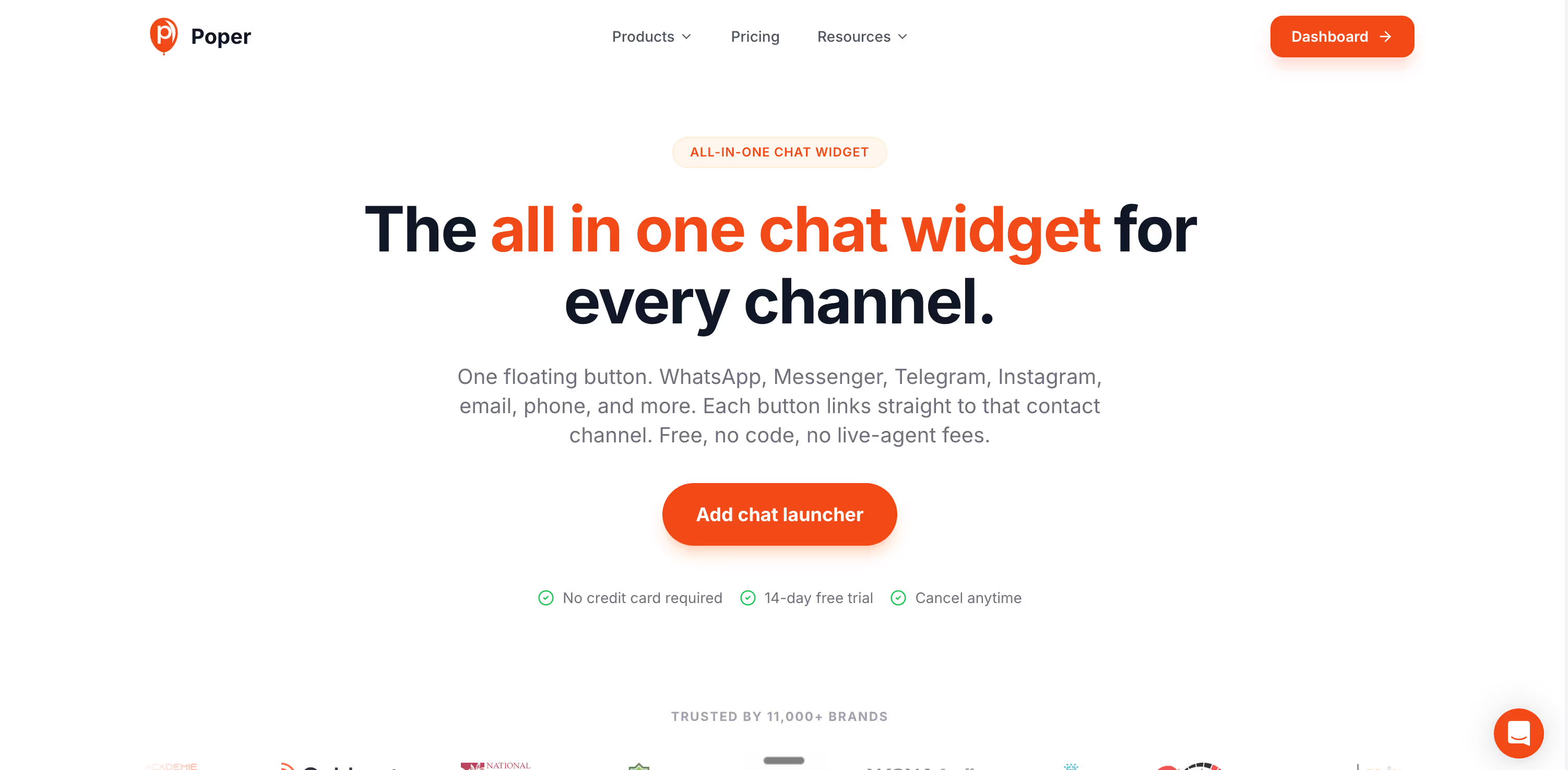
This is where I want to be precise about what we do. Poper's All-in-One Chat widget helps you give visitors channel choice on the front end, including options like WhatsApp, Messenger, Slack, Telegram, and more from a single launcher. That solves an important multichannel support problem immediately: customers can contact you in the channel they already prefer.
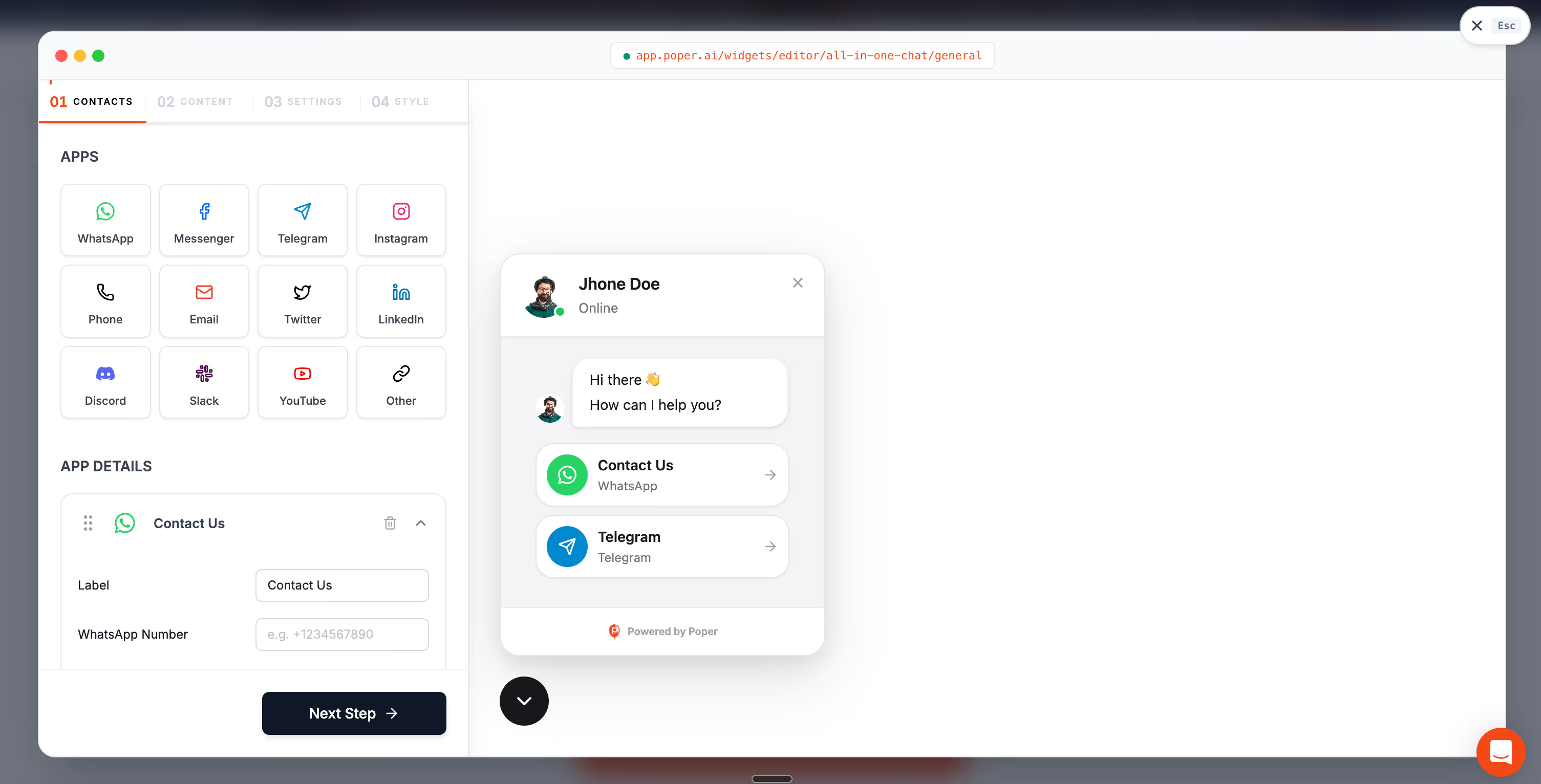
Where it becomes more valuable is when you pair that front-end flexibility with a shared inbox, CRM, or support workflow that preserves context after the click. That is how a simple site widget starts supporting a more serious omnichannel customer support strategy. In other words, Poper helps you improve the entry point, and your internal systems determine whether the rest of the journey feels truly connected.
Wrap up
If I had to reduce the whole debate to one sentence, it would be this: multichannel support gives customers more doors, but omnichannel customer support makes sure they do not walk into a different building each time. In 2026, customers clearly want both. They want choice, and they want continuity.
So if you are choosing where to invest, do not ask only how many channels you offer. Ask whether the conversation survives the switch. That is the difference customers actually feel, and it is the part of omnichannel customer support that still matters when the software demos are over.
References
Fewer Channels, Better Connected
You do not need a support platform rebuild to make progress this quarter. Put one launcher in front of the channels you already answer, watch what visitors reach for, and let that decide what you consolidate next.
Create Your Free Poper AccountFree plan, no credit card required.