Every March, the same thing happens at our office. Slack lights up, lunch breaks run long, and half the team suddenly cares deeply about a college basketball school they could not place on a map. That collective obsession is exactly why March Madness bracket marketing has become one of our favorite seasonal campaign plays.
We have watched brands of every size ride this wave: coffee shops, SaaS startups, gyms, and national retailers. In this post, I want to unpack why March Madness bracket marketing works so well, hand you five campaign templates you can copy this year, and show you how we would launch a bracket campaign with Poper in a single afternoon.
Why March Madness Bracket Marketing Works So Well
The raw numbers are hard to ignore. According to a press release from ESPN, a recent year Tournament Challenge collected a record 24.4 million brackets, with fans submitting "more than 709 brackets per second" at peak and making over 1.1 billion individual game picks.

It did not slow down. ESPN reported in March 2026 that 26.6 million brackets were completed for the 2026 tournament, a 7% jump over past year and the fourth consecutive record-setting year. People are not getting tired of brackets. They are filling out more of them.
Advertisers noticed. An analysis by eMarketer found that March Madness viewership soared to a 33-year high while brands poured well over a billion dollars into tournament advertising. The women's tournament grew even faster: a report from Just Women's Sports, citing Adweek, noted that ad sales for the women's tournament jumped roughly 200% year over year, with 95% of ad inventory sold well before tip-off.
Here is the part we care about most. You do not need a television budget to borrow this attention. March Madness bracket marketing lets a small brand run the same psychological loop that powers the tournament itself: predictions, pride, and a reason to check back after every round.
What Makes a Bracket Different From a Regular Giveaway
A standard giveaway gets one touchpoint. Someone enters, forgets, and maybe opens the winner announcement email three weeks later. March Madness bracket marketing flips that pattern because the tournament hands you six built-in reasons to re-engage: every round creates new results, new standings, and new bragging rights.
Participants also have skin in the game. Once someone fills out a bracket, they want to know how their picks performed, so they return on their own. That is the quiet superpower of March Madness bracket marketing: the follow-up emails feel like a service, not a promotion.
The 5 March Madness Bracket Marketing Templates
We see five repeatable campaign shapes across the brands that do this well. The table below summarizes them, and I will walk through each one.
| Template | Best For | Prize Idea | Primary Goal |
|---|---|---|---|
| Lead Capture Bracket Contest | E-commerce and newsletters | Gift card or product bundle | Email list growth |
| Product Showdown Bracket | Brands with many products or flavors | Discount on the winning product | Social engagement |
| Round-by-Round Reward Bracket | Retail and restaurants | Escalating coupons per round | Repeat visits |
| Local Community Bracket | Gyms, cafes, and local services | Local prize or free membership | Foot traffic |
| B2B Industry Bracket | SaaS, agencies, and media brands | Industry report or swag | Brand awareness |
1. The Lead Capture Bracket Contest
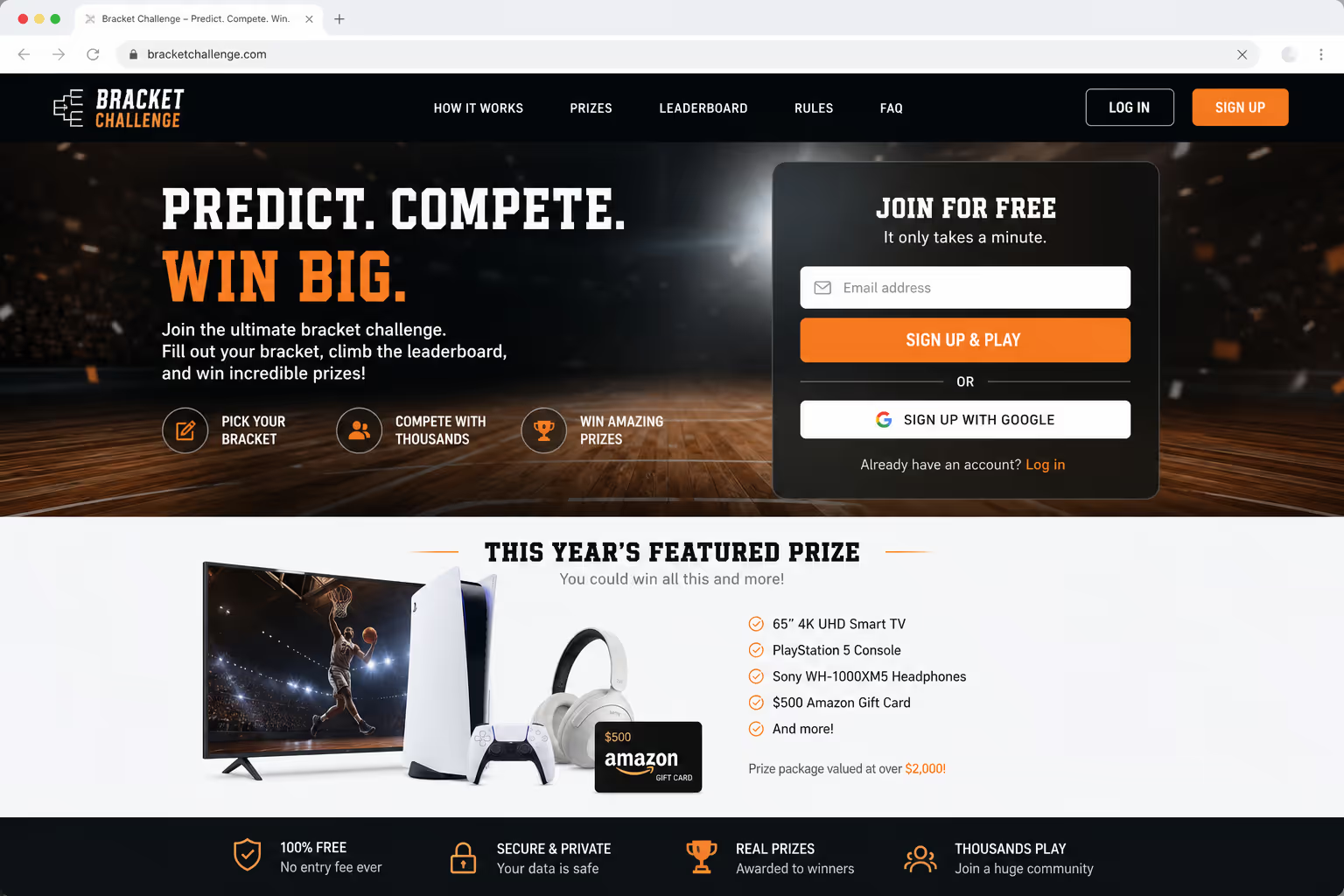
This is the workhorse of March Madness bracket marketing. You host a bracket on your site, visitors submit their picks, and entry requires an email address. The prize does the heavy lifting, so make it something your ideal customer actually wants, not a generic tablet.
The real value shows up after entry. Each round of the tournament gives you a natural excuse to email standings, and those emails get opened because people want to see their rank. By the championship game, you have sent six useful emails to a brand-new list segment.
2. The Product Showdown Bracket
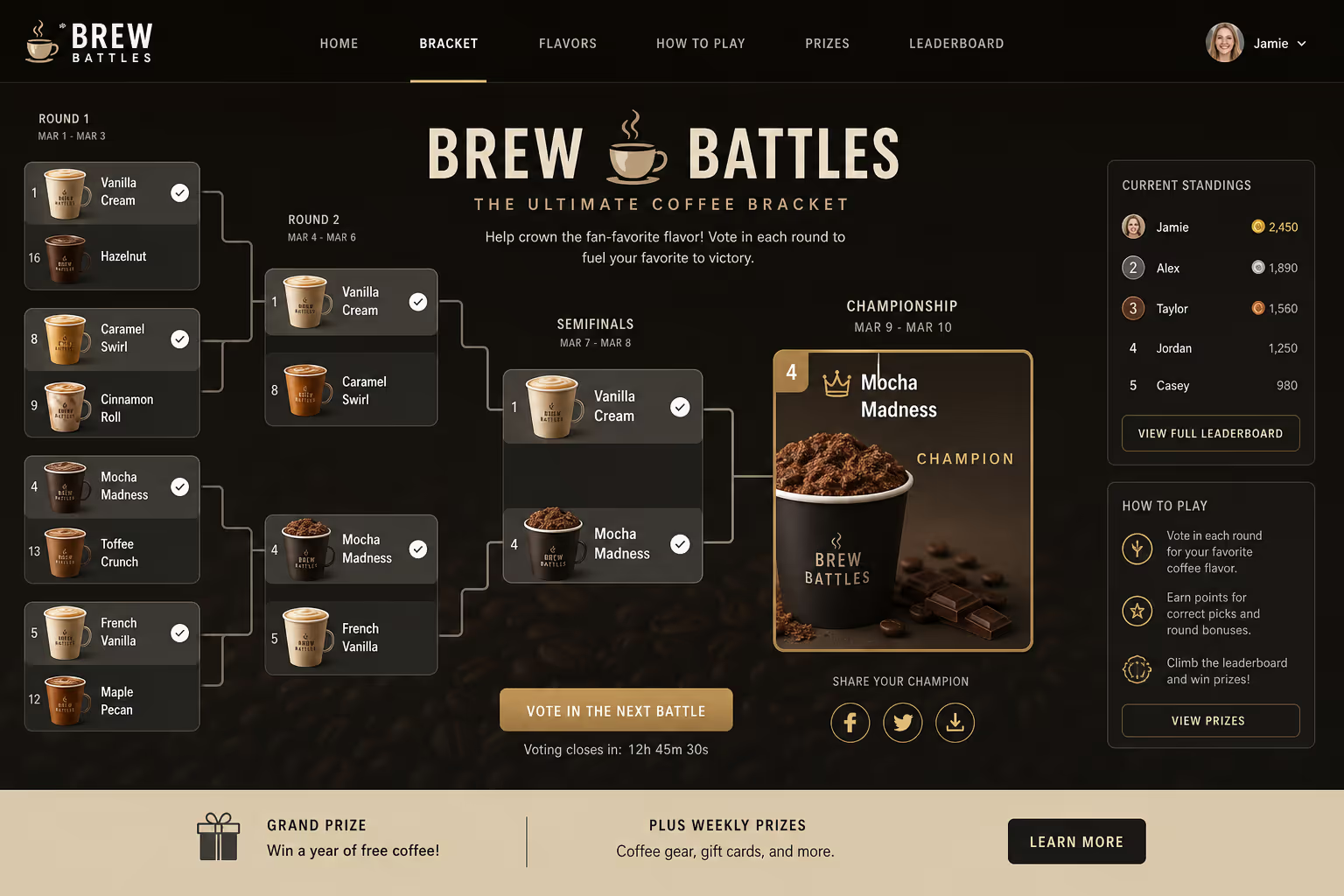
Instead of basketball teams, seed 16 of your own products, flavors, or features and let your audience vote round by round. A coffee roaster can run "best roast," a bookstore can run "best debut novel," and a software brand can run "most loved feature." The winning product earns a spotlight discount.
This version of March Madness bracket marketing shines on social media. Every matchup is a poll, every result is a post, and customers will defend their favorite pick in the comments without any push from you.
3. The Round-by-Round Reward Bracket
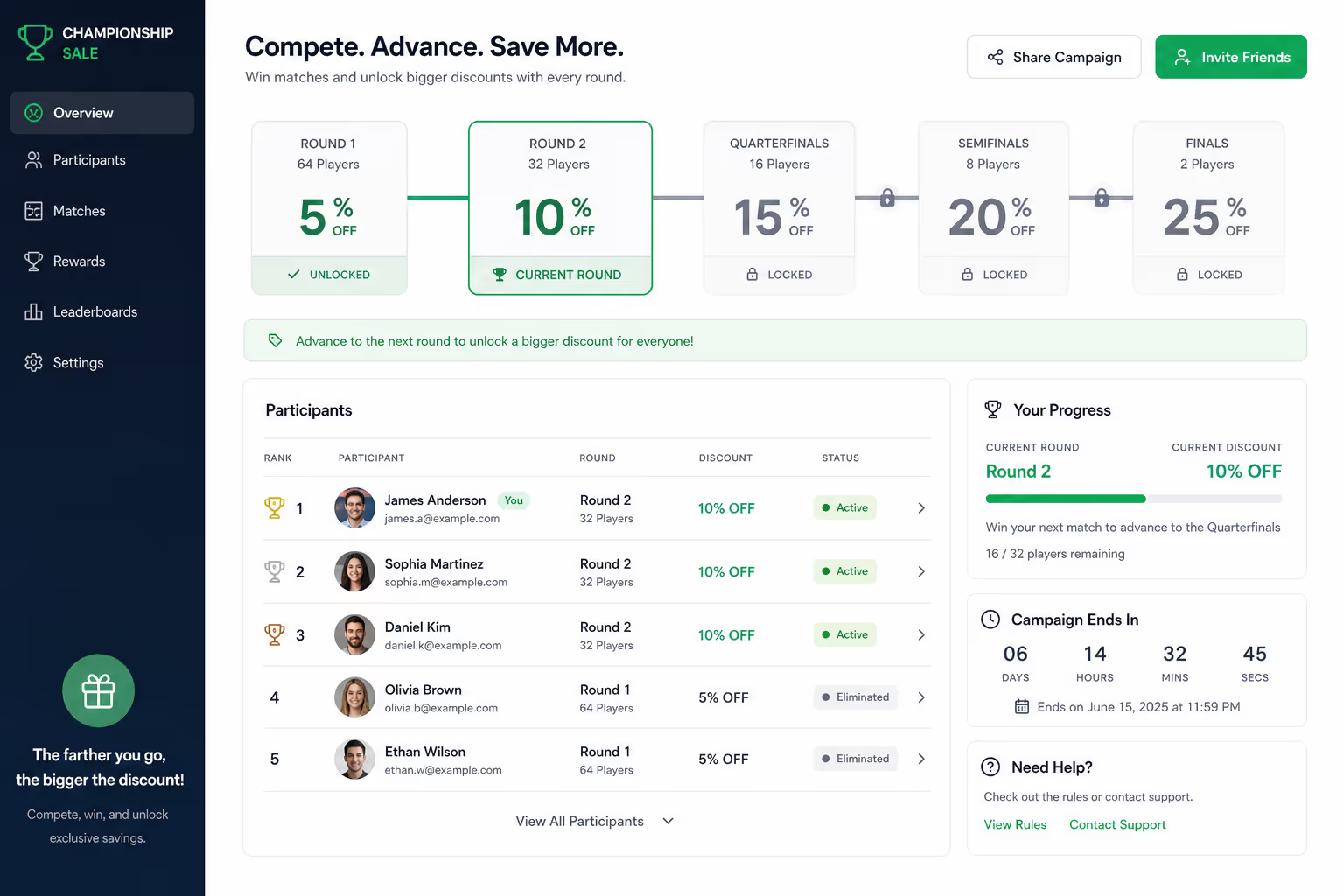
Here March Madness bracket marketing acts as a discount engine. Everyone whose champion pick is still alive unlocks a bigger coupon each round: 10% in the Sweet 16, 15% in the Elite Eight, and so on. If their team loses, they still keep the last reward they earned, so nobody walks away annoyed.
Restaurants and retailers love this template because it converts tournament check-ins into store visits. The customer comes back to see if their discount grew, and they usually do not leave empty-handed.
4. The Local Community Bracket
Local businesses can skip basketball entirely and bracket their own scene: best taco in town, best local band, best dog park. Print a QR code on the counter that opens the voting page, and the campaign promotes itself with every customer conversation.
We have seen gyms run member fitness challenges as brackets and cafes run "signature drink" tournaments. The mechanics of March Madness bracket marketing transfer cleanly because the bracket format, not the sport, is what people enjoy.
5. The B2B Industry Bracket
B2B brands use March Madness bracket marketing to start conversations. Seed 16 tools, trends, or thought leaders in your niche and let your audience vote on LinkedIn or in your newsletter. The matchups generate debate, and debate generates reach.
The prize matters less here. The goal is positioning your brand as the host of the industry's conversation, and a well-run bracket does that for three straight weeks.
A Quick Word About the Trademark
One caution before you launch. The NCAA owns the "March Madness" trademark and enforces it actively, so do not use the phrase in your campaign name, paid ads, or promotional graphics. Call your campaign something original like "Bracket Battle," "Spring Showdown," or "Hoops Mania."
You can still time your campaign to the tournament and talk about basketball generally. The strategy is March Madness bracket marketing; the public-facing campaign just needs its own name.
How We Would Launch It With Poper
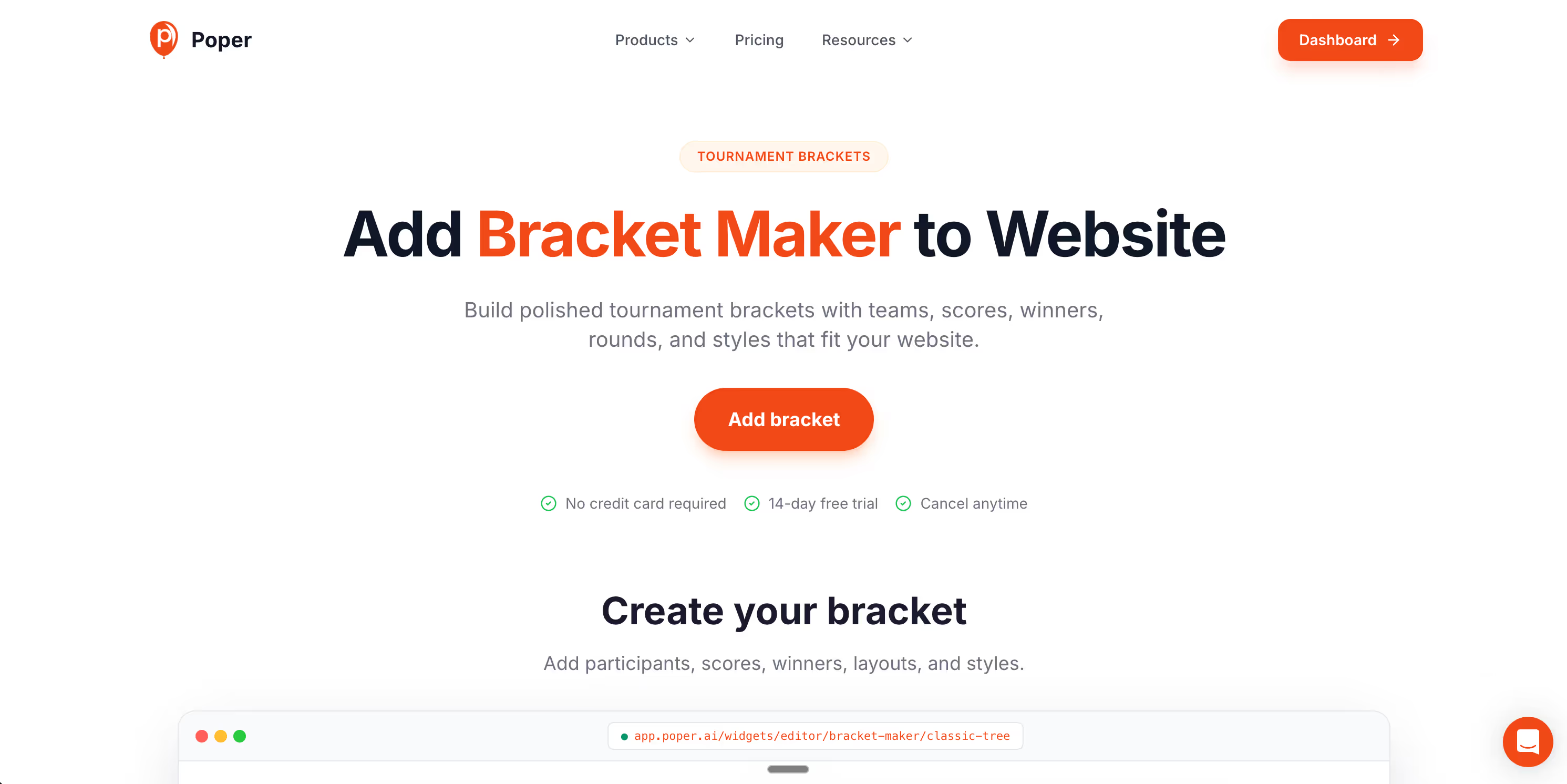
We built our Bracket Maker widget for exactly this kind of March Madness bracket marketing campaign, and the whole setup fits in an afternoon. Here is the launch sequence we recommend:
Pick one of the five templates above and choose a prize your audience cares about.
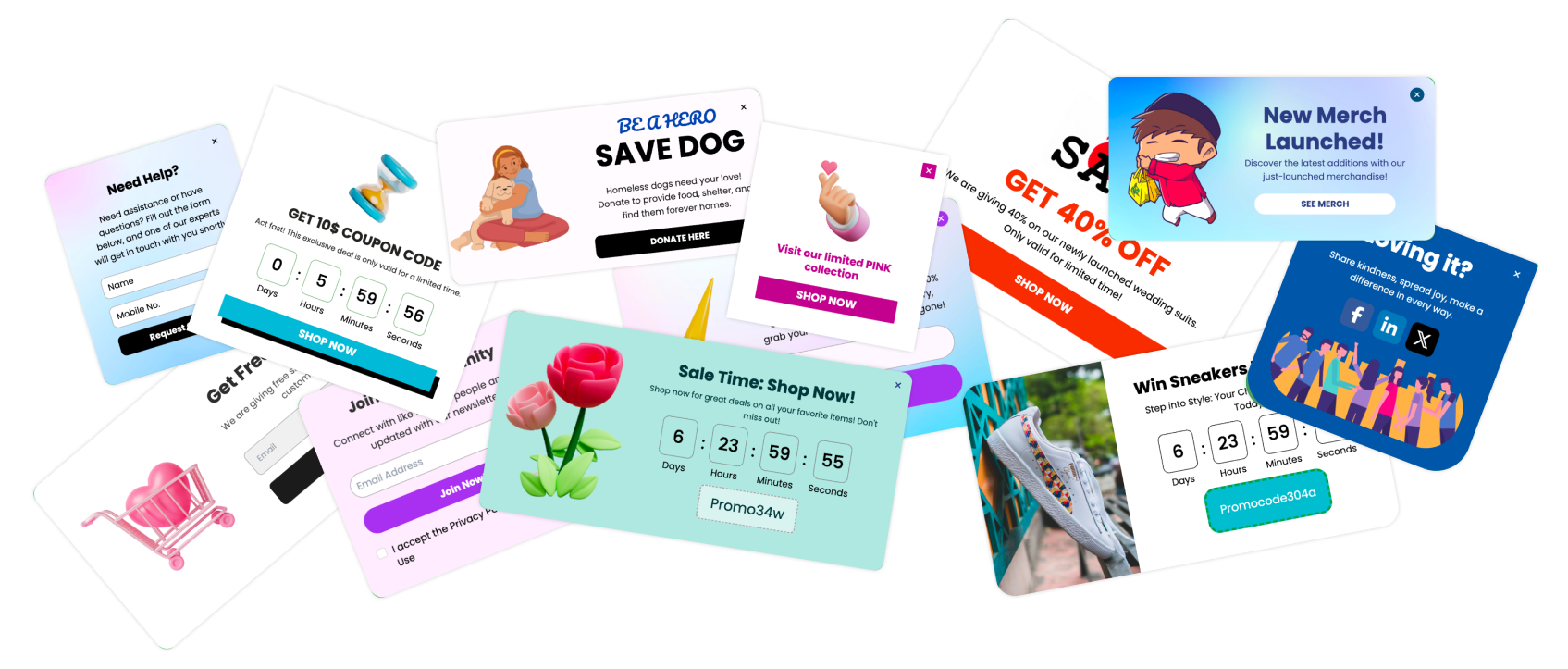
Build your bracket with Poper's Bracket Maker widget and embed it on a landing page. It works on WordPress, Shopify, Webflow, Wix, and any other platform without code.
Gate entry with a Poper popup or form so every submission captures an email.
Promote the campaign with an exit-intent popup and a countdown to the entry deadline.
Email standings after every round, and include one soft offer per email.
Announce the winner publicly and send every participant a consolation discount.
That last step matters more than people think. The consolation offer converts the 99% of entrants who did not win into customers while your brand is still on their mind.
How to Measure Whether It Worked
Judge a March Madness bracket marketing campaign on four numbers: total entries, email capture rate on the landing page, return visits per tournament round, and revenue from the post-campaign offer. Entries tell you the hook worked, but return visits tell you the engagement loop worked, and that is the metric that separates brackets from ordinary giveaways.
Benchmark against your own list growth, too. If a normal month adds 200 subscribers and your bracket adds 1,000 in three weeks, you have a repeatable annual play.
Final Thoughts
The tournament keeps breaking participation records, with ESPN counting 26.6 million brackets in 2026 alone, and that attention is available to any brand willing to host a game instead of just running an ad. Start planning in February, pick one template, and keep the first campaign simple.
March Madness bracket marketing rewards brands that show up every year, because last year's entrants become this year's first invites. Build your bracket once with Poper, save the template, and let the tournament do the promotion for you.