I remember the first time someone on my team asked me a fair question about our chat widget. They wanted to know if the numbers we were seeing were good. I did not have a clean answer. I knew our chat felt useful, but I had nothing to compare it against. That gap is exactly why I started collecting live chat conversion rate benchmarks in the first place.
I am going to share what my team and I now use as our reference. We will walk through live chat conversion rate benchmarks by industry, look at what counts as a strong number in 2026, and talk about how to read these figures without fooling yourself. By the end, you should be able to look at your own chat dashboard and know instantly whether it is winning or quietly leaking money.
What Live Chat Conversion Rate Benchmarks Actually Measure
Before we look at numbers, let me define the metric, because people mix it up. A chat conversion rate is the share of chat conversations that end in the action you care about. For a store that is a purchase. For a SaaS product it is usually a demo booking or a trial signup. Live chat conversion rate benchmarks simply tell you how that percentage compares to other sites in your space.
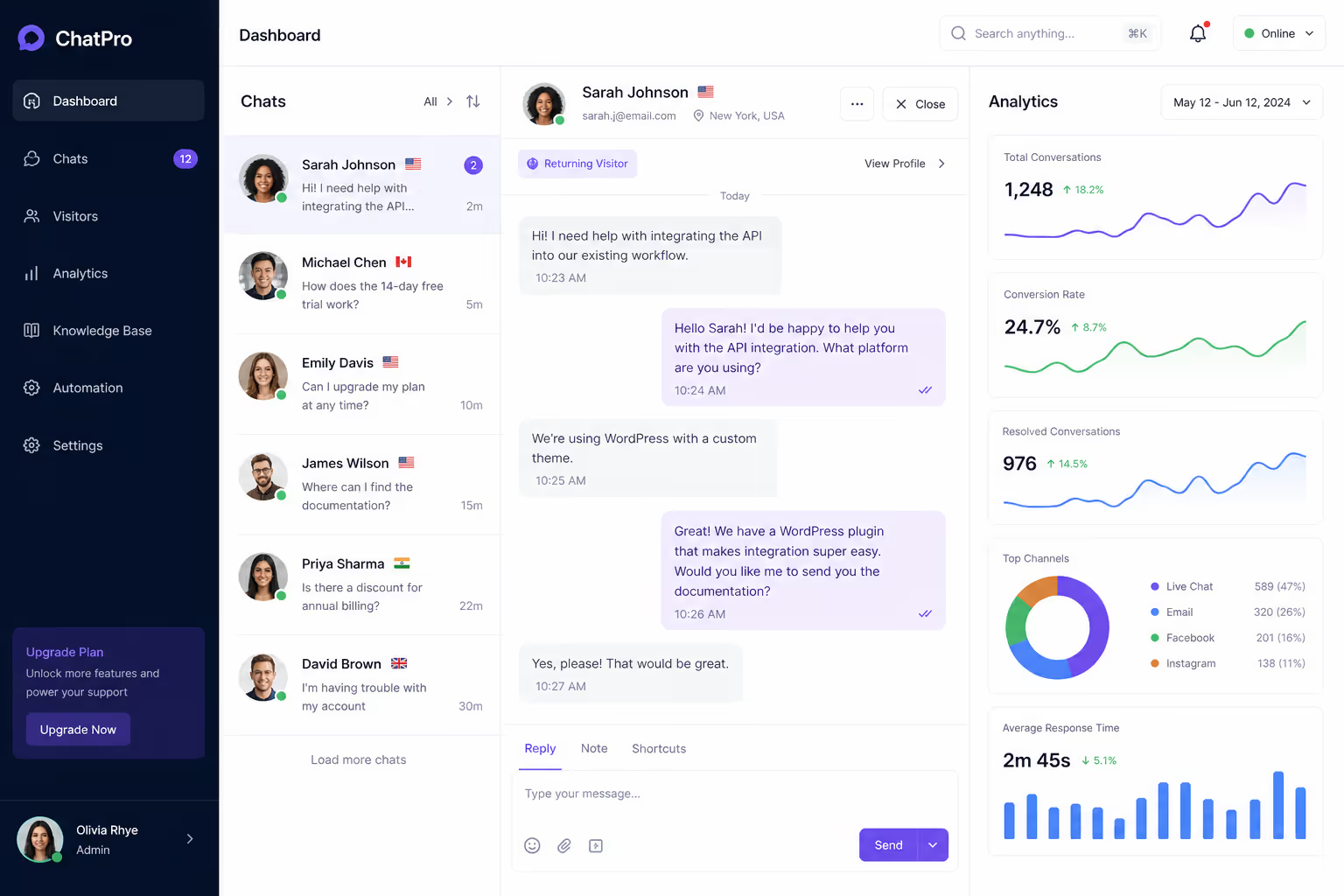
This matters because a raw number means nothing on its own. A 12% conversion rate sounds modest until you learn the average website form converts at 2% to 3%. Seen against that baseline, chat looks like a different sport. According to 2026 data summarized by Which-50, chat-to-conversion rates average 10% to 20%, while traditional forms sit at 2% to 3%. That single comparison is why I keep live chat conversion rate benchmarks pinned to my wall.
Here is the other reason benchmarks help. They stop you from celebrating too early or panicking too soon. Without a reference point, every number is just a number.
Start Measuring Your Own Chat Conversion Rate
You cannot place yourself on these benchmarks until chat is live and logging conversations. Poper's All in One Chat widget goes on with a single script tag and routes visitors to WhatsApp, Messenger, Slack, or Telegram.
<script id="poper-js-script" data-account-id="YOUR_ACCOUNT_ID" src="https://app.poper.ai/share/poper.js" defer></script>Live Chat Conversion Rate Benchmarks by Industry in 2026
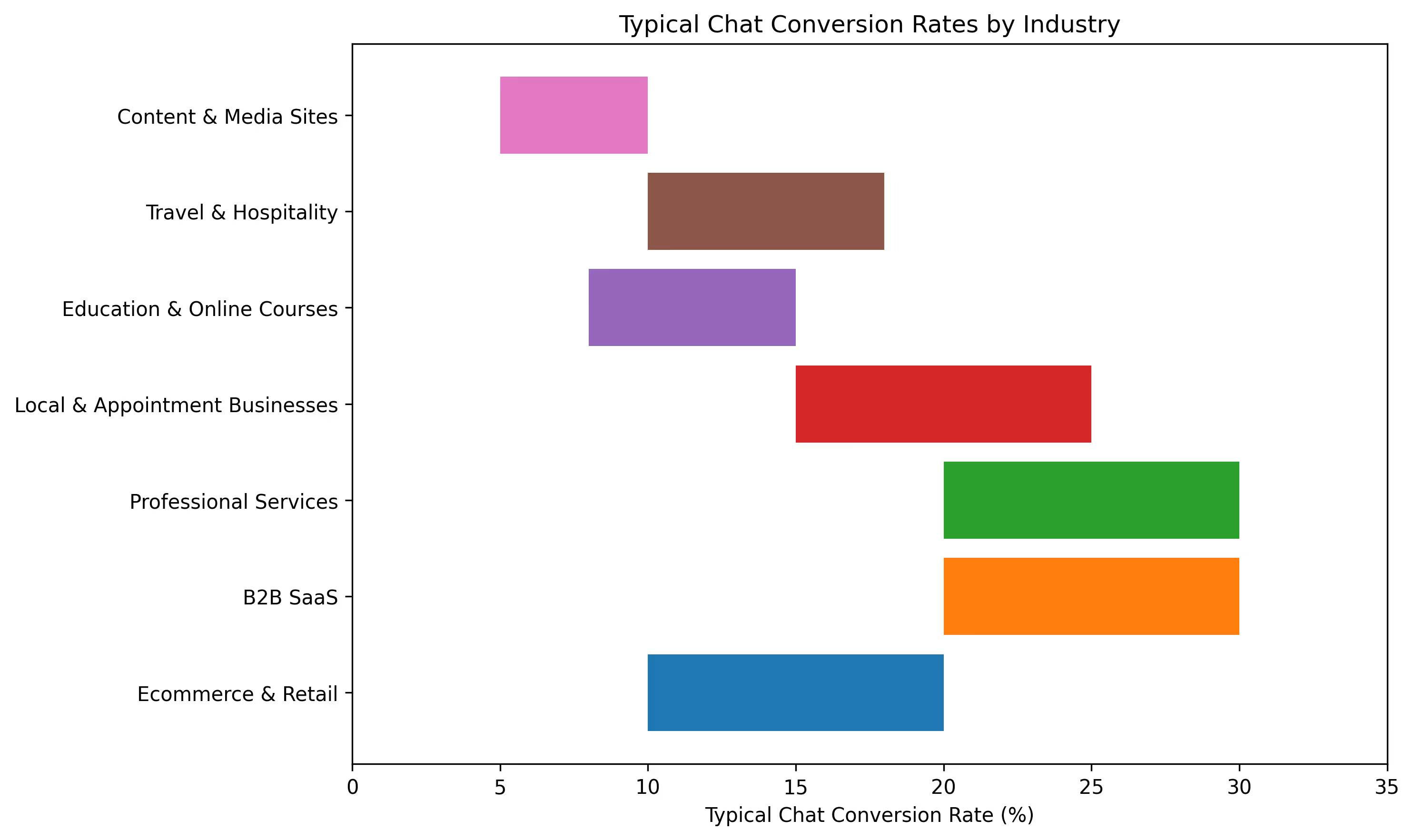
Industry context changes everything. A booking-heavy local business and a high-traffic content site will never share the same chat math. The table below collects the live chat conversion rate benchmarks my team treats as realistic targets for 2026, pulled from current industry reporting.
| Industry | Typical chat conversion rate | What "converted" usually means |
|---|---|---|
| Ecommerce and retail | 10% to 20%, with strong stores pushing higher | Completed purchase or recovered cart |
| B2B SaaS | 20% to 30% | Demo booked or qualified trial signup |
| Professional services | 20% to 30% | Consultation booked or quote requested |
| Local and appointment businesses | 15% to 25% | Appointment scheduled |
| Education and online courses | 8% to 15% | Enrollment or application started |
| Travel and hospitality | 10% to 18% | Booking or reservation |
| Content and media sites | 5% to 10% | Newsletter signup or lead capture |
Notice the spread. B2B SaaS and professional services sit at the top because a single converted chat can be worth thousands of dollars, and those visitors arrive with clear intent. Ecommerce sees the biggest swing, since chat can lift store conversions by as much as 70% when it triggers at the right moment, per 2026 figures from Nextiva. Content sites sit lower simply because the visitor's goal is reading, not buying.
When you read live chat conversion rate benchmarks, always find your row first. Comparing a media site to a SaaS funnel will only make you miserable for no reason.
Why Live Chat Conversion Rate Benchmarks Beat Website Forms
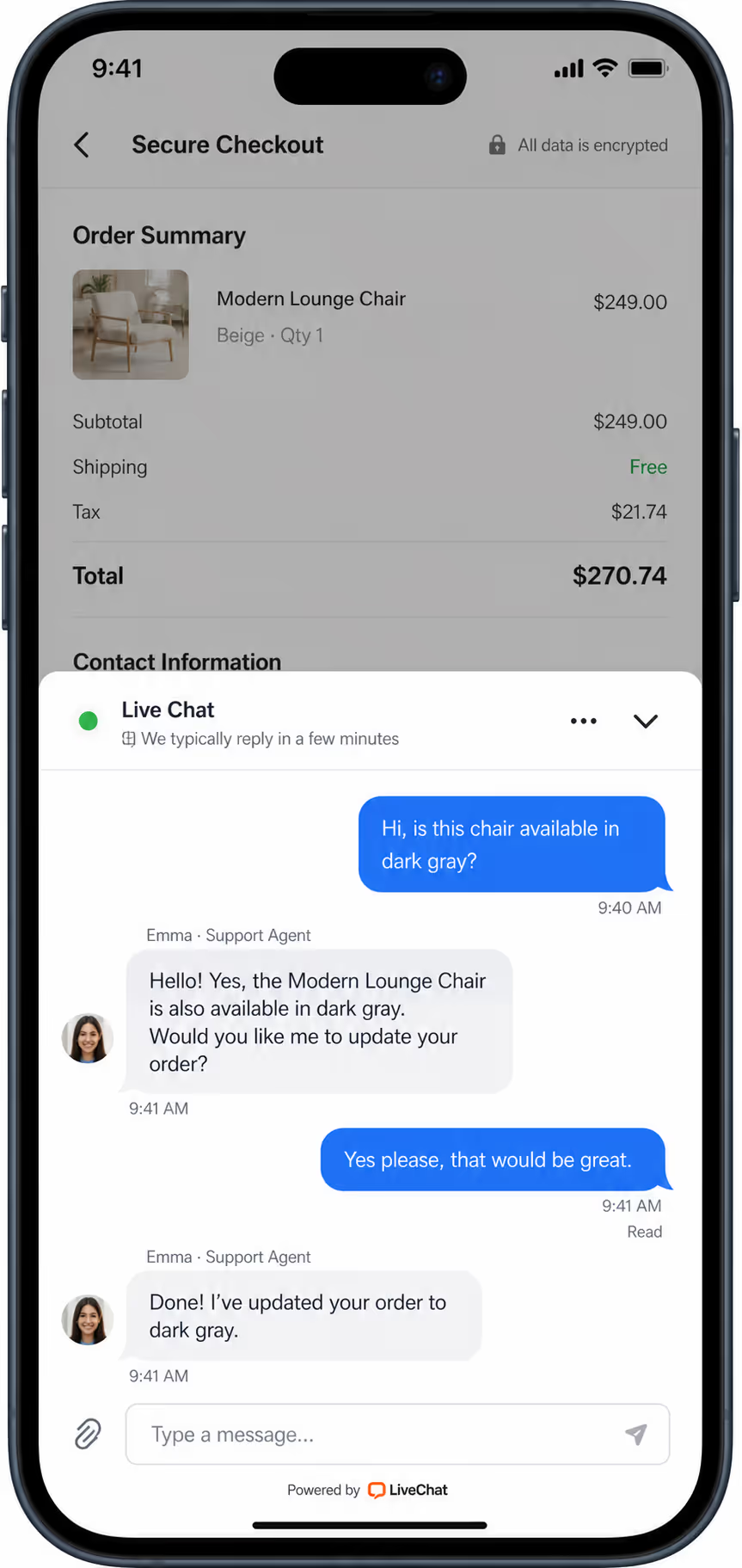
I want to spend a moment on the gap between chat and forms, because it is the strongest argument for taking these benchmarks seriously. A analysis by Trengo found that visitors who engage through live chat are 4.5 times more likely to convert than those who do not. Other current reporting puts the multiplier at 2.8 times, and notes that chat users spend around 60% more per order.
Even at the conservative end, that is a large advantage. It also explains why live chat conversion rate benchmarks keep climbing. As more buyers expect instant answers, the channel that delivers them wins more often. Customer satisfaction backs this up too. Live chat earns roughly an 88% satisfaction rating, the highest of any digital support channel, which means the conversions you gain do not come at the cost of a worse experience.
So when your chat numbers look healthy against these live chat conversion rate benchmarks, you are usually not just converting more. You are also keeping people happier than your form-only competitors.
The Hidden Metric Behind Every Benchmark: Response Time
Here is the part most teams miss. You cannot hit strong live chat conversion rate benchmarks if your response time is slow. The two move together, and response time is the lever you control most directly.
The current data is blunt about this. The average live chat first response time is about 1 minute and 35 seconds, yet customer satisfaction peaks near 84.7% when the first reply lands within 5 to 10 seconds. That is a huge difference created by seconds, not features. The table below shows how response speed tends to pull conversion in the same direction.
| First response time | Effect on chat conversion |
|---|---|
| Under 30 seconds | Conversion sits at or above industry benchmarks |
| 30 seconds to 2 minutes | Conversion holds, but momentum starts slipping |
| Over 2 minutes | Visitors abandon, and conversion falls below benchmark |
This is why I always tell teams to fix speed before chasing fancy features. If you are missing your live chat conversion rate benchmarks, the cause is usually a slow first reply, not a missing chatbot.
Route Chats To The App Your Team Already Watches
This post argues that a slow first reply is what keeps most sites under their benchmark. Poper sends every conversation into a channel your team checks all day, so nobody waits on a tab nobody opens.
Set Up Your Chat RoutingNo code required, and you can change channels whenever your team does.- 1Pick the channels you answer fastest, from WhatsApp and Messenger to Slack and Telegram.
- 2Trigger the chat button on intent: a pricing page rule, a scroll depth, or a stall on checkout.
- 3Watch replies land in the inbox your team already keeps open, and check the analytics dashboard weekly.
How To Compare Your Numbers Against Live Chat Conversion Rate Benchmarks
Let me make this practical. First, pull your own chat conversion rate for the last 90 days, not the last week, since small samples lie. Second, find your industry row in the table above. Third, place your number next to it honestly.
If you land inside the range, good. Hold steady and watch response time. If you land below the range, do not redesign everything at once. Check response speed first, then check whether chat is triggering at the right moments, then look at who is answering. Most gaps against live chat conversion rate benchmarks close once those three things are sorted.
One warning. Do not obsess over beating the top of every range. A SaaS team converting at 22% is doing fine even though some sites hit 30%. Benchmarks are a guide, not a scoreboard you must dominate.
What Strong Live Chat Conversion Rate Benchmarks Share
After tracking this for a while, I noticed the sites that consistently beat their live chat conversion rate benchmarks tend to do the same few things. They reply fast, almost always under a minute. They route chat to a place an agent actually watches, like WhatsApp or Slack, so nothing gets missed. They trigger chat with intent, on a pricing page or after a visitor stalls, instead of popping up on arrival.
None of that is exotic. It is just discipline. The brands quietly sitting above their live chat conversion rate benchmarks are rarely the ones with the most features. They are the ones who removed friction between a question and an answer.
A Simpler Way To Hit These Benchmarks With Poper
I will be straight about what we build. Poper offers an All-in-One Chat widget that connects WhatsApp, Messenger, Slack, Telegram, and more behind a single button. Because chats route into apps your team already checks, response time drops, and that is the metric most tightly linked to live chat conversion rate benchmarks.
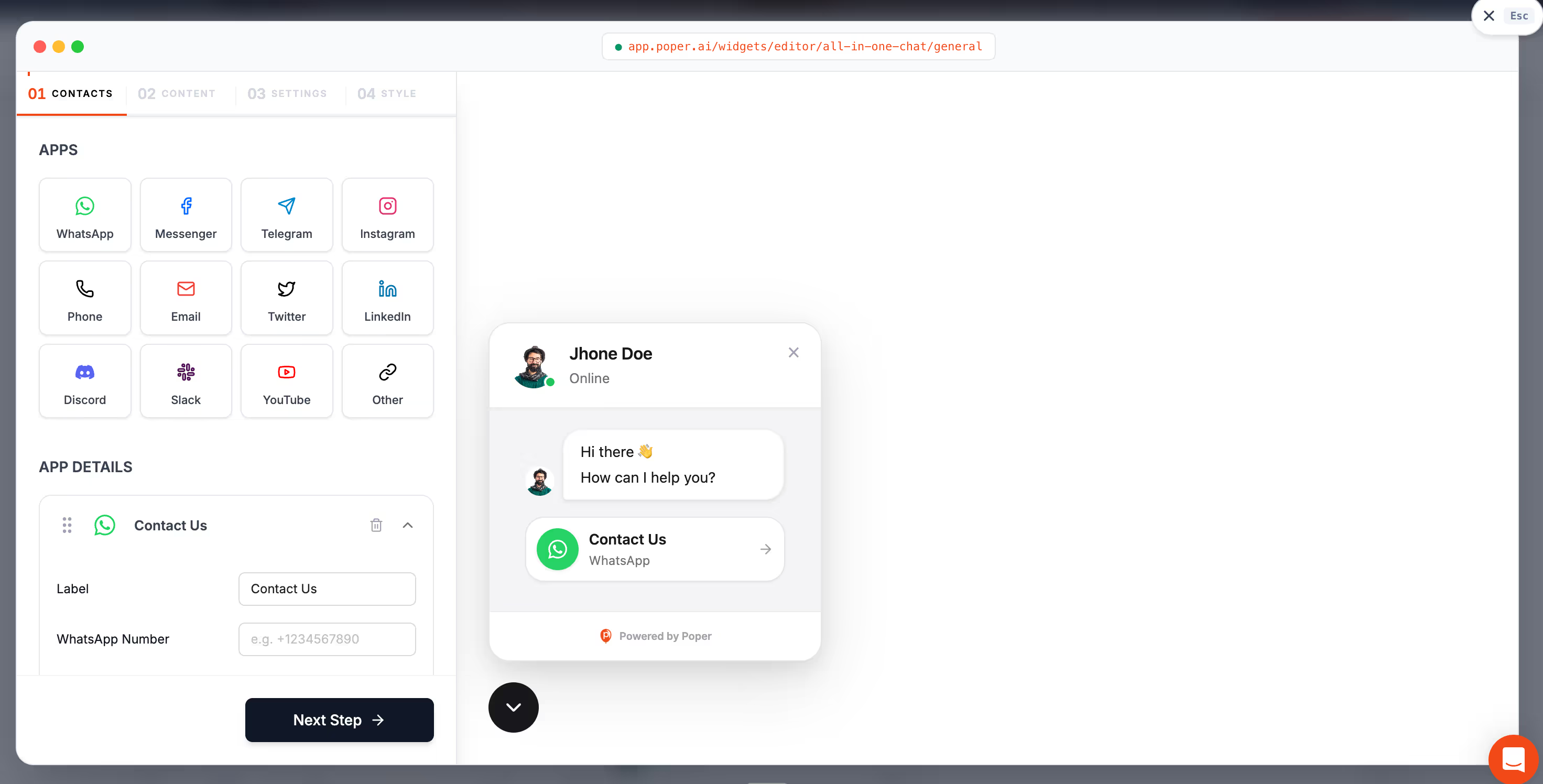
It also embeds on WordPress, Shopify, Webflow, Wix, or any site in under two minutes with no code, so you can start measuring against these benchmarks today instead of next quarter. If you want to pair chat with appointment booking or proactive popups, Poper covers those too, which helps the booking-heavy and ecommerce rows in our table.
So here is my closing thought. Live chat conversion rate benchmarks are not there to make you anxious. They are there to give you a fair mirror. Pull your number, find your industry row, fix your response time, and check again in 90 days. Do that, and you will stop guessing whether your chat is good and start knowing it.
Get A Number Worth Benchmarking
Pull your 90 day chat conversion rate, find your industry row, then fix what the data points to. Poper gives you the chat widget, the triggers, and a conversion analytics dashboard so the next check is measured, not guessed.
Create Your Free Poper AccountFree plan, no credit card required.