Last winter I helped a friend who runs a small home goods store dig into why her sales stalled the moment she started shipping overseas. Her traffic looked healthy. Shoppers from Germany, Canada, and Australia were landing on her product pages and adding items to their carts. Then they vanished.
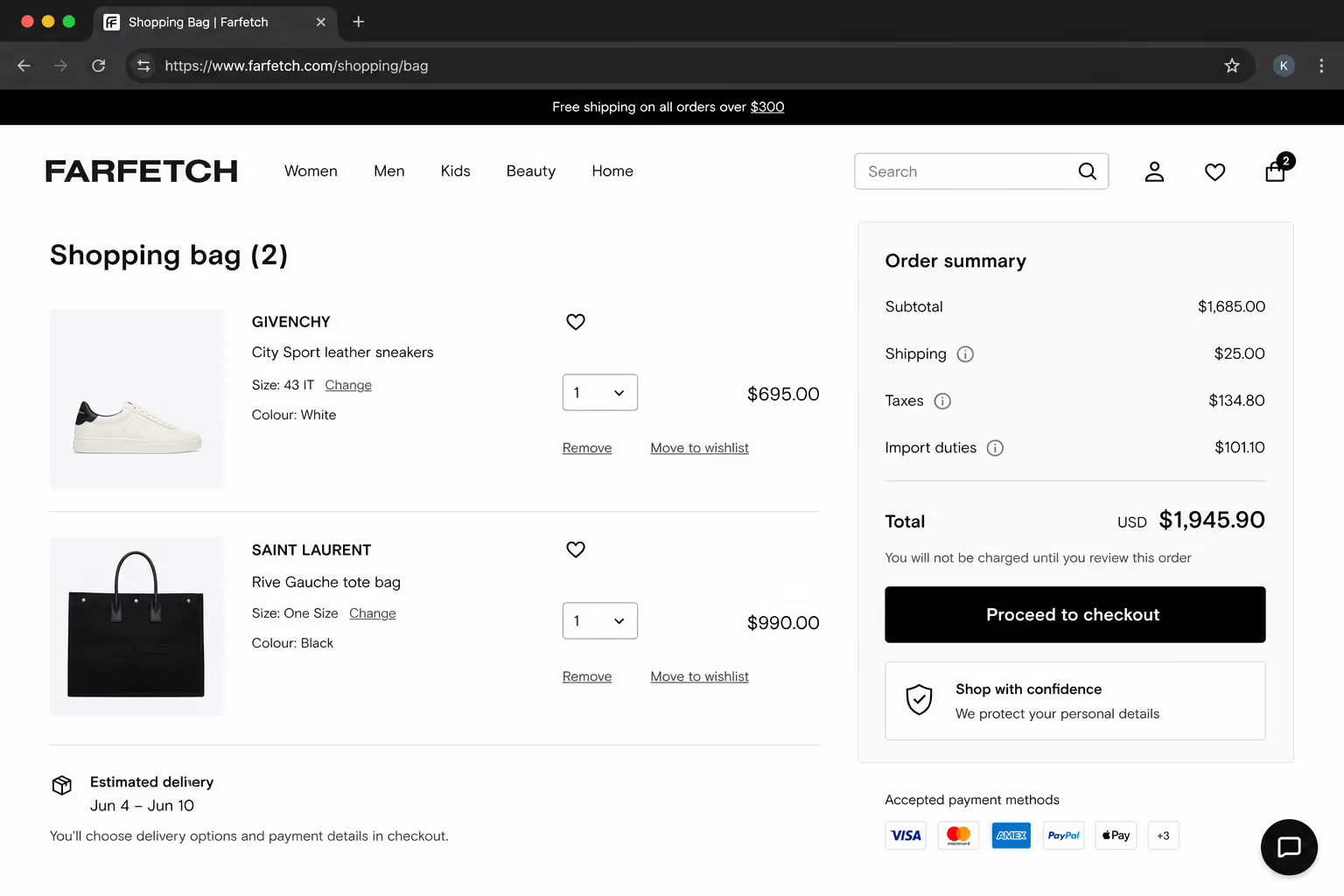
We pulled up her session recordings together, and the pattern was almost painful to watch. A visitor from Berlin would reach the payment step, stare at a dollar total she did not recognize, and close the tab. Her international ecommerce checkout was quietly bleeding money, and she had no idea.
That afternoon taught me something I now repeat to every store owner I talk to. Most brands obsess over ads and product photos while ignoring the one screen where global buyers actually decide to trust them. The international ecommerce checkout is that screen.
When it feels foreign, confusing, or risky, even a motivated shopper walks. So I want to walk you through why international shoppers abandon carts, what the recent data says, and the six fixes I have seen work again and again.
Why the International Ecommerce Checkout Is Where Money Quietly Leaks
Cart abandonment is brutal even at home. The average online cart abandonment rate now sits at 70.19 percent, according to Baymard Institute research compiled. That means roughly seven of every ten people who add something to a cart never finish paying. For a domestic store that is frustrating. For a cross-border store it is a crisis, because international buyers carry extra doubts your local customers never feel.
Think about what a shopper in another country actually faces at your international ecommerce checkout. They see a currency that is not theirs. They wonder what their bank will charge them. They question whether shipping will ever arrive, and whether they can return the item if it does not fit. Each of those doubts adds friction, and friction is what kills conversions on the international ecommerce checkout.
The opportunity is just as large as the risk. A report from Zonos notes that 59 percent of global shoppers now buy from retailers outside their home country. Cross-border demand is real and growing. The stores that win are simply the ones that make the international ecommerce checkout feel local, safe, and familiar.
What the Data Says About International Ecommerce Checkout
I like to anchor advice in numbers rather than opinions, so here is what current research tells us. The single most repeated finding is about currency. An analysis by Passport and Stacker found that 94 percent of cross-border shoppers expect to pay in their local currency, and 99 percent want to use their preferred, customary payment method. When your international ecommerce checkout ignores those expectations, you are asking most of your global visitors to fight their own instincts to buy from you.
Payment failure makes the gap worse. That same body of research shows 72 percent of merchants report higher rates of failed payments on overseas transactions than on domestic ones. So even shoppers who push through a confusing international ecommerce checkout can be blocked by a declined card at the finish line.
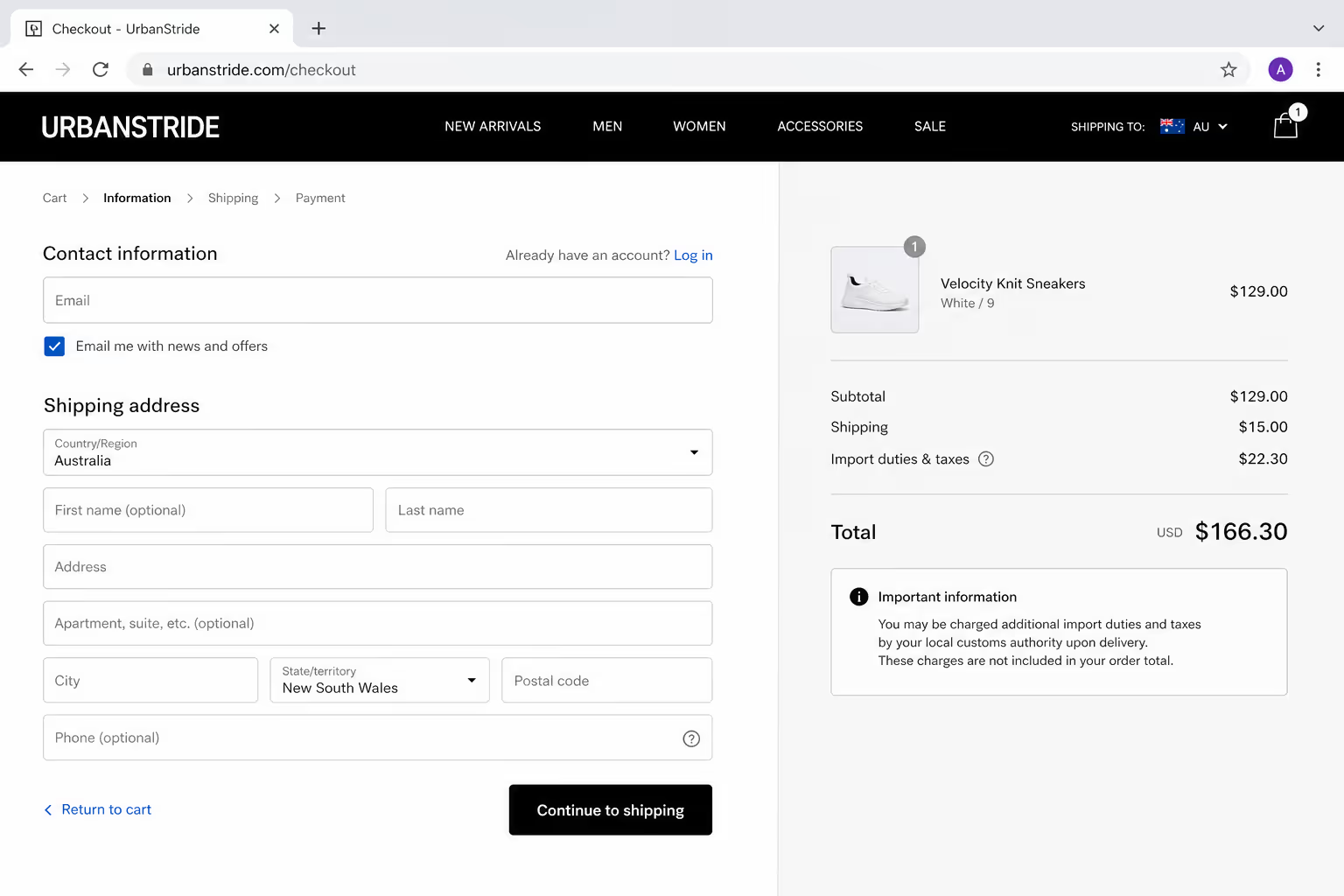
Delivery expectations matter too. Passport reported that 81 percent of shoppers will abandon a cart entirely when the checkout does not offer the delivery method they expect, and 54 percent name high delivery costs as their top frustration. And the classic domestic culprit still applies everywhere: Baymard found that unexpected extra costs like shipping, taxes, and fees drive 48 percent of all abandonment, the leading reason by a wide margin.
Here is the number that should get every store owner excited. Displaying prices in local currency increases conversion by around 24 percent on average, based on cross-border benchmarks summarized by Swell. That is not a rounding error. That is a fix to your international ecommerce checkout that can pay for itself in a single week.
The Real Friction Points, Side by Side
Before we get to fixes, it helps to see the friction points and their impact in one place. When I audit an international ecommerce checkout, these are the leaks I look for first, roughly in order of how much damage they do.
| Friction Point at the International Ecommerce Checkout | What the Data Says | The Fix in One Line |
|---|---|---|
| Surprise costs (shipping, tax, duties) | 48% abandon over unexpected extra costs (Baymard) | Show all-in pricing early, before the final step |
| Prices shown in a foreign currency | 94% expect their local currency (Passport) | Auto-display local currency with a live converter |
| Missing preferred payment method | 99% want their customary method (Passport) | Add local wallets and regional options |
| Unexpected or costly delivery | 81% abandon when delivery does not match expectations (Passport) | State shipping speed and cost up front |
| Forced account creation | 26% abandon when made to register (Baymard) | Offer guest checkout by default |
| Trust and security doubts | 25% abandon over security concerns (Baymard) | Show trust badges and clear return policy |
Six Fixes That Actually Work on the International Ecommerce Checkout
None of these fixes require you to rebuild your store. Each one chips away at a specific doubt that makes global shoppers hesitate. Applied together, they turn a leaky international ecommerce checkout into one that converts across borders.
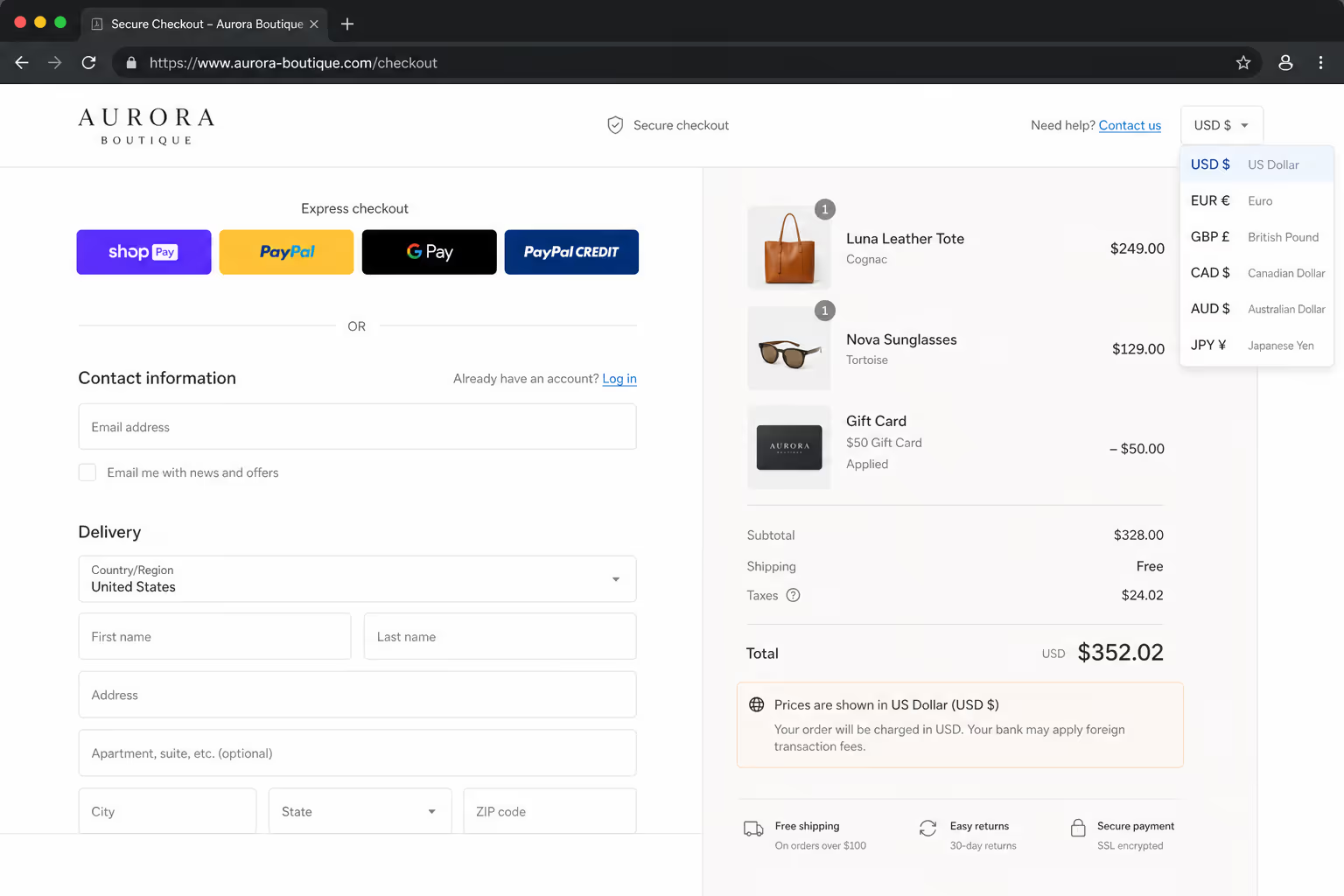
Fix one: show local currency automatically. This is the highest leverage change you can make. When a visitor from Toronto sees prices in Canadian dollars instead of doing mental math, the international ecommerce checkout stops feeling foreign. Given the 24 percent conversion lift the data shows, currency display is where I always start.
Fix two: kill the surprise costs. Since unexpected fees cause nearly half of all abandonment, your international ecommerce checkout should reveal shipping, tax, and duty estimates as early as the cart page. A total that only appears at the last step reads as a trap, and trapped shoppers leave.
Fix three: offer familiar payment methods. A German shopper often reaches for a local bank transfer, and a Dutch shopper for iDEAL. According to a PPRO analysis, local payment methods are a primary driver of global conversion. Matching the payment habits of each market removes a real barrier from the international ecommerce checkout.
Fix four: make delivery honest and clear. State the shipping cost and the delivery window before the payment step, not after. When shoppers know what to expect, the 81 percent who would otherwise abandon over delivery surprises have no reason to walk away from your international ecommerce checkout.
Fix five: allow guest checkout. Forcing account creation costs you a quarter of your buyers. Let people pay as guests, then invite them to save their details after the sale. A shorter path through the international ecommerce checkout almost always beats a longer one.
Fix six: prove you are safe. Trust badges, a visible return policy, and real customer reviews reassure a buyer who is sending money to a store on the other side of the world. Security doubt is the quiet reason a fourth of shoppers abandon, and reassurance is cheap to add to any international ecommerce checkout.
The international ecommerce checkout does not fail because your product is wrong. It fails because a global shopper feels a little unsure, and nobody removed the doubt in time.
How Poper Helps You Patch the International Ecommerce Checkout
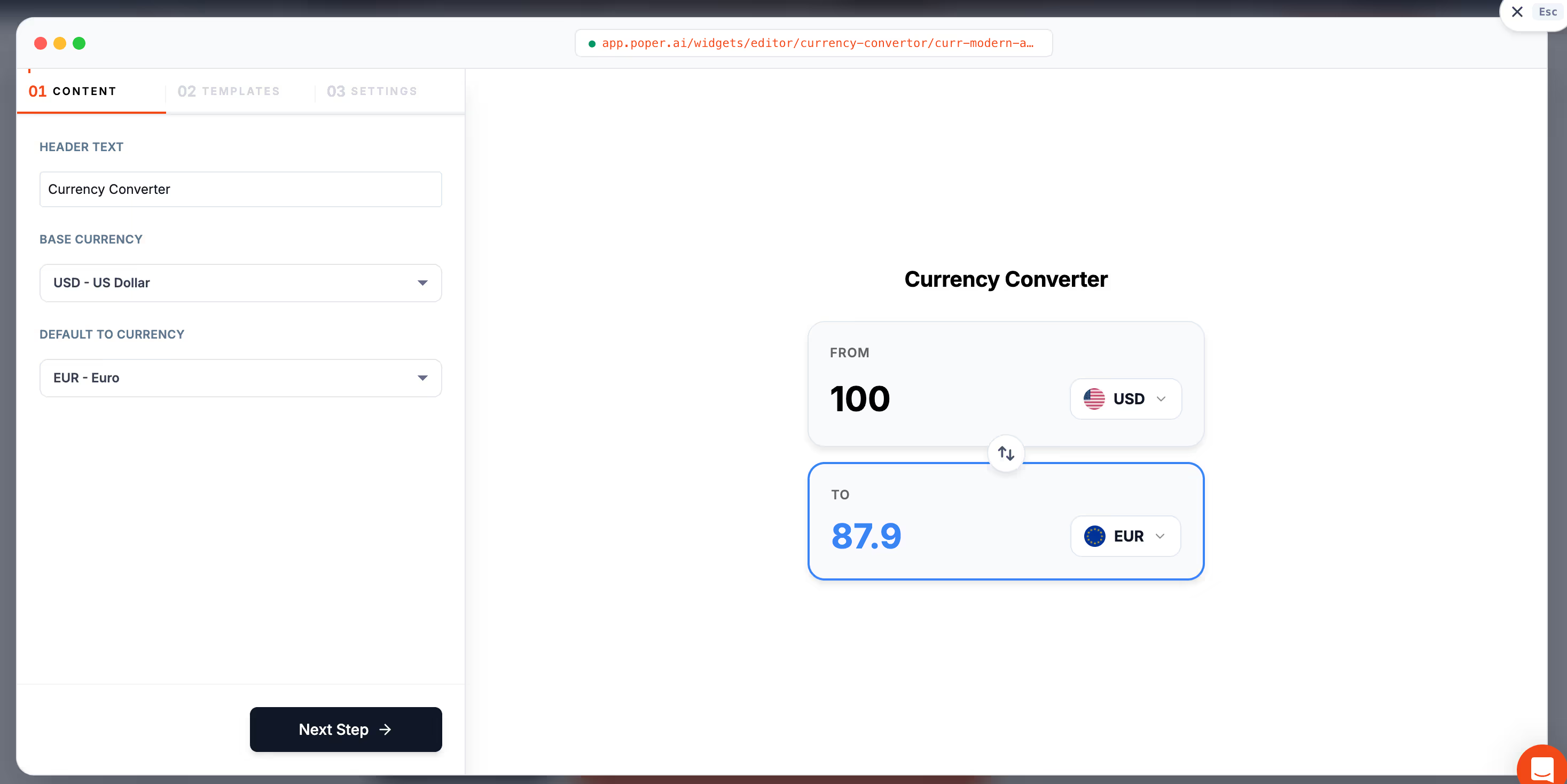
This is where our tools come in, and I promise to keep it practical. You do not need a developer to close most of these gaps. With Poper you can layer the right widget onto your existing store in about two minutes, no code required, and it works on Shopify, WooCommerce, Wix, and everything in between.
Our Currency Convertor widget is the fix I reach for first, because it directly answers the biggest complaint about any international ecommerce checkout. It shows real-time prices in a visitor's local currency, so a shopper never has to guess what they are actually paying. Given that local currency alone can lift conversion by around a quarter, this one widget often justifies the whole effort.
From there, Poper Trust Badges let you display secure-payment and free-shipping signals right where hesitation lives, which chips away at the security doubt behind a fourth of abandonment. A short Poper FAQ widget can answer the return and duty questions that stall international buyers, and a Poper Store Location or shipping-info bar can set delivery expectations before the international ecommerce checkout ever loads. Each widget targets one specific leak we found in the data.
The point is not to bolt on every widget at once. The point is to match each fix to the doubt it removes, then measure the change. Because Poper is built for testing, you can turn on the Currency Convertor for your global traffic, watch what happens to your international ecommerce checkout completion rate, and keep only what earns its place.
Turning the International Ecommerce Checkout Into a Growth Lever
My friend with the home goods store did not need a bigger ad budget. She needed her international ecommerce checkout to speak her buyers' language, literally. We switched on local currency, made shipping costs honest, added a couple of trust signals, and opened up guest checkout. Within a few weeks her overseas completion rate climbed, and the tab-closers from Berlin started becoming customers.
That is the quiet truth about selling across borders. The international ecommerce checkout is not a technical afterthought. It is the moment a curious visitor from another country decides you are worth the risk. Fix the currency, the surprises, the payment options, the delivery clarity, the guest path, and the trust signals, and you turn that moment in your favor. Do it well, and your international ecommerce checkout stops leaking and starts compounding, one confident global buyer at a time.
References
Baymard Institute, "How to Reduce Cart Abandonment". baymard.com/learn/reduce-cart-abandonment
Zonos, "Cross-Border Ecommerce". zonos.com
PPRO, "Why Local Payment Methods Drive Global Conversion,". ppro.com