I get this question almost every month from a client, and it usually comes packaged with a little anxiety. Someone read an old SEO post, saw a 2014 John Mueller quote, and now they want to rip out their FAQ accordion because they think faq accordion seo is silently tanking their rankings. So we sit down, open the page, and the answer is almost never as scary as they expect.
Note: According to Google's latest update, they have stopped supporting FAQ schema, and FAQ rich results are no longer appearing in Google search. This does not mean that you should not have an faq accordion on your website, but rather only the schema that appeared in Google is not valid anymore.
We’ll look at how Google treats accordion content in 2026, how the removal of FAQ rich results has changed FAQ accordion SEO, where hidden content can still hurt rankings, and which small technical details make the biggest difference. By the end, you’ll be able to review any FAQ section on your site and quickly tell whether its FAQ accordion SEO is helping or hurting the page.
I will also share how we think about faq accordion seo when we build the Poper FAQ widget, because the same rules apply whether you hand-roll it or drop in a no-code tool.
Why FAQ Accordion SEO keeps coming up

The reason FAQ Accordion SEO is still debated in 2026 is that the rules quietly changed twice, and most of the old advice never got updated. The first change was mobile-first indexing. The second was the May 2026 FAQ rich result deprecation. Together they rewrote the faq accordion seo playbook.
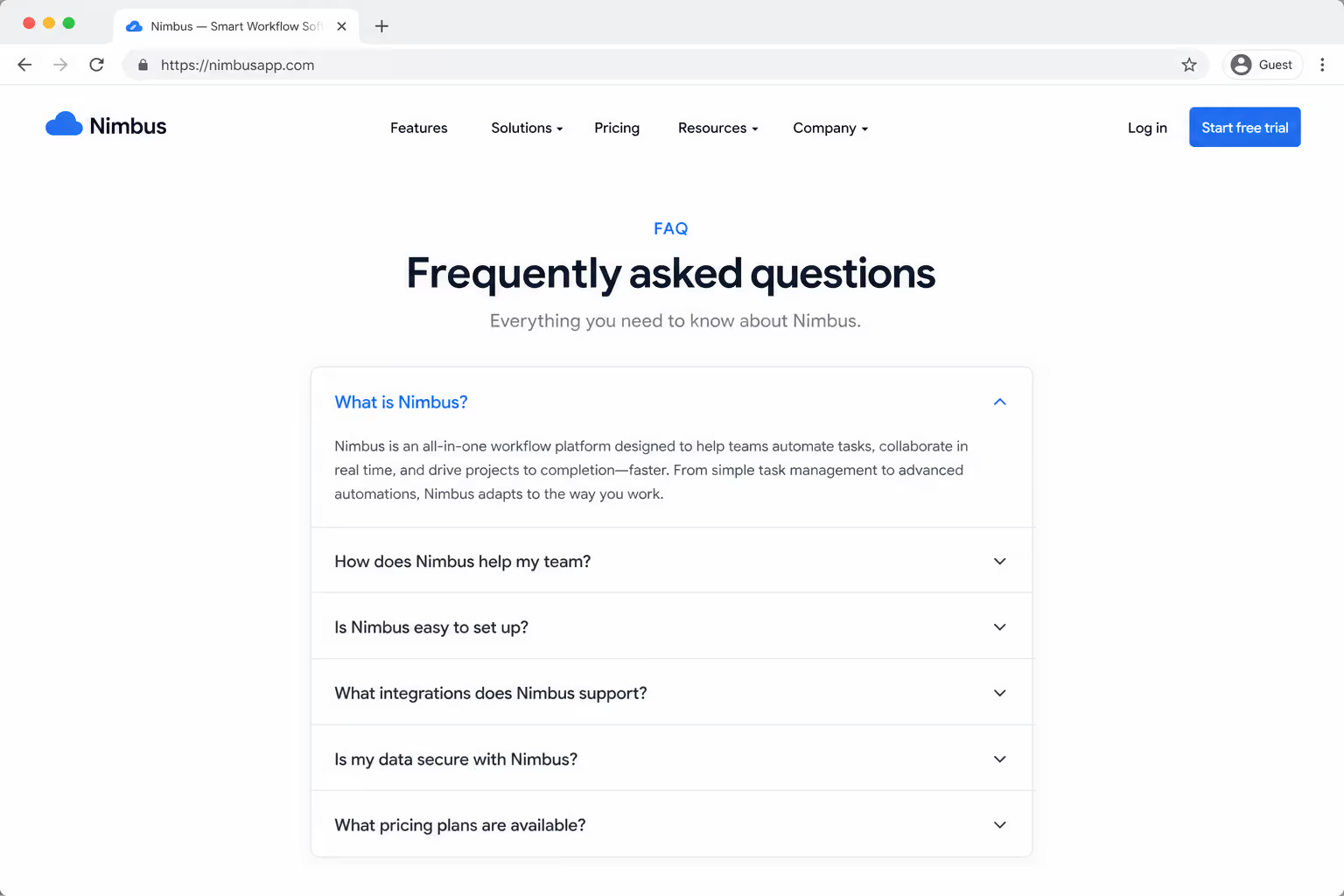
Before 2018, Google would discount content hidden by default. If you tucked an answer behind a click, Google might index it but weight it less. That single sentence is where most of the bad faq accordion seo advice comes from, and it has been outdated for years.
By July 5, 2024, Google had moved every indexed site to mobile-only crawling [1]. Mobile screens force accordions, tabs, and disclosure patterns. Penalising hidden content on mobile would penalise good UX, so Google stopped doing it. That is the foundation of modern faq accordion seo.
The second shift hit on May 7, 2026. Google officially stopped showing FAQ rich results in Search [2]. Search Console reporting for FAQs is scheduled to disappear in June 2026, and the API support follows in August 2026. If your faq accordion seo strategy was built on grabbing extra SERP real estate, it has effectively ended.
What Google actually sees inside a collapsed accordion
The core faq accordion seo question is simple: does Google index content that is hidden behind a click? The answer in 2026 is yes, with a sharp condition.
John Mueller has been clear about this. In Google's mobile-first index, content inside accordions and tabs is fully indexed and given full ranking weight [3]. Mueller's exact framing was that Google takes into account anything in the HTML that might be visible to users at some point, which includes collapsed FAQ answers.
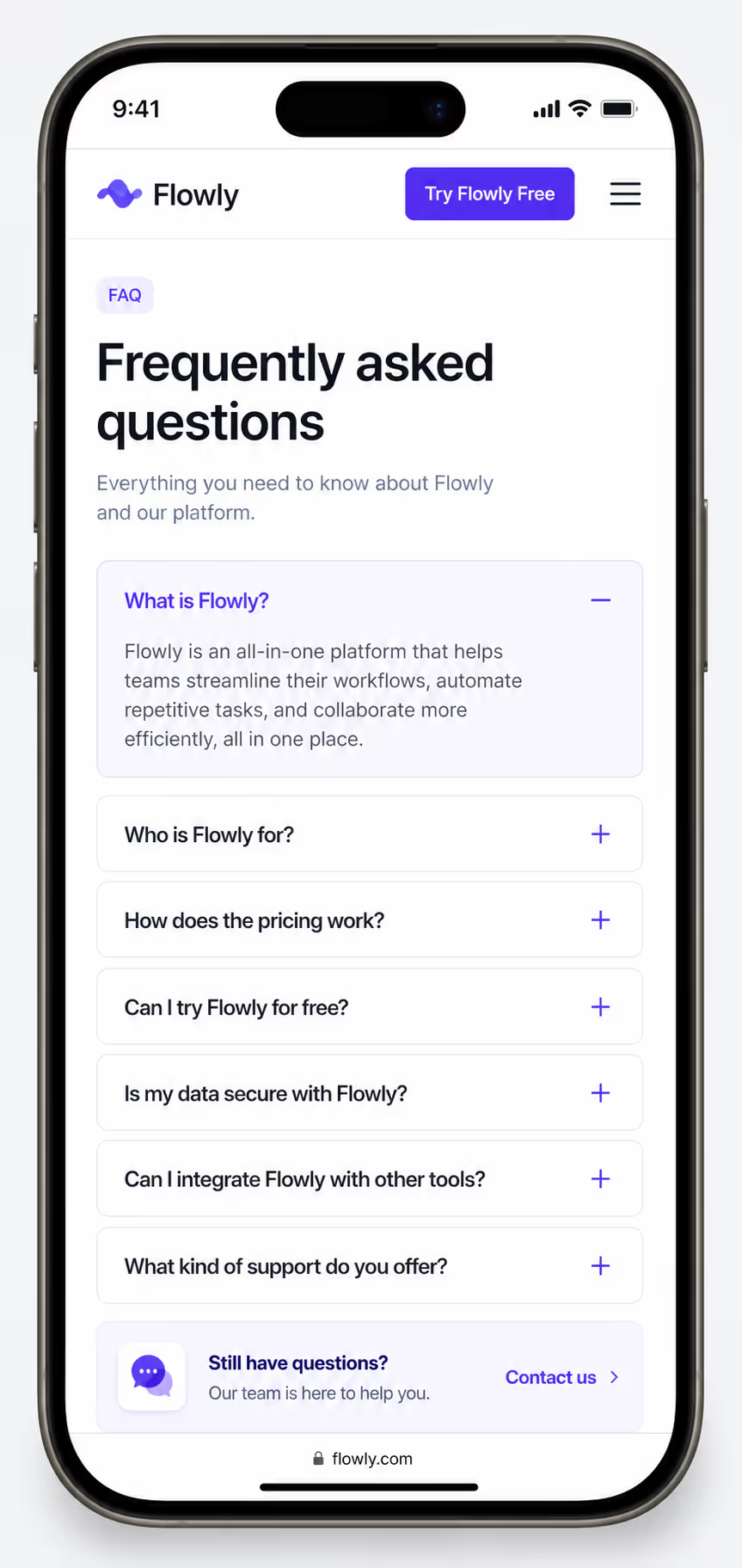
That makes faq accordion seo safe by default, but only if the content is in the initial HTML. The condition is non-negotiable. If your FAQ accordion fetches its answers from an API after the user clicks, Google's crawler never sees them. Your faq accordion seo collapses with it. The text has to be present in the DOM on first load, even when the panel is closed.
I check this on every client site with one quick test. I view the rendered HTML in Chrome DevTools, search for a unique phrase from an answer, and confirm the phrase exists in the source even when the accordion is closed. If it is there, faq accordion seo is fine. If it is missing until the user clicks, faq accordion seo is broken in a way Google cannot fix for you.
The Shape a Crawl Safe Accordion Should Have
A real button, an id that button controls, and the answer sitting in the served HTML instead of being fetched when someone clicks. If you would rather not hand maintain that on every template, the Poper FAQ widget is a hosted accordion you configure in the dashboard and install with a single line of code.
<div class="faq-item">
  <button aria-expanded="false" aria-controls="a1">
    Do FAQ accordions hurt SEO?
  </button>
  <div id="a1" hidden>
    No. The answer text ships in the HTML,
    so it is there when Google renders the page.
  </div>
</div>The May 2026 FAQ rich result change and faq accordion seo
This is where most people get confused right now. The deprecation of FAQ rich results is not a penalty on faq accordion seo. It is the removal of a SERP display feature.
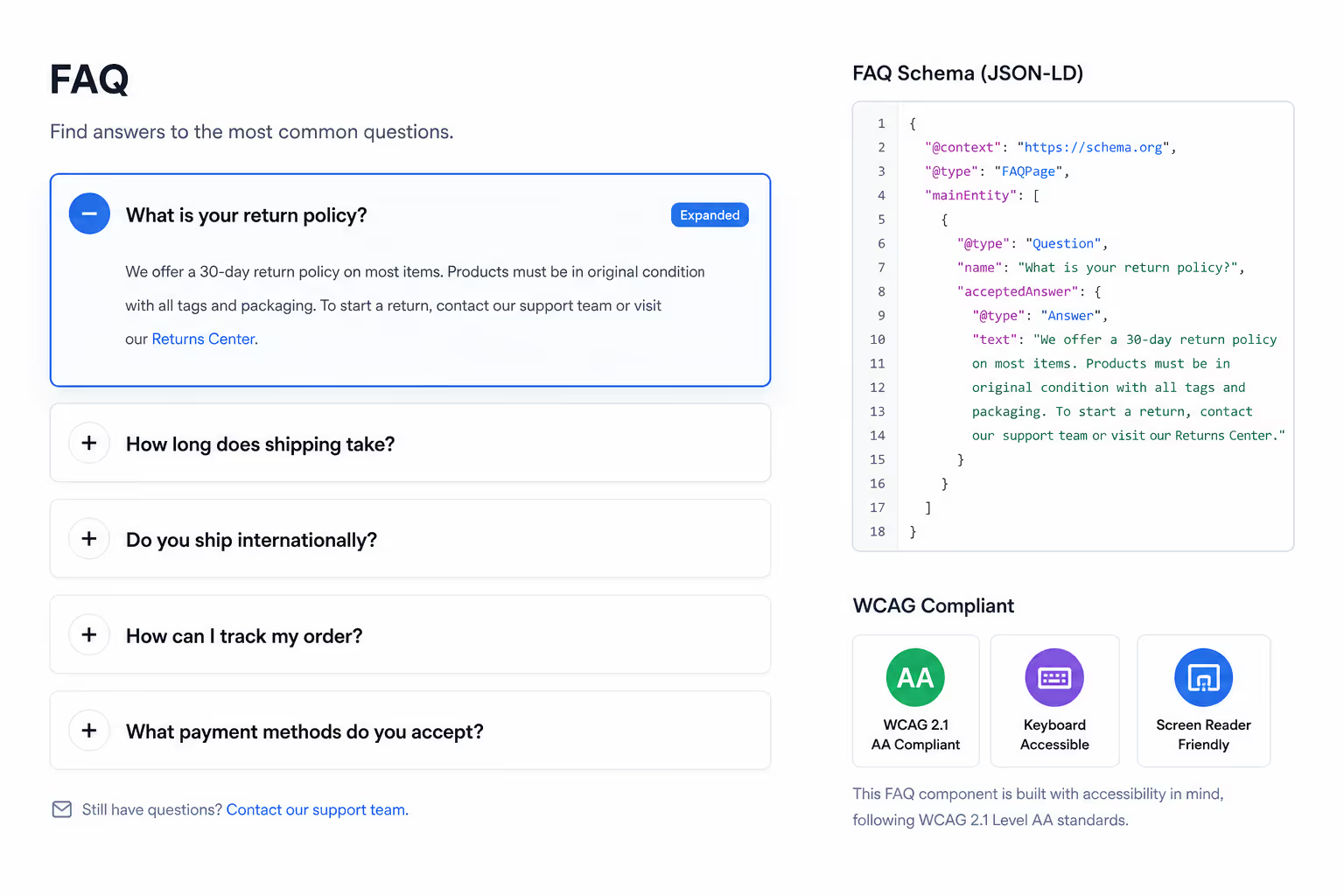
Here is the distinction that matters. The visual FAQ snippet, the one that used to dominate mobile SERPs with stacked questions, is gone. The FAQPage structured data type is still valid Schema.org markup. Google has confirmed it will continue using FAQ schema to better understand pages, even though it no longer renders the rich result.
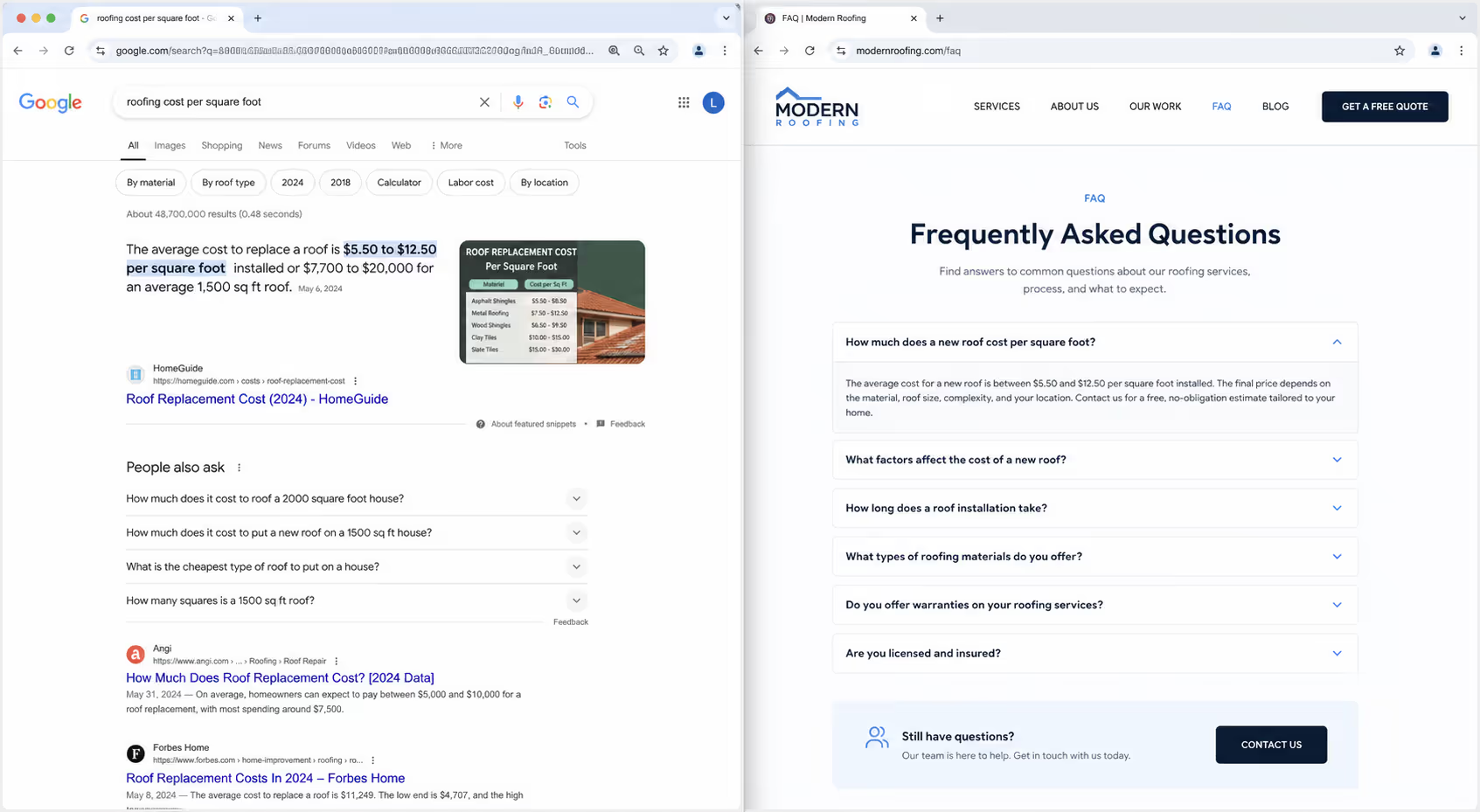
So what does that mean for faq accordion seo in practical terms? Your FAQ accordion keeps ranking the same content as before. You stop earning a separate SERP block. AI surfaces become the new place that FAQ content gets reused.
One stat caught my attention here. A analysis found that pages appearing in Google AI Overviews are 3.2x more likely to have FAQ schema implemented than pages that do not appear [4]. That is the new ceiling for faq accordion seo. The rich result is gone, but the schema still feeds the AI surface that increasingly answers users before they click.
If I were redesigning a content strategy today, I would keep my FAQ accordion, keep my FAQPage schema, and stop measuring faq accordion seo by rich result impressions. Track AI Overview presence, dwell time on the FAQ page, and the long-tail queries that the answers rank for.
When FAQ Accordion SEO actually hurts your page
Faq accordion seo only goes wrong in a small set of cases. I want to be specific so you can rule them out one by one.
The first case is content loaded on click. If the panel is empty in the initial HTML and the answer arrives by JavaScript only after a user expands the section, Google does not see it. This is the most common faq accordion failure I find on React or Vue sites that fetch FAQ data from a CMS over an API.
The second case is hidden duplicate content. Some teams hide a wall of keyword-stuffed text inside an accordion, hoping Google will index it without users seeing it. Google does index it.
Then the page gets a thin or unhelpful content classification because the visible portion does not match what is ranked. Faq accordion seo dies on these pages, but the accordion is not the cause. The intent behind it is.
The third case is when the FAQ is the only content on the page. If your page is a hero section, a CTA, and an FAQ accordion, you have built a page where faq accordion seo is doing all the ranking work.
That is risky after the May 2026 deprecation. Google now expects pages to demonstrate visible value, and a single accordion is easy to ignore. Pair the FAQ with above-the-fold context, supporting paragraphs, and visible body content.
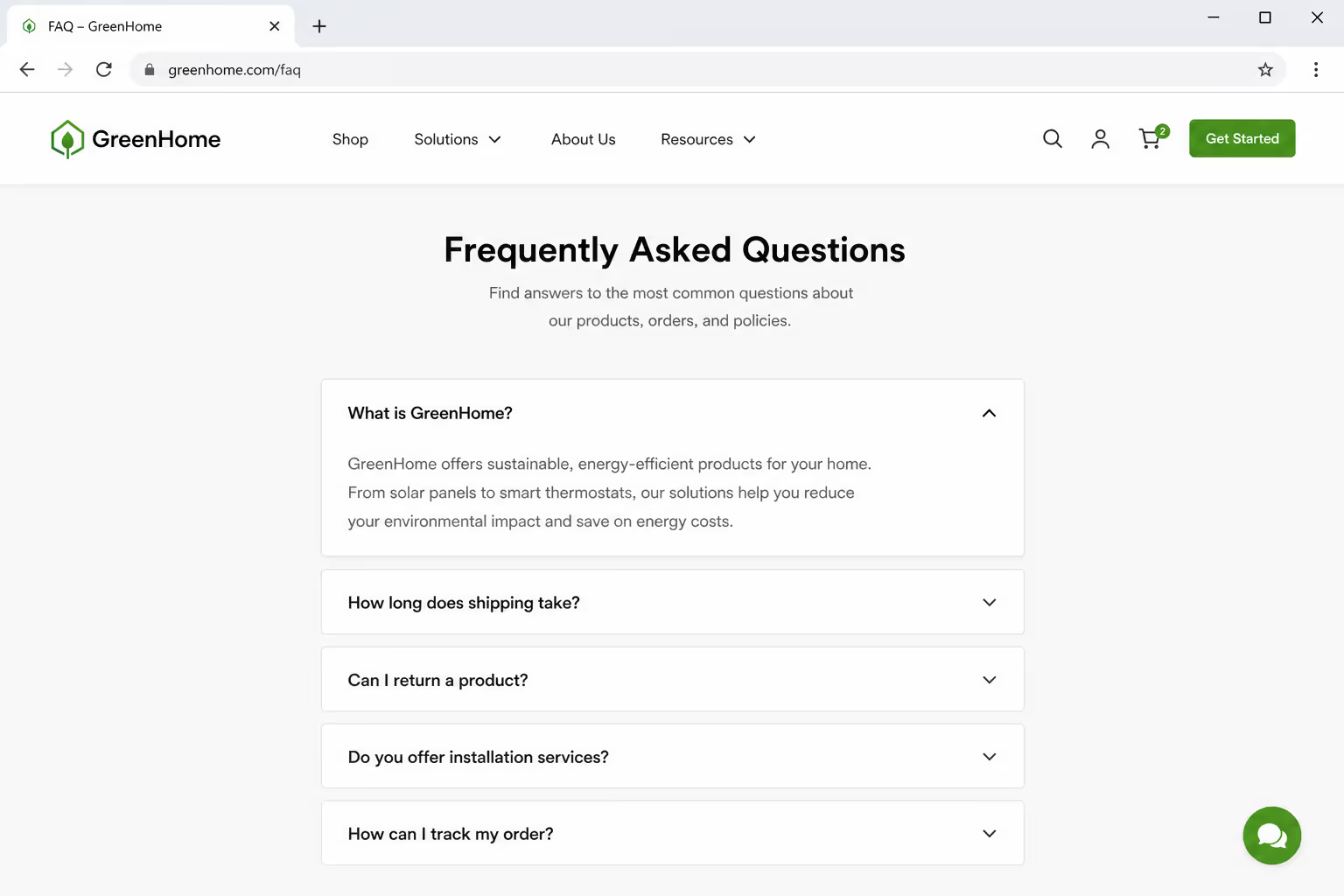
The fourth case is markup chaos. If your accordion buttons are divs instead of buttons, your headings are missing, and your panels are hidden with CSS opacity instead of the hidden attribute, faq accordion seo still works for Google, but accessibility breaks. Accessibility failures correlate with lower engagement, and lower engagement quietly drags faq accordion seo down through the engagement signals Google now relies on.
When FAQ Accordion SEO clearly helps
The flip side is just as important. A well-built FAQ accordion is one of the most reliable faq accordion seo wins I know.
Accordions compress long-tail keyword coverage onto a single URL. Each question is a discrete query that real users type, and each answer is a focused passage Google can extract. That structure plays directly into Google's passage indexing, which prefers pages where answers are organised and labelled. Faq accordion seo benefits from that organisation more than a flat wall of text would.
Accordions also help engagement metrics that feed modern ranking. A 2025 conversion rate optimisation analysis noted that sites with above-average engagement time see roughly 2.3x higher conversion rates, and dwell time is one of the clearer behavioural signals search engines now use [5]. A clean FAQ section keeps users on the page, lifts dwell time, and indirectly boosts faq accordion seo.
Accordions are also the right answer on mobile, which is now the only indexed version of your site. A 30-question FAQ as flat HTML on a phone is exhausting. An accordion respects the screen, respects the user, and keeps faq accordion seo intact under mobile-only indexing.
Five Boxes To Tick On Your Own FAQ Section
The failure cases above are the only ways a collapsed FAQ costs you traffic, and every one of them is a build decision. Run this list against the accordion you already have, or configure the Poper FAQ widget once and let the hosted markup cover the first two checks for you.
- Answer text is in the served HTML, not loaded when the panel opens
- Each question toggle is a real button carrying an aria-expanded state
- The collapsed panels are not a duplicate of content already visible on the page
- The FAQ supports the page instead of being the entire page
- The section stays readable on a phone, where most of the traffic arrives
The technical contract for safe FAQ Accordion SEO
Here is the short list I run through on every audit. If your accordion satisfies all of it, faq accordion seo is essentially solved on a technical level.
| Check | Why it matters for faq accordion seo | How to verify |
|---|---|---|
| Answers in initial HTML | Google indexes only what loads on first fetch, even if hidden | View source or rendered DOM, search for a known answer phrase |
| No JavaScript-only loading | Click-triggered fetches are invisible to the crawler | Disable JS in DevTools and reload, confirm answers are still present |
| Real heading tags around questions | Lets Google parse passage structure and improves faq accordion seo | Inspect the question element, look for h2 or h3 |
| FAQPage schema present | Feeds AI Overviews even after the rich result deprecation | Run the URL through Google's Rich Results Test for validation |
| Unique answers, no copy-paste | Duplicate FAQs across pages dilute faq accordion seo signals | Run a content fingerprint check across your FAQ URLs |
| Above-the-fold first question visible | Reassures Google and users that the FAQ has real, visible content | Manual check on mobile viewport, 360 to 414 pixels wide |
If you can tick every row, faq accordion seo is no longer a risk on that page. Most failures live in row one or row two, and both are simple to fix once you have spotted them.
How I write FAQ content for stronger SEO
Technical correctness is half the story. The other half is the content itself, and this is where I see teams lose faq accordion seo wins they should have earned.
I write FAQ questions in the exact phrasing a real user would type. That sentence sounds obvious, and it is constantly ignored. "What is X" lands far better than "On the topic of X, here is some information." The closer the question matches a real search query, the more faq accordion seo benefit it earns from passage indexing and AI surfaces.
I keep answers tight. Two to four sentences, direct, with the keyword in the first line when it fits naturally. Long FAQ answers turn into mini essays, which dilutes the targeting and weakens faq accordion seo for that question. If an answer needs more than four sentences, it probably deserves its own blog post and a link from the FAQ.
I avoid copy-pasted answers across pages. Boilerplate FAQs that appear on every product page split your faq accordion seo signal across many URLs and confuse Google about which one should rank. Unique FAQs per page, even if you reuse the structure, keep the signal concentrated.
How Poper handles FAQ Accordion SEO for you
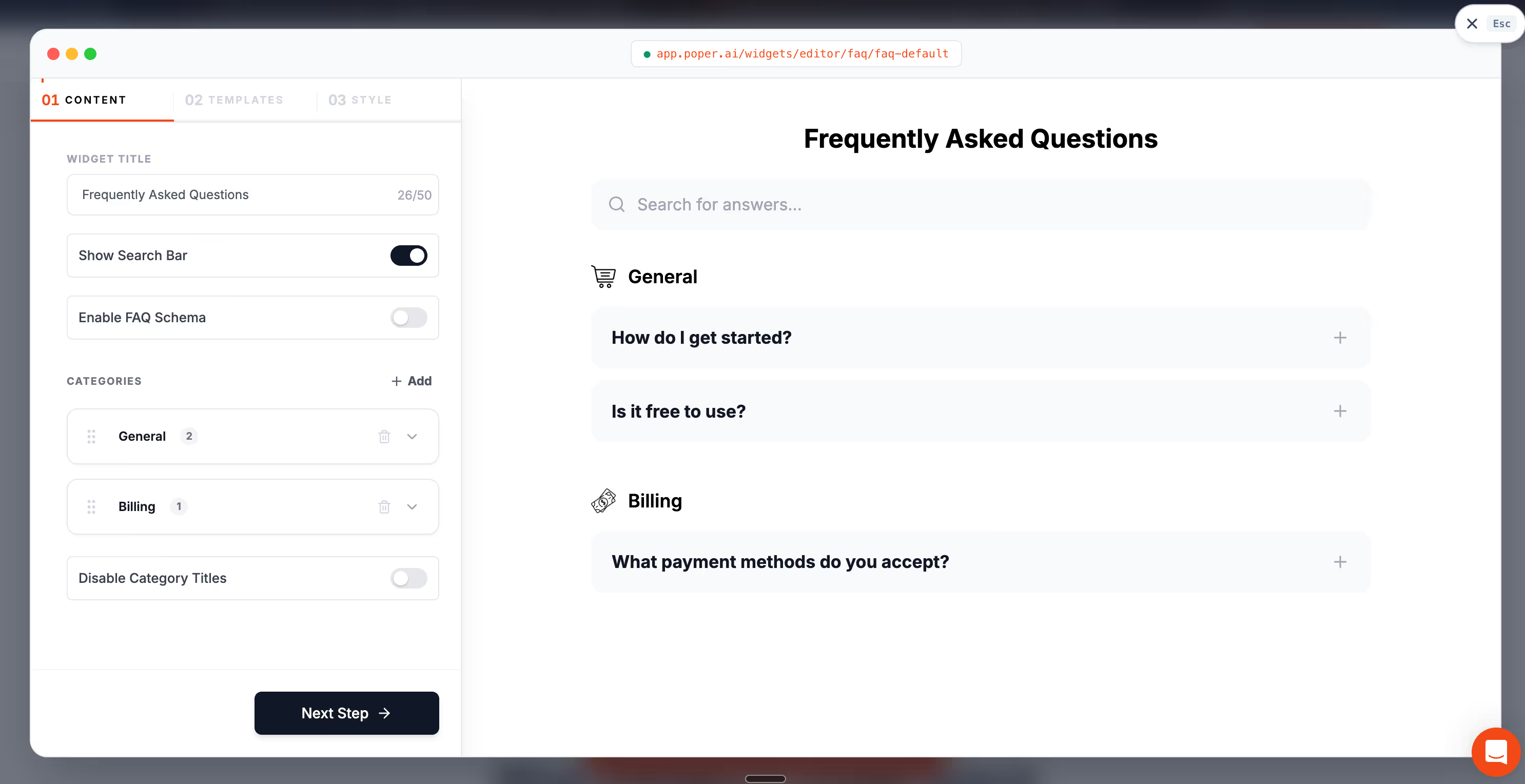
The Poper FAQ widget exists because faq accordion seo is easy to describe and hard to ship correctly. We render every answer in the initial HTML so Google sees the full content on first fetch. We use real heading tags around questions, real button elements for toggles, and the hidden attribute on collapsed panels. We emit FAQPage schema by default so your content stays eligible for AI Overview surfacing even after the May 2026 rich result change.
You can drop the widget on Shopify, WordPress, Webflow, Wix, Squarespace, or plain HTML and faq accordion seo behaves the same on all of them. If you want to see how it renders, the Poper Accordion widget page shows the live patterns.
Wrap up: FAQ Accordion SEO is mostly a choice you already made
If I had to compress this entire post into one paragraph, it would be this. Faq accordion seo is not hurt by hiding content in 2026, as long as the content lives in the initial HTML. Faq accordion seo is hurt by JavaScript-only loading, by hidden keyword stuffing, by markup that breaks accessibility, and by FAQ-only pages with nothing else of value. The May 2026 rich result change removed a SERP display perk, not a ranking factor.
Keep the accordion, keep the schema, write the questions like real users do, and verify the answers are in the source code. That is what faq accordion seo looks like when it is done well. The rest is noise from outdated blog posts that never updated after mobile-first indexing.
References
Keep the Accordion, Fix the Delivery
Collapsed is not the same as hidden, as long as the answer ships in the HTML. That is the whole argument. Put your questions in an accordion that renders before the click, write the answers for the person reading them, and spend the time you saved on the content instead of the container.
Create Your Free FAQ WidgetFree forever plan. One snippet to install. No credit card required.