Gamified campaigns produce a 100% to 150% jump in user engagement over traditional marketing, according to a AmplifAI analysis.
Few formats exploit that lift better than the tournament bracket, a structure that turns one vote into four weeks of return visits. The bracket challenge engagement stats below explain why a March Madness mechanic out-converts almost any static lead form you can ship.
Quick Take: Bracket challenges win because they reward repeat visits, not single actions. Gamified, interactive formats lift engagement 48% to 150% and pull voters back round after round, which compounds into leads a one-shot form never captures.
Why Brackets Out-Engage Static Lead Forms
Start with the gap between interactive and passive content. A Outgrow report found interactive content drives 52.6% more engagement than static content, and visitors spend roughly 13 minutes with it versus 8.5 minutes with a static page. That same report pegs interactive formats at 2x the conversions of passive ones.
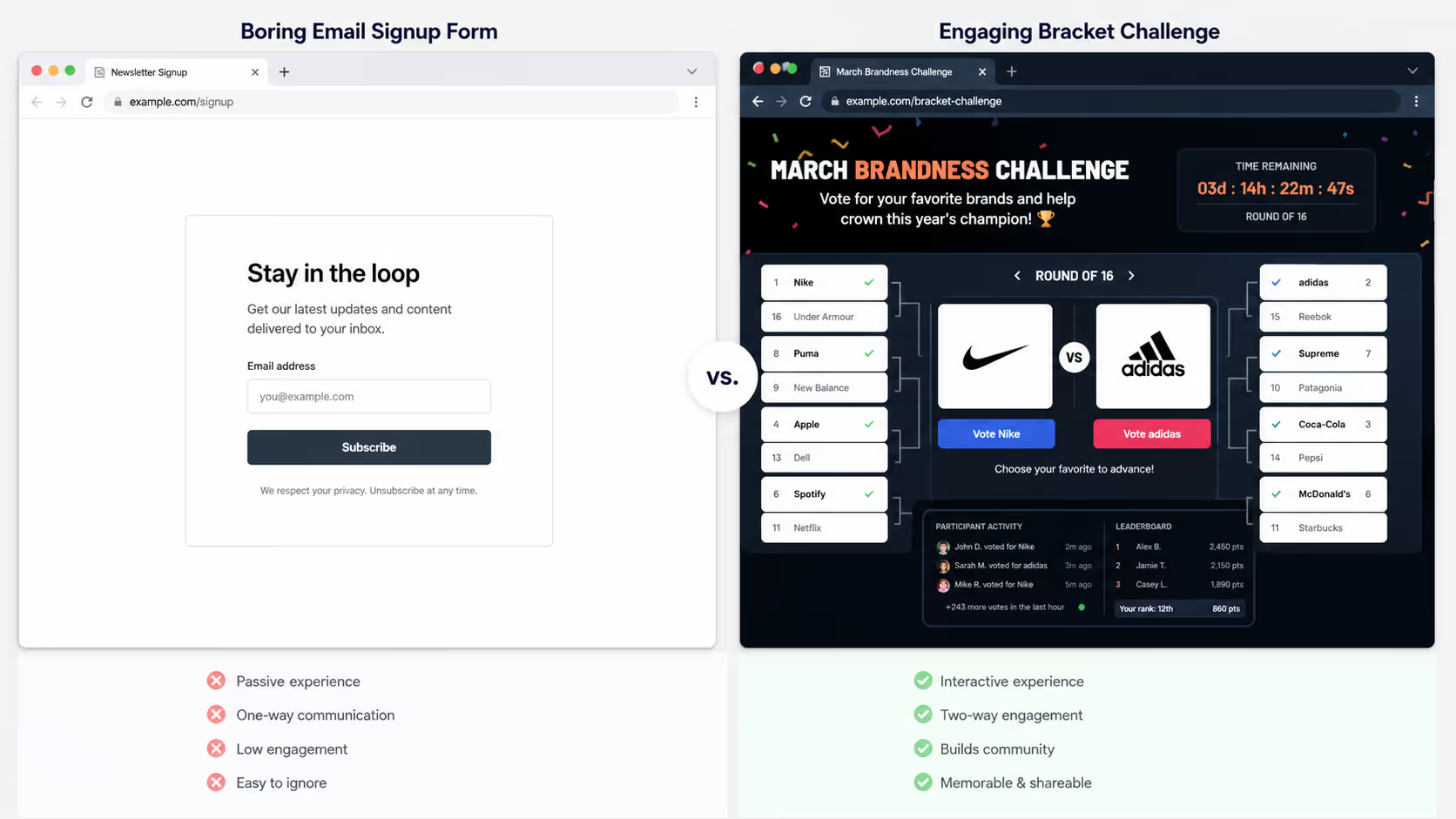
A bracket compresses several of those advantages into one widget. It is interactive, it is gamified, and it is social. The AmplifAI data shows gamified content is shared 12x more than non-gamified content, and gamification lifts overall customer engagement by 48%. A static newsletter box does none of that.
The cultural tailwind is real, too. Amra & Elma's March Madness report found brands spent more than $1.2 billion USD on tournament advertising, and bracket-tied campaigns drove a 39% spike in app downloads. You do not need a sports audience to borrow the mechanic, you need a field of things people will argue about.
What the Bracket Challenge Engagement Stats Actually Compare
The headline number people repeat is "4x engagement," but that figure only makes sense next to the alternatives. The table below maps three common lead mechanics against the metrics that matter, total visits per user, engagement lift, and social spread.
| Format | Visits per user | Engagement lift vs. static | Built-in social sharing |
|---|---|---|---|
| Static signup form | 1 | Baseline | None |
| One-shot giveaway | 1 to 2 | Moderate | Low |
| Bracket challenge | 4 to 6 (one per round) | 48% to 150% | 12x baseline |
The decisive column is visits per user. A signup form is a single transaction. A four-round bracket gives every entrant up to six reasons to return, seeding, three voting rounds, and the final. That repeat exposure, not a clever headline, is where the 4x engagement claim comes from.
The Four Behavioral Triggers a Bracket Pulls
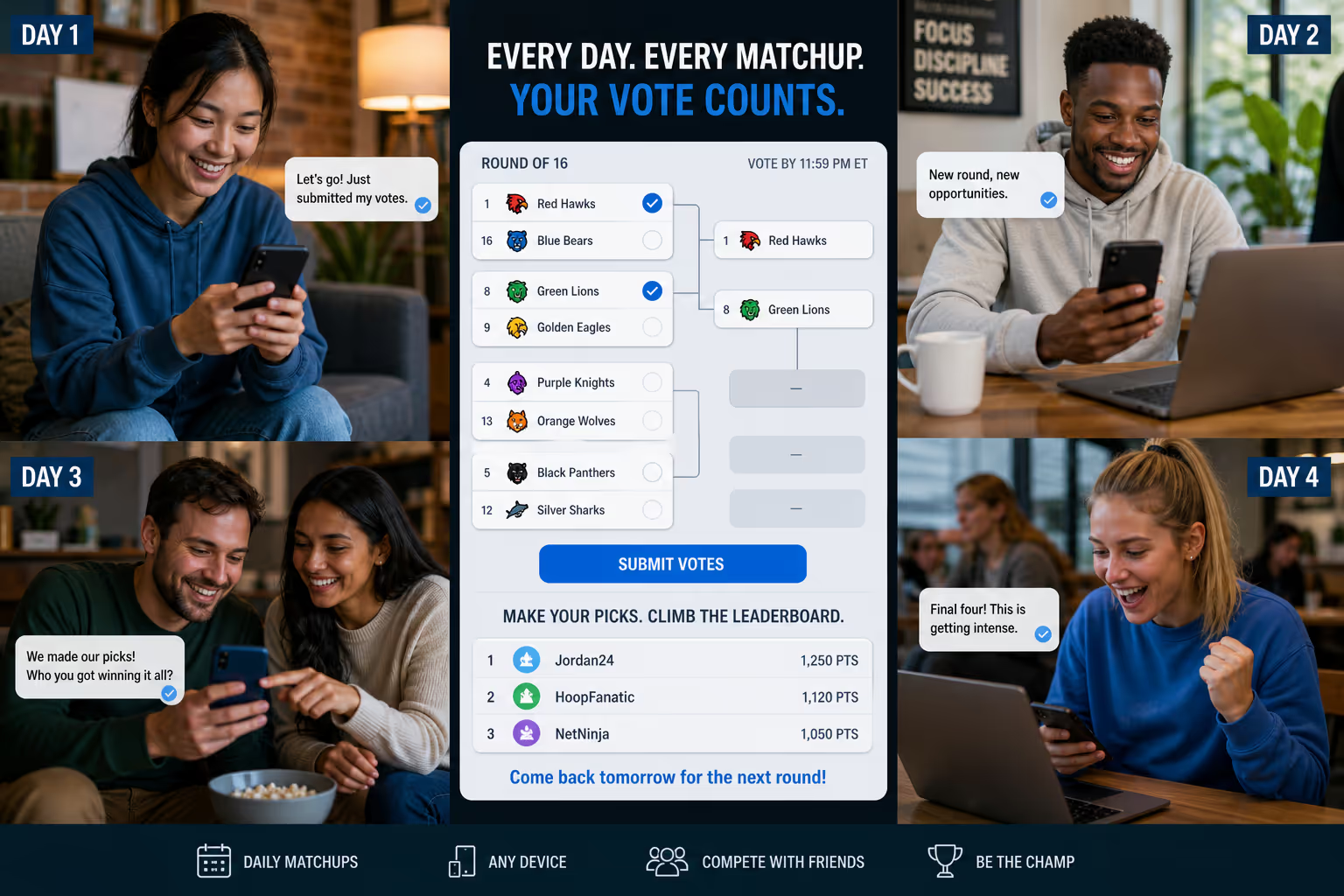
The format works because it stacks four well-documented psychological levers at once. Each one alone lifts engagement; together they explain the outsized bracket challenge engagement stats.
Open loops. An unfinished bracket is a cliffhanger, the brain resists leaving it incomplete, the same Zeigarnik effect that keeps you watching a series finale.
Sunk-cost investment. Once someone fills in round one, they are emotionally invested in being right, so they return to defend their picks.
Tribal social proof. Voting is public and opinionated, which triggers the debate and sharing that gamified content earns 12x more of.
Scheduled dopamine. Each round closes on a known date, so anticipation builds on a predictable loop rather than a one-time spike.
Experiential research backs the payoff. A
G2 roundup reports that 70% of consumers become repeat customers after an interactive brand experience, and 90% of marketers say experiential formats drive more compelling engagement than passive ones.
A bracket does not ask for one click, it sells a four-week argument, and people pay for arguments with their attention.
Benchmarks To Target Before You Build
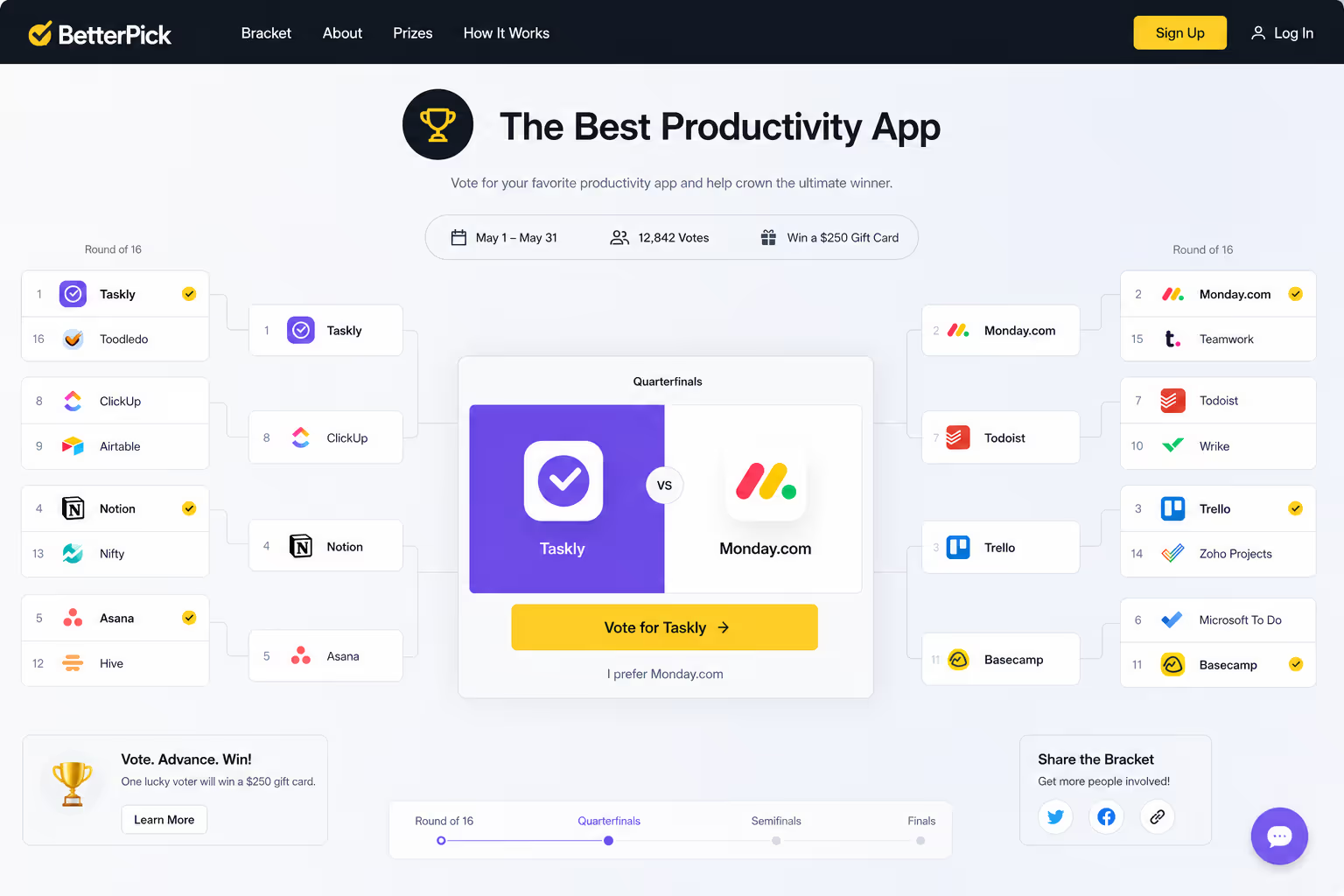
Treat the bracket challenge engagement stats as a scoreboard, not trivia. Set targets up front so you can tell a working contest from a vanity widget. Reasonable goals for a first run, anchored to the interactive-content and gamification data above:
Return rate. Aim for 50% or more of entrants returning for at least one additional round, the repeat-visit advantage is the entire point.
Session time. Expect interactive sessions closer to the 13-minute interactive benchmark than the 8.5-minute static one.
Share rate. Track shares per entrant, gamified formats earn up to 12x the sharing of static content, so anything flat signals weak matchups.
Email capture. Gate voting behind one field and measure opt-in rate against your standard form as the control.
Structure Rounds To Keep the Stats Climbing
Engagement decays when the rhythm breaks. The schedule, not the prize, sustains the numbers. Use a tight, predictable cadence:
Keep each round open three to five days, shorter loses casual voters, longer leaks momentum.
Announce results within 24 hours of a round closing; the dead air between "voting closed" and "results posted" is where contests quietly die.
Cap the field at 16 entries for a first run, which maps cleanly to four rounds and four weeks of content.
Email the list at every round open and close, so each stage becomes a fresh, low-effort touchpoint.
What This Means for Your Stack
The mechanic only pays off if the contest lives on a page you own and captures the email at the moment of peak motivation. Poper's Bracket Maker Widget embeds a tournament-style bracket on your site with no code, so every vote, visit, and share lands on your domain rather than a third-party platform.
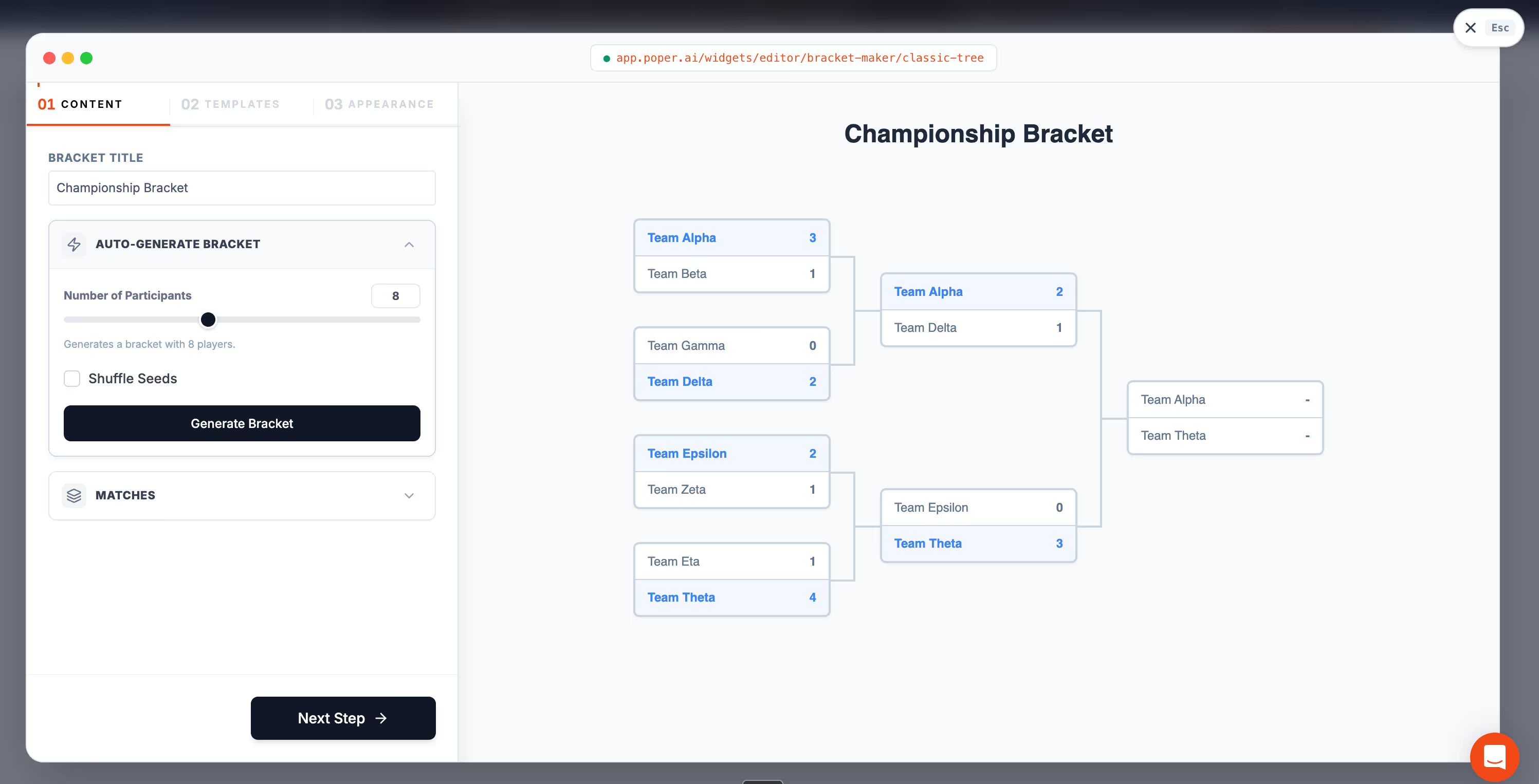
Pair it with the Popup Builder to gate the first vote behind a single-field email capture, then trigger round-open reminders with targeting rules. That combination turns the bracket challenge engagement stats from a chart into a repeatable lead engine, interactive front end, owned data on the back end.
Conclusion
The 4x figure is not hype; it is arithmetic. A static form is one visit, a giveaway is two, and a bracket is up to six, multiplied by 12x sharing and a 48% to 150% engagement lift. The bracket challenge engagement stats all point to the same conclusion: brackets win because they reward returning, and returning is what static forms can never buy.